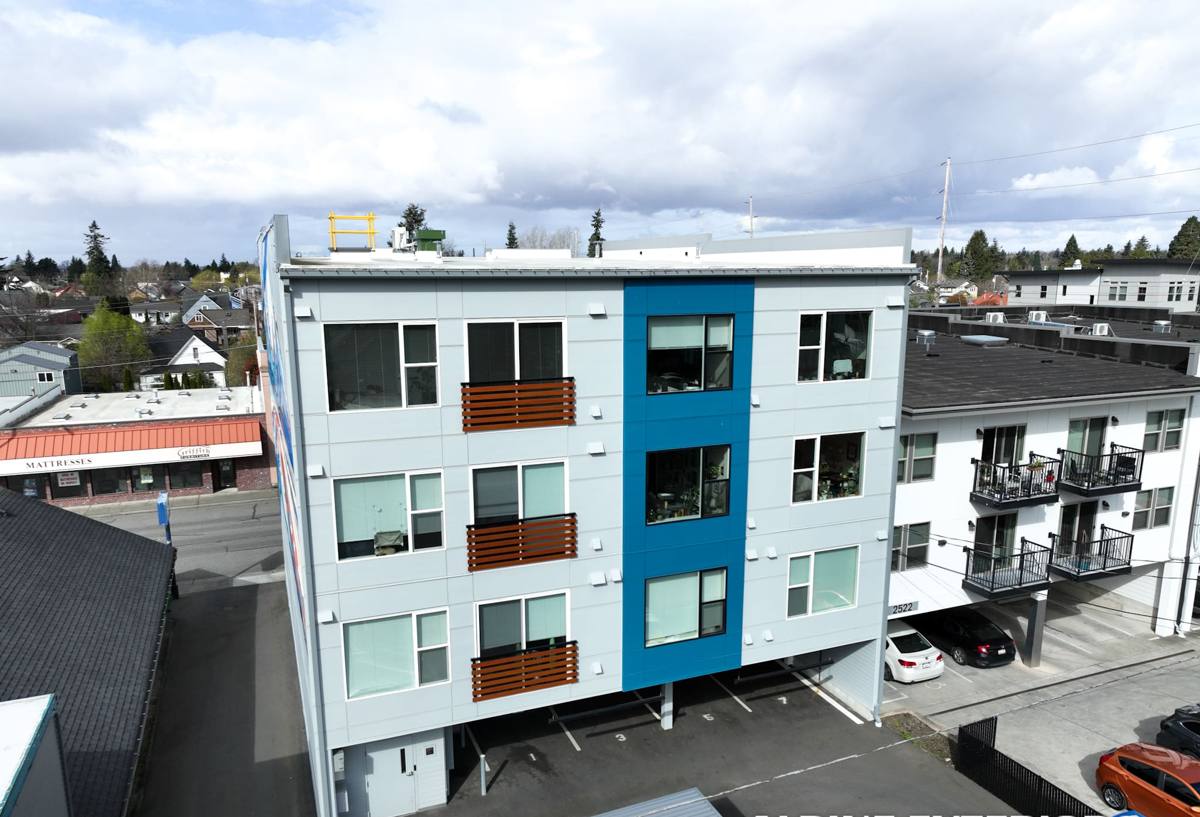
 Bellingham Exterior
 Barkley is one of Bellingham's more distinctive residential areas, with a mix of newer construction and homes now old enough that their original windows are showing their age. Whatcom County's climate is not gentle on window systems. Salt-laden air off the bay, long stretches of driving rain, and a moss season that can run half the year all work on window frames, seals, and flashing in ways that homeowners in drier climates never have to think about. Getting a window installation right here isn't just about picking a style you like — it's about choosing a product and installation method that will actually hold up to what this specific location throws at it year after year.
This page covers what Barkley homeowners should know about window installation specifically: how the local climate factors in, what a correct job looks like, how our process works, and why experience in this exact area matters more than it might seem.
Why Barkley's Climate Is Hard on Windows
Bellingham sits close enough to the water that salt air is a real factor in material selection and maintenance, not just a talking point. Salt-laden moisture accelerates corrosion on hardware, hinges, and lower-quality metal components, and it can degrade certain sealants faster than inland installations experience. Combine that with Whatcom County's driving rain — often blown sideways by wind off the bay rather than falling straight down — and you get conditions that test a window's weatherproofing from angles that manufacturers' baseline specs don't always account for.
Then there's moss. Bellingham's moss season is long, and while people usually associate it with roofs, it affects windows too. Moss and algae growth on and around window sills, especially on north-facing or shaded elevations common in wooded Barkley lots, holds moisture against the frame and trim far longer than it would in a drier climate. Over years, that constant damp exposure is what causes wood trim to soften, aluminum frames to pit, and vinyl frames to develop the kind of hairline stress cracks that let water in.
What This Means in Practice
None of this means Barkley homes need exotic or overbuilt windows. It means the installation details — flashing, sealant selection, drainage paths, and frame material — need to be chosen with this specific climate in mind, not treated as an afterthought. A window that performs fine in a dry inland town can fail here years earlier if it's installed without accounting for wind-driven rain and sustained damp exposure.
Signs a Barkley Home's Windows Need Attention
Window failure is usually gradual, and homeowners often don't notice the early signs until there's visible damage. In this climate, watch for these specific indicators:
- Fogging or condensation between panes of double-glazed windows, which means the seal has failed
- Soft, discolored, or spongy wood trim or sills, especially on shaded or north-facing walls
- Visible gaps between the window frame and siding, or cracked exterior caulk lines
- Drafts you can feel near the frame even when the window is fully closed and locked
- Difficulty opening, closing, or locking windows that used to operate smoothly
- Moss or dark green growth building up on sills, tracks, or the frame itself
- Peeling or bubbling paint on interior window trim, often a sign moisture is getting in from outside
- Noticeably higher heating bills without another clear explanation
Any one of these on its own might just need minor repair. Several at once, especially fogged glass combined with soft trim, usually means it's time to talk about replacement rather than patching.
What a Correct Window Installation Actually Involves
A window installation is only as good as the details most homeowners never see once the trim is back on. The window unit itself matters, but in this climate, the flashing and sealing work around it matters just as much — arguably more, since that's what determines whether water gets behind the frame over the next fifteen years.
The Core Steps
- Removal and inspection — pulling the old window and checking the rough opening, sheathing, and framing for hidden rot or water damage before anything new goes in
- Repair of the opening — any soft or damaged framing gets addressed now, not covered up, since this is the last chance to fix it without pulling the new window back out
- Flashing installation — proper flashing tape and pan flashing at the sill direct any water that does get past the window back out, rather than letting it pool against the frame
- Setting the window — shimmed level, plumb, and square, then fastened per the manufacturer's specifications so the frame isn't under stress that can crack seals over time
- Sealing — insulation around the frame gap and exterior sealant rated for the material and this climate's moisture exposure
- Exterior trim and finish work — trim, cladding, or siding tied back in cleanly so there's no gap or seam for wind-driven rain to exploit
Skipping or rushing any one of these steps is usually invisible on installation day and shows up as a leak, a soft spot, or a failed seal two to five years later. It's the number one reason a "window replacement" doesn't actually solve the problem it was meant to solve.
Choosing the Right Window for a Barkley Home
Frame material is the biggest decision, and the right answer depends on the home's exposure, budget, and maintenance appetite. Here's an honest comparison for this climate:
| Frame Material | How It Handles This Climate | Maintenance |
|---|---|---|
| Vinyl | Good moisture and salt-air resistance, doesn't corrode; quality varies significantly between manufacturers | Low — occasional cleaning, no painting or sealing needed |
| Fiberglass | Excellent dimensional stability in temperature swings and damp conditions; holds paint well if a custom color is wanted | Low to moderate |
| Wood (clad exterior) | Attractive and traditional; the exterior cladding protects the wood from direct moisture, but any breach in that cladding invites rot | Higher — exterior finish and seals need periodic inspection |
| Aluminum | Strong and slim-profile, but more prone to corrosion in salt air and conducts cold, which can increase condensation | Moderate — hardware and finish need monitoring near the water |
We don't push one material as universally "best" — it's a trade-off between upfront cost, appearance, and how much long-term maintenance a homeowner wants to take on. What we do insist on is quality within whatever material is chosen, since a budget vinyl window and a well-built vinyl window can have very different lifespans in this climate.
Glass and Seal Considerations
Double-pane, low-E glass is the standard for this region and makes sense for both energy efficiency and comfort. In homes with more direct wind or rain exposure, we pay close attention to the quality of the spacer system between panes — this is often where seals fail first, leading to that fogged-glass look years down the road.
Our Installation Process
Here's what working with us on a Barkley window project actually looks like, start to finish:
- Free on-site assessment — we look at the actual windows, the exposure of each elevation, and any existing damage before recommending anything
- Straightforward proposal — clear scope, product options, and pricing, with no pressure to decide on the spot
- Scheduling around the weather — we plan installation days with Whatcom County's rain patterns in mind so openings aren't left exposed longer than necessary
- Careful removal and opening inspection — including a real look at framing condition, not just a quick glance
- Installation to manufacturer spec — proper flashing, shimming, insulation, and sealing, every time, not just on the windows facing the street
- Final walkthrough — we check operation, seals, and finish work with the homeowner before calling the job done
- Cleanup — old windows and debris hauled off, work area left clean
Why a Crew That Knows Barkley Matters
Window installation looks similar on paper everywhere, but the details that matter shift by neighborhood and even by lot. A crew that regularly works in Barkley and the surrounding Bellingham area already knows which elevations tend to take the worst wind-driven rain, how tree cover affects moss buildup on sills, and which older home styles in the area tend to have framing issues behind the original windows. That familiarity means fewer surprises during the job and installation choices — flashing details, sealant selection, drainage — that are calibrated to this specific climate rather than a generic spec sheet.
It also means accountability. A contractor working in the same community year after year has a reason to get the flashing and sealing right the first time, because a callback for a leak isn't an abstract risk — it's a truck back on the same street.
What Affects the Cost
Every Barkley home is different, so we don't publish flat prices, but the main cost drivers are consistent:
| Factor | Why It Matters |
|---|---|
| Frame material | Vinyl is typically the most budget-friendly; fiberglass and clad wood cost more upfront |
| Number of windows | Per-window cost usually drops somewhat on larger, whole-home projects |
| Opening condition | Hidden rot or framing damage found during removal adds repair time and cost |
| Window size and type | Large picture windows, bays, and custom shapes cost more than standard double-hung units |
| Access and elevation | Second-story or hard-to-reach windows take more time and equipment |
We walk through these factors during the free assessment so there are no surprises once the proposal is in hand.
Get a Free Estimate for Your Barkley Home
If your windows are fogging, drafty, sticking, or just old enough that you're wondering whether it's time, we're happy to take a look and give you an honest read on where things stand. There's no pressure and no obligation — just a straight assessment from a crew that knows what this Bellingham climate does to windows over time. Use the form below to request your free, no-pressure estimate.