 Bellingham Exterior
 Exterior Work in Silver Beach: What the Climate Actually Does to a House
Silver Beach is one of those Bellingham neighborhoods where the weather isn't an abstraction — you feel it on the exterior of the house every single year. Homes here deal with a combination that's tough on building materials: damp, salt-tinged air drifting in off the water, driving rain that comes in sideways during winter storms, and a moss season that can stretch from October well into spring. None of that is unusual for Whatcom County, but it's more concentrated in neighborhoods close to the water, and Silver Beach is one of them.
We've worked on siding, roofing, windows, and decks all over Bellingham, and the failure patterns we see in Silver Beach are consistent. Moisture finds its way in through small gaps and sits there because the air rarely gets dry enough, long enough, to fully evaporate it. Add salt-laden air to that and you get accelerated corrosion on fasteners, hardware, and unprotected metal. Add moss and algae growth on top of that and you get trapped moisture sitting directly against siding, trim, and roofing material for months at a time. It's a slow, cumulative kind of wear — which is exactly why the materials and installation details matter more here than they would in a drier inland climate.
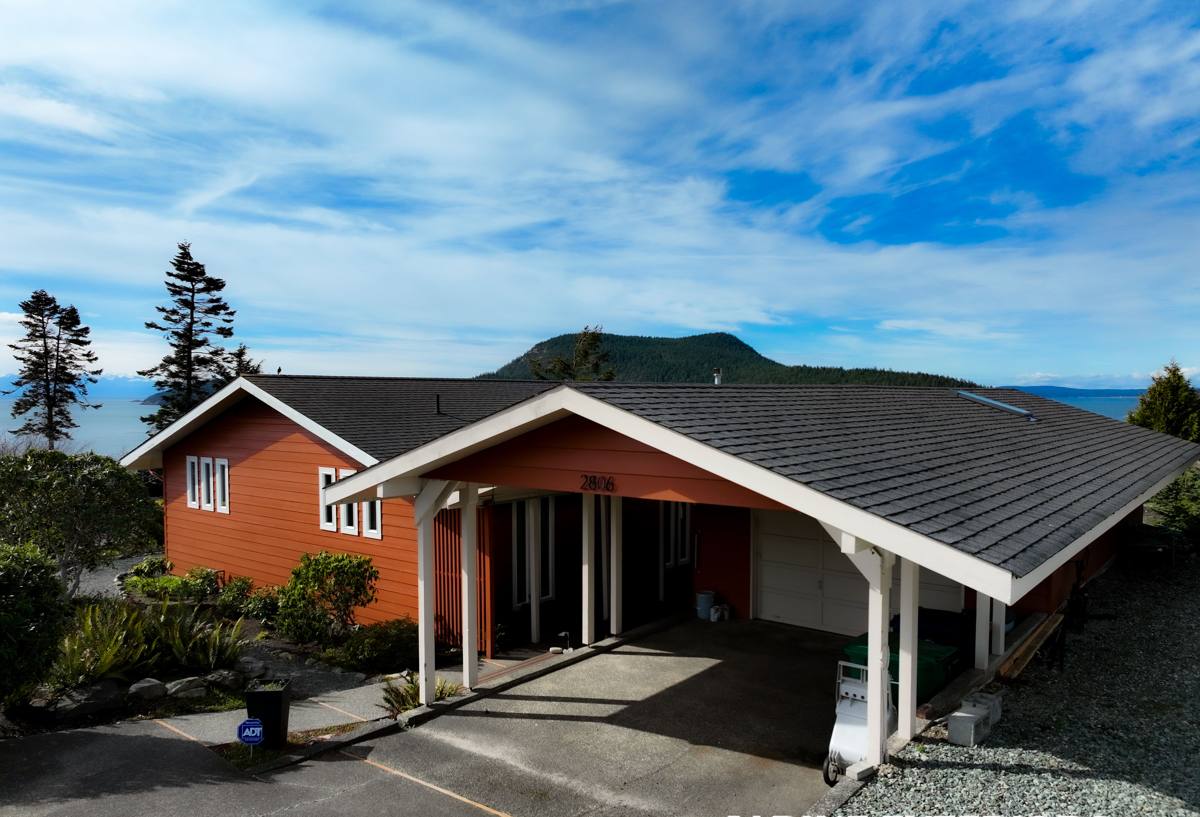
Siding: Why We Only Install James Hardie
Siding is the first line of defense against everything described above, and it's also where we're the most opinionated as a company. Bellingham Exterior Company installs James Hardie fiber cement siding exclusively. We don't install vinyl, LP SmartSide, Cemplank, Allura, or primed spruce and cedar products — not because those materials don't have a place in the market, but because after years of doing exterior work in this specific climate, we've standardized on the one product line we trust to hold up without becoming a maintenance project for the homeowner.
What Salt Air and Moss Do to Siding
Vinyl siding softens and warps with prolonged UV and temperature swings, and its seams can allow moisture to travel behind the panels where it has nowhere to go in a humid climate. Wood-based products, including primed spruce and cedar, absorb moisture readily and are a food source for the moss and algae that thrive in shaded, damp corners of a lot — which means more frequent painting, caulking, and spot repairs. Engineered wood siding is more moisture-resistant than raw wood but still relies heavily on paint film integrity and correct edge sealing to keep water out over the long run.
James Hardie fiber cement siding is cement-based, not wood-based, so it doesn't feed moss growth or swell when it takes on moisture the way wood products can. It's also non-combustible, which is a real advantage during wildfire smoke and ember season, and it carries a factory-applied ColorPlus finish that's baked on rather than field-painted — meaning the color layer is more consistent and better bonded than a job-site paint job, and it holds up better against the fading and chalking that salt air and UV exposure cause over time.
Product Lines Built for This Climate
James Hardie makes climate-engineered HZ product lines specifically formulated for different regions of the country. For the Pacific Northwest, that means a formulation designed around constant moisture exposure rather than dry heat or freeze-thaw cycling. That distinction matters in Silver Beach specifically — a product engineered for a dry climate and simply installed here would age differently than one engineered for exactly this kind of weather.
Siding Comparison
| Material | Moisture Behavior | Moss/Algae Resistance | Maintenance Over 10 Years |
|---|---|---|---|
| James Hardie Fiber Cement | Cement-based, doesn't swell or rot | Non-organic, doesn't feed growth | Periodic wash, factory finish holds color |
| Vinyl Siding | Seams can trap moisture behind panels | Growth on surface in shaded areas | Panel replacement if warped/cracked |
| Primed Wood/Cedar | Absorbs moisture readily | Organic material, feeds growth | Repainting, caulking, rot repair |
| Engineered Wood (LP/Cemplank/Allura) | Better than raw wood, still paint-film dependent | Moderate, depends on finish integrity | Edge sealing and paint maintenance |
Roofing: Where Driving Rain Finds the Weak Points
Roofs in Silver Beach take a beating from wind-driven rain, which behaves differently than straight-down rainfall. It gets pushed up under shingles, around flashing, and into any gap that a calmer climate might never expose. We pay close attention to flashing details around chimneys, valleys, and roof-to-wall transitions, because that's where wind-driven moisture problems actually start — not usually in the field of the shingles themselves.
Moss is the other major factor. A roof with moss growth isn't just a cosmetic issue — moss holds moisture against the roofing material and can work its way under shingle edges over time, shortening the life of the roof. Keeping moss under control, and installing with proper ventilation and underlayment to begin with, matters more here than in drier parts of the state.
Windows: Sealing Out Salt Air and Wind-Driven Rain
Window failures near the water usually show up as one of two things: seal failure that lets in moisture around the frame, or hardware corrosion accelerated by salt-laden air. Older windows with worn weatherstripping or degraded caulking are especially vulnerable during winter storms when rain is being pushed horizontally against the building envelope rather than just falling on it.
When we replace windows in a neighborhood like Silver Beach, correct flashing and sealing around the rough opening matters as much as the window unit itself. A quality window installed with poor flashing details will still leak; a modest window installed correctly will often outperform it. That installation-first mindset carries through everything we do on the exterior of a house.
Decks: Built for Standing Water and Constant Damp
Decks in this part of Bellingham deal with near-constant dampness for much of the year, plus moss and algae buildup on horizontal surfaces that don't dry out quickly, especially under tree cover or on shaded north-facing exposures. That combination makes decking material choice, proper drainage, and ledger board flashing especially important — a deck that traps water against the house structure is a bigger problem than a deck that simply needs refinishing.
We build and repair decks with drainage and moisture management as the starting point, not an afterthought, because in this climate a deck that looks fine on the surface can still be developing rot underneath if it wasn't detailed correctly at installation.
Why a Local Crew Matters in Silver Beach
Exterior work in Whatcom County isn't generic. A crew that mostly works drier inland regions may not instinctively flash a valley, seal a window opening, or detail a deck ledger the way this specific coastal-influenced climate demands. We work in Bellingham neighborhoods like Silver Beach regularly, so we're not guessing at how salt air, driving rain, and moss season interact with a given material — we've seen it play out on real homes, year after year, and we build and detail accordingly.
That local familiarity also means we know what realistic timelines look like around the wetter months, when exterior work needs weather windows, and how to sequence a job so materials aren't exposed to the elements longer than necessary.
What to Check Before Hiring for Exterior Work in This Climate
- Ask whether the crew has worked on homes in your specific neighborhood or similar coastal-influenced areas of Whatcom County
- Confirm what siding, roofing, and window products they install and why — and whether they'll explain trade-offs honestly
- Ask how they handle flashing details around windows, chimneys, and roof valleys, since that's where wind-driven rain causes the most damage
- Check that any warranty offered is transferable if you sell the home
- Ask about moss and algae mitigation as part of the installation, not just as a maintenance afterthought
- Get a written, itemized estimate rather than a vague lump-sum number
What an Estimate Actually Involves
When we come out to a home in Silver Beach, we're looking at more than square footage. We check the condition of existing siding, trim, and flashing; look for signs of moss-related moisture damage; assess window seals and sightlines for drafts or leaks; and, if a deck is involved, check the ledger connection and drainage. That gives us a realistic picture of what the home actually needs, rather than a one-size-fits-all quote.
Costs on any exterior project depend heavily on the condition of what's being replaced, how much of the existing structure needs repair before new material goes on, and the scope the homeowner chooses. We'd rather walk a homeowner through those specific factors in person than throw out a number that doesn't reflect their house.
Get a Straight Answer for Your Home
If you're dealing with moss buildup, a drafty window, aging siding, or a deck that never quite dries out, it's worth having someone local take a look before problems get more expensive to fix. We offer free, no-pressure estimates for homeowners in Silver Beach and throughout Bellingham — fill out the form below and we'll walk your property with you and give you an honest read on what it actually needs.