 Bellingham Exterior
 Exteriors Built for Columbia's Bay-Side Climate
Columbia sits close enough to Bellingham Bay that salt-laden air is a real factor in how exterior materials age here, not just a talking point. Add in the marine layer, the long stretch of gray-sky rain that defines a Whatcom County fall and winter, and the shaded, moisture-holding conditions that let moss and algae take over roofs and siding, and you've got one of the tougher micro-climates in the city for a home's exterior to survive in good shape. Homes in this neighborhood range from older bungalows and post-war builds to newer infill construction, and regardless of age, the exterior envelope is doing the same job: keeping wind-driven rain, salt spray, and constant damp out of the wall and roof assembly year-round.
We work on siding, roofing, windows, and decks for homeowners throughout this part of Bellingham, and Columbia's proximity to the water is something we plan around on every job — from the products we recommend to the flashing and drainage details we insist on getting right.
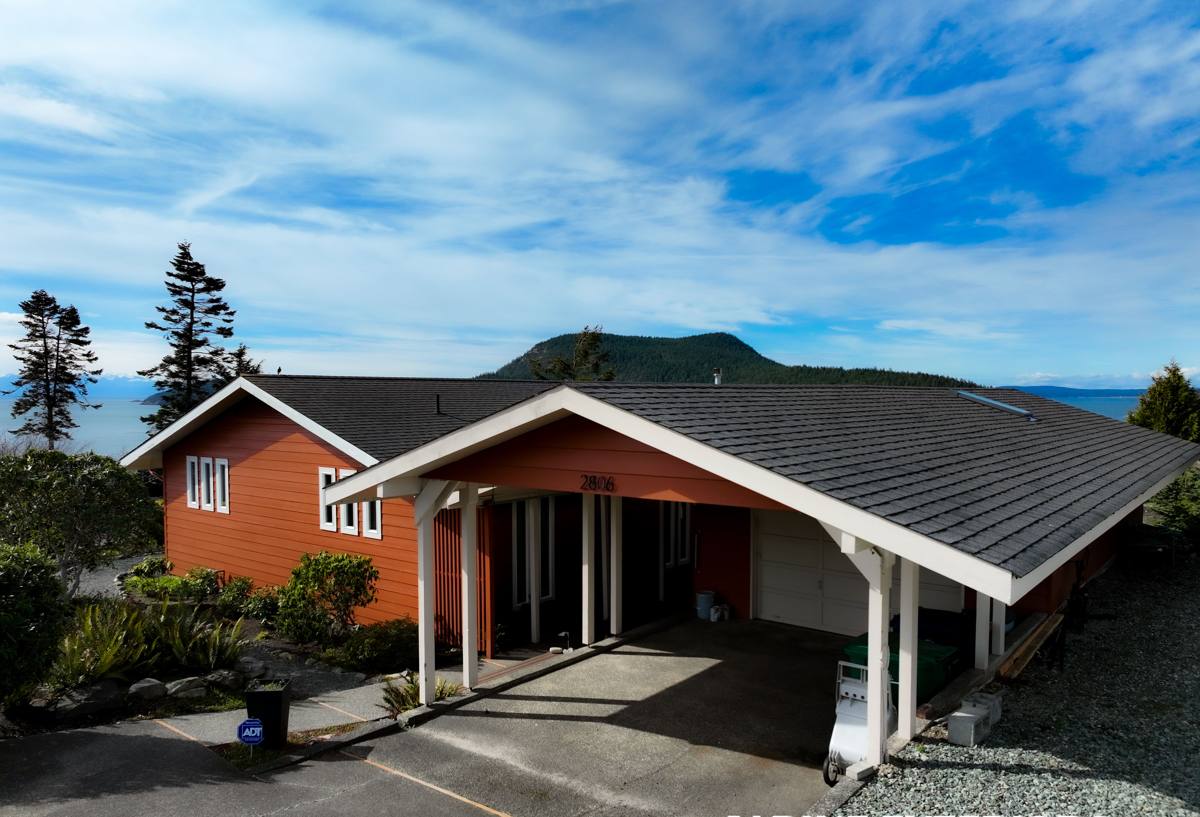
What Salt Air and Driving Rain Actually Do to a Home
Salt Air
Airborne salt doesn't need to be a dramatic coastal storm to cause wear — a steady, low-level exposure over years is what does the damage. It accelerates corrosion on exposed fasteners, flashing, and metal roofing components, and it degrades paint and coatings faster than homes further inland. Materials that aren't engineered to handle that kind of exposure tend to show it first at fastener heads, corners, and any spot where two materials meet.
Driving Rain
Bellingham's rain rarely falls straight down. Wind off the bay pushes it sideways, which means it finds its way into laps, seams, and penetrations that would stay dry in a calmer climate. Siding systems and roofing details that rely on gravity alone to shed water — rather than being installed with proper laps, flashing, and drainage planes — are the ones that end up with hidden moisture problems behind the wall or under the roofing.
Moss and Algae
Shade, moisture, and mild temperatures are exactly what moss and algae need to thrive, and Columbia's tree cover and marine humidity give them plenty of both. On roofs, moss lifts shingles and holds water against the roof deck. On siding, algae staining is mostly cosmetic but signals a surface that's staying damp longer than it should — which, on the wrong material, can be an early warning sign of deeper moisture retention.
Siding: Why We Only Install James Hardie
We install James Hardie fiber cement siding exclusively. We don't install vinyl, LP SmartSide, Cemplank, Allura, or primed wood species like spruce or cedar — not because those products don't have a place in the market, but because after years of exterior work in this specific climate, we don't think they hold up the way homeowners expect them to, and we'd rather stand behind one system we trust than offer several we don't.
Vinyl
Vinyl is affordable and low-maintenance in dry climates, but it's a plastic product that expands, contracts, and can become brittle with temperature swings, and it's not rated to resist wind-driven rain intrusion the way a properly installed fiber cement system is. In a marine environment like Columbia's, we see it warp, fade unevenly, and rely heavily on perfect installation to keep water out — there's little margin for error.
LP SmartSide, Cemplank, and Allura
LP SmartSide is an engineered wood product — treated to resist moisture, but still wood at its core, which means it's more vulnerable to swelling, edge damage, and rot than fiber cement if water gets past the coating, especially in a climate that stays damp for months at a stretch. Cemplank and Allura are also fiber cement, and reasonable products, but their installation specs, warranty structures, and factory finish quality vary from what we've standardized on with Hardie, and we'd rather have one system our crews know inside and out.
Primed Wood (Spruce, Cedar)
Real wood siding is beautiful, and cedar in particular has a long history in this region. But primed wood requires ongoing maintenance — repainting, caulking, and vigilance against rot — that most homeowners underestimate, and in a salt-air, high-moisture neighborhood, that maintenance cycle only gets more demanding.
Why James Hardie
James Hardie fiber cement is non-combustible, doesn't swell or rot the way wood-based products can, and its ColorPlus factory finish is baked on for a more consistent, longer-lasting color than field-applied paint. Hardie also engineers specific product lines (its HZ5 line, for example) for harsher climate zones, which matters in a place with sustained wet weather and salt exposure. It carries a strong transferable limited warranty, which protects the investment if the home changes hands. None of that replaces correct installation — flashing, clearances, and fastening still have to be done right — but it gives us a material foundation we're confident stands up to what Columbia's climate throws at it.
Roofing in a Moss-Prone, Rain-Heavy Neighborhood
Roofing work in Columbia has to account for both volume and duration of rain, plus the moss and algae pressure that comes with shaded, tree-lined lots. That means:
- Proper underlayment and ice-and-water-shield detailing at eaves, valleys, and penetrations, not just at code minimums
- Flashing sized and installed for sustained wind-driven rain, not just vertical rainfall
- Ventilation that lets the roof deck dry out between rain events instead of staying perpetually damp
- Material choices and, where appropriate, zinc or copper strips that help slow moss regrowth
We also do straightforward roof repair — replacing damaged flashing, fixing moss-lifted shingles, and addressing leaks before they turn into deck or interior damage — for homeowners who aren't ready for a full replacement yet.
Windows: Sealing Out Wind-Driven Moisture
Old, single-pane, or poorly flashed windows are one of the most common places we find water intrusion on Columbia homes. Wind-driven rain off the bay finds gaps around window openings that a calmer climate would never expose. When we replace windows, we pay as much attention to the flashing and integration with the surrounding wall assembly as we do to the window unit itself — a great window installed with poor flashing details will still leak.
Decks: Built for Constant Damp
Outdoor living spaces in Columbia deal with the same shade and moisture pressure as roofs and siding. Decking materials and structural components need to handle standing moisture, resist rot at ground contact and fastener points, and be built with drainage in mind so water doesn't pool against ledger boards or framing. We build and repair decks with that reality in mind rather than treating them as a dry-climate afterthought.
Cost Factors for Columbia Homeowners
Every home and project is different, but these are the main variables that drive cost on exterior work in this neighborhood:
| Factor | Why It Matters Here |
|---|---|
| Home size and wall complexity | More corners, gables, and trim details mean more labor and material |
| Existing damage or rot | Moisture-related damage from prior siding or roofing found during tear-off adds repair scope |
| Access and lot conditions | Mature trees, tight lots, and slopes common in Columbia can affect staging and labor time |
| Material and product line | Hardie's HZ5 climate-engineered products and specific ColorPlus colors vary in cost |
| Roof pitch and moss remediation | Steeper roofs and heavier moss buildup add time and safety considerations |
Why a Local Crew Matters
A contractor who works across Whatcom County day in and day out understands how Bellingham's bay-side exposure differs from a project a few miles inland, and that shapes real decisions — flashing details, material selection, and where to focus attention on a Columbia home. Local crews also mean faster response for repairs, familiarity with Bellingham's permitting and inspection process, and accountability that comes from working in the same community you live in.
What to Look for Before Hiring
- Proper licensing, bonding, and insurance for Washington contractors
- Manufacturer training or certification for the siding system being installed
- A written scope of work detailing flashing, underlayment, and drainage plane details — not just "install siding"
- Willingness to explain product trade-offs honestly, not just upsell the most expensive option
- Local references and a track record of work in similar coastal or marine-exposure neighborhoods
If you're noticing moss buildup, fading or warping siding, or moisture concerns on a Columbia home, we're happy to take a look and walk you through honest options. Reach out for a free, no-pressure estimate on siding, roofing, windows, or deck work.