 Bellingham Exterior
 Building for Birch Bay's Coastline, Not Against It
Birch Bay sits right on the water, and that changes what a house needs from its exterior. Homes a mile inland in Bellingham deal with plenty of rain, but Birch Bay properties also take on salt-laden air, near-constant wind off the water, and the kind of driving rain that finds every gap in a wall system. We've worked on enough homes along this stretch of Whatcom County shoreline to know that what holds up in a sheltered neighborhood doesn't always hold up a few hundred yards from the beach.
This page walks through what Birch Bay's climate actually does to siding, roofing, windows, and decks, and how we approach each one differently because of it. We're not going to pretend every product performs the same way out here — it doesn't, and pretending otherwise is how homeowners end up redoing work sooner than they should.
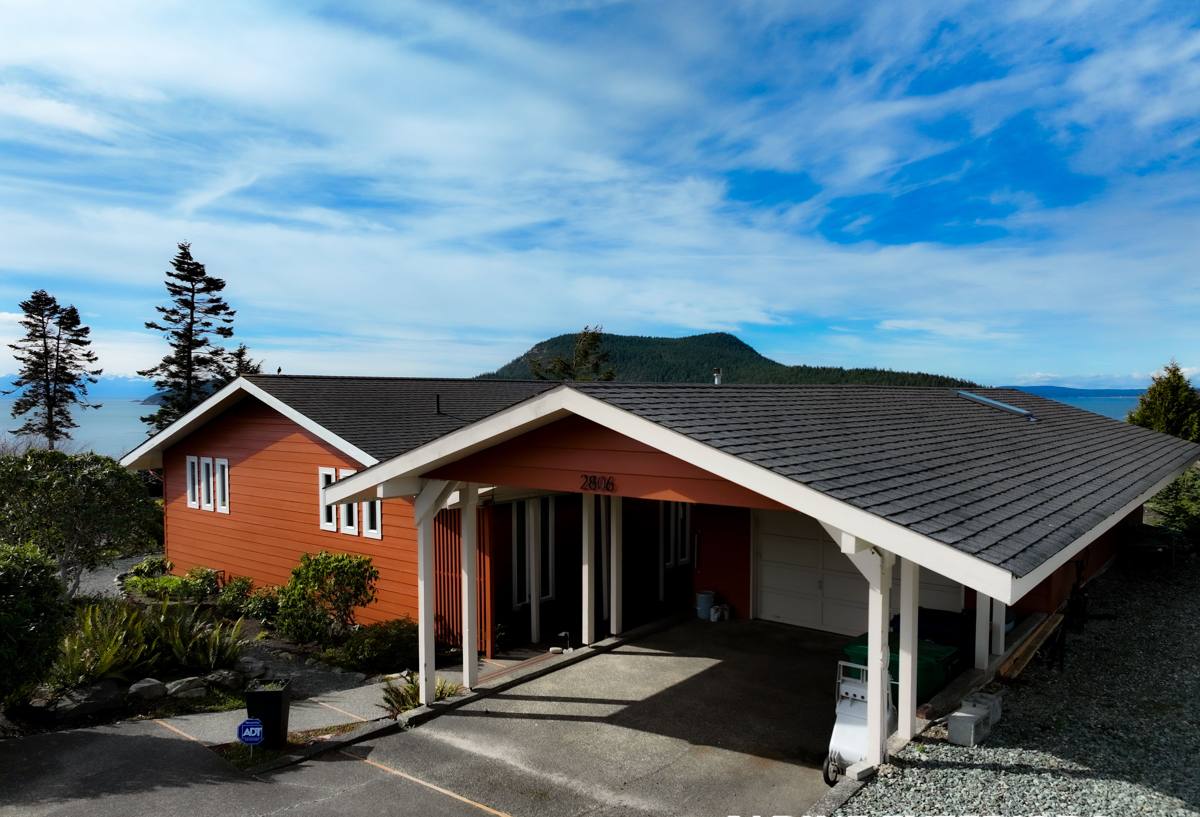
What the Salt Air and Marine Exposure Actually Do
Salt and Metal Fatigue
Airborne salt accelerates corrosion on anything metal — fasteners, flashing, gutter systems, and hardware. On a house set back from the water this is a slow background process. Right along Birch Bay's waterfront and the streets closest to it, it moves faster. Fasteners that would last decades elsewhere can start showing rust streaks and weakening years earlier if the wrong grade of material was used or if flashing details weren't sealed properly to begin with.
Driving Rain and Wind-Driven Moisture
Wind off the water doesn't just bring rain straight down — it pushes it sideways, into laps, seams, and any siding joint that isn't properly flashed and caulked. That's a different stress than a typical inland rainstorm, and it's why installation detailing (not just the material itself) matters so much for homes in this area.
The Long Moss Season
Northwest Washington's moss season already runs long compared to most of the country, and Birch Bay's combination of shade, humidity, and moisture retention on north-facing roof slopes and siding can stretch it further. Moss holds water against the surface it's growing on, and that constant dampness is hard on roofing materials and can work its way into siding seams and trim over time if it isn't kept in check.
Siding for a Coastal Environment
This is where the difference between products actually shows up, not just on a spec sheet but on the wall in year eight or year fifteen.
Why We Only Install James Hardie Fiber Cement
We've made a deliberate decision as a company to install only James Hardie fiber cement siding, and Birch Bay's exposure is a good example of why. Hardie's HZ5 product line is engineered specifically for climates with heavy moisture exposure — it resists moisture-related swelling, doesn't provide a food source for the algae and moss that thrive in this kind of humidity, and holds its ColorPlus factory finish without the repeated repainting that wood and some engineered wood products require. It's also non-combustible, which matters given how many Birch Bay homes sit close to dry brush and tree cover during summer months.
What We Don't Install, and Why
We don't install vinyl, LP SmartSide, primed spruce, cedar, or composite panels like Cemplank or Allura. Each of these has legitimate strengths — vinyl is inexpensive, wood has real curb appeal, engineered wood products install quickly — but each also has a real-world trade-off that matters more in a marine environment than it does inland:
- Vinyl can warp or become brittle with sustained UV and temperature swings, and its seams are more vulnerable to wind-driven rain intrusion than a properly lapped fiber cement system.
- LP SmartSide is a wood-strand product with an engineered coating; if that coating is compromised at a cut edge or fastener point, the wood substrate underneath is vulnerable to the kind of sustained moisture Birch Bay sees.
- Cedar and primed spruce look great fresh but require an ongoing maintenance commitment — restaining, recaulking, and monitoring for rot — that's demanding even inland and more so with constant salt humidity.
- Cemplank and Allura are also fiber cement, so the base material shares some of Hardie's strengths, but we've standardized on Hardie specifically for its factory finish warranty, its climate-specific HZ engineering, and consistency of supply and color-match availability for repairs down the road.
None of this means these products are junk. It means that after years of installing and repairing exteriors on this coastline, we decided we'd rather stand behind one system we trust completely than offer several and hedge.
Roofing That Handles Wind, Rain, and Moss Together
A roof in Birch Bay has to do three jobs at once: shed heavy, wind-driven rain, resist the uplift that comes with coastal gusts, and resist moss colonization on shaded slopes. That means paying close attention to underlayment quality, proper flashing at every penetration and valley, and fastening patterns rated for wind exposure — not just whatever the minimum code requires. We also talk with homeowners about proactive moss management, because a roof that's cleaned and treated on a regular schedule will consistently outlast one that isn't, regardless of the shingle brand on it.
Windows: Sealing Out Wind-Driven Moisture
Older windows in this area are often the first thing to show water intrusion, because failed seals and worn weatherstripping let wind-driven rain in around the frame rather than through the glass itself. When we replace windows on a Birch Bay home, we're as focused on the flashing and sealing details around the rough opening as we are on the window unit itself — a great window installed with poor flashing will still leak. For homes closest to the water, we also talk through glass and frame options that hold up better against sustained condensation and temperature swings between a cold marine morning and an afternoon with direct sun.
Decks: Built for Wet Wood Framing and Salt Exposure
Decks in Birch Bay face a double challenge: ground and air moisture from the marine environment, plus salt exposure if the deck faces the water directly. Fastener choice matters here as much as decking material — coastal-grade or stainless fasteners resist the corrosion that standard galvanized hardware can succumb to faster in this air. Proper ventilation underneath the deck structure and correctly flashed ledger connections are what actually determine whether a deck lasts fifteen years or thirty, more than the decking surface material itself.
Comparing Exterior Materials for Marine Exposure
| Material | Moisture Performance | Maintenance Burden | Typical Lifespan Consideration |
|---|---|---|---|
| James Hardie Fiber Cement | Strong — engineered for high-moisture climates (HZ5) | Low — factory finish, no regular repainting | Long, with strong transferable warranty |
| Vinyl Siding | Seams vulnerable to wind-driven rain | Low, but limited repair/color options over time | Moderate; UV and temperature stress over years |
| LP SmartSide / Engineered Wood | Coating-dependent; cut edges are a risk point | Moderate — inspection of seams and edges needed | Moderate, coating-dependent |
| Cedar / Primed Spruce | Absorbent; needs consistent sealing | High — restaining, recaulking on a schedule | Variable, maintenance-dependent |
| Other Fiber Cement (Cemplank, Allura) | Strong base material performance | Low | Long, warranty terms vary by manufacturer |
Why a Local Crew Matters Here
Exterior work in Birch Bay isn't the same job as exterior work in a sheltered inland neighborhood, and a crew that doesn't work this coastline regularly can miss the details that matter most — the flashing overlaps, the fastener grade, the caulking that needs to handle sideways rain instead of straight-down rain. We're based in Bellingham and work across Whatcom County, including the coastal communities like Birch Bay where the exposure is more demanding. That means we're not learning these lessons on your house; we've already applied them on others nearby.
A Simple Homeowner Checklist for Coastal Exteriors
- Inspect roof slopes each fall for moss buildup, especially on shaded, north-facing sections
- Check siding seams and trim joints for gaps after major windstorms
- Look for rust staining around fasteners, flashing, and gutter hardware
- Test windows for drafts or moisture at the frame edges, not just the glass
- Confirm deck ledger boards and under-deck framing stay ventilated and dry
- Rinse accumulated salt residue off siding and windows periodically if you're close to the water
What to Expect From an Estimate
When we come out to a Birch Bay property, we're looking at more than the surface material — we're checking flashing details, fastener condition, moisture staining, and how the house is actually holding up against the specific exposure it faces. That's true whether you're asking about a full siding replacement, a roof nearing the end of its service life, window upgrades, or a deck that needs attention. We'll give you a straight assessment of what's driving any problems we find and what your realistic options are, without pushing a product that isn't right for the site.
If you'd like a free, no-pressure estimate on your Birch Bay home's siding, roofing, windows, or deck, the form below is the easiest way to get started.