 Bellingham Exterior
 Exterior Work Built for Blaine's Coastline
Blaine sits right on the water at the northern edge of Whatcom County, close enough to the Strait of Georgia that salt air is part of daily life for most homes in town. That's a different exposure than what a house in downtown Bellingham deals with. Add in the driving rain that comes off Semiahmoo Bay during winter storms and the long stretch of gray, damp months that let moss and algae take hold on anything north-facing, and you've got a climate that is genuinely harder on exterior materials than people expect. We've worked on homes up and down this stretch of coastline, and the pattern is consistent: whatever's on the outside of the house needs to handle salt, water, and shade all at once, for months at a time.
This page covers how our siding, roofing, window, and deck work applies specifically to Blaine conditions, and what we look for when we're out at a property in this part of the county.
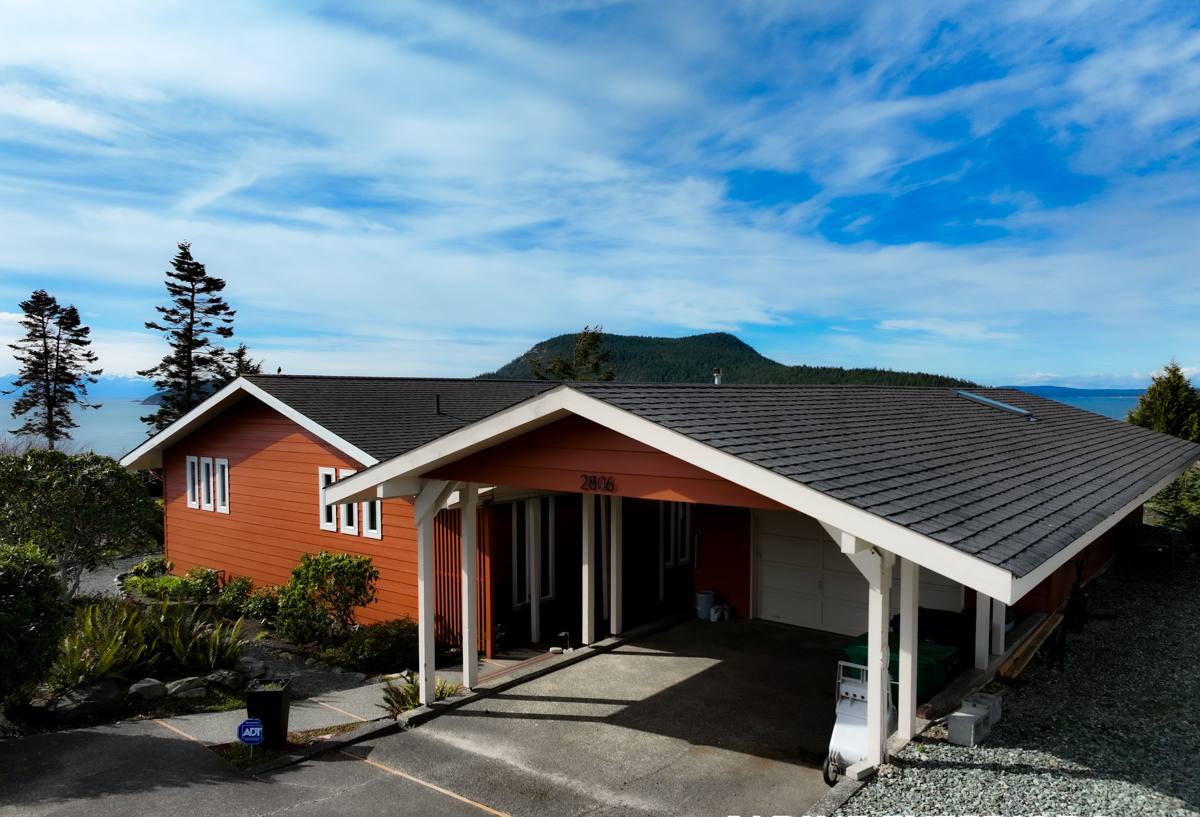
What Blaine's Climate Does to a House
Salt Air
Homes closer to the water take on airborne salt that settles on siding, trim, gutters, and metal fasteners. Over years, that salt exposure accelerates corrosion on anything not rated for it and can speed up the breakdown of paint films and lower-grade siding materials. It's not dramatic — it's slow, cumulative wear that shows up as premature fading, chalking, or corrosion around fastener heads.
Driving Rain and Wind
Blaine gets wind-driven rain off the water, which pushes moisture into joints, laps, and seams that would stay dry on a more sheltered inland lot. This is a water-management problem more than anything else — flashing, house wrap, and lap details all matter more here than they would on a protected site.
Moss and Algae Season
Whatcom County's wet season runs long, and north- and east-facing walls, shaded rooflines, and anything under tree cover stay damp for extended stretches. That's exactly the environment moss, algae, and mildew need to establish. On roofs it shows up as dark streaking and, over time, moisture holding under shingles. On siding it shows up as green or black staining that's hard to fully scrub out of porous or fibrous materials.
Siding in Blaine: Why We Only Install James Hardie
Siding takes the brunt of Blaine's climate — salt, rain, and moss all hit it directly, year-round. That's why we standardized on James Hardie fiber cement and don't install vinyl, LP SmartSide, Cemplank, Allura, or wood siding like primed spruce or cedar. Every one of those products has legitimate strengths, but each also has a trade-off that we think matters more on a coastal Whatcom County home than it would somewhere drier and more sheltered.
- Vinyl is affordable and low-maintenance, but it can become brittle in cold snaps, fades over time in UV exposure, and isn't a moisture-managed product the way fiber cement is — water that gets behind it has nowhere structured to go.
- LP SmartSide, Cemplank, and Allura are wood-strand or fiber cement competitors with real merits, but each has installation and moisture-performance nuances that don't line up with what we've seen hold up best on exposed coastal walls near the water.
- Cedar and primed spruce look great on day one, but wood siding demands an ongoing maintenance commitment — recoating, caulking, and watching for rot — that most homeowners underestimate until moss and moisture start working on it.
James Hardie fiber cement is non-combustible, engineered specifically for wet climates in its HZ5 product line, and finished with the ColorPlus factory paint system, which resists fading and holds up better against salt air than field-applied paint. It doesn't feed mold or moss the way wood fiber does, and Hardie backs it with a strong transferable warranty. None of that means Hardie is maintenance-free — it still needs to be installed to spec, with correct clearances, flashing, and caulking — but of everything on the market, it's what we're willing to put our name behind on a house that's going to sit exposed to Blaine's weather for decades.
Siding Material Comparison
| Material | Coastal/Salt Performance | Moisture & Moss Resistance | Maintenance |
|---|---|---|---|
| James Hardie Fiber Cement | Strong — ColorPlus finish resists salt-driven fading | Non-combustible, doesn't feed mold/moss growth | Low — occasional wash, no recoating |
| Vinyl | Fair — can fade and become brittle over time | Not moisture-managed; water can get trapped behind panels | Low, but limited repair options |
| Cedar / Primed Spruce | Weak without diligent upkeep | Absorbs moisture, prone to rot and moss in shaded areas | High — regular recoating and inspection |
| LP SmartSide / Wood-Strand Composites | Moderate, installation-sensitive | Requires careful sealing at cuts and edges | Moderate |
Roofing for a Wet, Mossy Climate
A Blaine roof spends a lot of its life damp. That means flashing, underlayment, and ventilation details carry more weight here than in a drier climate. Poor attic ventilation combined with prolonged moisture leads to the kind of moss growth that eventually lifts shingle edges and traps water underneath, which is where slow leaks and premature wear usually start. When we're on a roof in this area, we're paying close attention to valleys, chimney and vent flashing, and how well the roof is shedding water toward the gutters rather than letting it pool.
Routine moss removal and gutter clearing go a long way toward extending roof life here — it's one of the cheapest things a homeowner can do, and one of the most commonly skipped.
Windows: Sealing Out Wind-Driven Rain
Wind-driven rain off the water finds any weak point in a window installation — gaps in flashing, degraded caulking, or old sash seals. In Blaine, we see more of this kind of water intrusion around windows than we do on more sheltered inland properties. Correct flashing integration with the wall assembly and quality weatherstripping matter as much as the window unit itself. Newer, properly sealed windows also cut down on the drafts and condensation that show up during the region's long damp winters.
Decks: Built to Handle Standing Moisture
A deck in Blaine deals with the same rain and shade issues as siding and roofing, but with the added factor of horizontal surfaces where water sits longer. Decking material, board spacing, and substructure ventilation all affect how quickly a deck dries out between storms. Composite decking tends to handle this long wet season with less upkeep than untreated wood, but any deck — composite or wood — needs proper drainage underneath and regular clearing of leaves and debris that trap moisture against the boards.
What a Local Crew Notices That an Out-of-Area Contractor Might Miss
- Which sides of a Blaine home take the worst of the wind-driven rain off the water, and where flashing details need extra attention
- How much shade a lot gets and what that means for moss pressure on the roof and north-facing siding
- Salt exposure differences between waterfront lots and homes set back a few blocks
- Seasonal timing — knowing when Whatcom County's wet season makes certain exterior work impractical, and planning around it
Signs Your Exterior Needs a Look
- Green or black staining on siding, especially on shaded or north-facing walls
- Dark streaking or visible moss patches on the roof
- Soft spots, peeling paint, or swelling around window trim or wood siding
- Water stains on interior ceilings near roof valleys or chimneys
- Deck boards that stay damp long after rain has stopped, or soft/spongy spots underfoot
- Gutters overflowing or pulling away from the fascia
Cost Factors for Blaine Homeowners
Every property is different, but a few factors tend to move the needle most on exterior projects in this area:
| Factor | Why It Matters in Blaine |
|---|---|
| Proximity to the water | Homes closer to the shoreline face heavier salt exposure and may need more corrosion-resistant fasteners and trim |
| Tree cover and shading | Shaded walls and roof sections need more moss-resistant materials and more frequent cleaning |
| Existing moisture damage | Rot or trapped water behind old siding or roofing adds repair scope before new material goes on |
| Access and site conditions | Waterfront and hillside lots can affect staging, scaffolding, and material delivery |
Get a Free Estimate
If you're seeing moss buildup, staining, or wear on your Blaine home's siding, roof, windows, or deck, we're happy to take a look and give you an honest read on what's going on and what it would take to fix it. There's no pressure and no obligation — just a straightforward assessment from a crew that knows what this coastline does to a house. Use the form below to request a free estimate.