 Bellingham Exterior
 Why Decks in Blaine Wear Differently Than Decks Inland
Blaine sits right on the water at the top of Whatcom County, and that location shapes everything about how a deck ages there. Homes closer to the shoreline deal with salt-laden air moving in off the water almost year-round, on top of the same driving rain and long, gray moss season that the rest of the Bellingham area gets. The combination is harder on wood, fasteners, and hardware than what you'd see on a deck twenty miles inland. We've repaired enough decks around Blaine to know the failure patterns are consistent: corroded fasteners before the boards themselves look bad, moss and algae holding moisture against the surface for months at a stretch, and ledger connections that were fine when the deck was built but have quietly loosened over the years.
None of this means a Blaine deck is doomed — it means it needs to be built and repaired with that exposure in mind, not treated like a deck in a dry climate. That's the difference between a repair that lasts a few seasons and one that lasts the life of the structure.
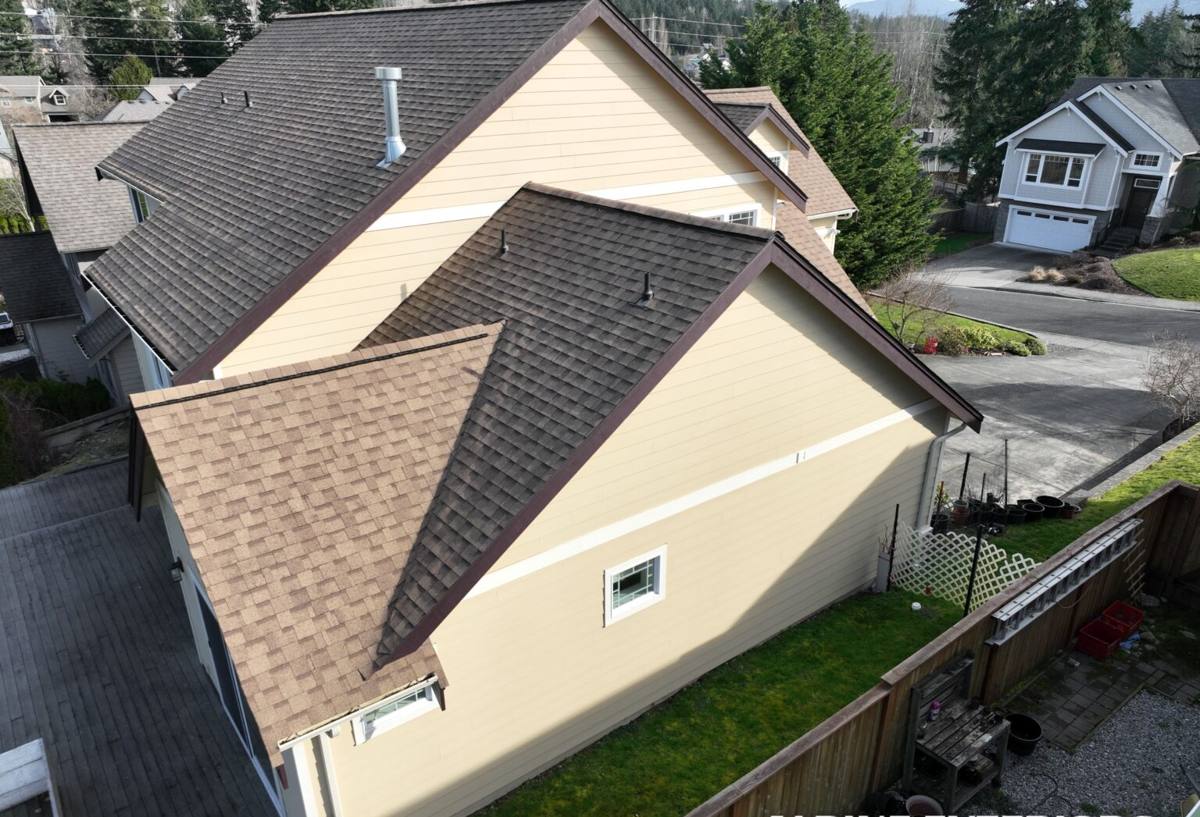
What Salt Air, Rain, and Moss Actually Do to a Deck
Salt air and metal fasteners
Salt in the air accelerates corrosion on nails, screws, joist hangers, and structural connectors. Standard fasteners that would hold up fine inland can start rusting and weakening years earlier in a coastal-influenced spot like Blaine. Corroded fasteners are one of the most common things we find during a repair call — often before the deck boards themselves show much wear, which is why a deck can look okay on top while losing structural integrity underneath.
Driving rain and end-grain saturation
Whatcom County rain doesn't just fall straight down — wind-driven rain gets pushed sideways into the undersides of deck boards, into fastener holes, and into the cut ends of boards where the wood is most absorbent. Repeated soaking and drying cycles are what cause cupping, splitting, and the slow rot that shows up first at board ends and around post bases.
Moss, algae, and trapped moisture
The long moss season here means organic growth gets a real foothold on any deck surface that stays shaded or doesn't dry out quickly — under railings, along the north side of a house, near overhanging trees. Moss and algae hold moisture against the wood far longer than open, sun-exposed boards, which softens the surface and creates the conditions for rot to start. It's also slick underfoot, so it's a safety issue as much as a maintenance one.
Signs a Blaine Deck Needs Repair, Not Just Cleaning
A lot of homeowners power-wash a deck, watch it look better for a season, and assume the problem is solved. Surface cleaning and structural repair are two different things, and it's worth knowing which one you actually need. Look for:
- Soft or spongy spots when you press on decking boards, especially near the house or at board ends
- Visible rust streaking around screws, nails, or joist hangers
- Gaps or movement where the deck framing meets the house (the ledger board connection)
- Railings or posts that flex or wobble more than they used to
- Persistent moss or dark staining that comes back within weeks of cleaning
- Boards that have cupped, split lengthwise, or pulled away from fasteners
- Stairs that feel less solid, or treads with visible give
Any one of these can be an isolated fix. Several together usually mean the deck needs a fuller structural look before anything cosmetic is worth doing.
What a Correct Deck Repair Actually Involves
A repair that just replaces the boards you can see and skips everything underneath tends to fail again within a few years in this climate. We approach deck repair in three layers, in order:
1. Structure first
This means checking the ledger board attachment to the house, the condition of the support posts and footings, joist spacing and condition, and any flashing at the ledger connection. Flashing in particular is easy to overlook and is one of the most common places we find hidden rot, because it's the point where the deck meets the house and water intrusion does the most damage if it's not sealed correctly.
2. Fasteners and hardware
Given how much salt air accelerates corrosion locally, we replace compromised fasteners and hardware with corrosion-resistant options rated for coastal exposure, not just whatever matches what was there before. Reusing corroded hardware to save a step is the kind of shortcut that shows up again as a service call in two or three years.
3. Decking and railings
Only once the structure and hardware are sound does it make sense to address the visible surface — replacing rotted or cupped boards, resetting loose railings, and fixing stair treads. Doing this step first, without addressing what's underneath, is how you end up with a good-looking deck sitting on a compromised frame.
Repair vs. Replacement: How We Help You Decide
Not every deck problem calls for a full rebuild, and not every deck is worth patching indefinitely. Here's the general framework we use when we're out on a Blaine property:
| Factor | Leans toward repair | Leans toward replacement |
|---|---|---|
| Structural framing | Solid, dry, no rot at ledger or posts | Rot or corrosion at multiple structural points |
| Age of deck | Under 15-20 years, built to code | Older, or never properly flashed/attached |
| Extent of damage | Isolated boards, localized moss/rot | Damage spread across most of the surface |
| Fastener condition | Mostly sound, some spot corrosion | Widespread rust, hangers failing |
| Homeowner goals | Extend usable life a number of years | Want a different layout, size, or material |
We'll always tell you honestly which side of that line your deck falls on. A repair that's really a stopgap on a failing structure isn't a good use of your money, and we'll say so rather than patch it and let it become someone's problem later — including ours, on a return visit.
How We Handle a Blaine Deck Repair, Start to Finish
- Inspection: We walk the full deck — top, underside, posts, footings, and the ledger connection — and check moisture levels in the framing where rot is suspected, not just what's visible from above.
- Honest scope: You get a clear rundown of what's structural, what's cosmetic, and what can reasonably wait. We separate "needs fixing now" from "worth watching."
- Written estimate: A straightforward breakdown of the work and materials, with no vague allowances that turn into surprise add-ons later.
- Repair work: Structure and hardware first, then decking and railings, following the order described above.
- Final check: We confirm connections are solid, boards are properly fastened and spaced for drainage, and nothing was left half-addressed.
Materials and Fasteners: Our Standards for Coastal Exposure
What we use for a repair in Blaine isn't automatically the same as what we'd use inland, and that's a deliberate choice, not an upsell. Standard-grade fasteners and connectors are rated for general use, but they're not the right match for a location with regular salt air exposure — they corrode faster, and once a fastener weakens, the connection it's holding weakens with it. We use corrosion-resistant fasteners and hardware suited to coastal conditions on repair work in this area as a matter of standard practice, not as an add-on option.
The same logic applies to how we handle flashing at the ledger board. It's inexpensive material, but it's the single most important detail in preventing hidden rot at the point where the deck meets the house, and it's not something we'll skip to save time on a repair.
After the Repair: Keeping Moss and Moisture From Coming Back
A good repair buys you time, but this climate doesn't stop working on your deck once we leave. A few habits make a real difference in how long the repair holds up:
- Clear leaves, needles, and debris out of gaps between boards regularly, especially heading into fall
- Rinse or gently clean moss and algae off the surface before it gets a strong foothold — waiting until it's thick makes it harder to remove without damaging the wood
- Keep gutters and downspouts near the deck clear so water isn't dumping directly onto or under it
- Check railings and stair connections once or twice a year for looseness, since seasonal wood movement can work fasteners loose over time
- Trim back vegetation that's shading the deck and keeping it damp longer than the rest of the yard
None of this is complicated, but skipping it is exactly how a repaired deck ends up needing the same work again in a few years.
Why a Crew That Already Works Blaine Makes a Difference
Deck repair isn't a one-size-fits-all trade. A contractor who mostly works drier, inland sites can miss the specific failure patterns that show up on a deck exposed to Blaine's salt air and coastal weather — they'll fix what's visibly broken and miss the corroded hardware or the flashing gap that caused it. Working regularly in and around Bellingham and Whatcom County means we're used to diagnosing those patterns quickly, because we've seen them on enough decks in similar conditions to know where to look first.
It also means we're realistic about timing. Deck repair work in this region goes smoother in drier stretches of the year, and a crew familiar with the local weather can plan around that instead of getting caught mid-repair by a soaking system rolling in off the water.
Get a Straight Answer on Your Deck
If your deck in Blaine has soft spots, rusting hardware, persistent moss, or just feels less solid than it used to, it's worth having someone look at it before those small issues become a full rebuild. We offer free, no-pressure estimates — we'll tell you honestly what needs fixing, what can wait, and what it'll take to do it right. Use the form below to get a time on the calendar.