 Bellingham Exterior
 Cedar Looks Great on Day One. Let's Talk About Year Ten.
Cedar siding has a following for good reason. It's a real wood product with genuine grain, it smells the way a lumberyard smells, and when it's freshly installed and finished, it's one of the best-looking sidings you can put on a house. We're not going to pretend otherwise. But we're a Bellingham exteriors contractor that installs only James Hardie fiber cement siding, and cedar is one of the products we've chosen not to put our name on. This page explains why, specifically in the context of Whatcom County's climate, not as a knock on cedar as a material.
If you're weighing cedar against fiber cement for a home in Bellingham, Fairhaven, Sudden Valley, or anywhere in between, the decision really comes down to how much ongoing maintenance you're willing to commit to and how the wood will behave against the specific weather this corner of Washington throws at it year-round.
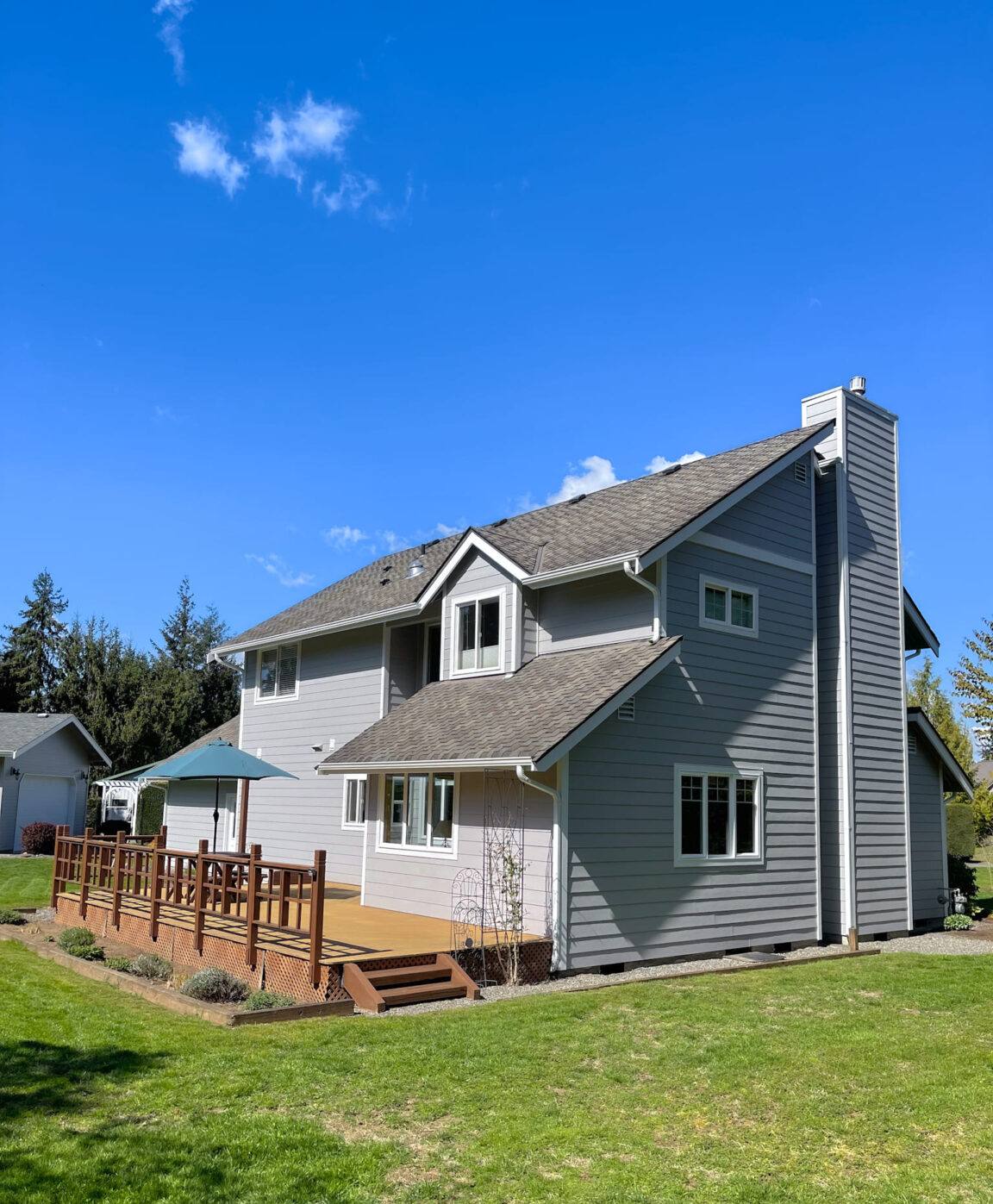
What Cedar Actually Gets Right
To be fair to the product: cedar has natural oils that give it some inherent resistance to rot and insects compared to other softwoods, it's a renewable material, it takes stain and paint well when properly prepped, and it can be repaired or replaced board-by-board if a section gets damaged. Architecturally, cedar shingle and shake siding has a texture that fiber cement lap siding doesn't try to fully replicate. If low maintenance were not a factor at all, cedar would be a defensible choice on looks alone.
The problem isn't the wood in a vacuum. It's the wood in Bellingham's specific weather pattern, over a 20-30 year ownership timeline, with realistic homeowner maintenance habits.
Bellingham's Climate Is Not Kind to Exposed Wood
Whatcom County sits in a spot where three separate stressors stack on top of each other: salt-laden air off Bellingham Bay and the Strait of Georgia, long stretches of driving, wind-blown rain especially on west and south-facing walls, and a moss and algae season that, realistically, runs most of the year given our overcast, damp conditions. Any one of those is manageable for wood siding with regular attention. All three together mean cedar in this area needs more upkeep than the same product would need in a drier or less coastal climate.
Salt air accelerates the breakdown of finishes faster than inland environments, which shortens the practical window between recoats. Driving rain finds its way into end grain, seams, and any spot where caulking has started to fail, and wood swells and contracts with moisture in a way that fiber cement doesn't. And moss doesn't just sit on the surface cosmetically — it holds moisture against the wood and, over years, that trapped dampness is what actually causes rot, not the rain itself.
The Maintenance Cedar Actually Requires
This is the part that doesn't always get explained clearly at the point of sale. Cedar siding is a maintain-forever product, not a maintain-once product. Here's what that looks like in practice for a Bellingham home:
- Refinishing (stain or paint) every 3-5 years on most exposures, sooner on south and west walls that take the brunt of sun and driving rain
- Annual or semi-annual washing to knock back moss and algae growth before it establishes itself in the grain
- Regular caulk inspection at seams, trim, and penetrations, since failed caulking is one of the most common entry points for moisture
- Prompt repair of any cracked, split, or cupped boards before they let water behind the siding
- Keeping vegetation and sprinklers pulled back so foliage and irrigation don't keep the siding perpetually damp
- Periodic inspection of the bottom courses and any ground-contact areas, which are the first place rot typically starts
None of that is unreasonable to ask of a homeowner who wants a wood exterior. But it's a real, recurring commitment — both in time and in the cost of professional refinishing if you're not doing it yourself. Skip a cycle or two, which happens constantly in real life, and you're not just behind on cosmetics. You're often looking at localized rot repair, which costs more than the maintenance you skipped would have.
What Happens When Maintenance Slips
We've refinished, repaired, and torn off enough wood siding on Bellingham homes to know the pattern. It's rarely dramatic — no one comes home to a wall falling off. It's gradual: a finish that starts looking chalky and thin, moss establishing itself in a shaded north corner, a seam that opens up slightly and lets moisture behind the board, and a few years later that section is soft when you press on it. By the time it's visibly a problem, the fix is usually board replacement and repainting a whole elevation to match, not a quick touch-up.
Cedar vs. James Hardie Fiber Cement: A Straight Comparison
| Factor | Cedar Siding | James Hardie Fiber Cement |
|---|---|---|
| Base material | Natural wood | Cement, sand, and cellulose fiber |
| Moisture behavior | Absorbs, swells, and can rot if not maintained | Engineered to resist moisture-related warping and rot |
| Refinishing cycle | Every 3-5 years, sooner on exposed walls | ColorPlus factory finish is warrantied for 15 years against fading and peeling |
| Moss/algae resistance | Low; wood grain gives moss something to grip | Higher; smoother factory-finished surface sheds growth more easily |
| Fire resistance | Combustible | Non-combustible |
| Typical lifespan installed to spec | Variable, heavily maintenance-dependent | Multiple decades with routine care |
| Warranty structure | Varies by installer; material itself carries limited coverage | Strong transferable manufacturer warranty |
The honest takeaway from that table isn't that cedar is a bad material — it's that cedar shifts more of the long-term burden onto the homeowner's maintenance schedule, while fiber cement shifts more of that burden onto the manufacturing and finishing process, before the siding ever goes on the wall.
Why We Standardized on James Hardie
We made a decision a while back to only install James Hardie fiber cement siding, and cedar is one of several products (alongside vinyl and some engineered wood options) that we explain rather than install. The reasoning is consistent across all of them: we want to stand behind what we put on a house for the long haul, and that's easier to do with a non-combustible, factory-finished product engineered specifically for wet, coastal climates like ours.
What Makes Hardie Different for This Climate
James Hardie's HZ5 product line is specifically formulated for climates with significant moisture exposure, which describes Whatcom County well. The ColorPlus factory finish is baked on under controlled conditions rather than applied on-site, which means more consistent coverage and a much longer runway before recoating is even a conversation. It's non-combustible, which matters more each year as wildfire smoke and dry-season risk become part of the conversation even here on the wet side of the state. And it comes with a strong, transferable warranty, which is worth something concrete if you sell the house within the coverage period.
None of that makes fiber cement maintenance-free. It still benefits from periodic washing and inspection like any exterior material. But the maintenance floor is meaningfully lower than cedar's, and that's the trade-off that matters most to us as the people installing it.
How to Think About This If You Already Have Cedar
If your home currently has cedar siding, this isn't a page telling you to panic or rip it off. Well-maintained cedar can last a long time, and a lot of Bellingham's older homes prove that. The questions worth asking yourself honestly are: are you actually keeping up with the refinishing cycle, is moss a recurring fight on your shadier walls, and are you finding soft spots or open seams when you inspect it. If the answer to any of those is "not really" or "yes," that's the point where a conversation about replacement — and what to replace it with — becomes worth having before a maintenance problem becomes a repair problem.
Quick Self-Check for Cedar Owners
- Has it been more than 5 years since the last full refinish?
- Is there visible moss or algae on north-facing or shaded sections?
- Do any boards feel soft, spongy, or show cupping when you press on them?
- Is caulking cracked or separated at seams and trim?
- Are sprinklers or landscaping keeping any section of the wall consistently damp?
If you're checking two or more of those boxes, it's worth having someone take a real look before deciding what to do next.
The Bottom Line
Cedar isn't a scam or a bad product — it's a wood siding that performs the way wood performs, which means it needs consistent attention, especially in a climate with as much salt air, driving rain, and moss pressure as Bellingham gets. We install James Hardie fiber cement because it's engineered to handle exactly those conditions with less ongoing maintenance and a stronger warranty behind it. If you're deciding between refinishing cedar again or replacing it with something built for this climate, we're happy to walk through what that actually looks like for your specific home.
If you'd like an honest, no-pressure look at your siding and what your options actually cost, we're glad to come take a look and give you a straight answer — no upsell, just the estimate below.