 Bellingham Exterior
 Fairhaven sits close to Bellingham Bay, and that proximity to the water shapes almost everything about how a home's exterior ages here. Salt-tinged marine air moves through the neighborhood year-round, Whatcom County's rain arrives in long driving stretches rather than short showers, and shaded lots under mature tree cover stay damp long enough for moss to become a permanent tenant rather than a seasonal nuisance. None of that is unique to any one street in Fairhaven — it's the character of living this close to Puget Sound in Western Washington — but it does mean an exterior built for a drier, calmer climate rarely holds up the way it's supposed to.
What Fairhaven's Location Does to a Home's Exterior
Being near the bay means airborne salt is a constant, low-level factor even on homes set back from the water. Salt accelerates corrosion on exposed fasteners, hinges, and hardware, and it keeps surfaces from fully drying out between rain events. Combine that with Bellingham's rain pattern — sustained, driving rain rather than brief downpours — and you get moisture that has time to work its way into every seam, lap joint, and butt joint that wasn't detailed correctly when the exterior went up.
Fairhaven's tree cover and hillside lots add another layer to the problem. North-facing walls, anything shaded by evergreens, and lower areas where air doesn't circulate well stay wet for extended stretches. That's exactly the condition moss, algae, and mildew need to establish themselves, and once they take hold on a wood-based or wood-look surface, they don't just sit there cosmetically — they hold moisture against the material and accelerate whatever deterioration is already underway.
Why This Matters More Than It Looks Like It Does
A lot of exterior damage in a climate like this starts small and stays hidden. A hairline gap at a butt joint, a fastener that's started to corrode, a section of trim that's held moisture for one too many winters — none of it looks urgent from the ground. By the time it's visible as peeling paint, soft wood, or a soft spot underfoot on a deck board, the underlying damage has usually been building for a while. That's the pattern we see repeatedly on Fairhaven homes, and it's the reason we think about exterior work in terms of moisture management first and appearance second — appearance follows naturally when the moisture management is right.
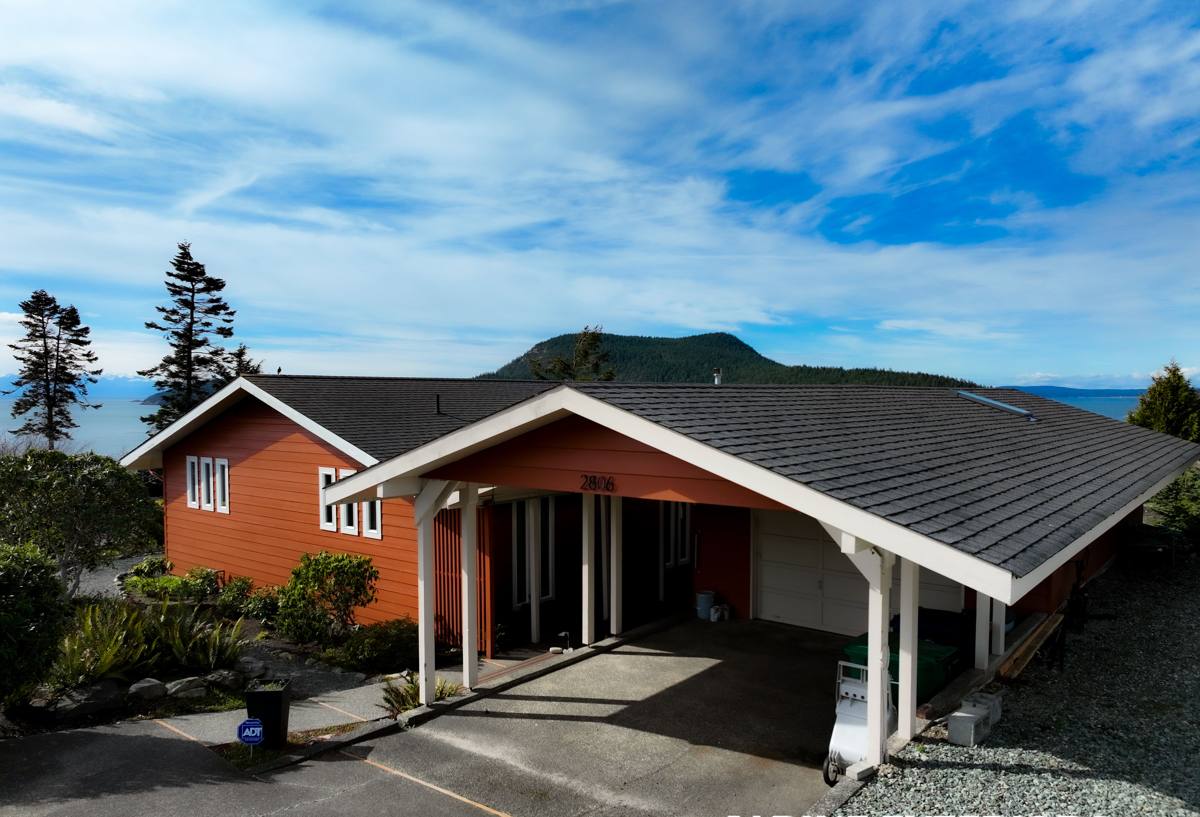
Why We Install Only James Hardie Fiber Cement
We don't install vinyl, LP SmartSide, Cemplank, Allura, primed spruce, or cedar. That's not a limitation in what our crew is capable of — it's a standard we hold ourselves to because of what we've seen these products do, and not do, in a marine climate like this one over the long run.
Vinyl expands and contracts with temperature swings in ways that open gaps at seams over time, and it's a petroleum-based product with real limits on fire resistance. Wood-based siding — whether that's engineered wood like LP SmartSide, primed spruce, or cedar — depends on an intact paint or coating layer to keep moisture out, and once that layer is compromised by driving rain, salt air, or sustained shade, the substrate underneath is exposed to exactly the kind of moisture cycling that leads to swelling, delamination, or rot. Other fiber cement brands share the same basic cement-and-cellulose chemistry as Hardie, but the ColorPlus factory finish, the climate-specific engineering, and the manufacturer warranty structure behind Hardie are what we've found actually hold up to inspection over a decade-plus, not just at year one.
James Hardie fiber cement is non-combustible, doesn't swell or delaminate the way wood-based products can when moisture gets into a seam, and the ColorPlus finish is factory-applied and warrantied against fading and chalking — the two things constant marine moisture and UV exposure do fastest to a painted surface. Hardie also builds region-specific HZ product lines engineered for climates like the Pacific Northwest's, which is a level of climate-matching most competing products simply don't offer. Paired with a strong transferable warranty and installation done to manufacturer spec, it's the product we're willing to put our name behind on a Fairhaven home.
How Hardie Compares to What We Won't Install
| Factor | James Hardie Fiber Cement | Vinyl | Wood-Based (LP, Cedar, Primed Spruce) |
|---|---|---|---|
| Moisture behavior | Doesn't absorb water or rot; cement-based core | Doesn't absorb moisture, but seams can open with expansion/contraction | Absorbs moisture once coating fails; prone to swelling and rot |
| Fire resistance | Non-combustible | Combustible (petroleum-based) | Combustible |
| Finish durability | Factory ColorPlus finish, warrantied against fading/chalking | Color molded in but can fade and chalk over time | Depends entirely on paint/coating maintenance |
| Climate engineering | Region-specific HZ product lines | Generally one-size-fits-all | Not climate-engineered |
| Long-term maintenance | Low — periodic caulk/paint touch-up at trim | Low, but seam and impact damage is hard to match/repair | Higher — repainting/recoating cycles required |
Our Full Exterior Scope in Fairhaven
Siding is usually the entry point for the conversation, but an exterior functions as one connected system, and we handle all of it:
- Siding: James Hardie fiber cement installation and replacement, with flashing, fastening, and clearance details built for this climate
- Roofing: Roof replacement and repair, with attention to how water sheds off the roofline onto the siding and trim below
- Windows: Replacement windows installed with correct flashing and sealing so water can't track behind new siding at the openings
- Decks: Deck construction and repair built to hold up under sustained wet-weather exposure and shaded, slow-drying conditions
We treat these as one project, not four separate ones. New siding installed over a roofline that dumps water onto the wall below just relocates the moisture problem instead of solving it, and windows that aren't flashed correctly can undercut even a well-installed Hardie job at the openings. Getting the intersections right — where roof meets wall, where window meets siding, where deck meets house — is where an exterior actually earns its long-term durability.
Why a Local Crew Matters in Fairhaven
Exterior work that holds up here comes down to details a generic install misses: how much direct rain exposure a given wall orientation actually gets so close to the bay, which walls are shaded enough to need extra attention to moss and mildew, how much clearance siding needs above grade given how slow the ground drains on shaded or low-lying lots, and how flashing needs to be layered so it keeps shedding water correctly through an entire wet season, not just on the dry day it was inspected.
A crew that works Bellingham and Whatcom County exteriors regularly starts to recognize these patterns from one property to the next. That shows up in decisions made on site — where a J-channel actually needs to sit, when caulk is the right call versus when only flashing will do, how a fastener schedule needs to adjust near the water — that a homeowner may never notice directly but will absolutely feel in how the exterior performs ten and fifteen years down the road.
Cost Factors to Understand Before You Budget
Every Fairhaven property is different, so we don't quote broad numbers without seeing the actual house, but the factors that drive cost up or down are consistent across most exterior projects here:
| Factor | Why It Matters |
|---|---|
| Current condition | Hidden rot or moisture damage found during tear-off adds repair work beyond the original scope |
| Home size and complexity | More corners, dormers, and trim detail mean more labor and material per square foot |
| Access and site conditions | Hillside lots, tight setbacks, and mature landscaping can slow staging and material handling |
| Product selection | Hardie panel, lap, and shingle profiles and ColorPlus color options carry different material costs |
| Scope bundling | Combining siding with roofing, window, or deck work in one project often reduces overlapping labor costs |
What to Expect if You're Considering a Project
Most Fairhaven homeowners reach out because something specific caught their attention — visible moss on a shaded wall, paint that won't stop peeling no matter how often it's redone, a soft spot near a window or deck board, or siding that's simply reached the end of its service life. Others are planning ahead of a problem rather than reacting to one, especially before a Whatcom County winter sets in. Either way, an honest look at the exterior's actual condition is the starting point before we recommend anything.
A few things worth doing before you bring in any contractor for exterior work:
- Walk the exterior on a dry day and note any soft spots, visible moss, or paint failure by wall orientation
- Check window and door trim for gaps, soft wood, or staining that suggests water intrusion
- Look at deck boards and ledger connections for softness or discoloration, especially in shaded areas
- Ask any contractor you're considering which siding products they install — and which they won't, and why
- Confirm licensing, insurance, and whether warranty coverage is manufacturer-backed and transferable
We're glad to walk a Fairhaven property, take an honest look at what the current siding, roofing, windows, or decking are actually dealing with, and give a straightforward read — including whether replacement makes sense now or targeted repairs will hold for a while longer. If that's worth a conversation, reach out for a free, no-pressure estimate.