 Bellingham Exterior
 Exterior Work in Birchwood: What Bellingham's Climate Does to a Home
Birchwood sits inside a part of Bellingham that, like the rest of Whatcom County, deals with a long wet season, salt-tinged air drifting in off the bay, and stretches of shade and dampness that give moss every opportunity it needs. None of that is unusual for this part of Washington. But it does mean the exterior of a house here works harder than it would in a drier climate, and it means the materials and installation details matter more than they would somewhere with less rain and less moisture pressure.
We've worked on homes throughout Bellingham neighborhoods like Birchwood long enough to know the patterns: north-facing walls that stay damp longer, roof valleys that collect debris and hold moisture, trim and window returns that take on water if they weren't flashed correctly the first time, and siding that looks fine from the street but is quietly failing underneath. This page walks through what we see, how we approach siding, roofing, windows, and decks for homes in this area, and why we've made some deliberate choices about what we will and won't install.
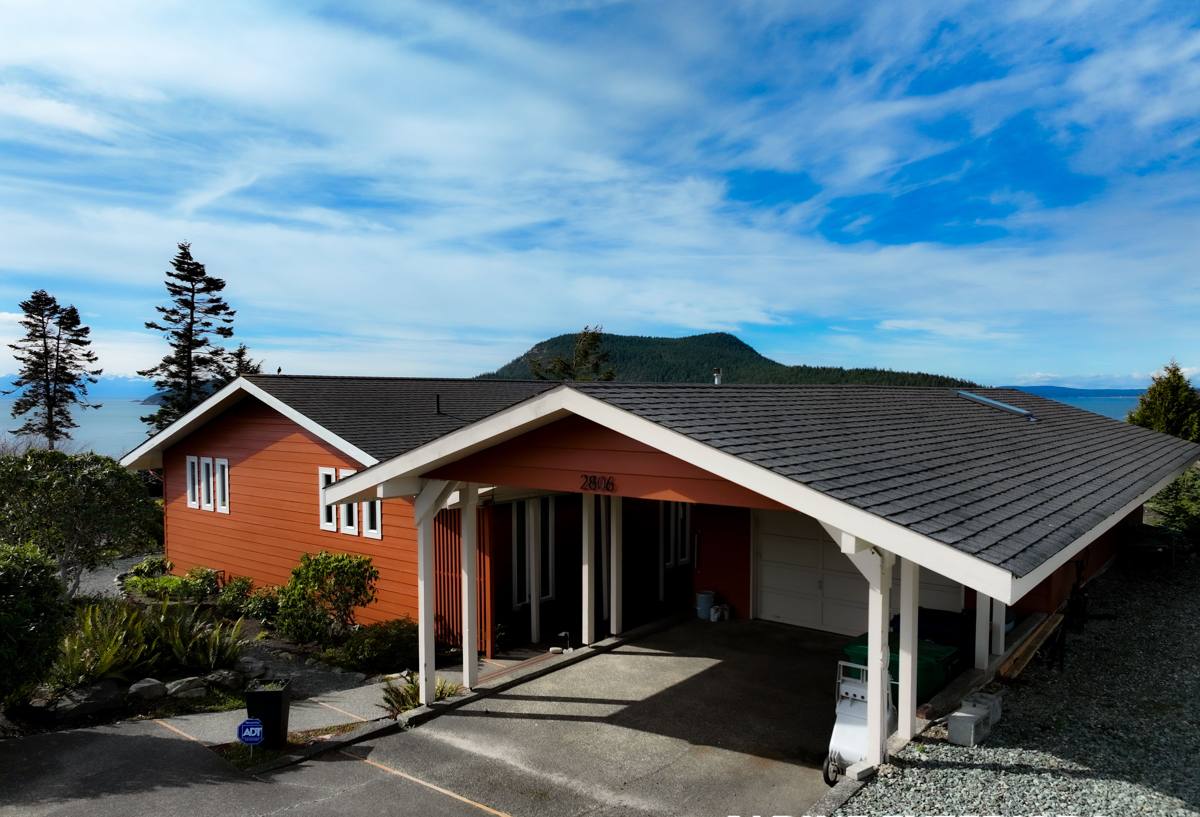
Siding: Why Material Choice Matters More Here Than Almost Anywhere
Siding is the single biggest factor in how well a house in Birchwood holds up over 15, 20, or 30 years. The Pacific Northwest is not forgiving of siding that swells, delaminates, or holds moisture against the wall sheathing. We install James Hardie fiber cement siding exclusively — we do not install vinyl, LP SmartSide, Cemplank, Allura, primed spruce, or cedar. That's a deliberate standard, not a sales pitch, and it's worth explaining honestly.
Why We Don't Install the Alternatives
Vinyl siding is inexpensive and low-maintenance in the sense that it doesn't need painting, but it's a petroleum-based product that expands and contracts with temperature swings, can crack in cold snaps, and fades over time in UV exposure. It also doesn't offer the fire resistance or impact durability that fiber cement does.
Engineered wood products like LP SmartSide use treated wood strand technology, which performs reasonably well when installation and caulking are perfect and stay perfect for the life of the product. In a climate with this much sustained moisture, any lapse in maintenance — a missed caulk line, a gap that opens up over a few seasons — gives water a path into a wood-based substrate, and wood-based substrates don't handle sustained moisture well.
Cedar and primed spruce are beautiful materials, and we understand why some homeowners want that look. But solid wood siding requires a real maintenance commitment: refinishing on a cycle, careful caulking, and vigilance about anywhere water can sit against the wood. In a county that sees this much annual rainfall, that maintenance cycle is not optional — it's the difference between the siding lasting or failing early.
Why James Hardie
Fiber cement is non-combustible, doesn't expand and contract the way vinyl does, and doesn't rot the way wood-based products can. James Hardie's HZ5 product line is engineered specifically for climates like ours — freeze-thaw cycles, sustained moisture, and coastal air. The factory-applied ColorPlus finish is baked on under controlled conditions, which gives more consistent, longer-lasting color than field-applied paint, and it comes with a real transferable warranty that isn't contingent on a maintenance schedule most homeowners won't keep up with. It costs more upfront than vinyl. It's a trade we think is worth making on a house that's going to sit in this climate for decades.
Siding Comparison at a Glance
| Material | Moisture Behavior in Wet Climates | Maintenance | Longevity |
|---|---|---|---|
| James Hardie Fiber Cement | Does not absorb/swell like wood; engineered for wet climates | Low — factory finish, no periodic refinishing needed | Decades with correct install |
| Vinyl | Doesn't rot, but can warp/crack; seams can allow water behind panels | Low, but limited repair options if damaged | Variable, shorter in harsh sun/cold swings |
| LP SmartSide | Wood-strand core vulnerable if caulking/sealing fails | Moderate — caulk lines need monitoring | Good if maintained strictly |
| Cedar / Primed Spruce | Absorbs moisture; needs consistent sealing | High — refinishing cycle required | Shorter without disciplined upkeep |
Roofing: The First Line of Defense Against a Long Wet Season
Roofs in Birchwood take on a lot over a year — sustained rain, wind off the bay, and the shade from mature trees that many Bellingham lots have, which keeps roof surfaces damp longer and speeds up moss growth. Moss isn't just cosmetic. It holds moisture against roofing material and can work its way under shingle edges over time, and on a shaded, north-facing slope it can come back within a season or two if it isn't addressed.
Our roofing work covers full replacements and repairs, with particular attention to the details that matter most in this climate: proper underlayment, ice-and-water shield in vulnerable areas, correct flashing at valleys, chimneys, and roof-to-wall transitions, and ventilation that lets the attic breathe so moisture doesn't get trapped from the inside. A roof that looks fine from the ground can still be failing at the flashing details you can't see from the street — that's where most leaks actually start.
Signs a Birchwood Roof Needs a Closer Look
- Moss or dark streaking building up on north-facing or shaded slopes
- Granules collecting in gutters (a sign shingles are wearing down)
- Daylight or staining visible in the attic near valleys or penetrations
- Curling, cracked, or missing shingles after a windy winter
- Water stains on interior ceilings near exterior walls or chimneys
Windows: Where Air and Water Sealing Really Counts
Older windows in this part of Bellingham are frequently the source of drafts and quiet moisture intrusion, especially where original flashing has degraded or where a window was never properly integrated with the siding around it. When we replace windows, we treat the flashing and water management around the opening as just as important as the window unit itself — a good window installed with poor flashing will still leak eventually, and a modest window installed correctly will outperform it.
Replacement windows also make a real difference in comfort and energy costs given how many months of the year Bellingham homes are heating against damp, cool air. We look at glazing, frame material, and how the new unit will integrate with either your existing siding or new Hardie siding if you're doing both at once — which is often the most efficient way to handle a full exterior update.
Decks: Built for Rain, Not Just for Summer
A deck in Birchwood spends most of the year wet, not dry, which changes what "durable" actually means here. Ledger board attachment and flashing where the deck meets the house is one of the most important — and most commonly overlooked — details in deck construction, because that's the single spot most likely to let water into the structure of the house itself if it's done wrong. We build and repair decks with attention to proper drainage, ledger flashing, joist protection, and fastener choice that won't corrode in salt-influenced air.
Whether you're looking at a wood deck or a composite system, the framing and flashing underneath matter more than the decking material on top. We're glad to walk through both options and what each means for maintenance over time.
Our Process for Birchwood Homeowners
We start with an on-site walkthrough of the exterior — siding, roof, windows, and any deck or trim work in scope — and talk through what we're seeing and why. From there we put together a written estimate that's specific to your house, not a generic package price. If the project involves siding, that estimate will include the James Hardie product line and color we recommend for your home's exposure, and we'll explain why.
What to Expect Working With a Local Crew
- An honest assessment of what actually needs attention versus what can wait
- A written, itemized estimate before any work begins
- Installation details — flashing, ventilation, fastening — done to manufacturer spec, not shortcuts
- A crew that's worked on homes in this same climate and knows its failure points
- Clear communication about timeline, especially around Bellingham's wetter months
Why a Local Crew Matters in a Climate Like This
Exterior work in Whatcom County isn't the same job as exterior work in a dry inland climate, even if the materials look identical on a spec sheet. Flashing details, ventilation requirements, and product choices that work fine in Eastern Washington can fail here within a few years if they're not adapted to sustained moisture and salt-influenced air. A crew that works this region regularly knows where water actually gets in on homes like yours, not just where a manual says it theoretically could.
That local knowledge shows up in small decisions — how tight to run a caulk joint, which flashing detail to prioritize at a roof-to-wall transition, when to recommend against cedar even though a homeowner likes the look. Those are the calls that determine whether an exterior project holds up for one Bellingham winter or for thirty.
Get a Free, No-Pressure Estimate
If you're weighing a siding, roofing, window, or deck project for your Birchwood home, we're happy to take a look and give you an honest read on condition, options, and cost — no pressure, no obligation. Use the form below to request a free estimate.