 Bellingham Exterior
 Exterior Work Built for Edgemoor's Bay-Side Climate
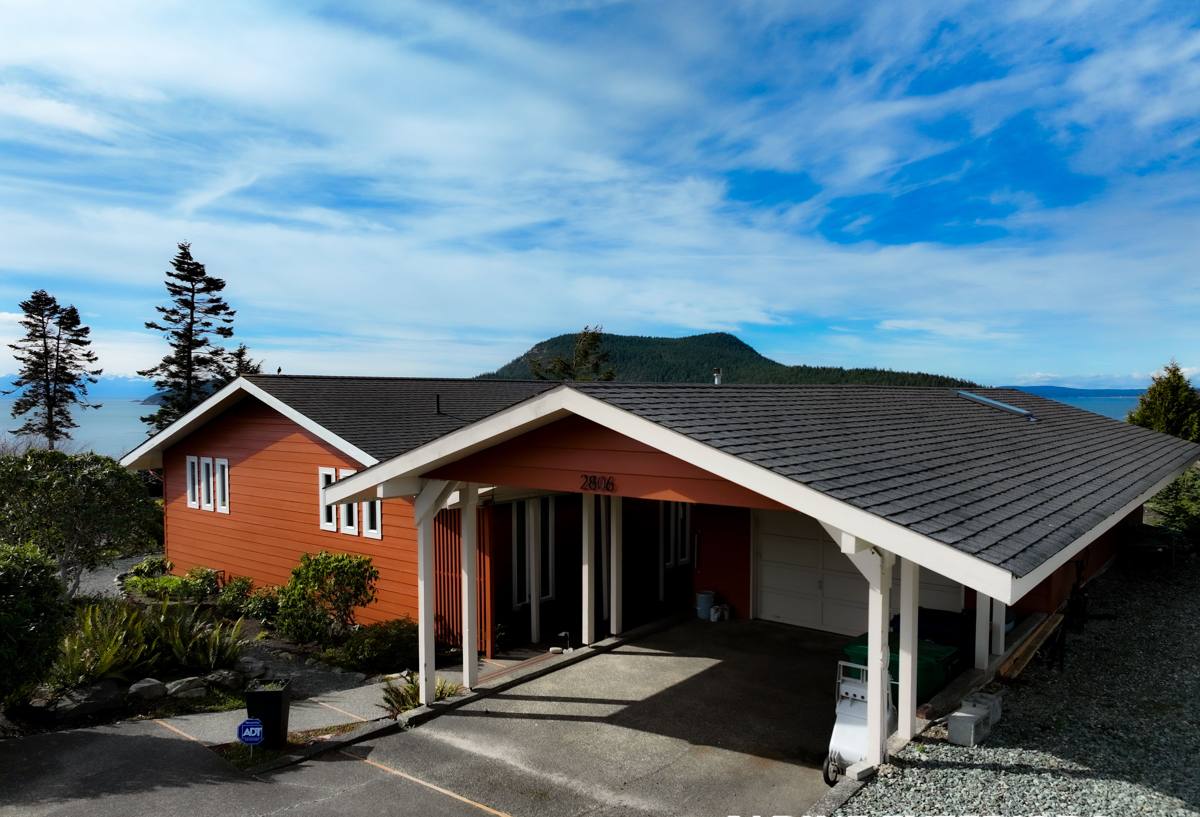
Edgemoor sits close enough to Bellingham Bay that homes here deal with a different mix of weather stress than properties further inland in Whatcom County. Salt-laden air off the water, wind-driven rain that finds every gap in a building envelope, and a moss season that can stretch from October into May all wear on a home's exterior in ways that are easy to underestimate until you're the one paying for repairs. We're a Bellingham-based exterior contractor, and Edgemoor is part of our regular service area — not a neighborhood we drive into once and forget.
This page walks through what we actually see on homes in this area, how our siding, roofing, window, and deck work is approached for these conditions, and why we've standardized on one siding product rather than offering a menu of options.
What the Bay-Side Climate Does to a Home Over Time
Salt Air and Corrosion
Proximity to salt water doesn't just affect boats and cars. Airborne salt accelerates corrosion on fasteners, flashing, and any exposed metal trim on a house. Over years, that corrosion can compromise the small details — nail heads, screw fasteners, drip edges — that keep water moving away from a structure instead of into it. It also has a slow bleaching and pitting effect on some paint finishes, which is one reason factory-applied, baked-on finishes tend to outlast field-applied paint in this kind of environment.
Driving Rain and Wind-Driven Moisture
Bellingham gets a lot of rain, but it's not just volume that matters — it's direction. Storms coming off the water push rain sideways into west- and southwest-facing walls, which puts real pressure on siding laps, window flashing, and any penetration in the exterior envelope. A home that would stay dry in a calm, straight-down rain can still take on moisture if the water-resistive barrier and flashing details behind the siding weren't installed correctly.
Moss, Algae, and Shade
Edgemoor's mature tree cover is part of what makes the area attractive, but it also means more shaded, damp roof and wall surfaces for a longer part of the year. Moss on a roof isn't just cosmetic — it holds moisture against shingles and can work its way under tabs and flashing over time. On siding, persistent damp and shade encourage algae growth and give any organic-based product (wood, some engineered wood siding) more opportunity to take on moisture at edges and cut ends.
Siding: Why We Only Install James Hardie
We install James Hardie fiber cement siding exclusively. We don't offer vinyl, LP SmartSide, Cemplank, Allura, primed spruce, or cedar as options — not because those products have no legitimate use anywhere, but because after years of doing exterior work in this specific climate, we don't think they hold up as well as Hardie does against salt air, sustained damp, and moss pressure, and we don't want to install something on your home that we don't fully stand behind.
What Makes Hardie Different Here
- Non-combustible core: Fiber cement doesn't burn, rot, or provide a food source for insects — relevant given wildfire smoke seasons are becoming a more regular part of Pacific Northwest summers.
- ColorPlus factory finish: Baked-on, not field-applied, which matters directly for salt-air fading and the freeze-thaw, wet-dry cycling that's common near the water.
- Engineered for moisture, not just painted against it: Hardie's HZ5 product line is specifically formulated for wetter, harsher climate zones, which fits Whatcom County's coastal exposure better than a general-purpose product.
- Dimensional stability: Fiber cement doesn't swell and contract with moisture the way wood-based products can, which keeps caulk joints and paint lines intact longer.
- Transferable warranty: A meaningful backing if the home changes hands, which is worth something in a desirable neighborhood like Edgemoor where resale is often a real consideration.
None of this means other products are worthless — vinyl is inexpensive and low-maintenance in mild conditions, engineered wood siding can look great when it's kept dry and well-maintained, and cedar has a look some homeowners specifically want. But we've made a professional call that for the conditions this area actually sees — salt exposure, driving rain, extended damp shade — fiber cement is the product we're willing to put our name behind.
Roofing for Moss-Heavy, Shaded Lots
Roofing work in Edgemoor is as much about prevention as installation. A roof done right here accounts for the tree cover and moisture load from day one:
- Proper underlayment and ice-and-water-shield placement at valleys and eaves, where moss and debris tend to collect first
- Flashing details at chimneys, skylights, and wall intersections sized for sustained wet weather, not just occasional storms
- Ventilation that lets a roof deck dry out between rain events instead of staying damp under shade
- Material choices that resist moss colonization better in low-sun, high-moisture spots
We also talk homeowners through realistic moss management — gutter clearing, occasional treatment, and keeping overhanging limbs trimmed back — because no roofing material is entirely moss-proof if the surrounding conditions never let it dry.
Windows: Sealing Against Wind-Driven Rain
Window failures in this area are rarely about the glass itself — they're almost always about flashing and sealant integrity at the rough opening. Wind-driven rain off the bay tests every window's ability to shed water sideways, not just down. When we replace windows, the flashing and water-resistive barrier integration around the opening gets as much attention as the window unit itself, because a great window installed with sloppy flashing will leak eventually, and a modest window installed correctly usually won't.
Decks: Built to Handle Salt Air and Shade
Decks in Edgemoor face a combination that's tough on materials: salt-laden air accelerates fastener corrosion, and shaded, tree-covered lots mean decking surfaces often stay damp longer than decks in full sun elsewhere in Bellingham. We use fasteners and hardware rated for coastal exposure, and we talk through decking material trade-offs — composite versus wood — honestly, based on how much sun and airflow a given deck actually gets, rather than a one-size answer.
Why a Local Crew Matters for This Kind of Work
Exterior work that has to perform against salt air, sustained rain, and moss isn't generic work — the details that matter change depending on how exposed a wall is, how much shade a roof plane gets, and which direction storms typically hit. A crew that works across Whatcom County regularly, rather than parachuting in for a single job, has actually seen how these details play out over multiple wet seasons on multiple homes. That matters more here than in a lot of inland climates, where the margin for a flashing mistake or a moisture-trapping detail is a lot wider.
Being local also means we're reachable after the job is done. If something needs a warranty look or a follow-up in year three, we're not a phone number that's stopped answering.
Comparing Siding Approaches for This Climate
| Factor | Vinyl | Engineered Wood (e.g. LP SmartSide) | Cedar | James Hardie Fiber Cement |
|---|---|---|---|---|
| Salt air / fading resistance | Moderate; can chalk and warp | Moderate with paint upkeep | Low without regular sealing | High with factory ColorPlus finish |
| Moisture / rot risk | Low rot risk, but can trap moisture behind it | Vulnerable at cut ends and joints if not sealed | Vulnerable without diligent maintenance | Very low; not organic-based |
| Fire resistance | Melts/deforms in heat | Combustible | Combustible | Non-combustible |
| Maintenance burden | Low, but limited repair options | Moderate; repainting/resealing over time | High; regular staining or sealing | Low; repaint cycle much longer than field-finished products |
| Typical warranty structure | Varies widely by product tier | Manufacturer-specific, often prorated | Rarely warrantied as a system | Long-term, transferable manufacturer warranty |
What to Ask Any Exterior Contractor Bidding This Work
- Are you factory-certified to install the siding product you're proposing, or is this a side offering?
- How do you detail flashing at windows, decks, and roof-wall intersections specifically for wind-driven rain?
- What underlayment and ventilation approach do you use on shaded, moss-prone roof sections?
- What fastener and hardware grade do you use for coastal salt-air exposure?
- Can you walk me through the manufacturer warranty terms in plain language, including what voids it?
- Do you carry current liability insurance and workers' comp coverage, and can you provide proof?
Getting Started
Whether you're dealing with an aging roof under mature trees, siding that's showing its age from years of salt air and rain, windows that leak in a west-facing storm, or a deck that needs hardware and material rated for this environment, we're glad to take a look and talk through what actually makes sense for your specific home and lot. We offer a free, no-pressure estimate — use the form below to get started.