 Bellingham Exterior
 Edgemoor sits close enough to Bellingham Bay that salt air is a daily fact of life, and close enough to mature tree canopy that moss, shade, and standing moisture are just as constant. Add in the driving rain that blows off the water during fall and winter storms, and windows in this part of Bellingham work harder than windows almost anywhere else in Whatcom County. When we replace windows here, we're not just swapping glass — we're addressing a specific combination of salt exposure, shade-driven moisture, and wind-driven rain that a generic install won't hold up against.
Why Edgemoor's Setting Is Tougher on Windows
Homes near the water take on airborne salt that settles into hardware, weep holes, and any exposed metal fasteners. Over years, that salt accelerates corrosion on lower-grade hinges, cranks, and screws — especially on windows facing the bay. Meanwhile, the tree cover common through much of Edgemoor keeps siding and trim shaded and slow to dry after rain, which is exactly the condition moss and mildew need to take hold around window frames and sills.
Layer on Bellingham's typical wind-driven rain — storms that come off the water at an angle instead of falling straight down — and you get water testing every seam, flashing detail, and sealant joint on a window several times a season. A window that's watertight in calm conditions can still leak under sideways rain if the flashing and sill pan weren't done correctly. This is the part of the job that matters most and shows the least once the trim is painted.
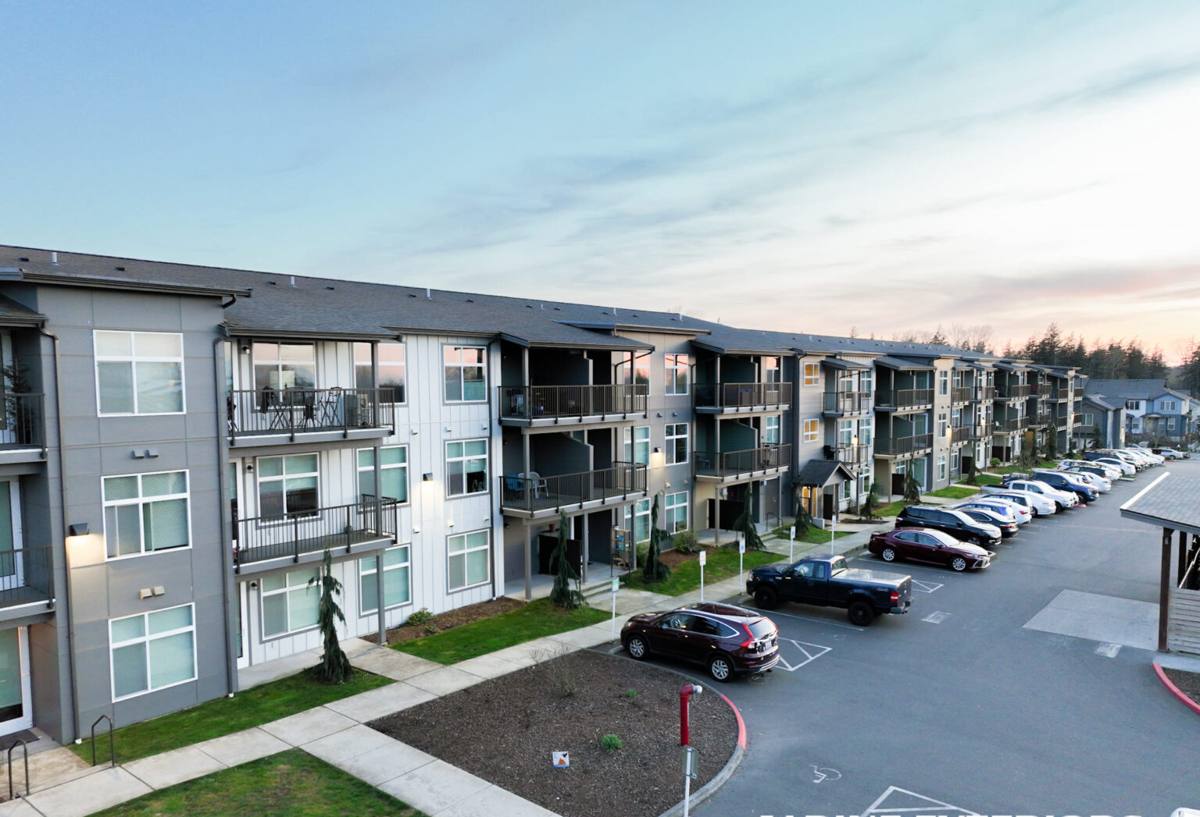
Signs an Edgemoor Home Needs Window Replacement
Moisture and Rot Signs
- Soft or discolored wood at the sill or lower frame corners
- Fogging or a permanent haze between the panes of a double-pane window (a failed seal, not a cleaning issue)
- Moss or dark streaking on the exterior casing that keeps returning after cleaning
- Paint that bubbles or peels specifically around the window opening, even if the rest of the trim looks fine
Performance Signs
- Noticeable draft near the frame during a windstorm, even with the window latched
- Sashes that are hard to open, don't stay up, or don't latch flush anymore
- Condensation on the inside of the glass that shows up more in shaded rooms than sunny ones
- A jump in heating costs that isn't explained by anything else in the house
Any one of these can be a minor fix. Several at once, especially on the bay-facing side of the house, usually means the window's original seal or flashing has broken down and repair is just delaying a replacement.
What a Correct Replacement Actually Involves
Window replacement done right in a marine, tree-shaded neighborhood like Edgemoor isn't just measure-and-install. The steps that actually determine whether the window lasts are mostly invisible once the job is finished:
- Accurate measurement and sizing — so the new unit fits the existing rough opening without gaps that get packed with excess sealant instead of proper insulation.
- Removal and inspection of the old opening — checking the sill and framing underneath for rot or moisture damage before anything new goes in. This is where hidden problems from years of shade and rain exposure usually surface.
- Sill pan and flashing installation — the detail that redirects any water that does get past the window back outside instead of into the wall cavity. This matters more here than in drier parts of Whatcom County.
- Proper insulation of the gap — using low-expansion foam or backer rod rather than overfilling with caulk, which can bow the frame and cause operational problems.
- Weatherproof sealant on the exterior — applied in a bead pattern that lets water drain rather than trapping it against the frame.
- Interior and exterior trim finish — matched to the home and sealed at the joints most exposed to wind-driven rain.
Skipping or rushing any one of these steps is usually what causes a "new" window to leak within a few years — not a defect in the window itself.
Choosing Materials for a Salt-Air, Shaded Climate
Every window material has trade-offs. For Edgemoor's combination of salt air and shade, maintenance burden and moisture behavior matter more than they would in a drier, sunnier location.
| Material | Salt Air Behavior | Moisture / Moss Resistance | Maintenance |
|---|---|---|---|
| Vinyl | Won't corrode; hardware quality varies by manufacturer | Good — non-porous surface sheds moss growth | Low — occasional rinse |
| Fiberglass | Excellent — highly stable in coastal conditions | Very good — dimensionally stable even when shaded and damp | Low |
| Aluminum-clad wood | Cladding protects wood but hardware and seams need monitoring | Depends heavily on installation quality at seams | Moderate |
| Bare wood | Attractive but most vulnerable to salt-driven rot in shaded, damp settings | Requires vigilant upkeep to avoid moss and rot at joints | High — regular refinishing |
We don't install bare wood windows on homes with heavy shade and bay exposure as a matter of professional standard — not because wood is a bad material, but because the maintenance schedule needed to keep it sound in this specific setting is more than most homeowners want to keep up with. Vinyl and fiberglass options hold up with far less attention, which matters when a window is shaded most of the day and rarely dries out fully between storms.
Our Process, Start to Finish
1. On-Site Assessment
We walk the exterior and interior of each window being considered, checking sill condition, current flashing, and how exposed each opening is to prevailing wind and rain direction — bay-facing and shaded openings often need more attention than others on the same house.
2. Straightforward Estimate
You get a clear breakdown of window count, material, and labor — no pressure, and no surprise add-ons discovered mid-project that weren't discussed up front.
3. Scheduled Installation
We work efficiently to minimize how long any opening is exposed, which matters in a rainy climate — a window opening left uncovered overnight is an unnecessary risk we plan around.
4. Flashing, Insulation, and Sealing
This is where the job is actually won or lost, as covered above. We don't shortcut this step regardless of how the finished trim will look.
5. Cleanup and Walkthrough
We remove old windows and debris, and walk the finished openings with you so you know how they operate and what routine care they need.
What Affects the Cost
Every home and window is different, so we avoid quoting numbers before seeing the job. In general, these factors move the price:
| Factor | Why It Matters |
|---|---|
| Number of windows | Per-unit costs typically drop somewhat on larger jobs |
| Material chosen | Vinyl is generally the most affordable; fiberglass and clad-wood cost more upfront |
| Window size and style | Large picture windows or specialty shapes cost more than standard double-hungs |
| Condition of the existing opening | Rot or framing repair found during removal adds time and material |
| Access | Second-story or hard-to-reach windows on sloped, wooded lots take longer to work safely |
| Trim and finish work | Matching existing interior trim profiles adds labor versus standard trim |
Any range we give you at the estimate will reflect what we actually see on your home, not a generic per-window number that ignores your specific site.
Why a Crew That Already Works Edgemoor Matters
Edgemoor's mix of sloped, wooded lots and close proximity to the water isn't something every crew is used to working around. Knowing which side of a house typically takes the worst wind-driven rain, how to protect landscaping and access routes on a shaded, often-damp lot, and what level of hardware corrosion resistance actually holds up this close to Bellingham Bay all come from doing this work in the neighborhood repeatedly — not from a one-size-fits-all install checklist. It also means we're not guessing about how long a job will realistically take once you factor in access and weather windows specific to this part of the county.
After Installation: Keeping New Windows Performing
New windows still need basic upkeep in this climate, especially anywhere shaded or salt-exposed:
- Rinse exterior frames periodically to clear salt residue and prevent moss from establishing
- Check and clear weep holes along the bottom track so water can drain instead of pooling
- Inspect exterior sealant joints once a year for cracking, especially after a hard winter
- Trim back vegetation that keeps a window in constant shade and slows drying
- Operate each window a few times through the year so hardware doesn't seize from disuse
None of this is intensive, but skipping it is how even a well-installed window ends up with preventable problems a decade in.
If you're noticing drafts, fogged glass, or trim trouble on an Edgemoor home, we're happy to take a look and walk you through honest options — no pressure, no obligation. Use the form below to request a free estimate.