 Bellingham Exterior
 Exterior Work for York Homes in Bellingham
York is one of the older, established neighborhoods inside Bellingham, and homes there run the gamut from early-20th-century houses to mid-century remodels to newer infill construction. What ties them together isn't age or style — it's the exterior envelope. Every one of them sits under the same Whatcom County sky, and that sky is hard on siding, roofing, windows, and decks in ways that are easy to underestimate if you haven't watched a house age through twenty or thirty Bellingham winters.
We do exterior work across Bellingham, and York is part of our regular route. That matters more than it sounds like it should — a crew that works a neighborhood repeatedly starts to recognize its patterns: which blocks catch more wind off the bay, which lots stay shaded and damp longer into the spring, which older homes were sided or roofed with materials that were standard decades ago but don't hold up the way people expected.
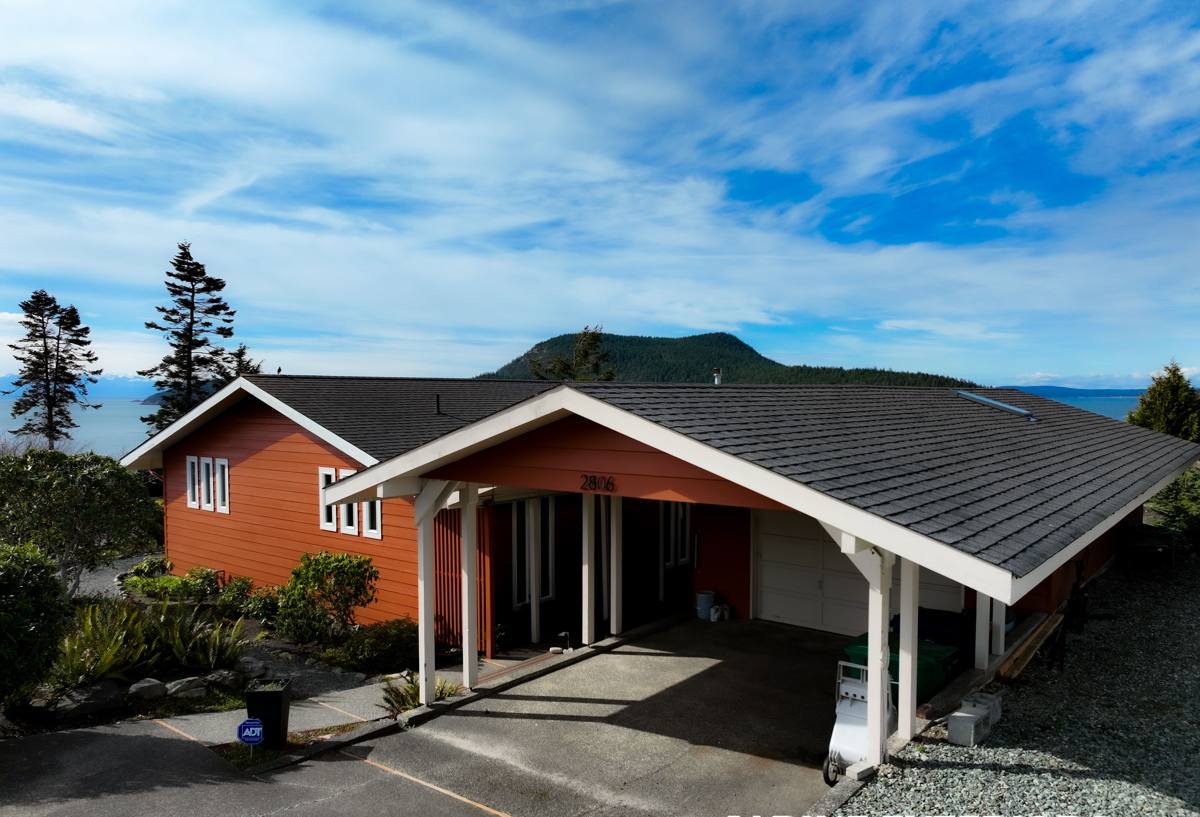
What Bellingham's Climate Actually Does to a House
Whatcom County sits in a marine climate zone, and Bellingham's proximity to the water adds a specific wrinkle: salt-laden air moving in off Bellingham Bay and the Strait of Georgia. Combine that with the region's long, wet fall-through-spring stretch and you get a set of stresses that show up on exteriors in predictable ways.
Salt Air
Airborne salt accelerates corrosion on fasteners, flashing, and any metal component that isn't rated for it. It also degrades certain paint and coating systems faster than inland products of the same type, which is part of why coating durability matters more here than in drier, inland parts of the state.
Driving Rain
Bellingham doesn't just get a lot of rain — it gets a lot of wind-driven rain, pushed sideways by storms coming off the water. That kind of rain finds gaps that vertical rain never would: lap joints, butt seams, window flanges, deck ledger connections. A siding or window installation that would be fine in a calmer climate can leak here if the detailing isn't tight.
Moss and Sustained Moisture
Whatcom County's moss season isn't a few weeks — it's most of the year on north-facing walls, shaded rooflines, and anywhere air doesn't move freely. Moss holds moisture against a surface long after the rain has stopped, and sustained moisture is the single biggest driver of rot, coating failure, and structural decay on an exterior.
Freeze-Thaw, in Moderation
York doesn't see the deep freezes of inland climates, but it does get enough freeze-thaw cycling each winter to widen small cracks and stress joints that are already compromised by moisture. It's a slower kind of damage, but it compounds over the years.
Siding: Why We Install James Hardie and Nothing Else
We install James Hardie fiber cement siding exclusively. We don't install vinyl, LP SmartSide, Cemplank, Allura, or primed wood products like spruce or cedar lap. That's a deliberate standard, not a limitation of what we're capable of installing, and it's worth explaining why.
Vinyl siding is affordable and low-maintenance in mild conditions, but it's a petroleum-based product that softens, warps, and becomes brittle across temperature swings, and it doesn't hold up structurally the way a rigid cement-based product does in wind-driven rain conditions. Engineered wood products like LP SmartSide use a wood-strand core that performs well when the coating and caulking are maintained perfectly, but any breach in that seal exposes wood fiber to moisture — and in a climate with York's rain volume and moss pressure, that margin for error is thin. Primed cedar and spruce are beautiful but are wood, full stop, meaning they need repainting on a real schedule and are vulnerable to rot at every unprotected cut and joint.
James Hardie fiber cement is a different category of material. It's non-combustible, dimensionally stable across temperature and humidity swings, and doesn't rot or feed insects because there's no organic wood fiber in the exposed material. Hardie's ColorPlus factory-applied finish is baked on under controlled conditions, which gives it better adhesion and UV resistance than field-applied paint, and Hardie backs it with a real, transferable limited warranty. For a marine climate like Bellingham's, Hardie also makes an HZ5 product line specifically engineered for wetter, harsher weather zones — which is exactly the zone York sits in.
Siding Material Comparison
| Material | Moisture Behavior in Marine Climate | Maintenance | Our Position |
|---|---|---|---|
| Vinyl | Warps and becomes brittle with temperature swings; can be pushed by wind-driven rain | Low, but limited repair options when damaged | Not installed |
| LP SmartSide / engineered wood | Performs well if coating stays intact; vulnerable at any breach | Coating and caulk upkeep is critical | Not installed |
| Primed cedar / spruce | Natural wood; absorbs moisture, prone to rot at cuts and joints | Regular repainting required | Not installed |
| James Hardie fiber cement | Non-combustible, dimensionally stable, HZ5 line built for wet climates | Low; factory finish holds up for years | Installed exclusively |
Roofing for York's Rain and Moss Pressure
Roofing in this neighborhood has to deal with sustained wet weather and moss more than it deals with heat or hail. The details that matter most are the ones that keep water moving off the roof and away from the structure: flashing at every penetration and valley, underlayment that's actually rated for the climate, and ventilation that lets the roof deck dry out between rain events instead of staying damp for weeks. Moss growth on shaded or north-facing slopes is common enough in Bellingham that it should be treated as routine maintenance rather than a surprise — left unaddressed, moss holds moisture against shingles and accelerates granule loss and decking rot underneath.
Windows: Sealing Out Driving Rain
Window failures in this climate are rarely about the glass — they're about the flashing and the seal around the frame. Wind-driven rain off the bay will find a poorly flashed window opening, and once water gets behind a window flange it can travel and cause damage well beyond the window itself before anyone notices a stain inside. Correct installation means proper flashing integration with the water-resistive barrier, sealed and shimmed frames, and flashing details that direct water out and down, never trapping it. Energy performance matters too, but in York specifically, keeping water out is the first job a window install has to do right.
Decks: Built for a Climate That Doesn't Dry Out Fast
Decks in York face the same sustained-moisture problem as siding and roofing, just at ground level and horizontal, which is worse for water shedding. Ledger board connections, joist hangers, and any wood-to-wood or wood-to-house contact point are the highest-risk spots for rot if they aren't properly flashed and fastened with corrosion-resistant hardware — and given the salt air in this area, hardware rating matters more here than it would inland. Decking material choice, board spacing for drainage, and proper ledger flashing all affect how long a deck lasts before it needs structural repair rather than just cosmetic refinishing.
Why a Local Crew Matters in York
Exterior work isn't one-size-fits-all across Washington State, and it isn't even one-size-fits-all across Bellingham. A crew that works York regularly knows the difference between a shaded, moss-prone lot and an exposed, wind-loaded one a few blocks over, and adjusts detailing accordingly — heavier flashing on the exposed side of a house, more attention to ventilation on the shaded side, hardware upgrades on anything within reach of salt air. That local pattern recognition is the difference between an installation that looks right on day one and one that's still performing correctly in year fifteen.
It also means accountability that doesn't disappear. A local crew is still in the area if a warranty question comes up, if a detail needs a second look after a big storm, or if a homeowner just wants someone to walk the exterior with them and explain what they're looking at.
What to Check Before Hiring for Exterior Work in York
- Confirm the contractor is licensed and insured in Washington State, and ask to see current documentation.
- Ask specifically how they detail flashing at penetrations, valleys, and window openings — vague answers are a red flag in a climate this wet.
- Ask what siding, roofing, and decking materials they install and why — and be wary of a contractor who installs everything with no stated standard.
- Ask about ventilation strategy for siding and roofing, not just the visible material.
- Get the warranty terms in writing, including what's manufacturer-backed versus installer-backed.
- Ask how they handle moss and organic growth on existing surfaces before new work goes over them.
What to Expect from an Estimate
A useful exterior estimate for a York home should include a look at the whole envelope, not just the material the homeowner called about — siding, roofing, window flashing, and deck connections all interact, and problems in one often show up as symptoms in another. We walk the exterior, note the specific exposure and moisture patterns on that lot, and put together a scope that addresses the actual conditions the house faces rather than a generic package.
If you're in York and dealing with siding that's showing its age, a roof that's holding moss longer each year, windows that let water in during a storm, or a deck that needs more than a fresh coat of stain, we'd rather look at it in person than guess over the phone. Reach out for a free, no-pressure estimate — the form below gets you a real answer, not a sales pitch.