 Bellingham Exterior
 Exterior Work in Ferndale: What the Climate Is Up Against
Ferndale sits close to the water, out where Whatcom County's farmland meets the Strait of Georgia coastline. That location shapes everything about how a house ages here. Homes get a steady dose of salt-laden air moving in off the water, long stretches of driving rain that comes in sideways more often than straight down, and a gray, damp season that stretches from fall through spring and gives moss, algae, and mildew months at a time to get established on anything that holds moisture. None of that is dramatic on its own, but stacked year after year it wears down exterior materials faster than homeowners moving here from drier climates tend to expect.
We work exteriors across Bellingham and the surrounding Whatcom County communities, and Ferndale's mix of coastal exposure and rural, tree-shaded lots means we see both ends of the problem: houses that take a direct hit from wind and salt off the water, and houses tucked under conifers that barely get any sun to dry out between storms. Good exterior work here has to account for both.
Siding: Why We Only Install James Hardie
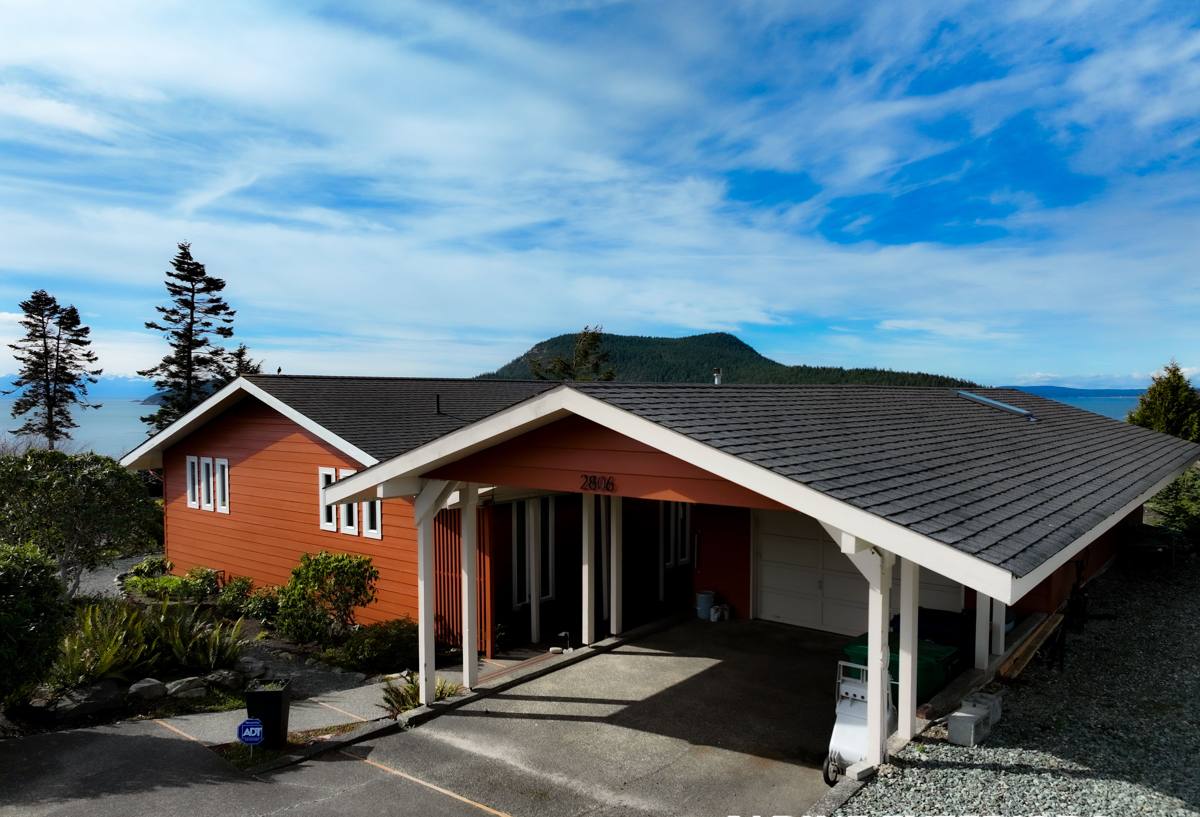
Siding is the single biggest factor in how well a Ferndale home holds up over time, because it's the material taking the brunt of wind-driven rain and salt air every day, all year. We install James Hardie fiber cement siding exclusively. We don't install vinyl, LP SmartSide, Cemplank, Allura, primed spruce, or cedar, and we think homeowners deserve a straight explanation of why before they sign off on any siding project.
What Salt Air and Rain Do to Siding Over Time
Vinyl siding gets brittle with age and temperature swings, and its seams and panels can loosen enough over the years to let wind-driven rain work its way behind the cladding. Engineered wood products like LP SmartSide perform well when installed and maintained exactly to spec, but they're wood-based, which means any breach in the factory coating or caulking gives moisture a path into a material that can swell, delaminate, or rot. Primed spruce and cedar are traditional, attractive choices, but they need repainting or restaining on a real schedule, and in a climate that stays damp for months at a stretch, that maintenance window gets tighter than most homeowners plan for.
Why James Hardie Fits This Climate
James Hardie fiber cement is not wood and it's not vinyl — it's a cement-based material engineered specifically to resist moisture intrusion, and it comes with a factory-applied ColorPlus finish baked on and warrantied against fading and chipping. It doesn't feed mold or algae the way wood fiber can, and it holds its shape and color through the wet-dry cycling that's routine in this part of Whatcom County. Hardie also builds region-specific "HZ" formulations engineered for climate zones like ours, and it's a non-combustible material, which matters more every year as wildfire smoke and dry-season risk become a bigger part of Pacific Northwest summers. It's also backed by a strong transferable warranty, which protects the investment for whoever owns the house next.
What Correct Installation Involves
Hardie's performance depends on installing it to the manufacturer's spec — correct fastening, proper clearances from grade and roof lines, sealed joints, and rainscreen or drainage detailing where it's called for. We install to that spec on every job, because the material is only as good as the installation behind it.
Roofing: Built for a Long Moss Season
Ferndale's tree cover and near-constant fall-through-spring dampness make moss and algae growth one of the most common roofing complaints we hear from local homeowners. Moss holds moisture against roofing material, works its way under shingle edges, and can lift and loosen roofing over time if it's left unaddressed. A roof that's shaded most of the day is going to need more attention than one out in the open, regardless of the material.
What We Look At
- Ventilation — poor attic airflow speeds up moss growth and shortens roof lifespan
- Flashing at valleys, chimneys, and roof-wall intersections, where wind-driven rain finds its way in first
- Gutter and downspout capacity for sustained heavy rain, not just average rainfall
- Material choice suited to shaded, damp exposure versus open, sun-exposed roof planes
We size and detail roofing to the specific exposure of the house, not a one-size-fits-all spec, because a roof on a wooded lot outside town needs different attention than one on an open lot closer to the water.
Windows: Keeping Wind-Driven Rain Out
Windows fail quietly. A window that leaks doesn't usually show it right away — it shows up later as staining, soft trim, or a musty smell near the sill, by which point moisture has often already gotten into the wall assembly. In a climate where rain regularly comes in at an angle, flashing and sealing around the window opening matter as much as the window unit itself.
What Matters Most in This Climate
Proper flashing integration with the wall's weather-resistive barrier, correctly bedded sills, and quality sealant application are what actually keep water out during a real Whatcom County storm. Energy performance matters too, but a well-sealed window that manages water correctly is the first job — everything else is secondary to that.
Decks: Standing Up to Wet-Dry Cycling
Outdoor living space in Ferndale has to survive months of standing damp followed by drier stretches, and that cycling is hard on ledger connections, fasteners, and any wood that doesn't drain and dry properly. The most common deck problems we see aren't dramatic failures — they're slow ones: a ledger board that's been trapping moisture against the house, fasteners that have started to corrode, or decking that's held onto water long enough to start rotting from the inside.
What a Well-Built Deck Needs Here
Correct ledger flashing where the deck meets the house, proper spacing and drainage beneath decking boards, and corrosion-resistant fasteners rated for coastal exposure. Material choice — pressure-treated lumber, composite, or other options — matters less than getting those structural and moisture details right.
Comparing Exterior Materials for a Coastal, Damp Climate
| Material | Moisture Behavior | Typical Maintenance | Our Position |
|---|---|---|---|
| Vinyl siding | Can loosen and let water behind panels as it ages | Low, but limited repair options once damaged | Not installed |
| LP SmartSide | Wood-based; vulnerable if coating or caulk is breached | Moderate — coating integrity must be maintained | Not installed |
| Cedar / primed spruce | Natural wood; absorbs moisture without upkeep | High — regular refinishing needed | Not installed |
| James Hardie fiber cement | Engineered to resist moisture intrusion and cycling | Low — factory finish, periodic cleaning | What we install |
Why a Local Crew Matters for Ferndale Homes
Exterior work in this climate isn't generic. A crew that mainly works in drier inland regions may not think twice about flashing details or drainage planes that are routine business for anyone who works Whatcom County's coastal edge regularly. We're based in Bellingham and work Ferndale and the surrounding area as part of our regular service territory, so the crew showing up already understands what the salt air, the rain angle, and the moss season do to a house here — it's not a one-off adjustment for a job in an unfamiliar climate.
Questions Worth Asking Any Contractor Before You Hire
- Are they licensed and insured to work in Washington State, and can they show proof?
- Do they specialize in exterior systems, or is siding, roofing, or window work a side offering?
- Will they explain product choice and installation method in plain terms, not just quote a price?
- Do they warranty their labor separately from the manufacturer's material warranty?
- Can they speak specifically to how they handle moisture and drainage detailing in this climate?
What Drives Cost on an Exterior Project
| Factor | Why It Matters |
|---|---|
| Home size and complexity | More corners, gables, and rooflines mean more flashing detail and labor |
| Current condition | Hidden moisture damage found during tear-off adds scope |
| Material selection | Fiber cement, roofing type, and window grade all price differently |
| Site access | Wooded or sloped lots, common around Ferndale, can affect staging and labor time |
| Season | Weather windows affect scheduling more in a wet climate than a dry one |
We walk every property and give a clear, itemized estimate before any work starts — no surprise scope added mid-project without a conversation first.
Simple Maintenance That Extends the Life of Your Exterior
- Clean gutters and downspouts at least twice a year, more often under heavy tree cover
- Rinse moss and algae off roofing and siding before it gets established, rather than after
- Check window and door sealant yearly for cracking or gaps
- Keep vegetation trimmed back from siding and roof edges to improve airflow and drying
- Inspect deck ledger boards and fasteners annually for early signs of moisture or corrosion
Get an Estimate for Your Ferndale Home
If you're weighing siding, roofing, windows, or a deck project on a Ferndale property, we're happy to take a look and give you a straightforward, no-pressure estimate. Use the form below to get started.