 Bellingham Exterior
 Why This Call Is Different in Bellingham
Every roofing decision comes down to the same question: is this roof still doing its job, or is it quietly failing underneath the surface? In most of the country that question is straightforward. In Whatcom County it gets complicated by a climate that never really gives a roof a break. We get driving rain off the Strait of Georgia, salt-laden air rolling in from Bellingham Bay, and long gray stretches from October through May where a roof surface rarely fully dries out. That combination is exactly what moss, algae, and slow-moving leaks need to take hold.
Homeowners often wait too long to ask the repair-or-replace question, then feel like they're choosing between two bad options: an expensive full replacement or another patch that might not hold. The truth is that the right answer is usually clear once you know what to actually look for, and it rarely comes down to a gut feeling or a sales pitch. This guide walks through how to tell the difference, what drives the cost either way, and where local conditions change the math.
Signs That Point to Repair
Not every roof problem means the whole system is compromised. A lot of roofs in this area are structurally sound but have isolated issues that a targeted repair handles well.
Localized damage
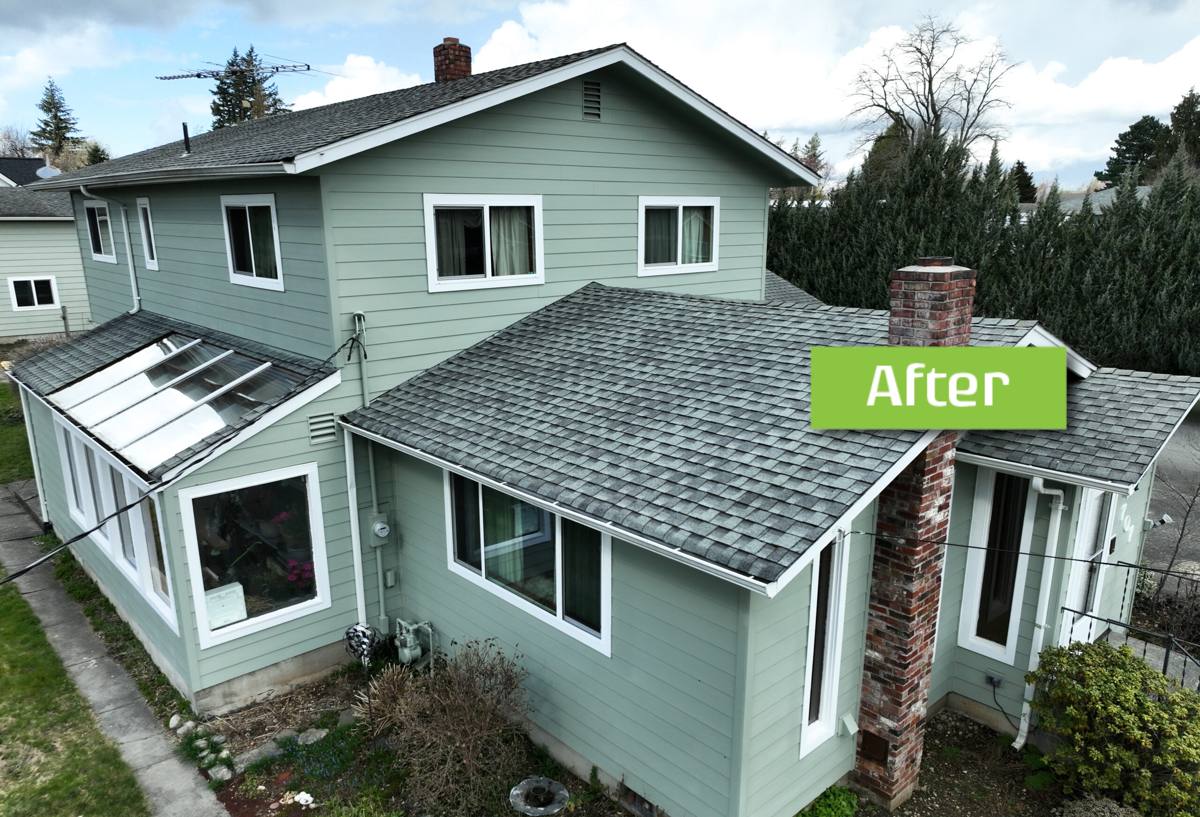
A single cracked or lifted shingle section, a damaged vent boot, or flashing that's pulled away around a chimney or skylight is usually a repair, not a replacement trigger. These are common failure points because they're where different materials meet, and sealants and flashing wear out well before the field of the roof does.
A roof that's still within its service life
If the roof is under roughly 15 years old, has one layer of material, and the decking underneath is dry and solid, repair is almost always the right first move. There's no reason to replace a roof that has another decade of life left in it because of one leak.
Isolated leaks with a findable source
A leak that traces back to one clear cause — a nail pop, a torn shingle, a failed pipe boot — is a repair. The distinction matters: a leak is a symptom, not a diagnosis, and a good contractor should be able to tell you which one you're dealing with before recommending anything.
Signs That Point to Replacement
Some conditions mean a repair would just be delaying an inevitable, and more expensive, replacement.
Age and material condition across the whole roof
Most composition shingle roofs in our climate are realistically good for 20-25 years, sometimes less if they've had heavy moss growth for extended periods. When a roof is approaching or past that range and showing wear broadly — granule loss, curling, brittleness — repairing one section just shifts the next failure to the section next to it.
Damage to the decking or structure
If moisture has worked its way past the roofing material and into the plywood or sheathing underneath, that's a different category of problem. Soft spots, sagging, or visible rot in the decking mean water has been getting in for a while, and no surface repair fixes what's happening underneath.
Multiple leaks in unrelated areas
One leak is a repair. Three or four leaks in different parts of the roof, especially after a wet winter, usually means the underlayment and field material are failing as a system, not in isolated spots.
Multiple existing layers
Some older homes in the area have two layers of shingles already. Building code generally won't allow a third layer, which means the next roofing project has to be a full tear-off and replacement regardless of condition.
Moss, Algae, and the Truth About "Roof Cleaning"
Moss deserves its own section because it drives more repair-or-replace confusion here than anything else. Whatcom County's combination of shade, moisture, and mild temperatures is close to ideal moss habitat, and a roof that looks heavily mossed can scare homeowners into thinking they need a full replacement when the shingles underneath are actually fine.
The reverse is also true. Moss holds moisture against the roof surface for extended periods, and over years that moisture exposure degrades the shingle mat and accelerates granule loss. A roof that's had thick moss for five or more winters without treatment is often further along in its wear than its age alone would suggest.
What actually matters is what's happening under the moss, not the moss itself. A qualified inspection should include gently checking shingle condition in mossy areas, not just noting that moss is present. Pressure washing is not the answer — it strips granules and can force water under the shingles, doing more damage than the moss itself. Proper moss management is soft washing or hand removal, done at the right time of year, paired with zinc or copper strips that limit regrowth going forward.
Repair vs. Replace: Comparing the Real Costs
Cost is rarely just the repair estimate versus the replacement estimate. It's worth thinking about the decision across a few dimensions, since a cheap repair on an old roof can end up costing more over a five-year window than a replacement would have.
| Factor | Favors Repair | Favors Replacement |
|---|---|---|
| Roof age | Under 15 years | 20+ years or unknown history |
| Damage pattern | Isolated to one area | Spread across multiple sections |
| Decking condition | Dry, solid, no sagging | Soft spots, visible rot, sagging |
| Layers of roofing | Single layer | Already at two layers |
| Upcoming plans | Selling soon, tight budget | Long-term ownership, planning other exterior work |
| Insurance involvement | Minor wind or debris damage | Storm damage covering large roof area |
A repair on a roof that's clearly near the end of its life often ends up being money that doesn't carry forward into the replacement — you're paying to extend a system you're going to tear off anyway. On the other hand, replacing a roof that has years of life left because of one fixable leak is money that didn't need to be spent yet. The goal of a good inspection is to put you on the correct side of that line.
What a Proper Roof Inspection Should Cover
A rushed inspection is how homeowners end up making the wrong call in either direction. Before you sign off on a repair or a replacement, make sure whoever is inspecting the roof is actually checking these things, not just glancing at the surface from the ground.
- Shingle or material condition in multiple locations, not just the most visible slope
- Flashing at every penetration — chimneys, vents, skylights, and roof-to-wall transitions
- Attic inspection for moisture staining, daylight gaps, or inadequate ventilation
- Decking condition checked by walking the roof, not just a visual pass
- Gutter and drainage condition, since backed-up gutters cause roof-edge damage that mimics other problems
- Moss and algae extent, and whether it's surface-level or has been present long enough to affect the shingle mat
- A clear age estimate or documented install date, since that alone should shape the recommendation
Mistakes That Turn a Repair Into a Replacement
Patch-and-pray repairs
Sealing over a symptom without finding the actual source of a leak is common and usually temporary. Roofing cement smeared over a problem area can mask an issue for a season or two while water continues working into the decking underneath.
DIY pressure washing
As mentioned above, pressure washing to remove moss is one of the fastest ways to shorten a roof's remaining life. It's a well-intentioned mistake that turns a cosmetic issue into a material one.
Waiting through a second wet season
A leak that gets ignored through one Bellingham winter and into a second one has usually done meaningfully more damage to the decking than the same leak addressed in the fall. Timing matters more here than in drier climates because the exposure window is so much longer.
Choosing based on price alone
The lowest repair bid and the lowest replacement bid aren't always doing the same scope of work. A cheap repair that skips proper flashing work, or a replacement bid that skips new underlayment, can look attractive on paper and cost more in problems down the line.
How Your Roof and Siding Work Together
Roof and siding decisions aren't fully separate. Roof-to-wall flashing, the transition where the roof edge meets the siding, and gutter placement all affect how water moves off the house and away from the wall assembly. If a roof replacement is on the table, it's a reasonable time to also look at the condition of the siding it ties into, especially at those transition points where a lot of moisture problems actually originate.
This is also where our own standard comes in. We install James Hardie fiber cement siding exclusively because it holds up to the same wet, mossy, salt-air conditions that make roofing decisions here more complicated — it doesn't absorb moisture the way wood-based siding products can, and it carries a strong transferable warranty. We're not going to tell you your roof project needs to become a siding project. But if the two are due around the same time, coordinating the work means the flashing and transitions between them get done once, correctly, instead of by two different contractors years apart.
Making the Decision
If you take one thing from this guide, make it this: age plus damage pattern plus decking condition tells you almost everything you need to know. A younger roof with isolated, findable damage is a repair. An older roof, widespread wear, or any sign of decking damage is a replacement. Everything else — moss cosmetics, minor granule loss, small flashing wear — falls in between and is worth a real inspection before you spend money either direction.
If you're trying to figure out which category your roof falls into, we're happy to take a look and give you a straight answer, not a sales pitch. Reach out for a free, no-pressure estimate using the form below.