 Bellingham Exterior
 Exterior Work in Cordata: What the Neighborhood Is Up Against
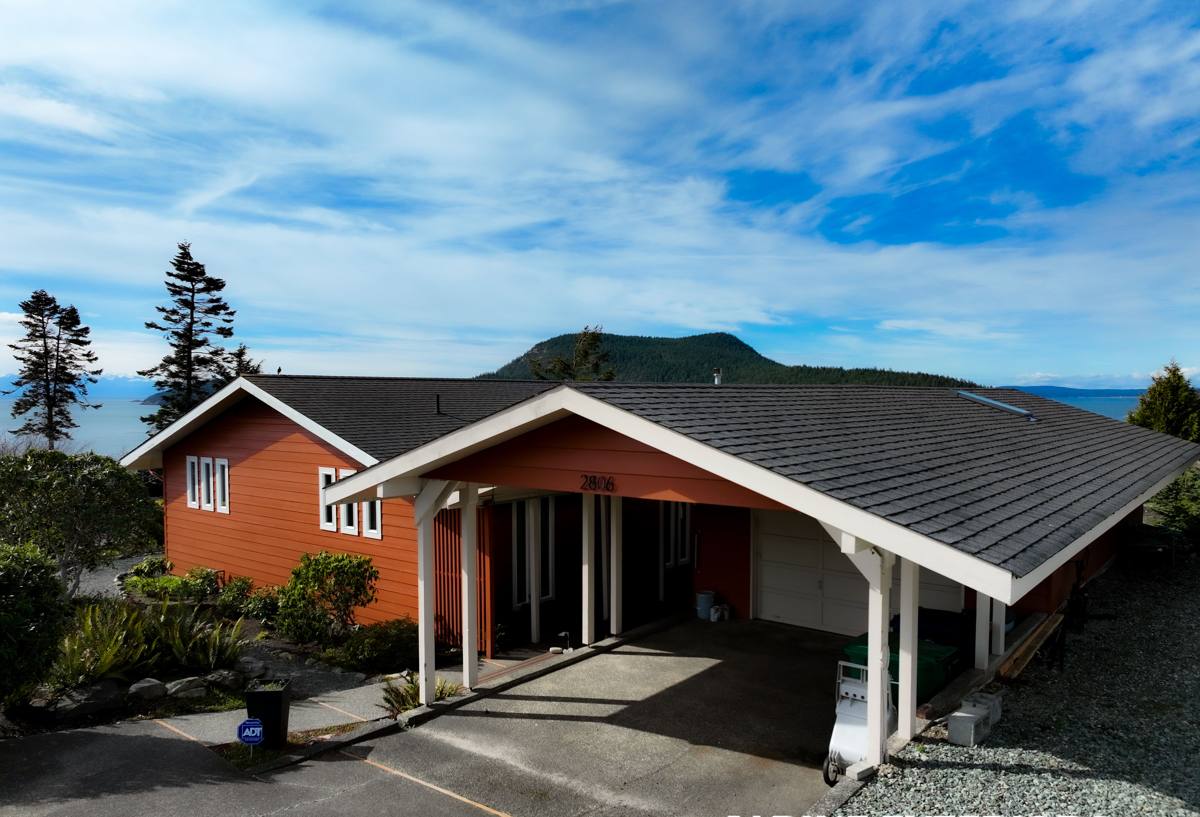
Cordata sits in the northern part of Bellingham, close enough to the water and open enough to weather that homes here take a steady beating year-round. It's not dramatic storm damage that wears a house down in this part of Whatcom County — it's the slow, patient grind of moisture, salt-tinged air, and shade. A house in Cordata can look fine for years while water is quietly working its way into seams, fasteners, and low-maintenance corners nobody checks.
We work on homes across Bellingham, and Cordata's mix of newer subdivisions and older single-family lots gives us a good cross-section of what holds up and what doesn't. This page walks through what we actually see out there, and how our siding, roofing, window, and deck work is built around it — not a generic sales pitch, just what a local crew learns from being in these attics, crawlspaces, and gutters year after year.
The Climate Problem, Specifically
Salt Air and Coastal Proximity
Cordata isn't beachfront, but it's close enough to Bellingham Bay and the Salish Sea that airborne salt is a real factor, especially on west- and south-facing walls that catch prevailing wind. Salt-laden moisture accelerates corrosion on fasteners, flashing, and any metal trim that isn't rated for it. It also speeds up the breakdown of lower-grade paints and coatings, which is part of why we're picky about what goes on a wall in the first place.
Driving Rain
Whatcom County doesn't get the heaviest annual rainfall in the state, but Bellingham's storms often come in sideways off Puget Sound with real wind behind them. Driving rain finds every gap in a building envelope that vertical rain never would — around window flanges, at siding laps, behind poorly sealed trim. A product or installation that only handles rain falling straight down is not enough here.
The Long Moss Season
Cordata has plenty of tree cover and enough shaded, north-facing rooflines and fence lines to keep moss and algae in business nearly ten months of the year. Moss holds moisture against a surface long after the rain stops, which is exactly the condition that rots wood trim, degrades shingles, and stains siding. A roof or deck that isn't detailed to shed water and dry out quickly becomes moss habitat within a couple of seasons.
Siding in Cordata: Why We Only Install James Hardie
Siding is the single biggest exposure surface on any house, and it's the product decision we get the most questions about. Bellingham Exterior Company installs James Hardie fiber cement exclusively. We don't install vinyl, LP SmartSide, Cemplank, Allura, or bare cedar and primed spruce — not because those products have no merit, but because we've made a standard for what we're willing to put our name on in this climate, and Hardie is the one that consistently meets it.
What Matters Most in Cordata's Conditions
- Moisture resistance: Fiber cement doesn't swell, delaminate, or rot the way engineered wood products can when a caulk joint fails and water gets behind the panel.
- Non-combustible material: Hardie's cement composition doesn't burn, which matters more each fire season even on the wetter west side of the state.
- Factory-cured finish: ColorPlus finish is baked on at the factory under controlled conditions, so it resists the fading and chalking that field-applied paint struggles with under Bellingham's UV and salt exposure.
- Climate-specific engineering: Hardie's HZ10 product line is formulated for wetter, harsher climates like ours, versus the HZ5 formulation sold in hot, dry regions.
Where We're Honest About Trade-Offs
Fiber cement is heavier and more labor-intensive to install correctly than vinyl or engineered wood, which is part of why it costs more up front. It has to be cut, fastened, and flashed to spec — done wrong, any siding product will fail early, and Hardie is not forgiving of sloppy installation around windows and butt joints. That's exactly why installation crew experience matters as much as the product choice itself.
Roofing for Shade, Moss, and Long Wet Stretches
Cordata's tree canopy is part of what makes the neighborhood pleasant to live in, but it's also what keeps certain roof sections shaded and slow to dry. We look at roofing here with moss prevention and proper attic ventilation as top priorities, not afterthoughts.
What We Check and Address
- Flashing at valleys, chimneys, and roof-to-wall transitions, where driving rain finds its way in first
- Gutter and downspout capacity for sustained Pacific Northwest rain events, not just cloudburst volume
- Ventilation balance, since a poorly vented attic traps moisture that condenses and rots decking from underneath
- Zinc or copper strips and moss-resistant treatments on shaded, north-facing slopes prone to buildup
A roof in Cordata that's never been checked for moss and moisture damage isn't necessarily a roof in good shape — it's often just a roof nobody's looked at closely.
Windows: Sealing Out Wind-Driven Rain
Window failures in this area are rarely about the glass itself — they're about the flashing and sealant details around the frame. Wind-driven rain pushes water sideways and upward in ways that stress a window's weakest points, particularly at the bottom corners and where trim meets siding.
What Correct Window Installation Looks Like Here
- Proper flashing tape and drainage plane integration so water that does get behind the trim has somewhere to go
- Sill pans that catch and redirect any moisture intrusion instead of letting it pool against framing
- Compatible sealants and materials that won't degrade or separate under repeated wet-dry cycling
- Correct shimming and fastening so frames don't rack or gap over time, which opens new paths for water
Energy performance matters too, but in Cordata's climate, keeping water out of the wall assembly is the more urgent job. A window that's efficient but poorly flashed will cause rot long before it costs you much on a heating bill.
Decks: Built to Dry, Not Just to Look Good
Outdoor living space is part of what draws people to this part of Bellingham, but a deck here has to survive shade, standing moisture, and moss the same way a roof does. The decks we see fail early are almost always failing because of trapped moisture — boards laid tight with no drainage gap, ledger boards flashed poorly against the house, or joists sitting in standing water with no ventilation underneath.
Deck Considerations Specific to This Area
- Proper ledger flashing where the deck attaches to the house, a common leak point that causes hidden structural rot
- Board spacing and joist ventilation to let a wet deck actually dry out between rain events
- Material choice suited to shaded exposure, since some composite and wood products handle sustained moss and mildew contact better than others
- Fastener and hardware corrosion resistance, especially if the deck faces prevailing wind off the water
Cost Factors: What Actually Moves the Number
| Factor | Why It Matters in Cordata |
|---|---|
| Home exposure (sun vs. shade) | Shaded, moss-prone walls and roofs often need more prep and moisture remediation before new material goes on |
| Existing water damage | Hidden rot behind old siding or around old flashing adds repair scope once it's opened up |
| Material choice | Fiber cement, dimensional roofing, and quality window units cost more upfront but reduce the repeat maintenance and repair cycle |
| Access and lot layout | Tree cover, tight side yards, and multi-story sections affect labor and staging time |
| Scope bundling | Doing siding, roofing, windows, or decks together can reduce redundant setup and trim costs versus separate projects |
Why a Local Crew Matters for This Kind of Work
Exterior work in Whatcom County isn't the same job as exterior work in a dry climate, and it isn't identical from one Bellingham neighborhood to the next either. A crew that works Cordata regularly knows which rooflines hold moss, which lots stay shaded into the afternoon, and which older subdivisions were built with detailing that doesn't hold up to today's driving rain. That local pattern recognition is what catches a problem during a walkthrough instead of after the siding's already up.
We also stand behind installation the way manufacturers expect — Hardie's warranty terms, roofing warranties, and window manufacturer coverage all assume correct, climate-appropriate installation. Cutting corners on flashing or fastening doesn't just risk early failure, it can void the coverage that's supposed to protect the homeowner.
A Simple Pre-Project Checklist for Cordata Homeowners
- Walk the exterior after a heavy rain and note any staining, moss buildup, or soft spots
- Check attic ventilation and look for condensation or musty smell, a sign of trapped moisture
- Inspect deck ledger boards and joists for discoloration or softness
- Look at window sills and trim for gaps, caulking failure, or paint bubbling
- Ask any contractor what specific flashing and drainage details they use for this climate, not just what product they sell
If you're in Cordata and want an honest read on where your siding, roof, windows, or deck actually stand, we're happy to take a look. The estimate is free, there's no pressure, and you'll get a straight answer about what needs attention now versus what can wait.