 Bellingham Exterior
 Exterior Work in Sehome: What the Neighborhood Is Up Against
Sehome sits close to downtown Bellingham and Bellingham Bay, in a stretch of Whatcom County where the exterior of a house rarely gets a break from the weather. The marine climate here means moisture is a near-constant presence — not just rain totals, but the kind of low-angle, wind-driven rain that finds its way into laps, seams, and fastener points that a drier climate would never test. Add in salt-tinged air off the bay, tree cover that keeps roofs and siding in shade for long stretches of the day, and a moss season that can run from fall well into spring, and you have a set of conditions that are genuinely harder on a home's exterior than most of the country deals with.
None of this means Sehome homes are doomed to constant repair. It means the materials and installation details matter more here than they would somewhere dry and sunny. We've built our business around exterior systems — siding, roofing, windows, and decks — that are chosen and installed with this specific climate in mind, not generic national averages.
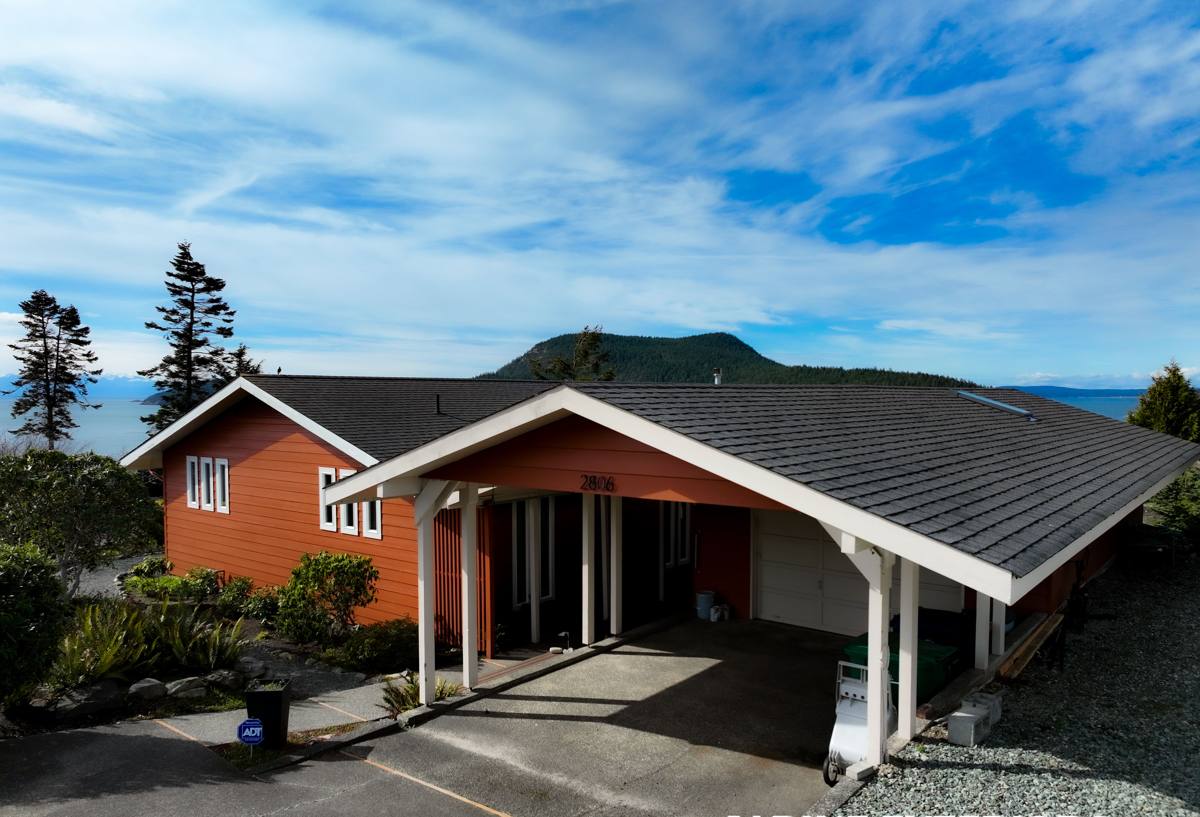
Siding in Sehome: Why We Standardized on James Hardie
Siding is the single largest surface area on most homes, and it's the first line of defense against wind-driven rain and constant humidity. After years of working on homes throughout Whatcom County, we made the decision to install only James Hardie fiber cement siding. We don't offer vinyl, LP SmartSide, Cemplank, Allura, primed spruce, or cedar — not because those products don't have a place in the market, but because we've weighed their real-world trade-offs against what this climate demands and settled on one system we're willing to stand behind.
What that means in practice
Fiber cement is dimensionally stable — it doesn't expand and contract with moisture the way wood-based products can, which matters when a house is damp more often than it's dry. It's non-combustible, which is an increasingly relevant consideration given regional wildfire smoke seasons and insurance underwriting trends. And James Hardie's ColorPlus factory finish is baked on and warrantied against fading and flaking, which removes a maintenance cycle that painted wood or field-finished products require homeowners to keep up with themselves.
Engineered for this region
James Hardie makes climate-specific product lines, and for a place like Bellingham — cool, wet, and coastal-influenced — that engineering is not marketing fluff. It affects how the product handles moisture cycling over decades, not just how it looks the first year. We size and detail every siding job around the HZ5 line, which is built for exactly this kind of climate zone.
Siding Material Comparison
| Factor | James Hardie Fiber Cement | Vinyl | Untreated/Primed Wood |
|---|---|---|---|
| Moisture behavior | Dimensionally stable, engineered for wet climates | Won't rot, but can warp or buckle with heat/cold cycling | Absorbs moisture, prone to rot without diligent upkeep |
| Fire performance | Non-combustible | Combustible, can melt/deform | Combustible |
| Finish longevity | Factory-baked ColorPlus finish, long fade warranty | Color molded in, can chalk/fade over time | Requires repainting/staining on a recurring cycle |
| Maintenance burden | Low — occasional wash | Low, but repairs can be hard to color-match | High — recurring paint, caulk, and rot inspection |
| Appearance | Authentic wood-grain or smooth profiles, holds shape | Can look plastic up close, limited profile depth | Most authentic look, but only while well-maintained |
Every one of these materials has a legitimate place somewhere in the industry. Our decision isn't a judgment on the products themselves — it's a decision about what we're comfortable putting our name behind in a climate that punishes moisture mistakes over a 20- to 30-year timeline.
Roofing: Moss, Rain, and Shade Are the Real Enemies
Roofs in Sehome deal with three compounding problems: heavy seasonal rainfall, tree canopy that keeps sections of the roof shaded and slow to dry, and moss growth that thrives in exactly those conditions. Moss isn't just cosmetic — as it establishes itself under shingle edges and around flashing, it holds moisture against the roofing material and can work its way under laps over time, which shortens the life of an otherwise sound roof.
Good roofing work here comes down to a few unglamorous fundamentals: correct underlayment for a wet climate, properly lapped and sealed flashing at every valley, chimney, and penetration, ventilation that lets the attic and roof deck actually dry out between storms, and gutter systems sized for real Pacific Northwest rain volume rather than a national average. We also talk to homeowners honestly about moss control and maintenance — it's an ongoing relationship with a roof in this climate, not a one-time fix.
Windows: Comfort, Condensation, and Storm Performance
Windows do double duty in Sehome — they need to keep driving rain out and keep the house comfortable through a long, damp heating season. Older single-pane or poorly sealed windows in this climate tend to show it in predictable ways: condensation between panes, cold drafts near the frame, and a noticeable jump in heating costs once the wet season sets in.
What we look at on a window job
- Frame material and seal quality relative to sustained damp exposure, not just occasional rain
- Proper flashing integration with the siding system so water is directed out and away from the rough opening
- Glazing package suited to a marine climate — comfort and condensation control matter as much as raw energy ratings
- Correct installation sequencing so the window and the siding work together as one weather-resistant system, not two separate projects
Window replacement is also a natural time to catch and correct hidden moisture damage around old openings before new siding goes on — something we always inspect for rather than assume away.
Decks: Built to Survive a Wet Climate, Not Just a Dry Weekend
A deck in Sehome spends most of the year exposed to standing moisture, shade-driven slow drying, and, depending on the lot, some salt air influence off the bay. That combination is hard on fasteners, ledger connections, and any wood surface that isn't detailed to shed water quickly. The most common deck failures we see aren't dramatic structural collapses — they're slow moisture intrusion at the ledger board, fastener corrosion, and decking boards that were never given a way to dry out underneath.
We build and repair decks with attention to proper ledger flashing, gapped decking for airflow and drainage, corrosion-resistant fasteners appropriate for a damp coastal climate, and substructure ventilation so the deck isn't sitting in trapped moisture for months at a time. Material choice — whether wood or composite — matters less than getting these details right.
Cost Factors by Project Type
Every home is different, and final numbers depend on size, access, existing damage, and scope. In general terms, here's how these four project types compare on investment and lifespan expectations in a climate like this one:
| Project | Typical Lifespan (Bellingham climate) | Biggest Local Cost Driver | Investment Level |
|---|---|---|---|
| James Hardie siding | Decades, with proper installation and upkeep | Removal of old material, extent of hidden moisture repair | Higher upfront, low ongoing maintenance cost |
| Roofing | Varies by material; moss and shade shorten effective life if untreated | Roof complexity, flashing detail work, moss remediation | Moderate to higher, depending on material |
| Windows | 20+ years for quality units, properly installed | Number of openings, flashing integration with siding | Moderate, scales with quantity |
| Decks | Highly dependent on ledger and substructure detailing | Ledger/structural repair, material choice | Lower to moderate, scales with size and material |
Why a Local Crew Matters in Whatcom County
Exterior work isn't just a materials question — it's a details-and-sequencing question, and those details change with the climate. A crew that works Whatcom County roofs, siding jobs, and decks year-round knows what a Sehome winter does to a poorly flashed valley, what a shaded north wall does to a siding job that wasn't detailed for slow drying, and how salt air factors into fastener and hardware choices near the bay. That kind of judgment doesn't come from a spec sheet — it comes from doing this work, in this climate, repeatedly.
A local crew is also easier to hold accountable. Warranty work, follow-up questions, and honest answers about what your home actually needs are a lot more reliable when the company doing the work lives and operates in the same weather it's building against.
Signs Your Sehome Home May Need Exterior Attention
- Green or black staining, or visible moss growth, on roofing or siding surfaces
- Soft, discolored, or bubbling siding, especially near the ground or around window trim
- Windows that fog between panes or feel drafty during wind-driven rain
- Deck boards that stay damp long after rain has stopped, or soft spots near the ledger board
- Granule buildup in gutters, or shingles that look thin, curled, or patchy
- Paint or caulk that's cracking or pulling away faster than expected
Any one of these on its own might be minor. Several together, especially on a home that hasn't had its exterior looked at in a while, are worth a professional assessment before small issues become expensive ones.
Getting Started
If you're in Sehome or elsewhere around Bellingham and want a straight answer about what your siding, roof, windows, or deck actually need — not a sales pitch — we're happy to take a look. Reach out for a free, no-pressure estimate using the form below, and we'll walk the property with you and tell you honestly what we see.