 Bellingham Exterior
 Exterior Work in Lynden: A Different Set of Conditions Than People Expect
Lynden sits inland from Bellingham Bay, closer to the Nooksack River valley and the Canadian border than to open saltwater. That distinction matters for how we approach a project here. Homeowners sometimes assume every Whatcom County property faces identical exposure, but a house in Lynden deals with a different mix than one perched on a bluff in coastal Bellingham. The marine air off the Strait of Georgia still reaches inland communities, especially during winter storm systems, but the bigger day-to-day stress on Lynden exteriors comes from something less dramatic and more relentless: sustained rain, high ambient humidity, and long stretches of shade and dampness that never fully dry out between storms.
That combination is exactly what breaks down the wrong exterior materials over time. It's also why the products and installation details we use here are chosen specifically for this kind of climate, not just whatever is cheapest or fastest to install.
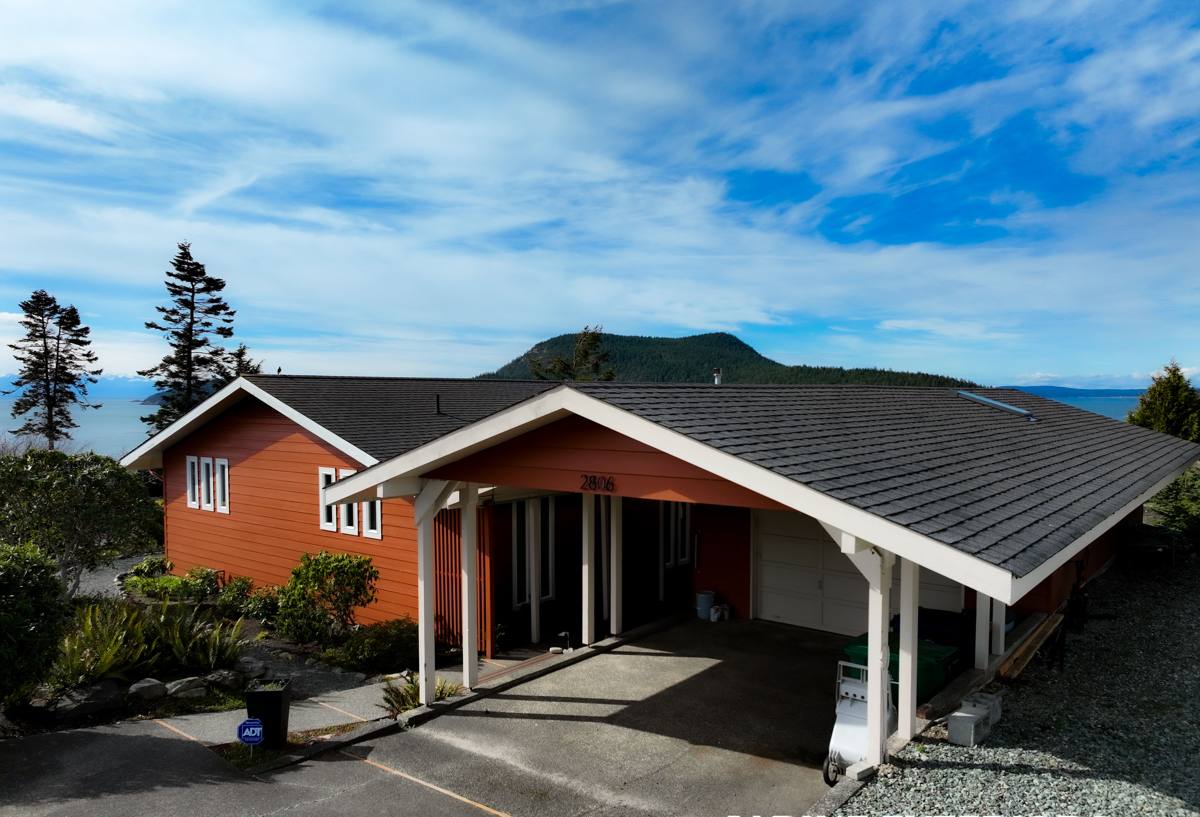
What Whatcom County Weather Does to a Home's Exterior
Driving Rain and Wind-Driven Moisture
Pacific storm systems don't just drop rain straight down here — wind pushes it sideways into walls, window frames, and trim joints. Over years, that wind-driven moisture finds every gap in flashing, every poorly caulked seam, and every material that wasn't designed to shed water repeatedly without swelling or cupping.
The Long Moss Season
Whatcom County's moss season isn't a brief autumn nuisance — it's close to year-round on north-facing roof slopes, shaded siding, and anywhere tree cover keeps surfaces from drying out. Moss holds moisture against roofing and siding materials, works into seams, and accelerates rot in anything wood-based or wood-composite. On a roof, unaddressed moss growth shortens the life of shingles significantly.
Temperature Swings and Freeze-Thaw
Lynden's inland location means slightly more temperature variation than the immediate coast — colder snaps in winter, warmer summer afternoons. Materials that absorb moisture and then freeze are prone to cracking and delaminating over repeated cycles. This is a real factor in choosing siding and roofing products that hold dimensional stability through the swings.
Siding: Why We Install Only James Hardie Fiber Cement
We don't install vinyl siding, LP SmartSide, Cemplank, Allura, primed spruce, or cedar. That's not a marketing position — it's a standard we set after years of seeing how different siding materials actually perform in this climate over the long haul, not just in the first few years after installation.
What the Alternatives Get Right — and Where They Fall Short Here
Vinyl is inexpensive and low-maintenance in the sense that it doesn't need painting, but it's a thin plastic product that can warp in temperature swings, crack on impact, and fade unevenly under UV exposure over the decades. Engineered wood products like LP SmartSide use wood strands bonded with resin — a real improvement over plain wood, but still wood-based, meaning any breach in the factory coating or a caulking failure at a seam gives moisture a path into a material that swells and can eventually rot. Cedar and primed spruce are traditional, attractive, and workable, but they demand ongoing painting, caulking, and moisture vigilance that most homeowners underestimate until it becomes a recurring expense.
Why James Hardie Fiber Cement
James Hardie siding is cement-based, not wood-based, which changes its relationship with moisture entirely. It doesn't swell, delaminate, or rot the way wood and wood-composite products can. It's non-combustible, which matters increasingly for insurance and wildfire-adjacent risk considerations even this far north. Hardie's ColorPlus factory-applied finish is baked on under controlled conditions rather than field-painted, which gives more consistent, longer-lasting color than a job-site paint job exposed to our humidity during application and cure. And Hardie engineers specific product lines — including HZ5 formulations — for regions like the Pacific Northwest that see sustained damp conditions, which is a meaningful difference from a generic, one-size-fits-all siding product.
The transferable warranty backing Hardie products is also a genuine asset if you sell the home — a buyer's inspector recognizes the brand and the coverage, which isn't true of generic fiber cement or engineered wood alternatives.
Roofing Built for Moss, Rain, and Real Longevity
A roof in Lynden works harder than the same roof would in a drier climate. We look at more than just shingle selection: proper ventilation to keep moisture from condensing in the attic, correctly lapped and sealed flashing at every valley and penetration, and gutter systems sized to actually keep up with a heavy winter storm rather than overflowing back under the roofline.
Moss prevention starts at installation — zinc or copper strips near the ridge line help suppress regrowth over time, and proper tree-line awareness during the estimate helps set expectations about which slopes will need more frequent attention. We're honest with homeowners about maintenance needs rather than pretending a roof here is maintenance-free once it's installed.
Windows: The Weak Point in Most Older Homes
Old single-pane or early dual-pane windows are one of the most common sources of both energy loss and water intrusion in Lynden's older housing stock. Wind-driven rain finds its way past failing seals and worn weatherstripping, and condensation between failed dual-pane units is a clear sign the seal is gone. When we replace windows, correct flashing integration with the surrounding siding matters as much as the window unit itself — a good window installed with poor flashing detail will still leak.
Decks: Built to Handle Standing Water and Shade
Deck failures in this climate almost always trace back to moisture that had nowhere to go — ledger boards without proper flashing, joists that stay wet under decking that doesn't allow airflow, or footings that were never engineered for saturated ground. We build decking systems with drainage and ventilation as first-order design decisions, not afterthoughts, and we talk through material trade-offs (wood versus composite decking) honestly based on how much upkeep a homeowner actually wants to take on.
What a Local Crew Actually Changes
A crew that works Whatcom County regularly knows which details matter here versus a drier climate: flashing sequencing, ventilation requirements, moss-resistant detailing, and how to schedule work around our wet season instead of fighting it. That's different from a national contractor cycling through the area on a broader Pacific Northwest sweep — the difference shows up in the small installation details that determine whether an exterior lasts fifteen years or forty.
Typical Project Scope by Category
| Service | Common Trigger for Replacement | What We Prioritize |
|---|---|---|
| Siding | Cracking, moisture staining, repeated repainting needs | Moisture-resistant material, correct flashing, factory finish |
| Roofing | Moss buildup, granule loss, aging beyond 15-20 years | Ventilation, flashing detail, moss suppression |
| Windows | Fogged panes, drafts, visible rot at frames | Proper flashing integration with siding |
| Decks | Soft or discolored boards, unstable footings | Drainage, ventilation, code-compliant footings |
Cost Factors Worth Understanding Before You Get Quotes
Exact pricing depends on your home's size, current condition, and scope, but the variables below are what actually move a quote up or down — useful to know before you compare bids.
| Factor | Why It Matters |
|---|---|
| Home size and wall/roof complexity | More corners, dormers, and roof planes mean more labor and material |
| Extent of existing damage | Rot or moisture damage found under old siding or roofing adds repair scope |
| Material tier chosen | Hardie board profiles, colors, and trim options vary in cost |
| Access and site conditions | Steep lots, tree cover, or tight access can affect labor time |
| Scope bundling | Combining siding, roofing, or windows in one project can reduce overlapping costs |
Choosing a Contractor in Lynden: What to Check
Whatcom County has no shortage of contractors advertising exterior work, and the quality gap between them is wide. A few things worth confirming before you sign anything:
- Washington state contractor license number, verifiable through L&I's public lookup
- Current liability insurance and bonding, not just a claim of coverage
- Manufacturer certification if the product (like James Hardie) has a certified-installer program tied to the warranty
- A written scope of work detailing flashing, moisture barrier, and ventilation approach — not just "siding replacement"
- References or past project history specific to this region, not just generalized reviews
- A clear, itemized estimate rather than a single lump-sum number with no breakdown
If you're weighing an exterior project in Lynden — siding, roofing, windows, or a deck — we're happy to walk your property, look at what your home is actually dealing with, and put together a straightforward, no-pressure estimate. Use the form below to get started.