 Bellingham Exterior
 Exterior Work Built for Life Near the Water
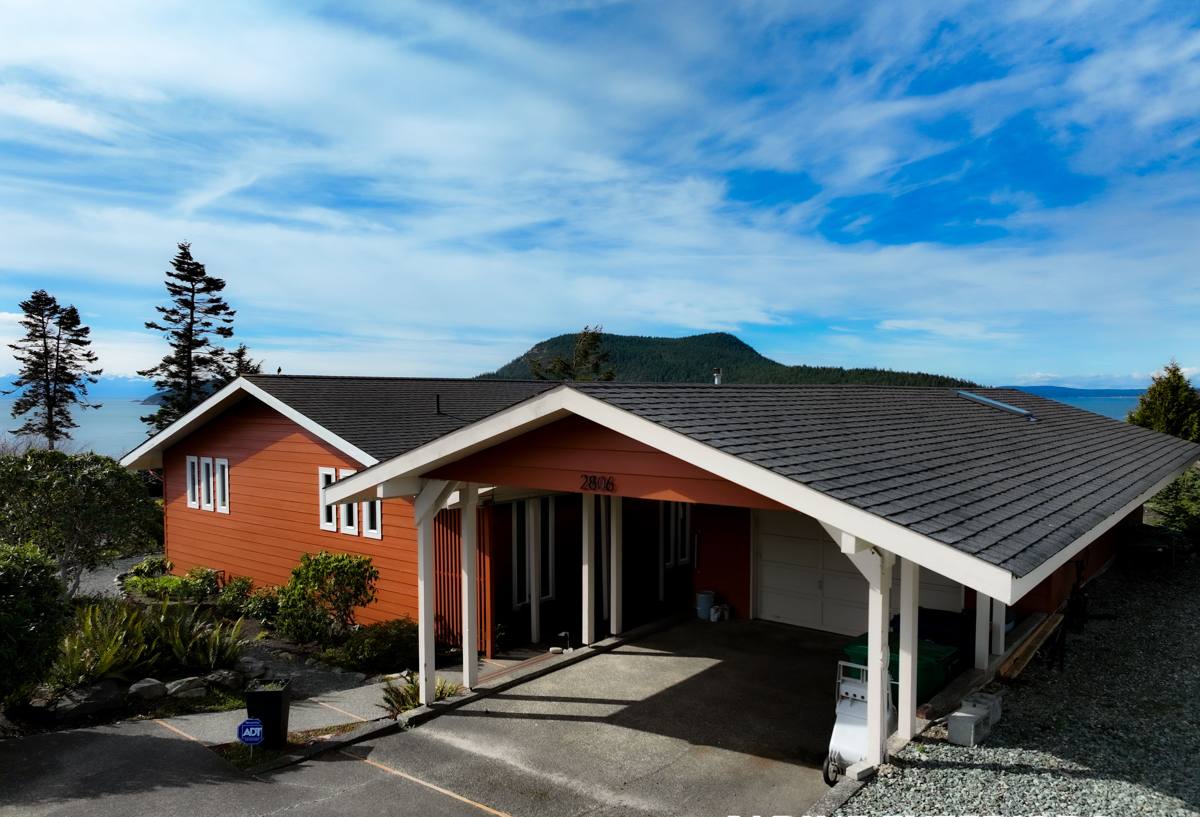
Homes along the Puget Sound side of Bellingham deal with a different set of pressures than houses further inland in Whatcom County. Salt-laden air moves in off the water, wind-driven rain hits siding at angles that shed roofs and gutters weren't always designed for, and the shade from mature evergreens keeps north- and west-facing walls damp for days after a storm passes. None of that is exotic or unusual for this part of Washington. It's just the baseline, and it's why exterior materials and installation details that work fine in a drier climate tend to underperform here.
We build our approach around that reality. Every siding, roofing, window, and deck job we do in the Puget area starts with the same question: how does this material and this installation detail hold up through another twenty Whatcom County winters, not just how does it look on install day.
What Salt Air and Moisture Actually Do to a House
Corrosion and Fastener Failure
Salt air accelerates corrosion on anything metal — nails, screws, flashing, hardware, even some trim accessories. When a contractor uses standard fasteners instead of coated or stainless options in a coastal-influenced area, the failure doesn't show up right away. It shows up three to five years later as rust streaking, loose trim, or fastener heads that have corroded enough to lose their grip. We spec fasteners and flashing for the environment the house actually sits in, not the cheapest option that passes inspection.
Moss, Algae, and Trapped Moisture
The long moss season in Bellingham isn't just a roof problem — it affects siding, decking, and anything with a north-facing or shaded exposure. Moss and algae hold moisture against a surface far longer than open air would, and that constant dampness is what breaks down materials that aren't built to take it. On siding, that means paint failure and substrate swelling. On decks, it means slick, degrading surfaces. On roofs, moss lifts shingles and shortens their life. Good exterior work in this area accounts for airflow, drainage, and material choice with moss in mind, not as an afterthought.
Wind-Driven Rain
Storms coming off the Sound don't just drop rain straight down — they push it sideways into walls, under laps, and around window and door openings. That's a water-management problem as much as a material problem. Flashing details, house wrap integration, and how siding laps are installed matter more here than in places with calmer weather patterns.
Siding: Why We Only Install James Hardie
We install James Hardie fiber cement siding exclusively. We don't install vinyl, LP SmartSide, Cemplank, Allura, primed spruce, or cedar, and that's a deliberate standard, not a limitation we're apologizing for.
In a marine climate with salt air and sustained moisture exposure, wood-based and wood-composite siding products carry real maintenance burdens — they're more vulnerable to moisture intrusion at cut edges and fastener points, and keeping them protected means staying on top of caulking, painting, and inspection on a schedule most homeowners don't have time for. Vinyl siding handles moisture fine on its own, but it expands and contracts with temperature swings, can become brittle over time, and doesn't offer the impact resistance or design flexibility that fits well with the architectural styles common in this area.
James Hardie fiber cement is non-combustible, dimensionally stable, and engineered specifically for climate zones like ours through its HZ5 product line, which is built for the wetter, harsher weather patterns found in the Pacific Northwest. The ColorPlus factory finish is baked on under controlled conditions rather than field-painted, which means better adhesion and more consistent color retention against the UV and moisture cycling that this area sees year-round. It also carries a strong, transferable warranty — something that matters if you ever sell the house.
We're not going to tell you competing products are junk. Cedar looks great and vinyl is inexpensive. What we will tell you is that after years of doing exterior work in this climate, we stopped installing products that require more maintenance than most homeowners realistically keep up with, or that don't hold up to salt air and moss-season moisture the way Hardie does. That's the standard we hold every job to.
Roofing That Handles Moss Season and Wind-Driven Rain
Roofs in the Puget area take a beating from two directions: sustained moisture that feeds moss and algae growth, and wind-driven rain that tests every flashing detail around penetrations, valleys, and roof-to-wall transitions. A roof that's watertight in a straight-down rain can still leak in a sideways storm if the flashing wasn't installed with that in mind.
We pay close attention to ventilation, underlayment quality, and flashing at every transition point, because those details determine whether moss gets a foothold and whether water finds its way in during the storms that roll off the Sound. Regular moss treatment and gutter maintenance extend a roof's life significantly in this climate — it's not optional maintenance here the way it might be in a drier region.
Windows: Sealing Out Wind-Driven Rain and Condensation
Older or poorly installed windows are one of the most common sources of moisture problems we find in homes near the water. Wind-driven rain finds gaps in flashing and sealant that wouldn't matter in calmer weather, and the temperature difference between damp, cool outside air and a heated interior drives condensation that can rot framing over time if it's not managed.
Proper window replacement isn't just swapping the glass unit — it's about flashing the opening correctly, integrating with the house wrap and siding so water sheds outward instead of behind the wall assembly, and choosing glazing and frame materials suited to a marine climate. Energy performance matters too, but for homes in this area, water management is often the bigger long-term issue.
Decks: Built to Survive Shade and Moss
Decks under tree cover or on the shaded side of a house near Puget deal with near-constant dampness for much of the year. That accelerates wood rot, feeds moss and algae growth on the deck surface, and corrodes fasteners faster than a deck in full sun would experience. Framing, ledger board attachment, and drainage beneath the deck surface all need to account for that reality, along with material choices that resist moisture better than untreated lumber.
A deck built without those considerations in mind might look fine for a couple of seasons before moss, soft spots, and fastener corrosion start showing up. We build decks in this area to shed water and resist moss from day one, not to look good until the first wet winter finds the weak points.
Comparing Exterior Materials for a Marine Climate
| Factor | James Hardie Fiber Cement | Vinyl | Wood / Wood Composite |
|---|---|---|---|
| Moisture resistance | Excellent, engineered for wet climates | Good, but can warp with temperature swings | Fair, prone to moisture intrusion at edges |
| Maintenance burden | Low — factory finish, occasional wash | Low, but brittleness increases with age | High — regular painting/sealing needed |
| Fire resistance | Non-combustible | Combustible | Combustible |
| Salt air / coastal durability | Strong track record | Moderate | Vulnerable without diligent upkeep |
| Warranty | Strong, transferable | Varies by manufacturer | Varies, often limited |
What Makes a Local Crew the Right Call Here
Exterior work in the Puget area isn't the same job as exterior work in a dry inland climate, and a crew that hasn't worked through a full Whatcom County winter cycle doesn't always know that going in. Local experience means knowing where moss tends to build up on a given roof orientation, which flashing details actually stop wind-driven rain instead of just meeting code minimums, and how salt air changes the fastener and hardware choices that hold up over time.
It also means being reachable after the job's done. If a question comes up two years into a Hardie warranty period, or a deck needs a maintenance check before the next wet season, a local crew that's still around and still doing this work in Bellingham is worth more than the lowest bid from a company that isn't based here.
A Practical Checklist for Homeowners in This Area
- Check north- and west-facing siding and roof sections for moss buildup at least once a year
- Inspect fasteners and flashing on decks and trim for early rust or corrosion, especially in shaded areas
- Keep gutters and downspouts clear before the fall rains start — clogged gutters push water where it doesn't belong
- Look for caulking or sealant failure around windows and doors, particularly on walls that take direct wind-driven rain
- Ask any contractor bidding on siding, roofing, or deck work how they account for salt air and moss-season moisture specifically
- Don't wait for visible rot or leaks to schedule an inspection — moisture damage in this climate often starts before it's visible
How We Approach a Puget-Area Project
We start with an honest look at what the specific exposure of your home calls for — how much shade it gets, which walls take the worst of the wind-driven rain, and what condition the current siding, roofing, windows, or decking are actually in versus what they look like from the curb. From there we walk through material options, but for siding specifically, that conversation leads to James Hardie because it's the product we trust to perform in this climate without asking homeowners to take on a heavy maintenance schedule.
We're not interested in selling a bigger job than a house needs, and we're not interested in cutting corners on flashing and fastener details that don't show up until a few years down the road. Given how much this climate tests an exterior, those details are the whole job.
If you're weighing siding, roofing, window, or deck work on a home in the Puget area, we're happy to take a look and give you a straightforward, no-pressure estimate — just fill out the form below.