 Bellingham Exterior
 Homes in the Puget area near Bellingham take a specific kind of beating year-round. Salt-laden air drifting off the water, driving rain that comes in sideways more often than straight down, and a moss season that seems to stretch longer every year all work against a roof at the same time. We've repaired enough roofs in this pocket of Whatcom County to know that "just patch it" often isn't the right answer — and that guessing at what's underneath the shingles usually costs homeowners more in the long run.
Why Puget Roofs Wear Differently
Roof repair here isn't identical to repair work forty miles inland. Three things stack up against roofs in this area, and they compound each other rather than acting alone.
Salt Air and Metal Fasteners
Proximity to Puget Sound means airborne salt settles on roofing surfaces and works into exposed metal — nail heads, flashing seams, vent boots, and gutter hardware. Over years, that accelerates corrosion in ways a roof twenty miles inland simply doesn't experience. A repair that ignores fastener condition and only addresses the visible shingle damage is a repair that fails again within a season or two.
Driving Rain and Wind-Driven Moisture
Storms off the water tend to arrive with real wind behind them, which pushes rain sideways and up under shingle edges, ridge caps, and step flashing rather than letting it run straight down and off. Roofing systems designed only for vertical rainfall — with minimal underlayment lap or loose flashing details — are the ones that develop leaks first in this kind of weather.
Moss, Shade, and a Long Wet Season
Bellingham's tree cover and extended damp stretch of the year give moss a long runway to establish itself, especially on north-facing slopes and anywhere shade lingers. Moss isn't just cosmetic — it holds moisture against the roofing surface, lifts shingle edges as it grows, and breaks down granule surfaces that are supposed to shed water and block UV.
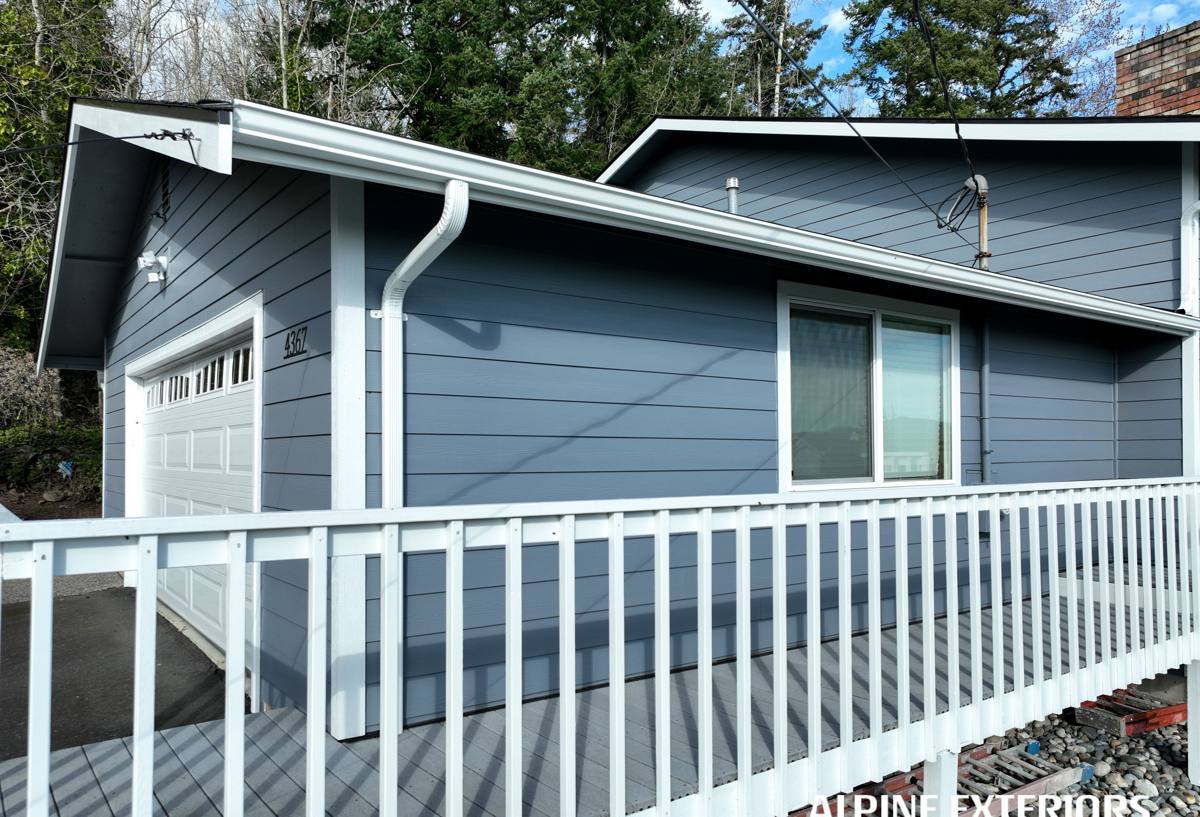
Common Repair Calls We See in This Area
Not every roof problem in Puget shows up the same way, but a handful of issues come up repeatedly:
- Moss-related shingle lifting and granule loss, especially on shaded north and east-facing slopes
- Corroded or failing flashing around chimneys, skylights, and roof-to-wall transitions
- Wind-driven leaks at ridge caps and hip lines after storm events
- Gutter and downspout backups that push water under the roof edge rather than away from it
- Soft or discolored decking discovered once shingles are pulled back for inspection
- Nail pops and fastener corrosion loosening shingles over time
What a Correct Repair Actually Involves
A roof repair that holds up in this climate goes beyond swapping a few shingles. Our process is built around finding the actual cause of a leak or failure, not just treating the symptom that's visible from the ground.
Inspection Before Anything Else
We start by getting on the roof, not just looking at it with binoculars. That means checking flashing seams, examining the underside of the decking where accessible (usually from the attic), and tracing water stains back to their actual entry point — which is frequently several feet from where the stain shows up inside.
Addressing the Underlayment, Not Just the Surface
If underlayment has failed or was never properly lapped to shed wind-driven rain, replacing shingles on top of it just delays the next leak. Where a repair area requires it, we replace underlayment correctly — proper overlap, sealed penetrations, and attention to how water will move under wind pressure, not just gravity.
Flashing Done Right
Flashing is where most "repaired" roofs fail again. Reusing corroded flashing, caulking over gaps instead of re-flashing, or mismatching metals that accelerate corrosion when they touch — these are shortcuts that show up as call-backs eighteen months later. We replace flashing when it's compromised and use materials suited to a salt-air environment.
Moss Treatment That Doesn't Just Mask the Problem
Killing surface moss without addressing the shingle damage underneath, or without slowing regrowth, means the same repair call in another year or two. Where moss has caused real damage, that gets repaired properly; where it's early-stage, we treat it and advise on maintenance that actually keeps it from coming back as fast.
Repair vs. Replacement: How We Help You Decide
Not every damaged section needs a full roof replacement, and not every leak can be permanently solved with a patch. The honest answer depends on the roof's age, how widespread the damage is, and what's happening structurally underneath.
| Factor | Points Toward Repair | Points Toward Replacement |
|---|---|---|
| Roof age | Under 15-20 years, depending on material | Near or past expected service life |
| Damage extent | Localized — one slope, one flashing area | Spread across multiple slopes or recurring in several spots |
| Decking condition | Solid, dry decking under damaged area | Soft, delaminated, or water-stained decking in multiple areas |
| Moss/algae history | Recent, treatable, limited granule loss | Long-term moss damage with widespread granule loss |
| Leak pattern | Single traceable source | Multiple unrelated leak points |
We'll tell you plainly which category your roof falls into. If a repair is the honest answer, that's what we recommend — a roof doesn't need to be replaced just because it has a problem.
Our Process, Start to Finish
- On-roof inspection — we physically examine the roof and, where possible, the attic side of the decking, not just a ground-level look.
- Straight explanation — we walk you through what we found, what's causing the issue, and what it will take to fix it correctly.
- Written scope and estimate — you get a clear description of the repair work, not a vague line item.
- Repair work — matching materials as closely as possible, correcting underlayment and flashing where needed, not just surface patching.
- Cleanup and final check — debris cleared, work area inspected before we call the job done.
Cost Factors for Roof Repair in This Area
Roof repair pricing varies with the specifics of the job, but a few factors tend to move the number the most in Puget specifically:
| Factor | Why It Matters Here |
|---|---|
| Extent of moss/moisture damage | Longer moss exposure often means more granule loss and possible decking repair, not just shingle replacement |
| Flashing material and condition | Salt-air corrosion sometimes means flashing needs full replacement rather than resealing |
| Roof pitch and access | Steeper slopes and limited access add labor time regardless of material cost |
| Decking condition once opened up | Hidden rot from long-term wind-driven moisture isn't visible until the repair is underway |
| Material matching | Older roofs sometimes require sourcing discontinued or less common shingle colors/profiles |
We won't quote a number without seeing the roof — anyone who does is either guessing or padding the estimate. What we can promise is a written scope so there are no surprises once work starts.
Maintenance That Extends the Life of a Repair
A repair is only as good as the maintenance that follows it. For homes in Puget, a few habits make a real difference:
- Keep gutters clear, especially after fall leaf drop and before the winter rain season ramps up
- Address moss early — a light treatment on a small patch is far cheaper than repair after it's spread and lifted shingles
- Trim back overhanging branches to reduce shade and debris buildup, both of which feed moss growth
- Have flashing and roof penetrations checked every couple of years, not just when a leak shows up
- Watch for granule buildup in gutters — it's an early sign of shingle wear, not just normal aging
Why a Crew That Already Works This Area Matters
Roof repair isn't a one-size-fits-all trade. A crew that mostly works drier, inland climates may not think twice about flashing choices or underlayment lapping that matter enormously here. Working regularly in Bellingham and around Whatcom County means we've seen how salt air, wind-driven rain, and moss actually behave on roofs in this specific environment — not in a manual written for a different climate. That translates into repairs that address the real cause instead of the visible symptom, and fewer callbacks for problems that should have been caught the first time.
Get a Straight Answer About Your Roof
If you're dealing with a leak, visible moss, or damaged flashing on a home in the Puget area, we're glad to take a look and give you an honest read on what it needs — repair or otherwise. Reach out for a free, no-pressure estimate using the form below, and we'll walk you through what we find in plain terms.