 Bellingham Exterior
 Why Birch Bay Decks Take More Punishment Than Decks a Few Miles Inland
Birch Bay sits right on the water, and that changes what a deck has to survive. A deck built in a sheltered inland yard in Bellingham deals with normal Pacific Northwest rain and winter damp. A deck built in Birch Bay deals with all of that plus salt-laden air blowing off the water, stronger and more consistent wind, and a longer stretch of shaded, damp months where moss and algae get a head start. None of this means a deck can't last decades out here — it means the details have to be right from the framing up, not just at the surface.
We work on homes throughout Whatcom County, and Birch Bay decks get treated differently on our job sites than a deck going in on a dry, wind-sheltered inland lot. The fasteners, the fastener coatings, the footing depth, the board spacing, and the finish schedule all shift a little when a structure is going to sit exposed to salt air and driving rain for its whole life.
Salt Air and Metal Fasteners
Airborne salt accelerates corrosion on anything metal — nails, screws, joist hangers, post bases, bolts. Standard galvanized hardware that's perfectly fine a mile inland can start showing rust streaks and pitting years earlier in a waterfront-adjacent environment like Birch Bay. Once a fastener starts corroding, it loses holding strength long before it looks obviously bad, and a deck's structural integrity depends on hundreds of those small connections doing their job.
Driving Rain and Wind Exposure
Wind off the water doesn't just push rain sideways — it drives it into every gap, seam, and fastener hole that isn't properly sealed or flashed. A ledger board attachment or a post base that would stay dry on a calm inland lot can take on water repeatedly in Birch Bay, and repeated wetting is what actually causes rot and hardware failure, not one bad storm.
Moss, Algae, and Shade
Whatcom County's damp season already runs long, and Birch Bay's marine humidity and tree-shaded lots stretch it further. Moss and algae aren't just a cosmetic nuisance — on wood decking they hold moisture against the board surface, and on any decking material they turn stair treads and low spots into a slip hazard. A deck built with proper drainage, gapping, and airflow underneath fights moss far better than one that traps water.
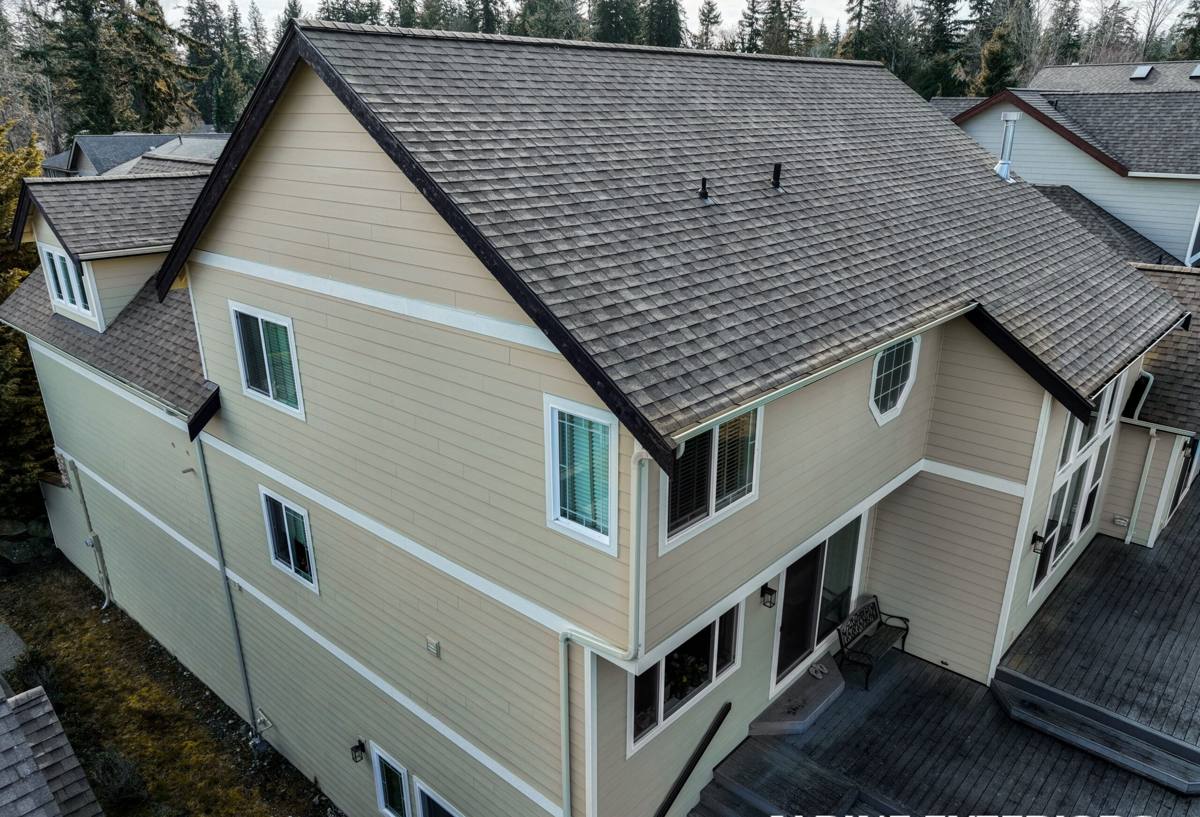
What a Correct Deck Build Looks Like for This Environment
A deck that's going to hold up in Birch Bay isn't built differently in a dramatic way — it's built to a higher standard of detail in the places most contractors treat as an afterthought.
Framing and Fasteners
We spec fasteners and structural hardware rated for coastal or high-corrosion exposure rather than defaulting to standard galvanized products, especially for anything within a few hundred feet of the water. That includes joist hangers, structural screws, post anchors, and ledger bolts. It costs a little more up front and saves a full re-frame a decade in.
Ledger Attachment and Flashing
The ledger board — where the deck ties into the house — is the single most common failure point on decks in wet climates, because it's a horizontal wood member bolted directly to the structure right where wind-driven rain wants to collect. Correct flashing, proper standoff spacing, and sealed fastener penetrations at this connection matter more in Birch Bay than almost anywhere else in the county.
Footings, Post Bases, and Drainage
Footings need to go below the frost line and bear on solid, well-drained soil, with post bases that keep wood posts off the concrete and off standing water. On lots with heavier moss growth or shaded, slow-draining soil, we grade and drain around footings so water doesn't sit against them season after season.
Decking Surface Choices
Board spacing, direction, and material all affect how fast a deck sheds water and how much moss gets a foothold. Wider gaps and consistent airflow underneath the deck do more to control moss than any single product choice.
Decking Material Comparison for a Salt-Air, High-Moisture Site
There's no single "right" decking material for every budget and every homeowner, but each option carries real trade-offs once salt air and long damp seasons are part of the equation.
| Material | Moisture & Salt-Air Behavior | Moss/Algae Resistance | Maintenance Load |
|---|---|---|---|
| Pressure-treated wood | Good if properly sealed and re-coated; end grain and fastener holes are the weak points | Needs regular cleaning; holds moss if not maintained | Highest — periodic cleaning, sealing, and inspection |
| Cedar | Naturally decay-resistant but still needs sealing against driving rain and salt | Moderate; benefits from airflow and gapping | Moderate to high — finish needs upkeep to hold its look |
| Composite decking | Doesn't rot or absorb moisture the way wood does; won't corrode | Still grows moss/algae on the surface in shaded, damp spots — needs washing | Lower — no sealing or staining, but surface cleaning still matters |
| PVC/capped polymer | Fully moisture-resistant surface, handles salt air well | Same surface cleaning need as composite in shaded areas | Lowest — cleaning only, no sealing or staining |
The right call depends on budget, how much shade the site gets, and how much upkeep a homeowner actually wants to do. We'll walk through this honestly during an estimate rather than push a single product — what matters most is that whatever surface goes down sits on framing and fasteners that are built for this environment underneath it.
Our Process From First Look to Finished Deck
- Site visit and assessment — we look at sun/shade exposure, wind direction, existing drainage, soil condition, and how close the site sits to the water, since all of that changes the spec.
- Design and material walkthrough — layout, decking material, railing, and any features like stairs or built-in seating, with honest trade-offs explained rather than upsold.
- Permitting — we handle the permit application and inspections required for the project.
- Demo of any existing structure — if there's an old deck to remove, we check the ledger and framing behind it for hidden rot before building new.
- Footings and framing — footings poured to proper depth, framing built with corrosion-appropriate hardware.
- Decking, railing, and finish work — installed to manufacturer spec (for composite/PVC) or properly sealed (for wood), with attention to gapping and drainage.
- Final walkthrough — we go over care and maintenance specific to the material chosen and the site conditions.
Permits and Code Considerations in Whatcom County
Deck construction in Whatcom County is subject to building permit requirements, and decks tied into a house structurally, elevated decks, and anything with stairs or guardrails typically need permits and inspections. Requirements can vary depending on whether a property falls under county jurisdiction or a specific overlay, and waterfront-proximity properties around Birch Bay sometimes have additional considerations related to shoreline setbacks. We handle the permit process as part of the job so homeowners aren't left tracking down requirements themselves.
Maintenance: Staying Ahead of Moss and Salt Once the Deck Is Built
Even a well-built deck needs some seasonal attention in this environment. A short annual routine catches small problems before they become structural ones.
- Sweep and rinse the deck surface regularly through the wet season to keep organic debris from feeding moss growth
- Check stair treads and shaded corners for early moss or algae film, since these are the first slip hazards
- Inspect visible fasteners and hardware once a year for early rust or corrosion, especially near the water-facing side
- Clear debris from gaps between boards so water keeps draining through rather than pooling
- Re-seal or re-stain wood decking on the manufacturer's recommended schedule — don't wait until it looks obviously weathered
- Confirm the ledger flashing and any caulked seams still look intact after major windstorms
Signs a Deck Is Already Losing the Battle
Some warning signs are easy to miss until they're serious. Soft or spongy spots in decking, rust streaks bleeding from fastener heads, a railing post that flexes more than it used to, or persistent moss that comes back within weeks of cleaning are all signals that moisture is getting somewhere it shouldn't. Catching these early is far cheaper than waiting for a board to fail or a railing to loosen.
Why Hiring a Crew That Already Works Birch Bay Matters
A contractor who mostly builds decks on dry, wind-sheltered inland lots and treats Birch Bay as just another job site will often use the same fastener specs, the same flashing details, and the same material assumptions everywhere. That's not a knock on their general skill — it's just a mismatch with what this specific stretch of coastline demands. A crew that already builds and repairs decks around Birch Bay has seen firsthand which fasteners hold up, which ledger details actually keep water out in a real windstorm, and which materials fight moss instead of feeding it. That local pattern recognition is hard to substitute for.
Bellingham Exterior Company builds and repairs decks throughout Bellingham and Whatcom County, including Birch Bay's coastal exposure, and we spec every deck to the conditions of its actual site rather than a one-size-fits-all standard.
If you're planning a new deck or want an honest look at whether an existing one is holding up, we're happy to come out for a free, no-pressure estimate — just fill out the form below.