 Bellingham Exterior
 Board & Batten in Birchwood: A Look That Has to Work as Hard as It Looks Good
Board and batten has become one of the most requested siding styles we see in Birchwood — the vertical lines read as clean and modern on newer builds, and just as at-home on a farmhouse-style remodel. But board and batten is a design profile, not a material, and the material behind that profile is what determines whether it still looks sharp in ten years or has turned into a maintenance headache. In Bellingham, and especially in a neighborhood exposed to the marine layer coming off the water, that material choice matters more than the reveal width or the batten spacing.
We install board and batten using James Hardie fiber cement exclusively. Not because it's the only way to get the look, but because it's the only way we're willing to stand behind the look once it's on a Whatcom County home.
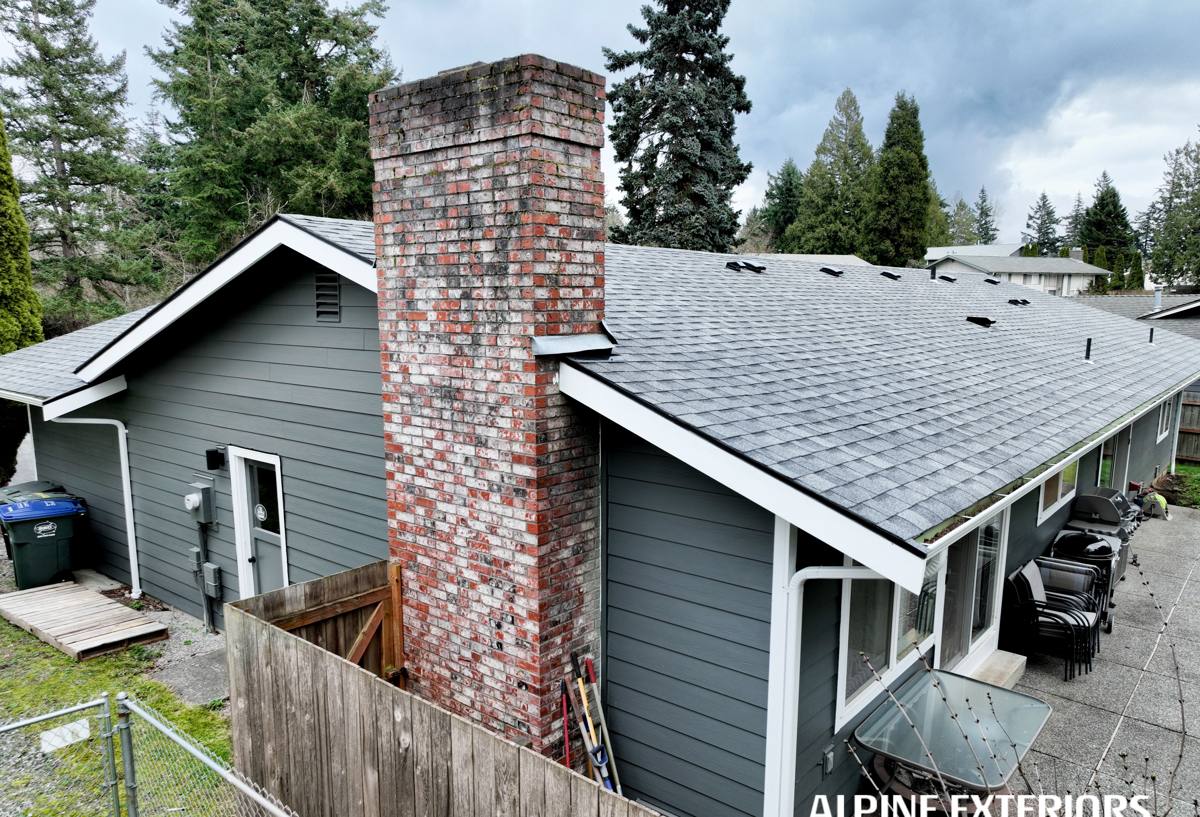
What Bellingham's Climate Actually Does to Vertical Siding
Vertical siding profiles behave differently than horizontal lap siding in wet, salt-influenced climates, and Birchwood gets a full dose of what Bellingham weather can deliver.
Salt air
Proximity to the water means airborne salt settles on exterior surfaces and accelerates corrosion of anything metal — fasteners, flashing, trim fasteners at butt joints. On board and batten specifically, the battens create more seams and more fastening points than a standard lap profile, so the quality and material of every fastener matters more, not less.
Driving rain
Board and batten's vertical joints, if not detailed correctly, give wind-driven rain a more direct path toward the wall assembly than horizontal lapped joints do. Bellingham's weather pattern — sustained rain events pushed by wind off the Sound — puts real pressure on those seams for months at a stretch, not just during the occasional storm.
Moss season
Western Washington's long, damp stretch from fall through spring is prime moss and algae growth season, and vertical battens create horizontal ledges and shadow lines where moisture lingers and organic growth gets a foothold. A siding product's factory finish and surface density directly affect how much of that growth actually takes hold versus rinses off.
None of this means board and batten is a poor choice for Birchwood — it means the execution has to account for these three things specifically, not just replicate a detail sheet written for a drier climate.
The System We Install: James Hardie Vertical Siding
For board and batten, we work with James Hardie's vertical siding options — HardiePanel vertical siding installed with Hardie batten strips, or the Hardie Artisan Collection where a more refined, tighter-grain reveal is wanted. Both are fiber cement: a mix of cellulose fiber, sand, and Portland cement that is non-combustible and dimensionally stable in a way wood and wood-based products are not.
Two things about the Hardie system matter specifically for this style and this climate:
- ColorPlus factory finish — baked-on, not field-applied, which means better adhesion and a harder surface that resists moss and algae growth better than a site-painted surface, and it doesn't need repainting on the same cycle as painted wood or primed products.
- HZ5 climate engineering — Hardie's product line is engineered for moisture exposure specific to the Pacific Northwest, which is the correct specification for Whatcom County, not a generic national spec.
We don't install vinyl board and batten, cedar board and batten, or primed spruce battens. Vinyl vertical profiles expand and contract more visibly at long vertical runs and can warp under UV and heat cycling. Cedar and primed wood battens require an ongoing paint and caulk maintenance cycle that, in a moss-heavy, high-moisture climate, comes due faster than most homeowners expect. Fiber cement gives us a material that holds its factory finish, resists moisture intrusion at the panel itself, and doesn't feed the organic growth that Bellingham's climate is so good at producing.
What a Correct Board & Batten Installation Actually Involves
The style is simple. The install behind it is not — and this is where most of the long-term problems with board and batten start, regardless of what material is used.
Drainage plane and rainscreen gap
Vertical siding needs a properly detailed water-resistive barrier and, ideally, a rainscreen gap behind the panels so any moisture that does get past the surface has somewhere to go and can dry out instead of sitting against the sheathing. This is non-negotiable in a climate with Bellingham's rain volume.
Batten spacing and fastening
Battens need consistent spacing over the panel joints, fastened into framing (not just sheathing) with corrosion-resistant fasteners rated for the coastal exposure this area sees. This is one of the most common corner-cutting points we see in prior installs — fasteners that looked fine going in but weren't rated for salt-air conditions.
Flashing at every horizontal transition
Window heads, roof-to-wall intersections, and any horizontal trim band need flashing detailed to shed water outward, not just caulked and hoped for. Caulk is a backup, not a strategy.
Panel joints and expansion
Fiber cement panels need the manufacturer's specified gaps and sealant at joints to allow for normal expansion and contraction without cracking the finish over time.
A quick homeowner checklist for evaluating any board and batten quote — ours or anyone else's:
- Is a rainscreen or drainage gap included, or is siding going straight over the existing barrier?
- What fastener type and coating is specified, and is it rated for coastal/salt exposure?
- How is flashing detailed at windows, doors, and roof lines — specifically, not generally?
- Is the manufacturer's install spec being followed for panel gaps and batten fastening?
- Does the warranty cover workmanship separately from the product warranty, and for how long?
Board & Batten Material Comparison
| Material | Moss/algae resistance | Salt-air durability | Maintenance cycle | Our position |
|---|---|---|---|---|
| James Hardie fiber cement | Strong — factory ColorPlus finish | Strong with correct fasteners | Low — no repainting on typical cycle | What we install |
| Vinyl vertical panel | Moderate — grows on surface texture | Moderate, can become brittle | Low, but limited repair options | Not installed |
| Cedar board and batten | Weak without frequent treatment | Weak — fasteners and wood both suffer | High — refinishing every few years | Not installed |
| Primed spruce/engineered wood | Weak once primer/paint wears | Weak at cut edges and joints | High — moisture-sensitive at edges | Not installed |
Our Process, Start to Finish
Every Birchwood board and batten project starts with an on-site look at the existing wall assembly — what's there now, what condition the sheathing and water-resistive barrier are in, and what that means for the scope of the tear-off. From there:
- Site assessment and measurements, including a look at any existing moisture damage behind the current siding.
- A written estimate that spells out the drainage plane approach, fastener spec, and flashing details — not just a square-footage price.
- Removal of existing siding and inspection of sheathing, with any repairs addressed before new material goes on.
- Installation of the water-resistive barrier and rainscreen system, then Hardie panels and battens per manufacturer spec.
- Final flashing, trim, and caulk detailing at every transition point.
- Walkthrough so you can see the finished work and ask questions before we call it done.
Living With Board & Batten in a Moss-Prone Climate
Even the right material benefits from a little homeowner attention. Keeping gutters clear so runoff doesn't sheet down the siding face, trimming back vegetation that shades panels and keeps them damp longer, and an occasional gentle rinse in late winter go a long way toward keeping a ColorPlus finish looking like it did on install day. What you shouldn't need is a repainting schedule — that's the whole point of the factory finish, and it's a real difference from wood-based board and batten options in this climate.
Why Local Experience in Birchwood Matters
Bellingham's exposure isn't uniform — how close a property sits to open water, how much wind-driven rain it takes on, how shaded and moss-prone the lot is all shift the details worth getting right. A crew that has already worked in Birchwood knows what that exposure looks like on this side of Bellingham specifically, and specs the rainscreen, fastener grade, and flashing details accordingly rather than applying a one-size-fits-all approach pulled from a drier region's install manual.
If you're weighing board and batten for a Birchwood home, we're happy to walk the property, look at what's there now, and give you a straightforward, no-pressure estimate for doing it right the first time.