 Bellingham Exterior
 New-Construction Windows Built for Columbia's Marine Climate
Columbia is one of Bellingham's older, established neighborhoods, which means a steady mix of ground-up new builds, teardown-rebuilds, and additions that require whole new window openings rather than simple replacements. New-construction windows are a different job than a retrofit: the window unit has a nailing fin that gets integrated directly into the wall's weather-resistive barrier and flashing system before siding ever goes on. Done right, this is the single most important moisture-control step in the entire building envelope. Done wrong, it's the reason a five-year-old house develops rot around its window openings.
Bellingham sits on Bellingham Bay in Whatcom County, and homes in and around Columbia deal with salt-laden air off the water, long stretches of driving rain that comes in sideways during fall and winter storms, and a moss and mildew season that can run most of the year on north-facing walls. New-construction window installation is where you either build in resistance to all three or bake in a slow-motion problem that won't show itself until the drywall and siding are already covering it up.
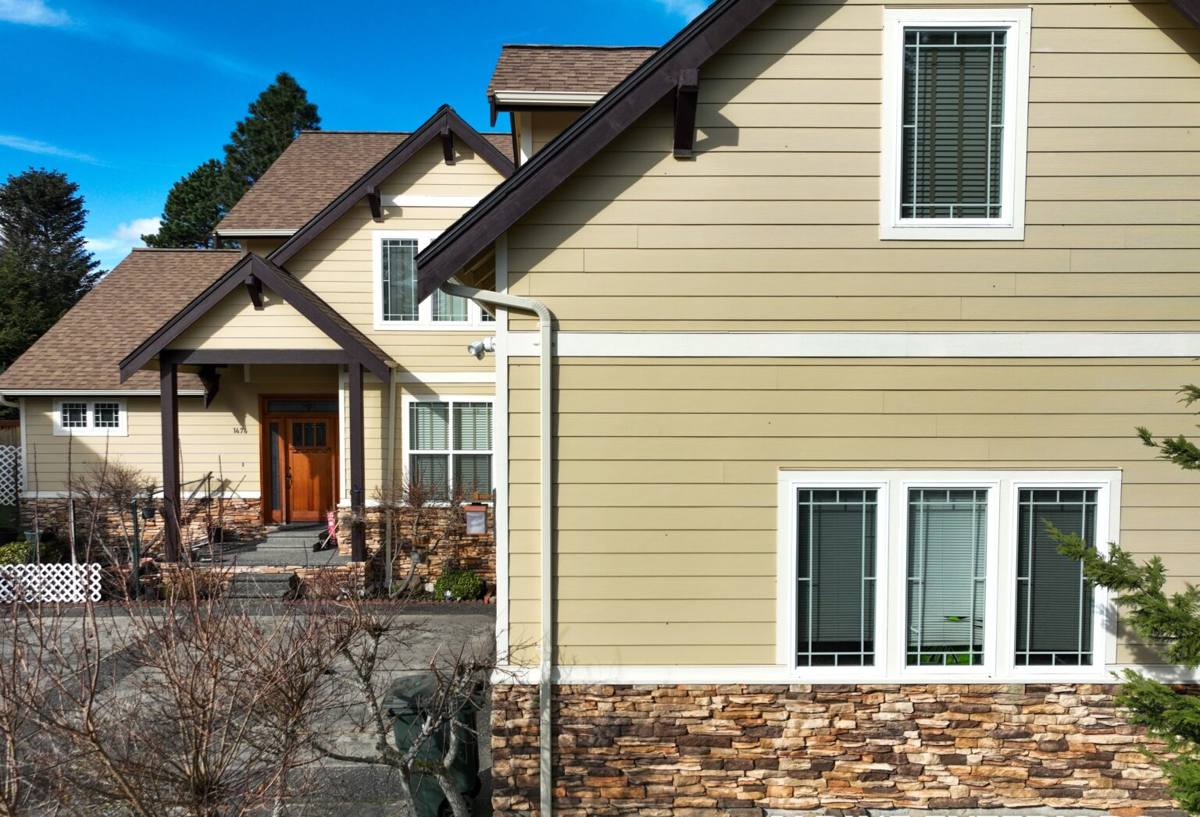
What "New-Construction" Actually Means
New-construction windows have a nailing flange (fin) around the perimeter of the frame. That flange gets fastened to the sheathing and integrated into a flashing sequence — sill pan, jamb flashing, head flashing, and housewrap — before any exterior finish is applied. This is different from replacement or "pocket" windows, which are inserted into an existing frame with the old exterior trim largely left in place. If you're building new, adding a room, or opening up a wall for a bigger window, you're in new-construction territory, and the installation sequence matters more than the window brand.
Why the Sequence Matters More Than the Window
We've seen plenty of good windows fail early because of installation shortcuts, and cheaper windows perform for decades because the flashing and sealing around them was done correctly. In a climate like ours, the window unit itself is only part of the equation. The sill pan, the order of the flashing layers (always shingle-style, so water sheds outward and down), and the sealant used at each layer determine whether wind-driven rain stays outside the wall or works its way behind the siding.
What Local Homes Need From This Job
- A sloped, sealed sill pan under every window — the single most common gap we find on jobs we're called to fix, and the first line of defense against sill rot.
- Housewrap integration done in the correct shingle-lap order, so water is directed out over the wrap, not trapped behind it.
- Compatible sealants and flashing tapes — mixing incompatible chemistries (certain tapes with certain housewraps) can fail invisibly for years before a leak shows up.
- Adequate rough opening clearance for shims and the flashing assembly, without oversizing to the point air can bypass the seal.
- Corrosion-resistant fasteners and flashing metal, given how much salt air moves off the bay and settles on wall assemblies close to the water.
- A finish plan for north- and west-facing elevations, where moss, algae, and prolonged dampness are the norm rather than the exception.
Our Installation Process
1. Rough Opening Check
Before a window ever gets set, we verify the rough opening is square, plumb, and correctly sized. On new builds this is usually clean; on additions and remodels in older Columbia homes, framing can be slightly out of true and needs correction before flashing begins.
2. Sill Pan and Flashing
We install a sloped sill pan flashing so any water that gets past the window sheds back outside rather than pooling on the sill. Jamb and head flashing follow in proper shingle-lap sequence, tied into the housewrap so the whole assembly directs water downward and outward.
3. Setting the Window
The unit is set plumb, level, and square, shimmed at the correct load points, and fastened through the nailing fin per the manufacturer's schedule — not just "a few nails to hold it." Under-fastening and over-fastening both cause problems: one lets the unit rack out of square over time, the other can distort the frame and bind the sash.
4. Sealing and Insulating
Gaps between the frame and rough opening get filled with a low-expansion, window-rated foam or backer rod and sealant — never standard high-expansion foam, which can bow window frames. Exterior sealant joints are tooled, not just gunned, so they actually shed water instead of just sitting on the surface.
5. Final Inspection and Water Test
We check operation, look at reveal and margins around the sash, and confirm flashing laps are correct before siding closes the wall up. Once siding covers the flashing, it's not a five-minute fix anymore — it's a siding removal job. We'd rather catch anything at this stage.
Window Types and What They're Suited For
Vinyl, fiberglass, and wood-clad are the three materials most homeowners in this area choose between for new construction. Each has real trade-offs worth understanding rather than a single "best" answer.
| Material | Strengths | Trade-offs in Our Climate |
|---|---|---|
| Vinyl | Lower cost, low maintenance, good energy performance | Frame can expand/contract with temperature swings; color and stiffness vary by manufacturer grade |
| Fiberglass | Very stable dimensionally, holds paint well, strong in wind-driven rain conditions | Higher upfront cost than vinyl |
| Wood-clad | Traditional look, good insulator | Exterior cladding must be well-sealed at joints or moisture can reach the wood core over time; more maintenance-sensitive near the water |
We don't push one material on every job. The right choice depends on the home's exposure, budget, and how it's oriented relative to prevailing wind and rain. A wall that takes direct weather off the bay deserves a different conversation than a sheltered, tree-lined lot a few blocks in.
Why the Installer Matters As Much As the Window
New-construction window installation is a trade skill, not a product purchase. Two crews can install the identical window from the identical manufacturer and get opposite long-term results, because the flashing sequence, fastening, and sealant choices are almost entirely dependent on the installer's discipline and experience with local conditions. A crew that regularly works Columbia and the surrounding Bellingham neighborhoods has already seen how these homes take on weather — where the moss builds up first, which elevations catch the worst of a winter storm, and which older framing quirks need extra attention before a window goes in.
That experience shows up in small decisions that matter: which sealant chemistry to use with a given housewrap, how much slope to build into a sill pan, and where to add extra flashing on an exposed gable wall. It's the kind of judgment that's hard to specify in a spec sheet but shows up in whether the wall stays dry for the next thirty years.
Common Mistakes We See on Rework Calls
- Sill pans skipped entirely, or a bead of caulk used in place of proper flashing.
- Housewrap taped over the nailing fin instead of lapped under it, trapping water against the sheathing.
- High-expansion foam used around the frame, bowing the jambs and causing the sash to bind.
- Incompatible tape and housewrap combinations that fail chemically over a few seasons, long after the crew is gone.
- Fasteners driven at an angle or missing the framing member, leaving the window under-secured.
Every one of these is invisible once siding and trim go on. That's exactly why the installation itself — not just the window you buy — deserves scrutiny before the wall closes up.
What to Expect on Cost
New-construction window pricing depends on unit size, material, glazing package, and how many openings are involved, plus site-specific factors like wall height and access. Rather than quote a number that won't reflect your actual project, we walk the job, confirm rough opening sizes and flashing needs, and give you a written estimate before any work starts. Homes with more complex elevations — multiple stories, extensive west or north exposure, tricky rooflines feeding water toward openings — take more flashing detail and time, which shows up in the estimate.
Get a Straightforward Estimate
If you're building new, adding on, or opening up walls for bigger windows in the Columbia area, we're happy to walk the site, look at your plans or rough openings, and talk through what the job actually needs. There's no pressure and no obligation — just a clear look at the work and an honest estimate you can use to plan. Reach out using the form below to get started.