 Bellingham Exterior
 Why Silver Beach Windows Wear Differently
Silver Beach sits in a spot that puts a lot of demands on a house's exterior. You've got the humidity and tree cover that comes with being close to Lake Whatcom, plus the broader Bellingham weather pattern of long wet stretches, salt-laden air moving in off Bellingham Bay, and short, low-angle winter sun that lets moisture sit on north- and west-facing walls for days at a time. Windows are one of the first components to show the wear from that combination, because they're a moving assembly with seals, weep holes, and finished surfaces that all have to keep working under constant moisture exposure.
We've worked enough homes in this part of Whatcom County to know that a window that performs fine in a drier inland climate can fail early here if it wasn't specified or installed with this environment in mind. That's the lens we bring to every Silver Beach job — not a generic install, but one sized to what this specific neighborhood does to a house.
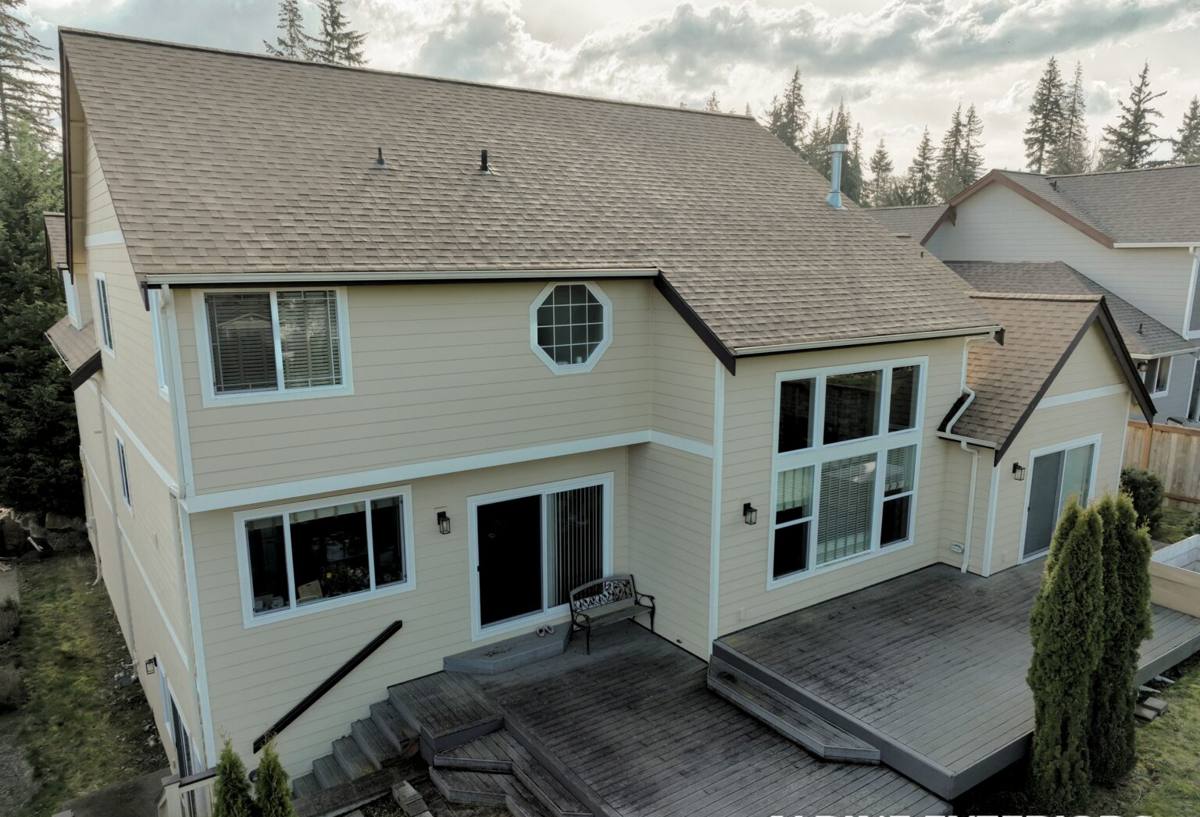
What the Local Climate Actually Does to a Window
Salt Air and Metal Fatigue
Proximity to Bellingham Bay means airborne salt travels further inland than most homeowners expect, especially on windy days. Salt accelerates corrosion on aluminum frames, hardware, screws, and lesser-grade hinges and locks. Once corrosion starts inside a frame cavity, it's often invisible until the window stops operating smoothly or a seal fails.
Driving Rain and Wind-Driven Moisture
Bellingham doesn't just get rain — it gets rain pushed sideways by wind off the water, which tests window flashing and sill pan details in ways a calm, straight-down rain never would. A window that's watertight in a light shower can still leak under wind-driven rain if the flashing or sill pan wasn't detailed correctly at install.
Moss, Algae, and Prolonged Dampness
Shade from mature trees around Silver Beach's lots keeps siding and window trim damp longer after a storm passes, which is exactly the condition moss and algae need to take hold. On wood-framed or wood-trimmed windows, that sustained moisture is what leads to soft spots, paint failure, and eventually rot at the sill and lower corners — usually the first place a window actually fails structurally, not the glass.
Signs a Silver Beach Home Needs Window Replacement
- Visible fogging or a hazy band between panes — the seal on the insulated glass unit has failed
- Soft, spongy, or discolored wood at the sill or lower corners of the frame
- Windows that stick, won't stay open, or need force to lock
- Cold drafts near the frame even when the window is fully closed and locked
- Paint that keeps bubbling or peeling on the same window every season
- Visible gaps between the frame and siding, or caulking that's cracked and pulling away
- A noticeable jump in heating costs with no other explanation
What a Correct Window Replacement Job Involves
Replacing a window well is mostly about what happens before the new window ever goes in. The frame opening has to be checked for rot and structural soundness, the old flashing has to come out clean, and a proper sill pan or sloped sill flashing needs to go in so any water that does get past the glazing has somewhere to drain — out, not into the wall cavity. Skipping or rushing this step is the single most common cause of window leaks we get called out to diagnose on older replacements, and it's invisible from the outside until the damage shows up on an interior wall or sill months or years later.
After the new window is set, it needs to be shimmed level and square, insulated around the frame without over-packing (which can bow the frame and cause it to bind), and sealed with the right sequence of house wrap, flashing tape, and exterior caulk so water is directed out and away from the opening at every layer. The interior and exterior trim finish it off, but the trim is cosmetic — the flashing and sealing underneath is what actually keeps the wall dry for the next twenty-plus years.
Choosing the Right Window for This Climate
There's no single "best" window material — the right choice depends on sun exposure, how sheltered or exposed the specific wall is, and what the homeowner wants to maintain long-term. Here's how the common options stack up for a damp, salt-air, shaded-lot environment like Silver Beach:
| Material | Moisture & Salt Air Behavior | Maintenance | Typical Trade-Off |
|---|---|---|---|
| Vinyl | Doesn't corrode or rot; handles humidity well | Low — occasional cleaning | Fewer color/finish options than wood or fiberglass |
| Fiberglass | Very stable in wet, temperature-swinging conditions; resists corrosion | Low | Higher upfront cost than vinyl |
| Wood (clad exterior) | Good if the exterior cladding is intact; interior wood still needs protection from condensation | Higher — exterior clad reduces but doesn't eliminate upkeep | Best look for older/craftsman-style homes, more sensitive to installation quality |
| Aluminum | Prone to corrosion in salt air and is a poor thermal performer in our climate | Moderate | We don't recommend it for this area as a primary frame material |
We steer most Silver Beach homeowners toward vinyl or fiberglass for standard replacements because both hold up to sustained moisture and salt exposure without the ongoing maintenance burden, and both come with strong warranty structures from manufacturers who stand behind coastal Pacific Northwest use. Wood-clad windows still make sense on homes where matching an existing architectural style matters more than minimizing upkeep — we're honest with homeowners about that trade-off before they buy, not after.
Glazing and U-Factor
Double-pane, low-E glazing is the practical baseline for this climate — it cuts heat loss and reduces interior condensation on cold, damp mornings, which is a real issue on shaded, poorly ventilated walls near the lake. Triple-pane can make sense on north-facing rooms or homes right along more exposed stretches, but it's not automatically worth the added cost on every wall of every house — we'll tell you plainly where it pays off and where it doesn't.
Our Process, Start to Finish
- On-site walkthrough of each window opening — checking framing, sill condition, and existing flashing before quoting anything
- Honest recommendation on material and glazing based on that specific wall's sun and moisture exposure
- Written estimate with no pressure to decide on the spot
- Removal of old windows with attention to what's found in the opening — rot or framing issues get flagged and priced separately, not hidden or ignored
- Proper sill pan flashing, house wrap integration, and sealing before the new window is set
- Interior and exterior trim finish work
- Final walkthrough and operation check on every window before we call the job done
Permits and Egress Requirements
Window replacement in the City of Bellingham and unincorporated Whatcom County can trigger permit and inspection requirements, particularly when a bedroom window is being resized or when the work affects a required egress opening. Bedroom windows generally need to meet minimum clear opening dimensions for emergency escape, and that requirement doesn't go away just because you're "only" replacing what's already there — if the existing opening was already undersized, replacement is often the moment to correct it. We handle the permit conversation upfront so there are no surprises mid-project.
What to Ask Before Hiring Anyone for This Job
- Will you inspect the sill and framing for rot before quoting, or only after you've opened the wall?
- What sill pan or flashing method do you use, and why?
- Is the manufacturer's warranty registered in the homeowner's name after install?
- Who pulls the permit if the job requires one — you or me?
- Can you show me examples of similar homes you've worked on in this area?
- What happens if you find rotten framing once the old window is out?
A contractor who answers these clearly and specifically, without vague reassurance, is usually one who's done this enough times in this exact climate to know where the real risk sits.
Why Local Experience in Silver Beach Matters
A window replacement crew that only works dry, inland jobs doesn't always think about salt air corrosion, sideways rain, or how much longer a shaded lakeside wall stays wet after a storm. Those aren't textbook concerns — they're things you learn by doing the work in Whatcom County, season after season, and seeing which details hold up and which ones fail early. We price and detail every Silver Beach window job around what this specific stretch of Bellingham does to a house, not a generic national spec sheet.
If you're noticing drafts, fogged glass, sticking sashes, or soft wood around a window frame, it's worth having someone take a real look before the damage spreads into the surrounding wall. We offer free, no-pressure estimates for Silver Beach homeowners — use the form below to get a time on the calendar.