 Bellingham Exterior
 Deck Replacement Built for Blaine's Coastline
Blaine sits right on the water at the top of Whatcom County, and that location shapes everything about how a deck ages here. Salt air off the Strait of Georgia gets into fasteners and framing connectors faster than it does even a few miles inland. Combine that with driving rain off the water and a moss season that can stretch from October well into spring, and you've got a climate that finds every weak point in a deck within a few years, not a few decades. If your deck is cupping, spongy underfoot, or the ledger board looks dark and swollen, you're looking at conditions we see constantly in this part of the county.
A deck replacement in Blaine isn't the same job as one in a drier, inland town. The fastener hardware, the flashing detail at the house connection, and even the gap spacing between boards all need to account for how much moisture this deck is going to see over its life. We build for that from day one.
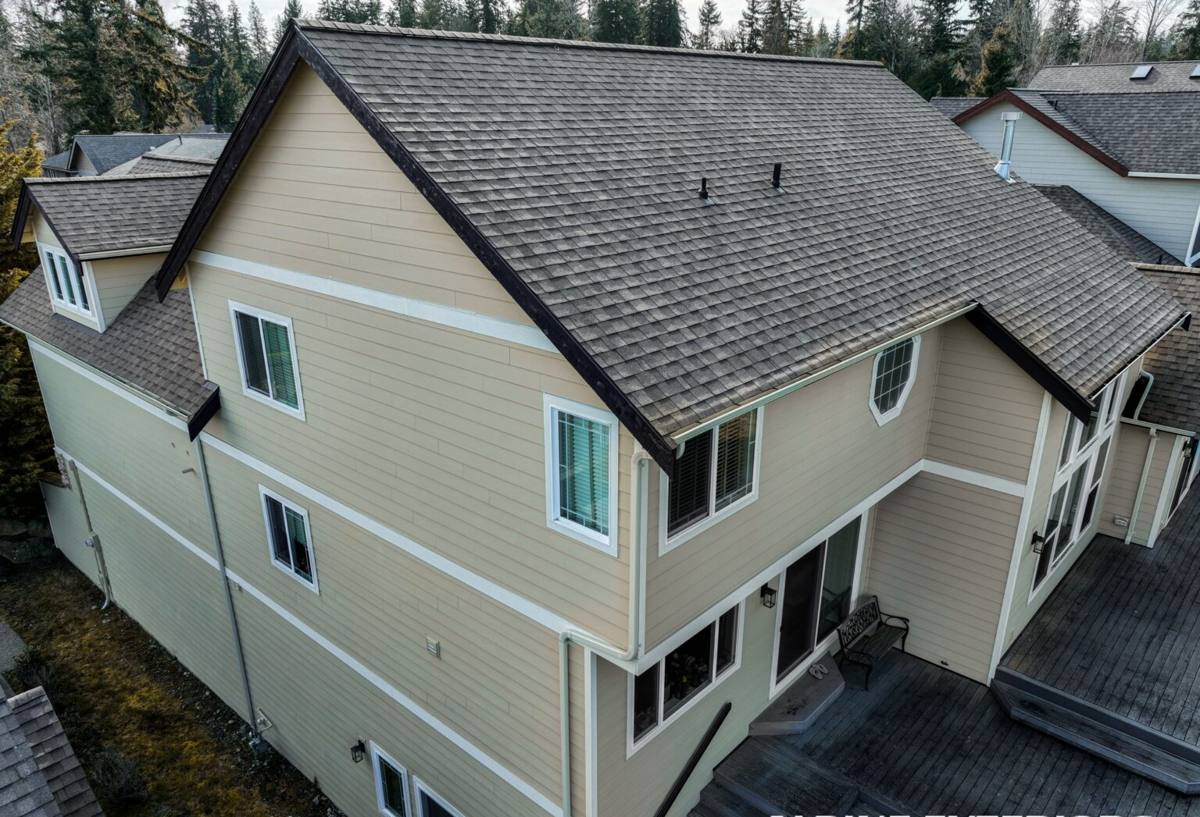
What Blaine's Climate Actually Does to a Deck
Salt Air and Metal Fatigue
Salt-laden air corrodes exposed fasteners, joist hangers, and structural screws well before the wood itself gives out. Once a fastener starts rusting, it loses holding strength quietly — you won't see it until a board lifts or a railing gets loose. This is the single biggest reason decks near the water fail structurally sooner than their inland counterparts, even when the wood looks fine on the surface.
Driving Rain and Ledger Rot
Wind-driven rain off the Strait doesn't just fall straight down — it gets pushed sideways into the house-to-deck connection at the ledger board. If that connection wasn't flashed correctly (or wasn't flashed at all, which is common on older decks), water tracks behind the ledger and into the rim joist. That's slow, hidden rot, and it's one of the most expensive things to ignore because by the time it's visible, framing is often compromised.
Moss, Algae, and Trapped Moisture
Whatcom County's long wet season means moss and algae get a real foothold on horizontal wood surfaces, especially in shaded spots near fences, trees, or the north side of a house. Moss holds moisture against the board surface for months at a time. On older or lower-grade decking, that constant dampness accelerates rot and makes boards slick and unsafe well before they look structurally bad.
Signs Your Blaine Deck Needs Replacing, Not Just Repairing
- Boards that feel spongy, springy, or soft when you walk across them
- Visible cupping, splitting, or graying that's gone past the surface into the wood grain
- Rust staining running down from screws or nail heads
- A ledger board that's dark, swollen, or separating slightly from the house
- Railing posts that wiggle at the base — often a sign the post base or blocking has rotted
- Persistent moss or algae that comes back within weeks of cleaning
- Joists or beams (visible from underneath) that are gray, cracked, or soft to a screwdriver poke
One or two of these on their own might mean a repair is enough. Several together, especially anything involving the ledger or framing, usually means the more honest answer is a full replacement rather than patching a structure that's already compromised underneath.
What a Correct Deck Replacement Involves
Full Tear-Out and Structural Inspection
We don't just pull the decking boards and reuse the frame underneath. Every replacement starts with removing the surface decking so we can actually see the ledger, joists, beams, and posts — the parts that determine whether the new deck will last. If the framing is compromised, replacing it now is far cheaper than discovering it later.
Ledger Flashing Done Right
Given how much wind-driven rain this area gets, the ledger-to-house connection is where we spend extra attention. Proper flashing — installed in the correct layered order with the house's water-resistive barrier — is what keeps water from tracking behind the deck and into your home's wall framing. This is one detail that's easy to skip and very expensive to fix later, so it's not optional in our process.
Corrosion-Resistant Hardware
Given the salt air this close to the water, we use fasteners and structural connectors rated for coastal exposure rather than standard interior-grade hardware. It costs a little more up front and saves you from the quiet fastener corrosion that undermines decks built with the wrong hardware for this environment.
Drainage and Airflow Underneath
Standing water and trapped moisture under a deck are what invite rot and moss to take hold. We grade and detail the substructure so water has somewhere to go, and we keep enough clearance and airflow underneath that the framing actually gets a chance to dry out between rain events — which, in Blaine, matters more than almost anything else.
Decking Material Options for a Coastal Climate
There's no single "right" material for every homeowner — it comes down to your budget, how much upkeep you're willing to do, and how long you want the deck to last before its next major service. Here's how the common options actually perform in Blaine's conditions:
| Material | How It Handles Salt Air & Moisture | Maintenance | Typical Lifespan Here |
|---|---|---|---|
| Pressure-treated lumber | Good if properly sealed; needs reapplication regularly in this climate | Annual cleaning and re-sealing | 10–15 years |
| Cedar | Naturally moisture- and insect-resistant, but still needs sealing near salt air | Periodic cleaning, re-staining every few years | 15–20 years |
| Composite decking | Doesn't absorb moisture or rot; handles moss and algae growth better than wood | Occasional washing, no sealing or staining | 25–30+ years |
| PVC decking | Fully moisture-resistant, best performer in coastal, wet climates | Lowest maintenance of the group | 25–30+ years |
We'll walk you through the honest trade-offs for your specific deck — composite and PVC cost more upfront but largely eliminate the sealing and staining cycle that wood requires in a climate this wet. Wood costs less initially but only holds up if the maintenance actually happens on schedule, which is a real commitment given how much moss and moisture this area sees.
Our Process for Blaine Deck Replacements
- On-site assessment — we inspect the existing deck, ledger connection, and substructure, and talk through what we find in plain terms
- Written estimate — a clear scope and price range before any work starts, no surprise add-ons hidden in fine print
- Permitting — Blaine and Whatcom County have permit requirements for deck work above certain heights or footprint sizes; we handle that process
- Tear-out and structural repair — full removal of old decking, inspection and repair or replacement of framing as needed
- Flashing and framing — ledger flashing, joist hangers, and corrosion-resistant hardware installed to hold up against this climate
- Decking installation — your chosen material installed with proper spacing and fastening for drainage and expansion
- Final walkthrough — we go over the finished deck with you and answer any maintenance questions before we call it done
Why a Local Crew Matters for This Job
Deck replacement isn't a one-size-fits-all trade. A crew that mostly works drier, inland regions may not think twice about ledger flashing detail or hardware grade — and in most of the country, that's fine. In Blaine, it isn't. We work throughout Whatcom County and see firsthand how quickly a deck can fail here when it wasn't built with salt air, driving rain, and moss season in mind. That's not a sales pitch — it's the difference between a deck that needs major work again in eight years and one that holds up for two to three decades.
We're also familiar with the permitting expectations in Blaine and the surrounding county, which keeps your project moving instead of stalling out on paperwork you didn't know you needed.
Cost Factors to Expect
Every deck replacement is different, and we're not going to quote a number without seeing your project — but a few things consistently move the price up or down:
- Deck size and height above grade (taller decks need more substantial framing and railing)
- Decking material chosen (wood vs. composite vs. PVC)
- Condition of the existing substructure — whether framing needs partial or full replacement
- Stairs, multiple levels, or built-in features like benches or planters
- Railing style and material
- Site access for material delivery and equipment
We'll break these down clearly in your written estimate so you know exactly what you're paying for and why.
If your deck in Blaine is showing signs of wear, or you just want an honest opinion on whether it needs repair or full replacement, we're happy to take a look. Reach out for a free, no-pressure estimate using the form below.