 Bellingham Exterior
 Roofing Built for Edgemoor's Shoreline Climate
Edgemoor sits close enough to Bellingham Bay that salt air is part of daily life, not an occasional nuisance. That proximity to the water, combined with the driving rain that comes off the Salish Sea and the long, damp moss season that follows, puts real stress on a roof that a homeowner farther inland simply doesn't deal with in the same way. A new roof installation in this neighborhood isn't just a matter of picking shingles off a rack — it's a matter of choosing materials and installation details that hold up to salt-laden wind, sustained wet weather, and shaded, moisture-retentive tree cover.
We've worked enough roofs in and around Edgemoor to know which failure points show up first here: fastener corrosion near the shoreline, moss establishing in shaded valleys and north-facing slopes, and moisture finding its way in through undersized or poorly maintained flashing. A correct new roof installation addresses all three from the start, rather than leaving them as maintenance problems for the homeowner to chase later.
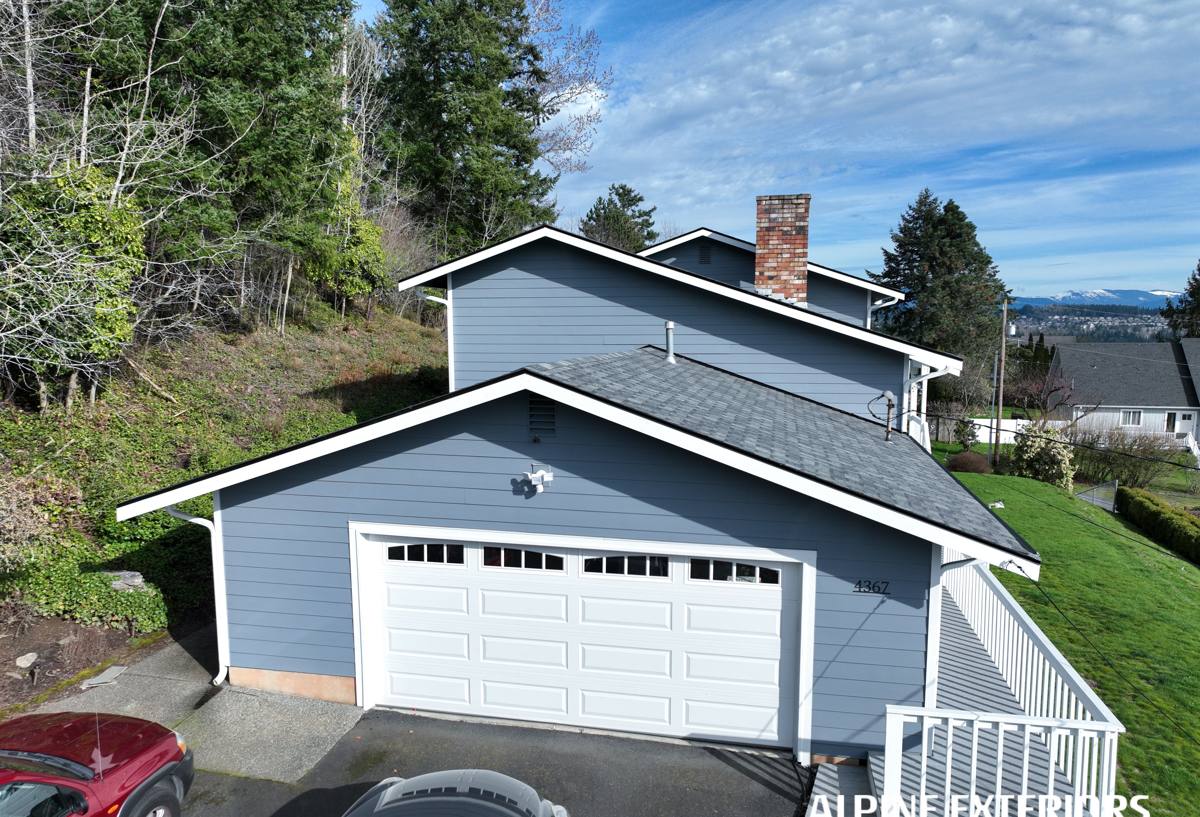
Why Edgemoor's Location Changes the Job
Salt Air and Metal Fatigue
Homes closer to the bay are exposed to airborne salt that accelerates corrosion on unprotected or poorly rated metal — nails, flashing, vents, and fasteners in particular. Standard electro-galvanized fasteners can start showing rust streaks and weakening well before a roof's shingles are due for replacement. For Edgemoor installs, we specify corrosion-resistant fastener and flashing materials suited to coastal exposure, because replacing a roof over rusted flashing just moves the same problem down the road a few years.
Driving Rain and Wind-Driven Water
Bellingham's weather doesn't always come straight down. Wind off the water pushes rain sideways and up under laps, edges, and vents that would stay dry in a calmer climate. That means underlayment coverage, starter strip placement, and fastening patterns all need to account for wind-driven rain, not just standard vertical drainage. It's a detail that's easy to skip and hard to notice until a wall or ceiling stain shows up two winters later.
Moss Season and Shaded Roof Planes
Edgemoor's mature tree cover is part of what makes the neighborhood attractive, but it also means shaded, slow-drying roof sections — especially north-facing slopes and valleys — stay damp long enough for moss to take hold. Moss isn't just cosmetic. As it grows, it lifts shingle edges, holds moisture against the roof deck, and accelerates granule loss. A new roof installed with moss-resistant materials and proper ventilation buys years of lower-maintenance performance.
What a Correct New Roof Installation Actually Involves
A roof replacement isn't just tearing off old material and nailing down new shingles. Done right, it's a sequence of steps where each layer protects the one below it:
- Tear-off and deck inspection: Full removal of old roofing so the deck can be checked for rot, soft spots, or delamination — problems that are invisible until the old layers are off.
- Deck repair: Any damaged sheathing gets replaced before anything new goes down. Installing over a compromised deck is one of the most common shortcuts that leads to early failure.
- Ice and water barrier at vulnerable points: Eaves, valleys, and areas prone to wind-driven rain get self-adhering waterproof membrane, not just standard felt.
- Synthetic underlayment: A full water-resistant layer across the deck as a second line of defense beneath the roofing material.
- Flashing at every penetration: Chimneys, skylights, vent pipes, and wall intersections — corrosion-resistant flashing sized and lapped correctly for coastal exposure.
- Ventilation correction: Balanced intake and exhaust airflow to keep the attic dry and the roof deck at a stable temperature, which slows moss growth and extends shingle life.
- Roofing material installation: Fastened to manufacturer spec, with attention to nailing pattern and exposure in wind-exposed areas.
- Final inspection and cleanup: Walk the roof, check every penetration and edge, and clear the property of debris and stray fasteners.
Roofing Material Options for Edgemoor Homes
There's no single "best" roofing material for every Edgemoor home — the right choice depends on the roof's exposure, the home's style, and the homeowner's maintenance expectations. Here's how the common options stack up for this specific climate:
| Material | Salt Air Performance | Moss Resistance | Typical Lifespan | Maintenance |
|---|---|---|---|---|
| Architectural asphalt shingle | Good, with corrosion-resistant fasteners | Good with algae/moss-resistant granules | 25–30 years | Periodic moss and debris removal |
| Standing seam metal | Excellent with marine-grade coatings | Excellent — moss struggles to grip smooth metal | 40–50+ years | Low; occasional gutter and fastener check |
| Composite/synthetic shake | Very good | Good | 30–50 years | Low to moderate |
| Cedar shake | Fair — needs vigilant maintenance near salt air | Requires regular treatment to resist moss | 20–30 years with upkeep | High |
We don't push cedar shake in shaded, salt-exposed settings like much of Edgemoor unless a homeowner is committed to the upkeep it requires — regular treatment against moisture and moss is non-negotiable, and skipping it shortens the roof's real service life well below its rated lifespan. That's a maintenance-burden and moisture-behavior tradeoff we'll walk through honestly, not a knock on the material itself.
Our Process for an Edgemoor Roof Replacement
1. On-Site Assessment
We start with a walk of the roof and attic, not just a look from the ground. That means checking current ventilation, spotting existing moss or moisture staining, and noting exposure to wind and salt air based on the home's position relative to the water and tree cover.
2. Material and Scope Recommendation
Based on that assessment, we recommend a roofing system — material, underlayment, flashing spec, and ventilation plan — suited to the specific roof, not a one-size-fits-all package. We'll explain the tradeoffs in plain terms so the decision is the homeowner's, made with full information.
3. Written Estimate
A clear, itemized estimate covering material, labor, tear-off, disposal, and any deck repair contingency, so there are no surprises once work starts.
4. Installation
Full crew on site for the duration of the job — we don't leave a torn-off roof exposed overnight in a climate where rain can show up with little warning. Weather timing is planned around Bellingham's forecast, not scheduled blind.
5. Final Walkthrough
We review the finished roof with the homeowner, cover basic maintenance expectations for the climate, and make sure warranty paperwork is in hand.
Signs an Edgemoor Roof Needs Replacing, Not Just Repair
Not every roof problem calls for full replacement, but certain signs point away from a patch-and-wait approach:
- Granule loss heavy enough to show bare patches or granules collecting in gutters
- Shingles curling, cracking, or lifting at multiple points across the roof, not just one isolated area
- Moss established deeply enough that it's lifting shingle edges rather than sitting on the surface
- Flashing that's visibly corroded, rusted, or separating from the roof plane
- Daylight visible through the roof deck from inside the attic
- Repeated leaks in different locations after previous repairs
- The roof is at or past the manufacturer's rated lifespan for its material
If a roof shows one or two of these in isolation, targeted repair may still make sense. When several show up together, replacement is usually the more cost-effective path — repeated repairs on an aging roof add up, and each one is a chance for water to find a new way in.
Cost Factors for a New Roof in This Area
Every roof is priced on its own specifics, but a few factors consistently move the number for Edgemoor homes:
| Factor | Why It Matters Here |
|---|---|
| Roof size and pitch | Steeper or larger roofs take more material and labor time |
| Material choice | Metal and composite systems cost more upfront but need less coastal maintenance than shake |
| Deck condition | Rot or soft decking found during tear-off adds repair cost not visible before the job starts |
| Flashing and penetration count | Chimneys, skylights, and multiple vents each need correctly sized flashing |
| Ventilation upgrades | Correcting poor attic airflow adds cost but reduces future moss and moisture problems |
| Tree cover and access | Shaded, tree-lined lots can add setup and cleanup time |
Rather than quote a broad price range that doesn't mean much without seeing the roof, we walk every Edgemoor property in person and give a written estimate based on what's actually there — the size, pitch, material choice, and condition of the deck underneath.
Why Local Experience Matters for This Job
A roofing crew that hasn't worked near Bellingham Bay before may not think twice about standard fasteners or a generic ventilation layout — and on an inland roof, that's often fine. On an Edgemoor roof, those same shortcuts show up as rust streaks and moss mats within a few seasons. Working this neighborhood regularly means knowing which slopes tend to stay shaded and damp, which fastener and flashing specs actually hold up to salt air over years, and how to time a tear-off around Whatcom County's rain patterns so a home isn't left exposed.
That local pattern recognition doesn't replace a proper on-site inspection of any individual roof, but it does mean fewer surprises and a system that's built for the conditions it will actually face, not generic conditions.
Get a Free, No-Pressure Estimate
If your Edgemoor roof is showing its age — or you just want an honest read on how many years it has left — we're happy to take a look. The estimate is free, there's no pressure to commit, and you'll get a straightforward assessment of what your roof actually needs. Use the form below to get started.