 Bellingham Exterior
 Why Fairhaven's Windows Work Harder Than Most
Fairhaven sits right on Bellingham Bay, and that waterfront location changes what a window has to deal with day to day. Homes a few miles inland in Whatcom County face wind and rain too, but they don't get the steady salt-laden air coming off the water, and they don't sit in the same fog and drizzle pattern that settles over the bay for weeks at a stretch. Fairhaven also has a lot of older housing stock — homes built well before modern window technology existed, many still on their original frames or carrying a mismatched replacement from decades past. Between the exposure and the age of the building envelope, windows in this neighborhood tend to fail sooner than the manufacturer's warranty would suggest, and repairs stop making sense sooner too.
We're not guessing at any of this from a brochure. Window replacement here is a regular part of our work, and the failure patterns we see in Fairhaven — corroded hardware, soft sills, fogged glass, drafts around old aluminum frames — are different enough from what we see in drier, more inland parts of Whatcom County that it changes how we spec a job.
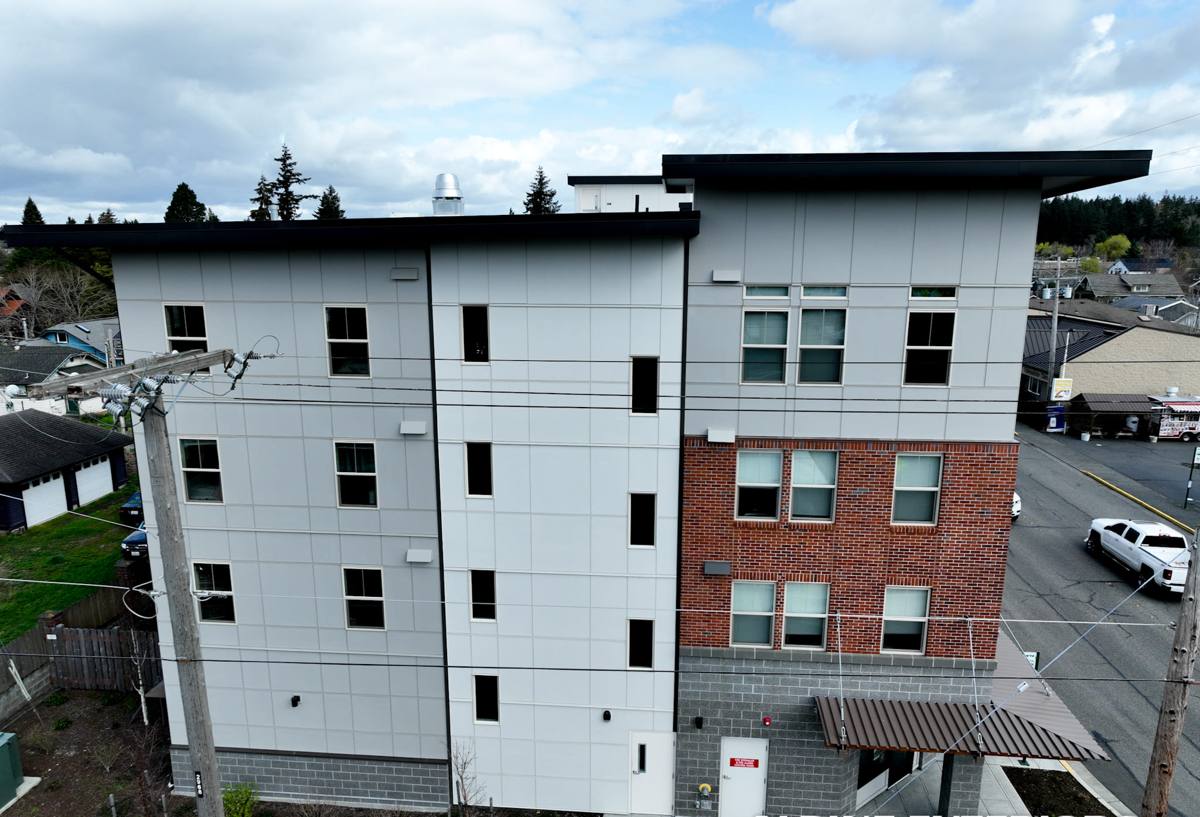
What Salt Air, Driving Rain, and Moss Season Do to Windows
Salt Air and Hardware Corrosion
Airborne salt from Bellingham Bay settles on everything nearby, including window hardware. Cheap or unprotected metal locks, hinges, and balance mechanisms corrode faster near the water than they would a few miles inland. Once hardware seizes or corrodes, a window stops locking properly or stops sliding smoothly, and that's a security and energy problem, not just an annoyance.
Driving Rain and Wind-Driven Water
Bellingham's storms don't always fall straight down. Wind off the bay pushes rain sideways into west- and south-facing walls, which puts real pressure on flashing, sealant, and the water management details around a window — not just the glass itself. A window that would be fine in a calm climate can leak in Fairhaven if it wasn't flashed and sealed correctly, because the water is being driven into gaps a plumb-drop rain would never reach.
Moss Season and Prolonged Dampness
Whatcom County's long wet season keeps wood trim, sills, and casings damp for months at a time. Moss and algae take hold on north-facing and shaded walls, holding moisture against the building longer than open, sunny walls do. On older wood-frame windows, that sustained dampness is what actually causes rot — it's rarely one storm, it's months of a sill that never fully dries out.
Signs It's Time to Replace, Not Repair
Not every problem window needs full replacement, but in a marine climate like this one, repairs on an aging window often just delay the inevitable. Here's what tells us replacement is the better investment:
- Soft, spongy, or visibly rotted wood at the sill or lower corners
- Fogging or a visible haze between panes, meaning the seal has failed
- Windows that won't stay open, won't lock, or are painted shut from swelling
- Noticeable drafts or cold spots along the frame even when it's fully closed
- Condensation forming on the inside of the glass regularly through fall and winter
- Visible corrosion on locks, cranks, or balance hardware
- Frames that are warped, bowed, or no longer square in the opening
If you're only seeing one of these on one window, a repair may still make sense. If you're seeing several across the house, or the windows are original to a home built decades ago, replacement is almost always the more cost-effective path once you factor in the energy loss and ongoing repair calls.
Choosing Window Materials and Glass for a Marine Climate
Not every window product on the market is a good fit for a house sitting this close to salt water. We steer Fairhaven homeowners toward materials and glass packages based on how they actually hold up in this specific environment, not just on sticker price.
| Frame Material | How It Handles This Climate | Trade-Offs |
|---|---|---|
| Vinyl | Won't rust or corrode from salt air; low maintenance | Fewer color and profile options for matching historic trim |
| Fiberglass | Very stable in temperature swings and damp conditions; strong, low-maintenance finish | Higher upfront cost than vinyl |
| Wood with Aluminum or Vinyl Cladding | Interior wood look with an exterior shell that resists moisture and salt exposure | Needs correct installation and flashing to keep water out of the wood core; more maintenance long-term |
| Bare Wood | Best fit for historic character; least suited to sustained moisture and salt exposure without diligent upkeep | Highest maintenance burden in this climate; shortest service life if neglected |
Glass matters as much as frame material. In this climate we typically recommend dual-pane, low-E glass as the baseline, with argon gas fill and warm-edge spacers to cut down on condensation and heat loss. For homes exposed to more direct wind and noise off the bay, a laminated or triple-pane upgrade adds sound dampening and an extra layer of protection, though it comes at a higher cost. We'll walk through what actually makes sense for your specific exposure rather than defaulting to the most expensive option.
Respecting Fairhaven's Older Homes
A lot of the housing in Fairhaven has real character — narrow sightlines, divided-light grid patterns, trim profiles that don't match what comes standard on a big-box window. When we replace windows on an older Fairhaven home, matching that character is part of the job, not an afterthought. That can mean choosing a frame profile that keeps the same visible sightline, replicating a grid pattern with simulated divided lites instead of a flat grille, or matching exterior trim and casing so the new window doesn't look like it was dropped in from a different house.
This matters for resale value as much as it does for pride of ownership. A window replacement that changes the whole look of an older home's façade is a downgrade, even if the glass performs better. We aim for both: modern performance behind a look that still belongs on the house.
How We Handle a Fairhaven Window Replacement, Start to Finish
The process is the same discipline every time, adjusted for what your specific house and exposure need:
1. On-Site Assessment and Measurement
We look at every window being replaced, not just take a quick tally. That means checking the condition of the framing behind the trim, noting which walls take the worst wind-driven rain, and measuring precisely, since older homes are rarely perfectly square.
2. Product Selection
Based on that assessment, we recommend frame material and glass packages suited to each wall's actual exposure — a shaded, moss-prone north wall and a sun-exposed south wall don't always need the same spec.
3. Removal and Opening Prep
Old windows come out carefully, and we inspect the rough opening once it's exposed. If there's hidden rot or water damage behind the old frame — which is common in older Fairhaven homes — we address it before anything new goes in. Installing a new window over a compromised opening just hides the problem.
4. Flashing and Weatherproofing
This is the step that matters most in a driving-rain climate. Proper flashing, correctly lapped house wrap, and quality sealant at every joint are what actually keep wind-driven water out — the window unit itself is only part of the system. We follow manufacturer-specified flashing details rather than shortcuts, because a leak here doesn't show up until months later, often as hidden rot.
5. Installation and Shimming
Windows get shimmed and leveled so they operate smoothly and seal evenly, then fastened per manufacturer specifications to preserve the warranty.
6. Insulation, Sealing, and Trim
Gaps get properly insulated (not overpacked, which can bow a frame), interior and exterior sealant is applied, and trim is finished to match the surrounding house.
7. Walkthrough and Cleanup
We test every window for smooth operation and a tight seal, clean up the job site, and walk you through anything you should know about care going forward.
Cost Factors to Expect
Every Fairhaven job is different, but a few factors consistently move the price up or down:
- Number of windows and how many walls or stories are involved
- Frame material chosen — vinyl typically costs less than fiberglass or clad wood
- Glass package: standard dual-pane low-E versus laminated or triple-pane upgrades
- Condition of the existing opening, including any hidden rot or framing repair needed
- Access — second-story or hard-to-reach windows near steep lots or tight setbacks take more time
- Custom trim work needed to match an older home's existing profile
We provide a written estimate that breaks these out so you know exactly what you're paying for and where the flexibility is if you need to phase the project.
Why Local Experience in Fairhaven and Whatcom County Matters
A crew that mostly works dry, inland climates can still install a technically correct window and have it fail here within a few years, because the failure points in this environment are different. Knowing which walls in Fairhaven take the worst of the wind off the bay, how long moss season really runs in Whatcom County, and how older local homes were typically framed and trimmed all change how we spec, flash, and install a job. That local pattern recognition is the difference between a window that looks fine at handoff and one that's still performing correctly ten years later.
We're also familiar with what permitting and inspection look like for this kind of work in the City of Bellingham, so there are no surprises mid-project.
Caring for New Windows in This Climate
New windows still need some seasonal attention here. A few habits go a long way: clear moss and debris from tracks and weep holes before the wet season sets in, since blocked weep holes trap water against the frame. Rinse salt residue off exterior frames and hardware periodically, especially on walls facing the bay. Check exterior sealant annually for cracking or gaps, and address small gaps before they become active leaks. Keep an eye on interior condensation in winter — a small amount on a cold morning is normal, but persistent heavy condensation can point to a ventilation or humidity issue worth addressing separately from the windows themselves.
If your Fairhaven home's windows are drafty, foggy, hard to operate, or original to a house built long before today's glass and sealing technology existed, we're happy to take a look. We offer a free, no-pressure estimate — tell us what you're seeing, and we'll give you a straight assessment of what needs replacing now, what can wait, and what it will actually cost.