 Bellingham Exterior
 Asphalt Shingle Roofing Built for Happy Valley's Climate
Happy Valley homes sit under the same Whatcom County sky as the rest of Bellingham, and that sky is hard on a roof. Salt-tinged air drifting in off the bay, rain that comes in sideways as often as it falls straight down, and a moss season that can run most of the year on shaded slopes all wear on asphalt shingles in specific, predictable ways. A roof that's installed correctly for this climate can handle it for decades. One that's installed to a generic national spec, or repaired with shortcuts, tends to show problems years before it should.
We install and repair asphalt shingle roofs across Bellingham, including the established residential streets of Happy Valley, and we treat this as a distinct job from roofing a drier, inland climate. The material, the underlayment, the flashing details, and the ventilation all have to work together as one system, and in a neighborhood with this much tree cover and consistent moisture, every one of those pieces matters more than it would somewhere drier.
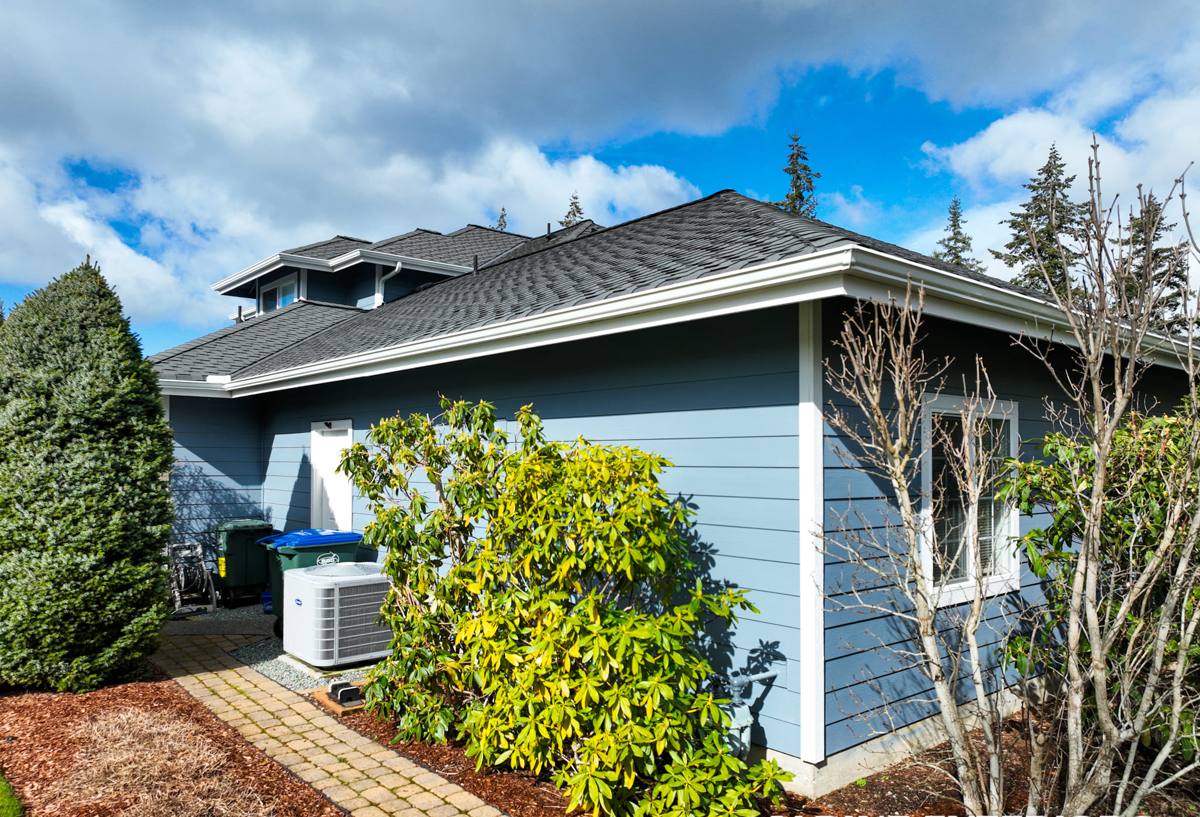
What Salt Air, Rain, and Moss Actually Do to a Shingle Roof
Salt Air and Fastener Corrosion
Bellingham's proximity to the bay means a steady, low-level exposure to salt-laden moisture in the air, not just on stormy days. Over years, that exposure is harder on exposed metal, flashing, and lower-grade fasteners than an inland climate would be. It's a slow kind of damage, and it often shows up first as a rusting nail head or a flashing seam that's started to fail, long before the shingles themselves look worn.
Wind-Driven Rain
Rain in this part of Whatcom County frequently arrives at an angle, pushed by wind off the water rather than dropping straight down. That matters at every roof penetration, valley, and edge. A shingle system, underlayment, and flashing detail that would hold up fine under calmer, vertical rainfall can still let water in here specifically because wind is driving moisture up under laps and into seams a standard installation wouldn't fully account for.
A Long Moss and Debris Season
Happy Valley's mature tree canopy, common across many of Bellingham's older residential neighborhoods, means a steady supply of shade, needles, and organic debris landing on roofs for most of the year. Combined with consistent dampness, that's a recipe for moss and algae growth on asphalt shingles, especially on north-facing slopes and anywhere debris collects instead of shedding off. Moss doesn't just look bad. Its root structure works into the shingle surface and lifts tabs over time, and a moss mat that holds water against the roof deck can shorten the life of even a good shingle by years.
What a Correct Asphalt Shingle Installation Requires Here
Buying a good shingle is only part of the job. In a climate this wet, the details underneath and around the shingles do as much work as the shingles themselves.
- Full tear-off when warranted: Layering new shingles over old hides deck problems and shortens the life of the new roof. We assess whether the existing deck is sound before deciding tear-off versus overlay.
- Synthetic underlayment: A quality synthetic underlayment sheds wind-driven rain better than older felt products and holds up longer under sustained moisture exposure.
- Ice and water shield at vulnerable points: Valleys, eaves, and roof-to-wall transitions get self-adhering membrane, the spots most likely to see water driven or pooled against them in this climate.
- Correctly lapped step and counter flashing: Chimneys, walls, and skylights need flashing that's layered correctly with the shingle courses, not just caulked at the seam.
- Balanced attic ventilation: Intake and exhaust ventilation that actually balance keep moist air from condensing under the deck, which matters in a marine climate where humidity is a near-constant factor.
- Manufacturer-spec nailing pattern: Correct nail count and placement is what most shingle wind warranties are actually conditioned on, and it's one of the most commonly rushed steps on a low-cost job.
Choosing the Right Shingle for a Happy Valley Home
Not every asphalt shingle is a good fit for this climate. We generally steer Happy Valley homeowners toward architectural (laminated) shingles with algae-resistant granules rather than older-style 3-tab products, for reasons that come down to how each performs under sustained moisture and moss pressure.
| Shingle Type | Typical Wind Rating | How It Performs Here |
|---|---|---|
| 3-tab shingles | Lower, generally 60-70 mph | Lower upfront cost, but thinner profile and lower wind rating make them more vulnerable to Bellingham's wind-driven storms and faster to show moss and wear |
| Architectural (laminated) shingles | Higher, commonly 110-130 mph | Heavier, multi-layer construction sheds wind-driven rain better and holds up longer under the region's moss and moisture load |
| Algae-resistant (AR) granules | N/A | Copper- or zinc-infused granules slow algae and moss regrowth on shaded slopes, a real factor in a canopy-covered neighborhood like Happy Valley |
We don't push a single shingle brand as the only acceptable option the way we do with some other exterior products, because major manufacturers all produce laminated, algae-resistant lines that perform reasonably well in this climate when installed correctly. What we do insist on is the architectural profile with AR granules for anything going on a Happy Valley roof, and a manufacturer warranty that's actually backed by a certified installation, not just a shingle purchase.
Our Process, From Inspection to Cleanup
Inspection and Honest Assessment
We start by getting on the roof, not just looking at it from the ground. That means checking the deck for soft spots, evaluating existing flashing and ventilation, and looking for the early signs of moss or moisture damage that aren't visible from the yard. You get a plain explanation of what we found and what it means for the job, not a sales pitch.
Tear-Off and Deck Repair
Old shingles and underlayment come off down to the deck, which is the only way to actually see what's underneath. Any soft or damaged decking gets replaced before a single new shingle goes down. This is also when we catch the moisture damage that's been building quietly, sometimes for years, under an aging roof.
Installation
Underlayment, ice and water shield, flashing, and shingles go on in the correct sequence, with attention to the nailing pattern and lap details that keep a roof watertight against wind-driven rain. Ventilation gets checked and corrected as part of the same job, not treated as a separate add-on.
Cleanup and Final Walkthrough
We clear the site of old material and debris, do a magnetic sweep for stray fasteners, and walk the finished roof with you before calling the job done.
Asphalt Shingle Roof Cost Factors in Happy Valley
| Factor | What It Affects | Why It Matters Here |
|---|---|---|
| Roof size and pitch | Total material and labor | Steeper or more complex rooflines, common on Bellingham's older homes, take longer to work safely and correctly |
| Deck condition | Repair costs before new shingles go on | Years of trapped moisture under aging shingles can rot decking before it's visible from the ground |
| Number of valleys and penetrations | Flashing labor and material | Each valley, chimney, or skylight is a spot where wind-driven rain needs extra attention |
| Shingle grade selected | Material cost and expected lifespan | Architectural, algae-resistant shingles cost more upfront but hold up better against this neighborhood's tree cover and moisture |
| Site access and tree cover | Labor time and setup | Mature trees common in Happy Valley can add staging, debris cleanup, and careful material handling |
Real numbers depend on the specific roof, which is why we inspect the property in person before quoting rather than pricing off square footage alone.
Signs Your Happy Valley Roof Needs Attention
- Moss or dark streaking that returns quickly after cleaning, especially on shaded, north-facing slopes
- Shingle tabs that are curling, cupping, or lifting at the edges
- Bald spots where granules have worn away, exposing the darker asphalt underneath
- Cracked or missing shingles after wind events or storms
- Daylight visible through the attic roof deck, or damp insulation after rain
- Water stains on interior ceilings, especially near valleys, chimneys, or skylights
- Sagging sections of roofline, which can point to deck or structural moisture damage
Moss Prevention and Roof Maintenance
A correctly installed roof still benefits from basic upkeep in a climate this wet. Keeping gutters and valleys clear of needles and debris prevents the standing moisture that moss and algae need to take hold. Trimming back branches that overhang the roofline reduces both shade and debris buildup on the shingles. Zinc or copper control strips, installed along the ridge, release trace metal ions with every rain that help slow moss regrowth on the slopes below them. None of this replaces a correct installation, but it extends the life of a good roof and helps catch small problems before they become deck-level repairs.
Why a Local Crew Matters for a Happy Valley Roof
A crew that works Bellingham roofs regularly has seen how salt air, wind-driven rain, and moss actually play out over a full year on real houses, not just how a shingle performs on a spec sheet. That experience shows up in small decisions on install day, like where to add extra ice and water shield, which slopes need closer attention to ventilation, and which flashing details are worth the extra time so a homeowner isn't dealing with a leak two winters later. Happy Valley's mix of mature tree cover and established housing stock has its own particular demands, and a crew that already understands the neighborhood's climate pattern doesn't have to learn that on your roof.
If your Happy Valley home needs a new asphalt shingle roof, a repair, or just an honest inspection to see where things stand, we're glad to take a look. Reach out using the form below to schedule a free, no-pressure estimate.