 Bellingham Exterior
 Board & Batten Siding, Built for Puget's Weather
Puget sits close enough to the water that homes here take a different kind of weathering than siding a few miles inland. Salt-laden air moves through on the wind, wind-driven rain hits walls at an angle instead of falling straight down, and the long gray stretch of fall through spring keeps north- and west-facing walls damp enough for moss and algae to get a foothold. Board and batten siding has a strong, clean vertical look that fits a lot of Puget's homes well, but that same vertical profile creates more seams, more batten joints, and more places for water to find a way in if the install isn't done right. This page is about what a correct board and batten job looks like on a Puget property specifically — not siding in general.
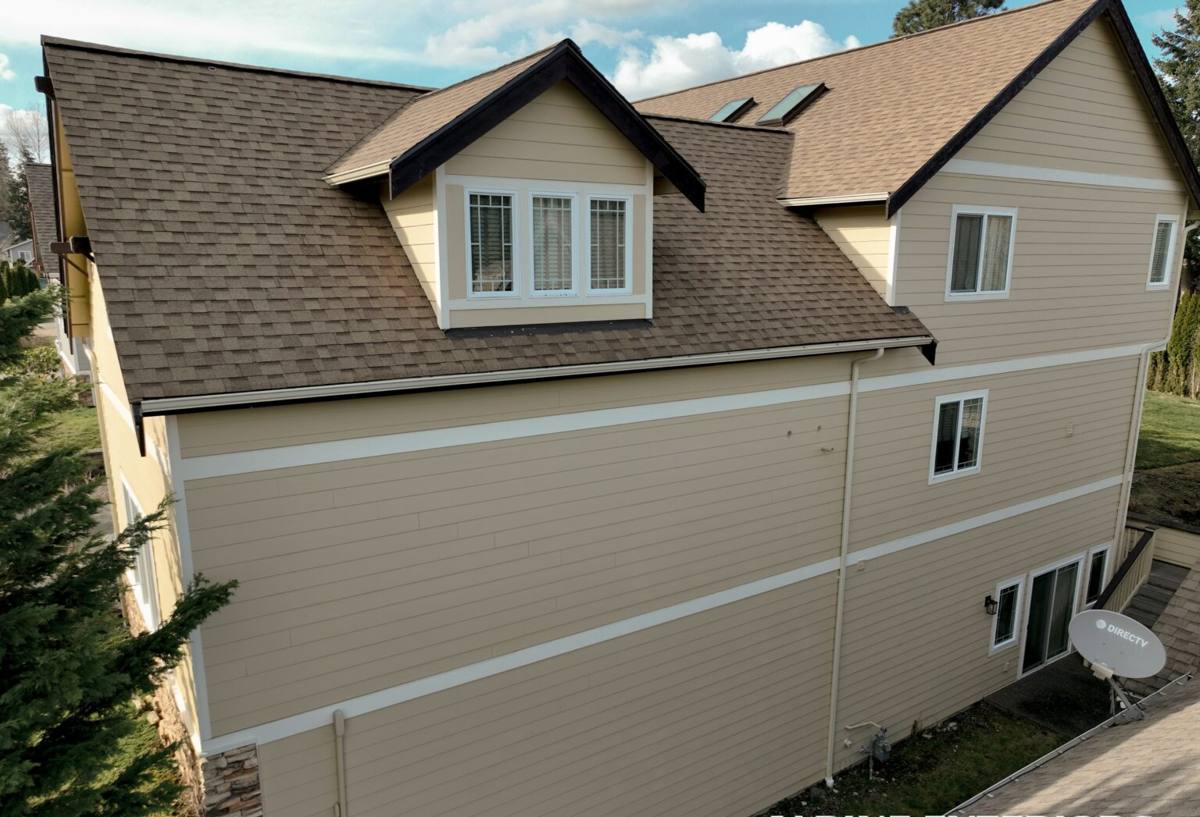
Why Board & Batten Suits This Neighborhood
Board and batten reads as a classic Pacific Northwest exterior — vertical boards with narrow strips (battens) covering the seams between them. It shows up well on both traditional and modern homes, works nicely as an accent on gables and entry features, and can also cover a full elevation. In Puget, where homes sit under tree cover as often as they sit in open coastal wind, the style holds up visually in a way that flatter horizontal lap sometimes doesn't — the vertical lines shed the visual clutter of moss streaking and shadow lines from nearby trees better than a wide lap board does.
The tradeoff is that board and batten has more linear feet of seam per square foot of wall than lap siding. Every batten strip is another fastening line, another place where water can track down behind the material if flashing and gapping aren't handled correctly. That's not a reason to avoid the style — it's a reason to be picky about who installs it.
What "Correct" Looks Like Behind the Boards
The visible boards and battens are the easy part to judge. What actually determines whether the siding lasts is what's happening behind them:
- A drainage plane (weather-resistive barrier) that's lapped correctly, top over bottom, with no reverse laps that funnel water inward
- A rainscreen gap or furring strategy that lets any water that gets behind the siding drain and the wall assembly dry out, rather than sitting against sheathing
- Flashing at every horizontal transition — window and door heads, water tables, roof-to-wall intersections — not caulk standing in for flashing
- Fastener placement that follows the manufacturer's pattern, not just "close enough," since board and batten relies on consistent fastening to stay flat and tight over time
- Batten spacing and board gaps sized to allow for expansion without buckling or cracking the joint
What Salt Air and Driving Rain Do to Vertical Siding
Bellingham's position on Puget Sound means homes closer to the water deal with airborne salt that inland Whatcom County properties don't. Salt accelerates corrosion on exposed metal fasteners and trim flashing, and it can degrade lower-grade caulks and sealants faster than manufacturers' published lifespans suggest. On a board and batten wall, that matters more than on lap siding because there are simply more fastener points and more sealed joints exposed to the weather.
Driving rain is the other half of the equation. When rain comes in sideways instead of straight down, it doesn't just wash down the face of the wall — it pushes water sideways into every seam, batten edge, and inside corner it can find. A board and batten system that was only ever tested against vertical rainfall assumptions will leak here. That's why the drainage plane and rainscreen detailing behind the boards carry more of the weatherproofing load than the caulk lines homeowners can actually see.
Moss and Algae on North and West Walls
Puget's tree cover and marine humidity give moss and algae a long growing season on shaded siding. Vertical board and batten actually has an advantage here over some flat panel systems — the ridges cast shadow lines and shed surface water faster than a flush wall — but no siding is immune. A factory-applied finish that resists moisture absorption into the substrate matters more here than paint color or texture, because moss and algae need a damp surface to establish themselves, and a material that dries out faster after rain gives them less to work with.
Why We Install James Hardie for Board & Batten, and Nothing Else
We standardized on James Hardie fiber cement for every siding job we do, board and batten included, and we don't install vinyl, LP SmartSide, Cemplank, Allura, primed spruce, or cedar board and batten. That's a deliberate call, not a default.
Wood board and batten — cedar or primed spruce — looks great on day one, but it's an organic material sitting in a climate that stays damp for months at a stretch. It needs regular refinishing, it's a food source for moss and mildew, and the battens themselves (thin strips with end grain exposed) are often the first place rot shows up. Vinyl board and batten is low-maintenance in the sense that it doesn't rot, but it's a thin plastic product that can warp with sun exposure, crack in cold snaps, and it simply doesn't hold the crisp, flat board profile that gives this style its character — vinyl "board and batten" often reads as vinyl from ten feet away. LP SmartSide and other engineered-wood composites use a wood-strand core; that core is more moisture-resistant than solid wood, but it's still an engineered wood product, and any breach in the factory coating exposes it to swelling at cut edges and fastener penetrations — exactly the kind of damage that's easy to cause during installation and easy to miss afterward.
James Hardie fiber cement doesn't have an organic core to rot, swell, or feed moss. It's non-combustible, it holds paint and factory-applied ColorPlus finish far longer than wood substrates do, and Hardie's HZ5 product line is engineered for cold, wet, freeze-thaw climates like ours — which matters in a marine environment with salt air and long damp seasons. It's also simply a better substrate for board and batten specifically: fiber cement stays flat and straight over time in a way that keeps batten lines crisp instead of wavy.
Board & Batten Product Comparison
| Material | Moisture/Rot Risk | Maintenance | Fit for Puget's Climate |
|---|---|---|---|
| James Hardie fiber cement | No organic core; won't rot | Low — factory finish, occasional wash | HZ5 line engineered for marine/freeze-thaw conditions |
| Cedar board and batten | High — organic, absorbs moisture | High — refinishing, moss treatment | Struggles in long damp seasons without upkeep |
| Primed spruce | High — softwood, prone to swelling | High — repaint cycles | Lower rot resistance than cedar |
| LP SmartSide / engineered wood | Moderate — wood-strand core | Moderate | Vulnerable at cut edges and fastener points if coating is breached |
| Vinyl | Low rot risk, but warps/cracks with heat and cold | Low | Doesn't hold a true flat board profile |
How We Approach a Puget Board & Batten Job
The process starts before any siding goes up. We walk the exterior and look specifically at the conditions that matter for a vertical siding system: which elevations take the most wind-driven rain, where moss has already established itself, where old caulk or flashing has failed, and what the existing wall assembly looks like underneath. On a re-side, that often means finding out what shape the sheathing is in once old siding comes off — something that's genuinely hard to know from the outside.
From there:
- Remove existing siding and inspect sheathing for rot or moisture damage, repairing anything compromised before new material goes up
- Install or verify the weather-resistive barrier with correct lapping and flash all penetrations, windows, and horizontal transitions
- Build in a rainscreen gap so the wall assembly can drain and dry rather than trapping moisture against the sheathing
- Install Hardie boards and battens to manufacturer fastening specs, with gapping that accounts for material movement
- Seal and finish per Hardie's requirements so the ColorPlus finish and warranty stay intact
Why Local Experience on This Style Matters
Board and batten punishes shortcuts more visibly than lap siding does — a batten that wasn't fastened on a consistent line shows up as a wavy shadow the first time the sun hits it low in the sky, and a missed flashing detail on a west-facing gable in Puget will show water staining well before it shows up on a sheltered wall inland. A crew that's done this work on homes exposed to the Sound's wind and salt knows where to put extra attention — corners, water tables, anywhere horizontal trim meets vertical boards — before those become the callback.
Before You Hire: A Board & Batten Checklist
- Ask what's happening behind the boards — weather-resistive barrier, flashing plan, rainscreen — not just what finish color is available
- Confirm the fastening pattern follows the manufacturer's published spec, not a generalized approach
- Ask how sheathing condition will be assessed and handled if rot is found during tear-off
- Get the warranty terms in writing — both the material warranty and the installer's workmanship warranty
- Ask whether the crew has installed this specific product and style in a comparable coastal or marine exposure, not just siding in general
What This Costs and What Drives the Price
Board and batten costs more per square foot than lap siding to install, mainly because of the extra labor in fastening battens and finishing seams. Beyond that baseline, a few things move the price on a specific Puget property:
| Factor | Why It Matters |
|---|---|
| Tear-off and sheathing condition | Rot found under old siding adds repair scope before new material goes up |
| Wall height and access | Multi-story or steep-site homes need more scaffolding and staging time |
| Amount of trim and transitions | Windows, water tables, and roof-wall intersections each need individual flashing |
| Full elevation vs. accent use | Board and batten as a gable or entry accent costs less than a full-wall application |
We'll never invent a number without seeing the house — every Puget property carries a different mix of these factors, and an honest estimate depends on walking the site.
If you're weighing board and batten for a home in Puget, we're glad to come take a look and talk through what your specific walls need. The estimate is free, there's no pressure attached to it, and you'll leave the conversation knowing exactly what a correct job for your house involves — just fill out the form below to get started.