 Bellingham Exterior
 Storm Damage Roof Repair Built for Silver Beach Homes
Silver Beach sits in a part of Bellingham where tall fir and cedar canopy, tight tree lines, and lake-adjacent lots create a roofing environment that's different from a wide-open subdivision across town. Wind moves through the trees before it hits your roofline, rain gets funneled and pooled by overhanging branches, and shade patterns that never fully burn off keep certain roof planes damp for days after a storm passes. When a windstorm rolls through Whatcom County, the damage on a Silver Beach roof often shows up in different spots and in different ways than it would on a house with full sun exposure and no tree cover.
We repair storm-damaged roofs across Bellingham, and Silver Beach is one of the neighborhoods we're in regularly. That matters for storm work specifically, because knowing which roof planes take the worst of a southwest blow, which streets have canopy that drops limbs onto shingles, and which older homes in the area were built with roofing details that don't hold up well to today's storm patterns all shapes how fast and how correctly we can diagnose the problem.
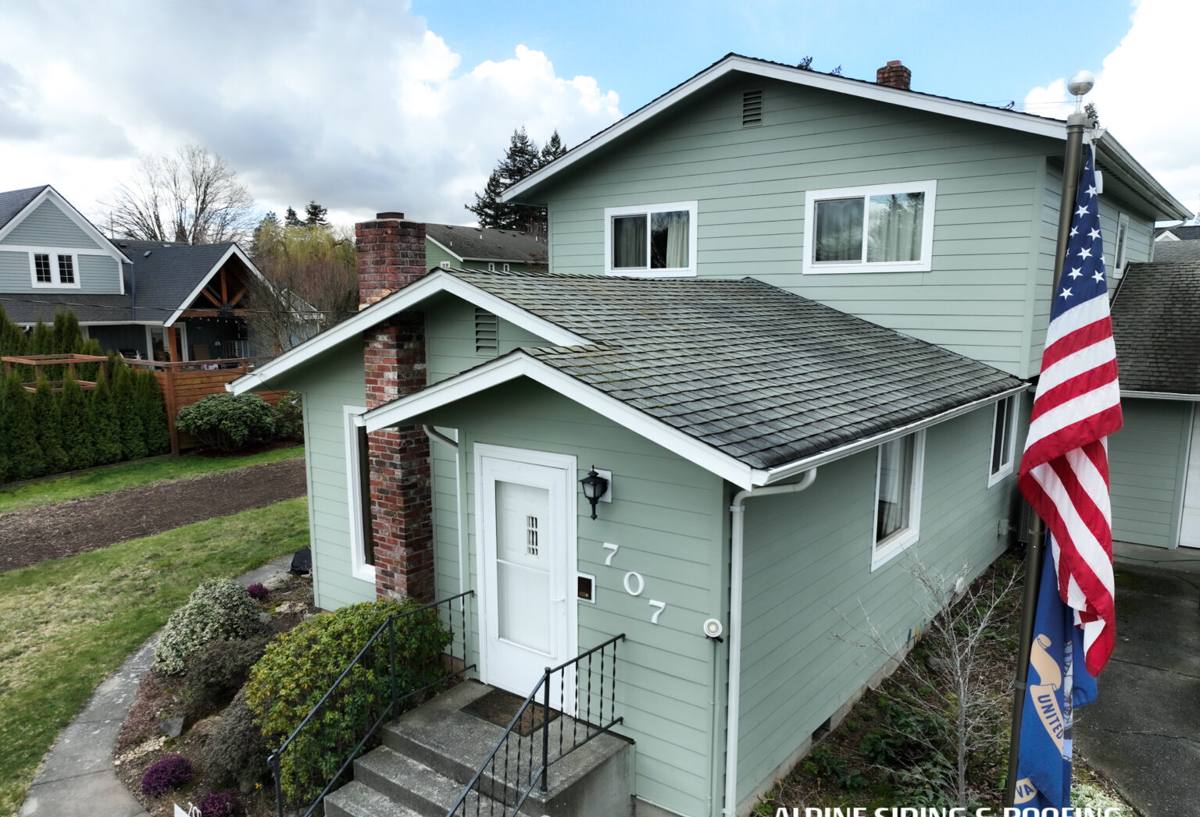
How Storms Actually Damage a Roof Here
Wind and Gusts Through the Tree Line
Open, unobstructed wind tends to lift roofing in a fairly predictable pattern — usually starting at ridges, hips, and exposed edges. Wind that's been broken up by trees behaves less predictably. It can hit a roof at odd angles, drive gusts down between houses, and put more stress on one section of a roof than another depending on which way the canopy opens up. That uneven loading is a common reason storm damage on a wooded lot shows up as scattered, isolated shingle lift or torn tabs rather than one clean damaged section.
Driving Rain and Wind-Driven Water
Whatcom County storms frequently combine wind with heavy, sustained rain. When wind pushes rain sideways instead of letting it run straight off the roof, water finds its way under shingle tabs, around flashing, and into any gap that wouldn't normally be a problem in calm weather. This is how a roof that looked fine before a storm ends up with an active leak afterward — the water intrusion point isn't always where the visible damage is, which is why a proper storm inspection checks more than just the shingles that look obviously wrong.
Moss, Debris, and the Long Wet Season
Tree-shaded, lake-adjacent properties in this part of Bellingham stay damp longer between storms than roofs with full sun exposure. That extended moisture window is exactly what moss needs to establish. Moss holds water against the roofing material, lifts shingle edges as it grows, and gives wind something to grab onto during the next storm. Branches, needles, and cones also tend to collect in valleys and behind chimneys on tree-lined lots, and a debris-clogged valley during a heavy rain event is one of the more common causes of a storm leak that homeowners don't see coming.
Marine Air and Metal Components
Whatcom County's marine climate carries salt-laden air off the Sound with weather systems, and that air reaches roofs well beyond the immediate waterfront. It's slow, cumulative corrosion — not storm damage on its own — but it weakens flashing, fasteners, and any exposed metal over time, which means those components are often the first thing to fail once a storm puts real stress on the roof. A roof with corroded flashing that would have lasted through a mild rain can spring a leak in the same storm a well-maintained roof shrugs off.
What a Correct Storm Damage Repair Involves
Storm repair isn't just replacing whatever shingles are visibly missing. A repair that's actually correct starts with figuring out the full extent of the damage, not just the part you can see from the ground.
Full Roof Assessment, Not a Drive-By
We get on the roof (weather permitting) and check the whole system: shingle condition on every plane, flashing at chimneys, walls, and valleys, the ridge and hips, vent boots, and the decking underneath where damage is visible. Wind and rain damage is frequently worse on the leeward or shaded side of a roof than the side that looks obviously beat up, especially on tree-covered lots where wind direction and debris impact vary plane to plane.
Matching the Repair to the Actual Damage
Not every storm-damaged roof needs full replacement, and not every roof can be safely patched. The right call depends on the roof's age, how widespread the damage is, whether the decking underneath is sound, and whether replacement shingles that reasonably match the existing roof are still available.
| Repair Type | When It Fits | What Drives the Cost |
|---|---|---|
| Spot patch (few shingles/flashing points) | Isolated wind lift or debris impact, roof otherwise sound and under ~10-12 years old | Number of access points, roof pitch, whether matching shingles are on hand |
| Section replacement | Damage concentrated on one or two planes, decking underneath is dry and solid | Square footage of the section, decking repair if any, flashing detail complexity |
| Full re-roof | Widespread damage, roof already near end of life, or decking compromised in multiple areas | Total roof area, material choice, number of layers being removed, chimney/valley/vent count |
Decking and Structure Come First
If wind-driven rain has been getting under damaged shingles for any length of time before the repair, the plywood or board decking underneath can be soft or delaminated. Covering that up with new shingles instead of replacing the bad decking is how a "repaired" roof leaks again during the next storm. We check decking condition before closing anything back up, and we'll show you what we find rather than assuming it's fine.
Our Storm Repair Process
- Contact and initial description: Tell us what you're seeing — missing shingles, a leak, debris on the roof — and roughly when the damage occurred.
- Inspection: We walk the roof and attic/ceiling where accessible, document what we find, and explain it in plain terms.
- Written scope and estimate: You get a clear explanation of what needs to happen and why, broken into patch, section, or full-replacement terms as applicable.
- Temporary protection if needed: If there's an active leak or exposed decking, we can tarp or dry-in the area to stop further water intrusion while repair materials are sourced.
- Repair work: Damaged materials removed, decking repaired or replaced as needed, new shingles and flashing installed to match the existing roof as closely as possible.
- Final walkthrough: We show you the completed work and flag anything else on the roof worth keeping an eye on.
Signs of Storm Damage Worth Checking After a Blow
- Shingles in the yard, gutters, or against the fence line after a windstorm
- Curled, cracked, or lifted shingle tabs, especially near ridges and edges
- New or growing water stains on ceilings or in the attic
- Bent, loose, or missing flashing around chimneys, walls, or roof valleys
- Granules collecting in downspouts or gutter runs
- Branches or heavy debris resting on the roof surface
- Daylight visible through the roof deck from inside the attic
- Moss or standing debris in valleys that's noticeably worse after a wet stretch
Any one of these on its own isn't necessarily an emergency, but they're all worth a look, since minor storm damage left alone tends to get worse with the next round of Whatcom County weather rather than staying the same.
Insurance and Documentation
Most homeowner policies cover sudden storm damage — wind, falling limbs, wind-driven rain intrusion — though coverage details, deductibles, and what counts as "sudden" versus gradual wear vary by policy. We're not your insurance adjuster and won't promise a claim outcome, but we can document damage with photos and a written scope that you can hand to your insurer, and we'll point out plainly where we think something is storm-caused versus pre-existing wear, since mixing those up is a common reason claims get delayed or denied.
Why Local Storm Experience on This Type of Property Matters
A roof on a wooded, lake-adjacent lot in Silver Beach doesn't fail the same way a roof in a treeless new-build neighborhood does. A crew that's used to working on open, sunny roofs can miss the specific patterns that show up here — the shaded plane that never fully dries out, the valley that clogs with needles every fall, the flashing that's further along in corrosion than its age would suggest because of the persistent damp. We work storm damage across Bellingham and Whatcom County regularly enough to recognize those patterns quickly instead of treating every roof the same way.
There's also a practical side to local experience: knowing what access and staging look like on tighter, tree-lined lots, understanding typical roof construction on homes of the vintage common in this part of Bellingham, and being able to source matching materials without a lot of back-and-forth all shorten the time between the storm and a roof that's actually watertight again.
Reducing Storm Damage Before the Next One Hits
You can't storm-proof a roof, but a few things measurably reduce how much damage a given storm does:
- Keeping overhanging branches trimmed back so they can't drop debris or rub the roof surface in wind
- Clearing valleys and gutters before the wet season builds up so water has somewhere to go
- Treating or removing established moss before it lifts shingle edges
- Having flashing and fasteners checked periodically, since marine-climate corrosion is gradual and easy to miss until a storm exploits it
- Addressing minor shingle damage promptly instead of waiting for the next storm to make it worse
None of this eliminates storm risk, but a well-maintained roof consistently comes through a Whatcom County storm season in better shape than one that's been left alone for years.
Get a Straightforward Look at Your Roof
If a recent storm has left you with missing shingles, a leak, or just questions about whether your roof came through okay, we're glad to take a look. The estimate is free, there's no pressure, and we'll tell you honestly whether you're looking at a simple patch or something more — use the form below to get started.