 Bellingham Exterior
 Metal Roofing in Sunnyland: Built for This Corner of Bellingham
Sunnyland sits close enough to Bellingham Bay that salt-laden air is a daily fact of life for anything on a roofline, and the neighborhood's mix of older bungalows and mid-century homes means a lot of original roofs are due for a rethink. Metal roofing has become a popular upgrade here, not because it's trendy, but because it solves specific problems that asphalt shingles struggle with in this climate: driving rain off the water, heavy moss pressure under the tree canopy, and salt air that chews through cheap fasteners and coatings faster than most homeowners expect.
This page is about what a metal roof actually needs to do well in Sunnyland specifically — not a generic rundown of metal roofing everywhere. If you're comparing options for a home in this neighborhood, the details below are the ones that matter most.
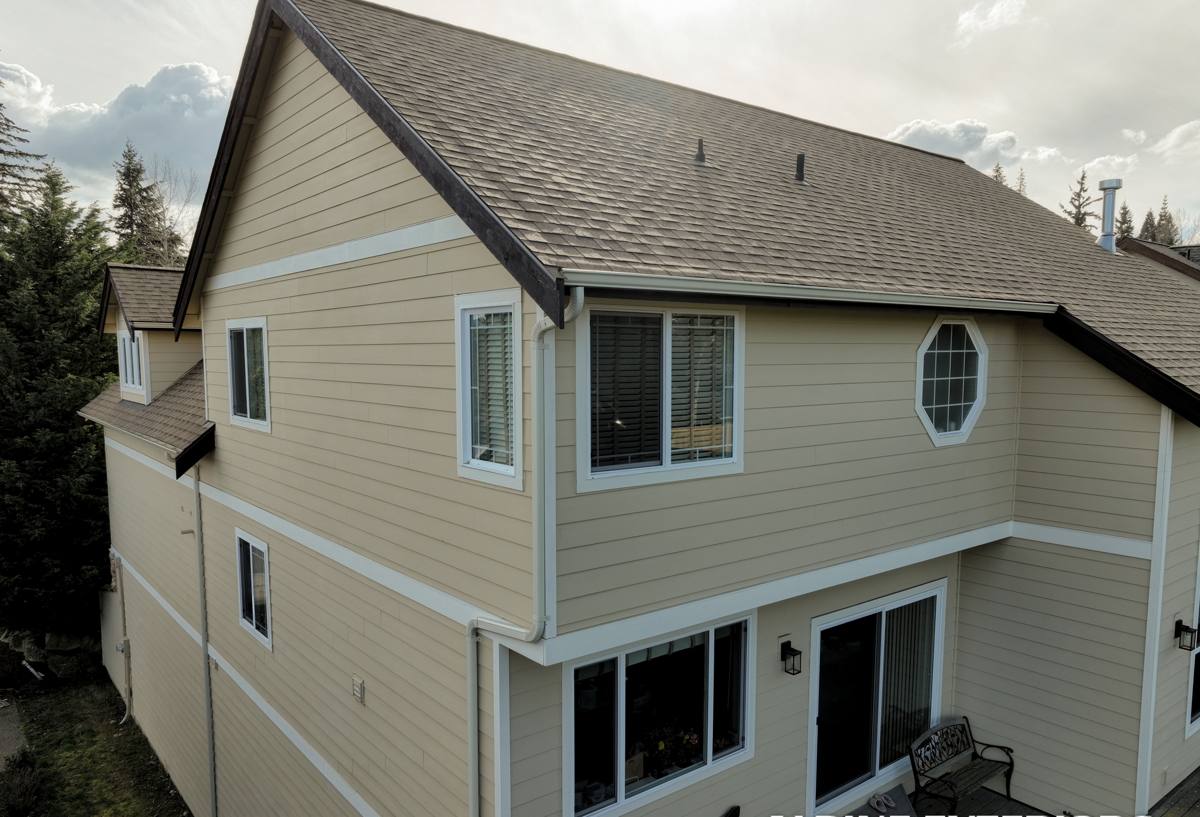
What Sunnyland's Climate Actually Does to a Roof
Salt Air and Corrosion
Homes within a mile or two of Bellingham Bay get more airborne salt than homes further inland, even on a mild day. Salt air accelerates corrosion on any metal component that isn't properly rated or protected — fasteners, flashing, and cut edges are usually the first to show it. This is the single biggest reason we're careful about material selection and detailing on Sunnyland jobs; a metal roof that's a great fit in a dry inland climate can underperform here if it's not spec'd for coastal exposure.
Driving Rain
Whatcom County storms often come with wind, which pushes rain sideways into laps, seams, and penetrations instead of letting it run straight down. A roof detailed for calm, vertical rainfall will leak here eventually. Every seam, valley, and flashing point on a Sunnyland roof needs to assume rain is going to hit it from an angle, not just fall on it.
Moss and Shade
Sunnyland has a good tree canopy in places, and shaded, damp roof sections are where moss and moisture-holding debris build up fastest. On shingles, that moss works its way under the surface and holds water against the roof deck for months at a time. Metal doesn't give moss the same foothold, but debris still collects in valleys and against transitions, and those spots need clear paths for water to keep moving.
Why Metal Makes Sense for This Neighborhood
- Sheds wind-driven rain more reliably than a shingle roof when seams and laps are installed correctly
- Doesn't give moss the organic surface it needs to colonize the way granulated shingles do
- Handles the freeze-thaw swings of a Pacific Northwest winter without the granule loss and cracking shingles show over time
- Long service life reduces how often a roof near the bay has to be re-exposed to salt-air wear cycles through tear-off and re-install
- Steeper Sunnyland rooflines shed water fast off metal, reducing standing water and ponding risk in valleys
None of that means metal is the right call for every home or budget. It's a bigger upfront investment than asphalt shingles, and it only delivers on that investment if the installation details are right — which is really the point of this whole page.
Standing Seam vs. Exposed-Fastener: What We Recommend and Why
There are two main metal roofing styles homeowners in Sunnyland ask about, and they perform differently in this climate.
| Factor | Standing Seam | Exposed-Fastener |
|---|---|---|
| Fastener exposure | Concealed clips, no exposed screws through the panel face | Screws penetrate the panel face directly |
| Salt-air durability | Better — fewer failure points exposed to weather | Fair — depends heavily on fastener quality and gasket condition over time |
| Long-term maintenance | Low — no gaskets to inspect or replace | Moderate — fastener gaskets compress and should be checked periodically |
| Upfront cost | Higher | Lower |
| Best fit | Primary residences, homes closer to the bay, longer ownership horizon | Outbuildings, shops, budget-driven projects, shorter ownership horizon |
For most Sunnyland homes, especially anything within easy reach of the bay's salt air, we lean toward standing seam because it removes the exposed-fastener failure point entirely. Exposed-fastener panels aren't a bad product — they're a legitimate, more affordable option — but they ask more of the homeowner over the years in the form of periodic fastener checks. We'll walk through both honestly rather than pushing whichever costs more.
What a Correct Metal Roof Installation Actually Involves
Underlayment and Deck Prep
Metal roofing is only as good as what's underneath it. We check the deck for soft spots, confirm proper ventilation, and install underlayment rated for the exposure — this matters more here than in drier climates because any weak point in the deck stays wet longer under our rain patterns.
Fastener and Flashing Selection
Given the salt-air exposure in Sunnyland, we spec fasteners and flashing rated for coastal corrosion resistance, not the generic hardware that's fine 20 miles inland. This is a small line-item cost difference that has an outsized effect on how the roof looks and performs after a decade near the bay.
Seam and Lap Detailing for Wind-Driven Rain
Panel laps, ridge caps, and valley transitions get extra attention to handle rain coming in sideways, not just straight down. This is where a rushed installation shows itself first — usually as a leak at a valley or penetration during the first real windstorm, not on a calm day.
Penetrations and Transitions
Chimneys, vents, and skylights are where most roof leaks actually start, metal or otherwise. Each penetration gets properly formed flashing rather than sealant alone — sealant is a backup, not the primary water barrier, no matter what shortcut methods promise.
Our Process for Sunnyland Roofing Projects
- On-site assessment — we walk the roof, check the deck, and look at how the specific site (tree cover, wind exposure, proximity to the bay) should shape the material and detailing choices
- Honest material recommendation — standing seam or exposed-fastener, based on your home, budget, and how long you plan to own it — not a one-size answer
- Clear written scope — what's included, what fastener and flashing grade we're using, and the timeline
- Installation with coastal-grade detailing — deck prep, underlayment, fastener selection, and seam work suited to salt air and driving rain
- Final walkthrough — we go over the finished roof with you, including what little maintenance it does need going forward
What to Check Before Hiring Anyone for Metal Roofing Near the Bay
- Ask specifically what fastener and flashing grade they use — coastal-rated hardware costs more, and some crews default to standard-grade materials unless you ask
- Confirm they're detailing for wind-driven rain, not just standard vertical runoff
- Ask how they handle valleys and penetrations, since that's where most leaks originate
- Check that they carry proper licensing and insurance for roofing work in Washington
- Ask for a written scope that names the specific panel system and gauge, not just "metal roofing"
- Ask how they ventilate the roof deck — poor ventilation shortens the life of any roofing material in a wet climate
Why a Crew That Already Works Sunnyland Matters
A roofing crew that's worked in Sunnyland and similar Bellingham neighborhoods knows the local pattern before they climb the ladder: which sides of a roof take the worst wind-driven rain, how much salt exposure to plan for this close to the bay, and how aggressively moss builds up under the local tree cover. That's not something you get from a general contractor rotating through a dozen different climates. It shows up in the small decisions — fastener grade, flashing details, where extra attention goes on the roof — that determine whether a metal roof holds up quietly for decades or starts giving you trouble in year six.
We're a Bellingham-based crew, and Whatcom County's coastal climate is the environment we build for every day, not an occasional job site.
Maintenance: What a Metal Roof Actually Needs
One of the practical advantages of metal roofing in Sunnyland is how little upkeep it demands compared to shingles. It doesn't need moss treatments the way a shingle roof does, and there are no granules to lose over time. That said, it's not zero-maintenance:
- Clear debris from valleys and against penetrations once or twice a year, especially under tree cover
- Have exposed-fastener systems checked periodically for fastener and gasket condition
- Keep gutters clear so water isn't backing up under the drip edge
- After major windstorms, a quick visual check for lifted flashing or debris impact is worth the five minutes
If you're weighing a metal roof for a home in Sunnyland, we're happy to walk the roof with you, talk through standing seam versus exposed-fastener for your specific situation, and give you an honest, no-pressure estimate. There's a form below to get that started.