 Bellingham Exterior
 Roof Repair Built for Sunnyland's Weather, Not a Generic Climate
Sunnyland sits close enough to Bellingham Bay and the Whatcom Falls watershed that its roofs deal with a specific mix of stress: salt-tinged air drifting in off the water, driving rain that comes in sideways during fall and winter storms, and a moss season that can run eight or nine months out of the year under the neighborhood's mature tree canopy. None of that is unique to any one street — it's the reality for most of this part of Bellingham — but it means a roof repair here has to account for more than a single missing shingle. We look at the whole system: underlayment, flashing, ventilation, and the moss and debris load that's been sitting on the roof, sometimes for years, before we tell a homeowner what actually needs fixing.
A repair that ignores those factors tends to fail again within a season or two. A repair that accounts for them holds up the way it should.
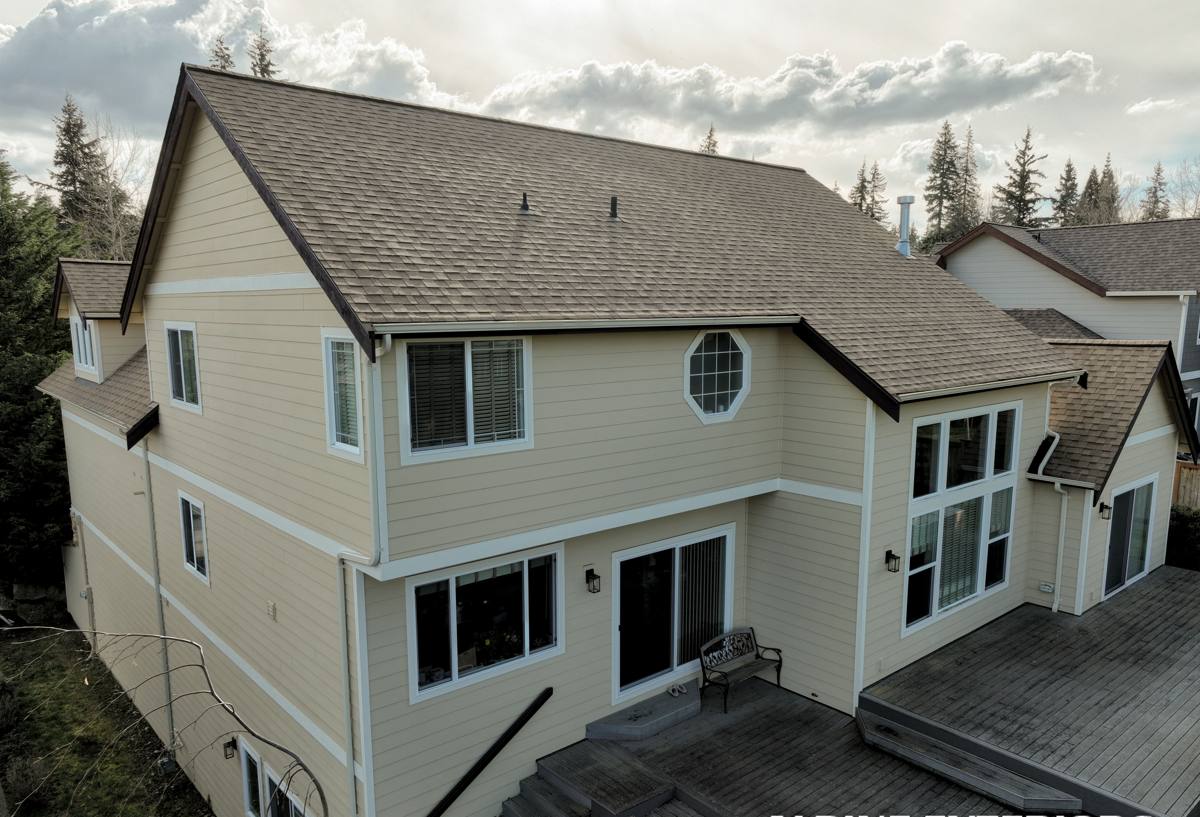
What Actually Causes Most Roof Repairs Around Here
Moss and Organic Growth
Whatcom County's tree cover and near-constant fall-to-spring moisture are a perfect setup for moss, and Sunnyland's shaded lots are no exception. Moss doesn't just sit on top of shingles — it works its rhizoids under the shingle edges and tabs, lifting them slightly and giving wind-driven rain a path underneath. Left long enough, it holds moisture against the roof deck, which is where rot starts. Most of the "mystery leaks" we get called out for trace back to moss that's been growing unchecked for a few years.
Flashing Failures
Flashing around chimneys, skylights, vent pipes, and roof-to-wall transitions is the single most common leak point on any roof, and it's usually the culprit before the field shingles ever are. Bellingham's freeze-thaw swings in winter and the sheer volume of annual rainfall accelerate sealant breakdown and metal fatigue at these joints faster than in drier climates.
Wind and Driving Rain
Storms coming off the Strait of Georgia and Bellingham Bay don't just bring volume — they bring horizontal rain that finds any gap in a roof's defenses. Homes on more exposed lots or higher ground tend to show wind-lifted shingle edges and stress cracking sooner than sheltered ones.
Salt Air and Material Fatigue
Proximity to the bay means metal fasteners, flashing, and exposed hardware corrode faster here than they would further inland. It's a slow process, but it's steady, and it's one more reason we check fastener and flashing condition on every repair call rather than just patching the visible problem.
Signs a Sunnyland Roof Needs a Repair Call
Most roof problems give warning signs well before a leak shows up inside the house. Worth checking for, especially after a windy winter:
- Moss buildup thicker than about a quarter-inch, especially along the north-facing slopes that stay shaded and damp
- Shingle tabs that look lifted, curled, or cracked, particularly along ridges and roof edges
- Granules collecting in gutters or at downspout outlets — a sign of asphalt shingle wear
- Rust streaking or gaps at flashing around chimneys, skylights, and vent pipes
- Dark staining or a slightly sagging look on ceilings, especially in upstairs rooms or attics
- Daylight visible through the roof deck from inside the attic
- Gutters overflowing or pulling away from the fascia during heavy rain
Any one of these on its own isn't necessarily an emergency. Several at once, or a leak that's already showing inside, means it's time for someone to get on the roof and look closely.
What a Correct Roof Repair Actually Involves
Diagnosis Before Anything Gets Touched
The most common mistake in roof repair — done by homeowners and by contractors who are rushing — is patching the spot where the leak shows up inside rather than the spot where the water is actually getting in. Water travels along rafters and sheathing before it drips, so the visible stain and the actual entry point are often several feet apart. We start every repair with a full inspection of the affected area and the roof around it, not just a patch on the obvious spot.
Matching Materials, Not Just Covering the Gap
A repair should blend into the existing roof system, not just stop water. That means matching shingle type, profile, and as close to the original color as the product line allows, and using flashing metal and fasteners that are compatible with what's already on the roof. Mismatched materials can create their own problems — galvanic corrosion between dissimilar metals, for instance, or a patch that ages differently than the surrounding roof and stands out or fails early.
Addressing the Cause, Not Just the Symptom
If moss caused the failure, the repair isn't done until the moss is dealt with and a plan is in place to keep it from coming back — whether that's manual removal, zinc or copper strip installation, or a maintenance schedule. If a ventilation problem contributed to deck rot, we address the venting, not just the rotted section. A repair that doesn't deal with the root cause is a repair that comes back.
Proper Flashing and Sealant Work
Flashing gets rebent, replaced, or resealed with materials rated for our climate — not a generic caulk that will crack under the next freeze-thaw cycle. This is detail work, and it's where most of the durability of a repair actually comes from.
Repair or Replacement? Honest Factors to Weigh
Not every roof problem calls for a full replacement, and not every roof problem should be patched indefinitely either. Here's how we think through it with homeowners:
| Factor | Leans Toward Repair | Leans Toward Replacement |
|---|---|---|
| Roof age | Under 15-20 years, depending on material | Near or past the material's expected lifespan |
| Extent of damage | Isolated to one section, flashing point, or slope | Widespread across multiple slopes or the whole roof |
| Deck condition | Solid, no rot found during inspection | Soft spots, rot, or sagging found in the sheathing |
| Repair history | First or second repair on this roof | Repeated repairs to the same areas over a few years |
| Moss/organic damage | Surface growth, shingles still intact underneath | Moss has caused granule loss and shingle breakdown |
We'll always tell you honestly which side of that table your roof falls on. A repair that's likely to fail again within a year or two isn't a good use of anyone's money, and we'd rather say so upfront than sell a patch we don't believe in.
How We Handle a Sunnyland Repair Call
- Inspection. We walk the roof (weather permitting) and check the attic if accessible, tracing the water path rather than just looking at the stain.
- Assessment and explanation. We walk you through what we found, what's causing it, and what the repair will involve — in plain terms, not upsell language.
- Repair. Matching materials, proper flashing technique, and moss removal or treatment where needed.
- Cleanup and check. Debris and old material removed, gutters cleared if they were part of the problem, and a final check that the repair area is sealed and sound.
We schedule around Bellingham's weather rather than fighting it — some repairs, particularly flashing and sealant work, need a dry window to cure properly, and we'll tell you if that means waiting a day or two rather than doing rushed work in the rain.
Materials We Work With
Sunnyland has a mix of roof ages and types, from older asphalt shingle roofs on original homes to newer composition and metal roofing on remodels and additions. Our repair approach adjusts to what's already on the roof:
- Asphalt/composition shingle — the most common type in the neighborhood; repairs involve matching tab profile and granule color as closely as the current product line allows
- Metal roofing — repairs focus on seam integrity, fastener condition, and panel-to-flashing transitions, since metal roofs fail at connections more often than in the field
- Cedar shake — less common on newer builds but present on some older homes; repair requires matching shake thickness and exposure, and honest conversation about moss risk given how these roofs hold moisture
For any roof type, we're straightforward about maintenance burden and moisture behavior specific to that material rather than pushing one product over another — the right choice depends on your roof's age, slope, and how much shade the lot gets.
Why Working With a Crew That Knows This Neighborhood Matters
A roof repair company that regularly works in Sunnyland and the surrounding Bellingham neighborhoods has already seen how the local combination of shade, moss, salt air, and storm exposure plays out on roofs like yours. That matters for diagnosis speed — knowing which flashing points fail first on a given roof age and style, or recognizing moss damage patterns specific to shaded lots — and it matters for accountability, since we're not driving in from out of the area for a one-time job. Whatcom County's weather is consistent enough year to year that local experience translates directly into fewer surprises and repairs that are sized correctly the first time.
Ready for an Honest Look at Your Roof?
If you're seeing moss buildup, a stain on the ceiling, or just want a second opinion before winter storms roll in, we're happy to take a look. Fill out the form below for a free, no-pressure estimate — we'll tell you what we find and what it actually takes to fix it.