 Bellingham Exterior
 Decking Built for Barkley's Actual Weather
Barkley sits close enough to Bellingham Bay and the surrounding wetlands that homeowners here deal with a specific combination of stressors on outdoor structures: salt-tinged air moving in off the water, long stretches of driving rain through fall and winter, and a moss season that can run from October well into spring. A deck that looks fine in a showroom photo doesn't automatically hold up to that combination. Composite decking, installed correctly, is one of the more reliable answers to this climate — but "installed correctly" is doing a lot of work in that sentence, and it's worth understanding what that actually means before you commit to a material or a crew.
This page is specifically about composite decking for homes in and around Barkley. We're not going to give you a generic decking pitch — we're going to walk through what Whatcom County's weather does to decking over time, what a properly built composite deck needs structurally, and how our process addresses the failure points we actually see on jobs in this part of Bellingham.
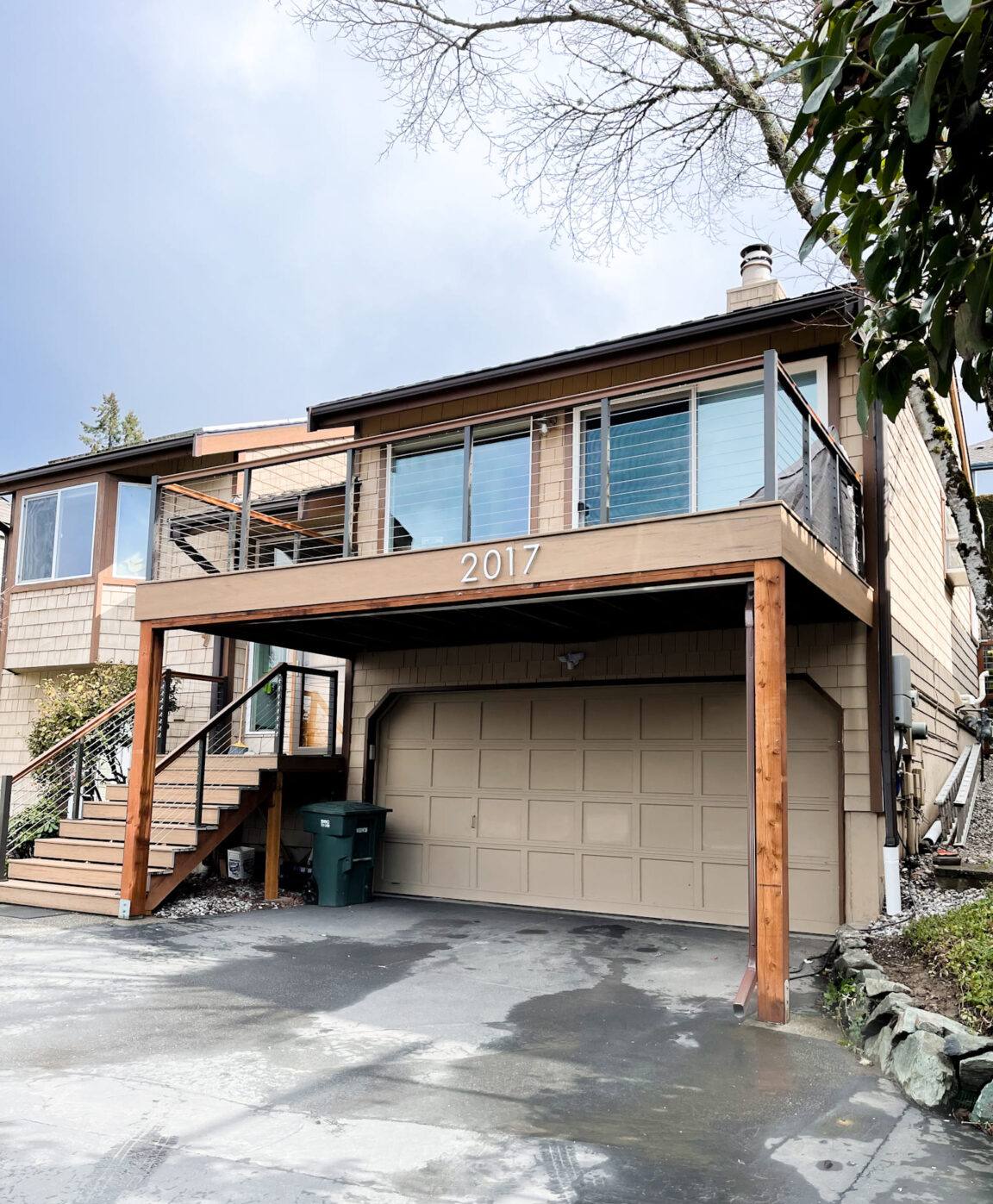
What Bellingham's Climate Does to a Deck Over Time
Every material reacts to moisture and biological growth differently, and understanding the failure pattern helps explain why certain build details matter more here than they would in a drier climate.
Moisture Load and Driving Rain
Bellingham's rain doesn't just fall straight down — winter storms off the Strait of Georgia push rain sideways, driving it into board seams, fastener holes, and any gap where end grain or substructure is exposed. Over years, that repeated wetting and drying cycle is what causes warping, fastener pull-through, and rot in wood decking, and it's what causes staining, mildew, and substructure rot in poorly built composite decks. The board material matters less here than the details around it — flashing, gapping, and drainage.
Salt Air
Proximity to the bay means airborne salt settles on outdoor surfaces and accelerates corrosion on anything metal — fasteners, brackets, railing hardware, screws. A deck can look structurally sound on the surface while its hidden fastener system is quietly corroding underneath. This is one of the more overlooked factors in decking failures we see in this area, because the damage isn't visible until a board comes loose.
Moss and Algae Season
Whatcom County's combination of shade, moisture, and mild temperatures gives moss and algae a long growing window. On any decking surface — wood or composite — organic growth holds moisture against the board, which is where most of the long-term surface damage originates. Composite boards with a capped, textured surface resist this better than uncapped composite or bare wood, but no decking material is immune. Airflow underneath the deck and consistent drainage away from the structure matter as much as the board itself.
Composite vs. Other Decking Materials
There's no single "best" decking material for every home — the right choice depends on your budget, how much upkeep you're willing to do, and how the deck is used. Here's an honest comparison based on how each material actually performs in this climate.
| Material | Moisture Resistance | Maintenance | Typical Lifespan Here | Upfront Cost |
|---|---|---|---|---|
| Pressure-treated wood | Moderate — needs sealing | Annual cleaning, periodic staining/sealing | 10–15 years before major repair | Lowest |
| Cedar | Good naturally, degrades once seal fails | Regular sealing, moss removal | 15–20 years with upkeep | Moderate |
| Capped composite | Very good — resists moisture absorption | Periodic washing, no sealing/staining | 25–30+ years | Higher |
| Uncapped composite (older style) | Fair — surface can absorb moisture over time | More frequent cleaning | 15–20 years | Moderate |
| PVC decking | Excellent — no wood content | Low, occasional washing | 25–30+ years | Highest |
We install capped composite for most Barkley projects because it strikes the best balance for this climate: it doesn't absorb moisture the way uncapped composite or wood can, it doesn't need staining or sealing, and the cap layer resists the surface staining that moss and algae leave behind. We're happy to talk through PVC or wood options too — the right call depends on your specific project and budget, not a one-size answer.
What a Correct Composite Deck Installation Actually Involves
Composite boards get most of the marketing attention, but the substructure underneath them determines whether a deck lasts 10 years or 30 in this climate. A correct installation includes:
- Joist protection tape or an equivalent moisture barrier on every joist top, not just the visible edges — this is the single most common shortcut we see skipped on rushed jobs
- Stainless or coated fasteners rated for coastal/salt-air exposure, not standard hardware that corrodes within a few seasons
- Proper board gapping for drainage and expansion, sized correctly for the specific composite product being installed
- Ledger board flashing that actually sheds water away from the house rim joist, not just a bead of caulk
- Adequate ventilation and clearance underneath the deck so airflow can dry out the substructure after rain
- Correct joist spacing for the composite board span rating — composite typically needs tighter joist spacing than wood, and skipping this causes bounce and long-term sagging
None of this is visible once the deck is finished, which is exactly why it matters who builds it. A deck can look identical on day one whether these details were done right or skipped entirely — the difference shows up three, five, or ten years later.
Our Process for a Barkley Composite Deck
Site Evaluation
We start by looking at drainage patterns around your specific lot, sun and shade exposure (which drives how much moss pressure the deck will face), and the condition of any existing structure being replaced. Barkley's mix of mature tree cover and residential lots means shade and drainage vary a lot block to block, so we don't assume — we look.
Framing and Substructure
This is where the moisture-barrier tape, corrosion-resistant fasteners, and correct joist spacing get built in. If we're working off an existing frame, we inspect it for rot or corrosion before ever laying a new board over it — building new decking on top of a compromised frame just hides the problem for a few years.
Board Installation
Hidden fastener systems are standard on most composite installs we do — they keep the surface free of exposed screw heads (which corrode and stain in salt air) and give a cleaner finished look. Board layout and gapping are set to the manufacturer's spec for the product and expected seasonal movement.
Finishing Details
Fascia boards, stair treads, railing systems, and picture-frame edge details get finished with the same attention to fastener choice and moisture management as the field of the deck. A deck's edges and stairs take more direct weather exposure than the flat field, so these details matter more than they might seem to.
Maintenance in a Salt Air, High-Moss Climate
Composite decking is lower-maintenance than wood, not maintenance-free. In Barkley's climate, a simple seasonal routine keeps a composite deck performing the way it's supposed to:
- Sweep debris off regularly — trapped leaves and needles hold moisture against the board surface and feed moss growth
- Wash the deck surface once or twice a year with a soft-bristle brush and a mild composite-safe cleaner, more often in heavily shaded areas
- Rinse the gaps between boards where debris and organic buildup tend to collect
- Check railing hardware and fastener points annually for early signs of corrosion, especially if the deck faces prevailing weather off the bay
- Keep gutters and downspouts near the deck clear so runoff isn't dumping extra water onto or under the structure
- Trim back overhanging branches where practical to reduce shade and moss pressure on the deck surface
Cost Factors for a Barkley Composite Deck
Composite decking costs more upfront than pressure-treated wood, but the total cost of ownership over 20+ years often favors composite once you factor in the sealing, staining, and repair cycle wood requires in this climate. Actual pricing depends on size, height, railing choice, and site access, but here are the main factors that move the number:
| Factor | Why It Affects Cost |
|---|---|
| Deck size and shape | More square footage and complex angles increase material and labor |
| Height off grade | Taller decks need more substructure, stairs, and railing per code |
| Board tier (capped vs. premium capped composite) | Higher-tier boards cost more per square foot but offer better fade and stain resistance |
| Railing system | Composite, aluminum, or cable railing all price differently than basic wood rail |
| Site access and demo | Removing an old deck or working a tight lot adds labor time |
| Structural condition | Rotted ledger boards or footings that need replacement add cost but shouldn't be skipped |
Why Local Experience in Barkley Matters
Bellingham and Whatcom County have their own permitting requirements, frost depth standards for footings, and inspection expectations that differ from decking guidance written for drier or milder climates. A crew that already works in and around Barkley knows the drainage and shade patterns typical to this area, has already dealt with the corrosion and moss issues specific to homes near the bay, and isn't learning the region's weather behavior on your project. That local familiarity shows up in the small decisions — fastener choice, ventilation gaps, flashing details — that don't show up on a spec sheet but determine how the deck ages.
If you're planning a new composite deck or replacing an aging one in Barkley, we're glad to take a look and give you an honest, no-pressure estimate. There's a form below — tell us a bit about your project and we'll follow up to schedule a time to come out.