 Bellingham Exterior
 Bellingham's Climate Is Hard on Windows — Sunnyland Is No Exception
Sunnyland is one of Bellingham's older, established residential neighborhoods, with a housing stock that spans mid-century bungalows through newer infill construction. Whatever the vintage, every home in the area faces the same set of conditions: salt-laden air drifting in off Bellingham Bay, long stretches of driving rain in fall and winter, and a moss season that can run most of the year in the shaded, moisture-heavy corners of a property. Windows sit at the front line of all of it.
Original or early-generation replacement windows in this part of Whatcom County were rarely built with today's air-sealing standards or moisture-management details. Over a few decades, wood sashes swell and stick, aluminum frames pit and corrode faster near the bay, and seals that were adequate when installed start letting in drafts and, eventually, water. A window installation done right for a Sunnyland home has to account for that climate from the first measurement to the final bead of sealant — not just swap old glass for new.
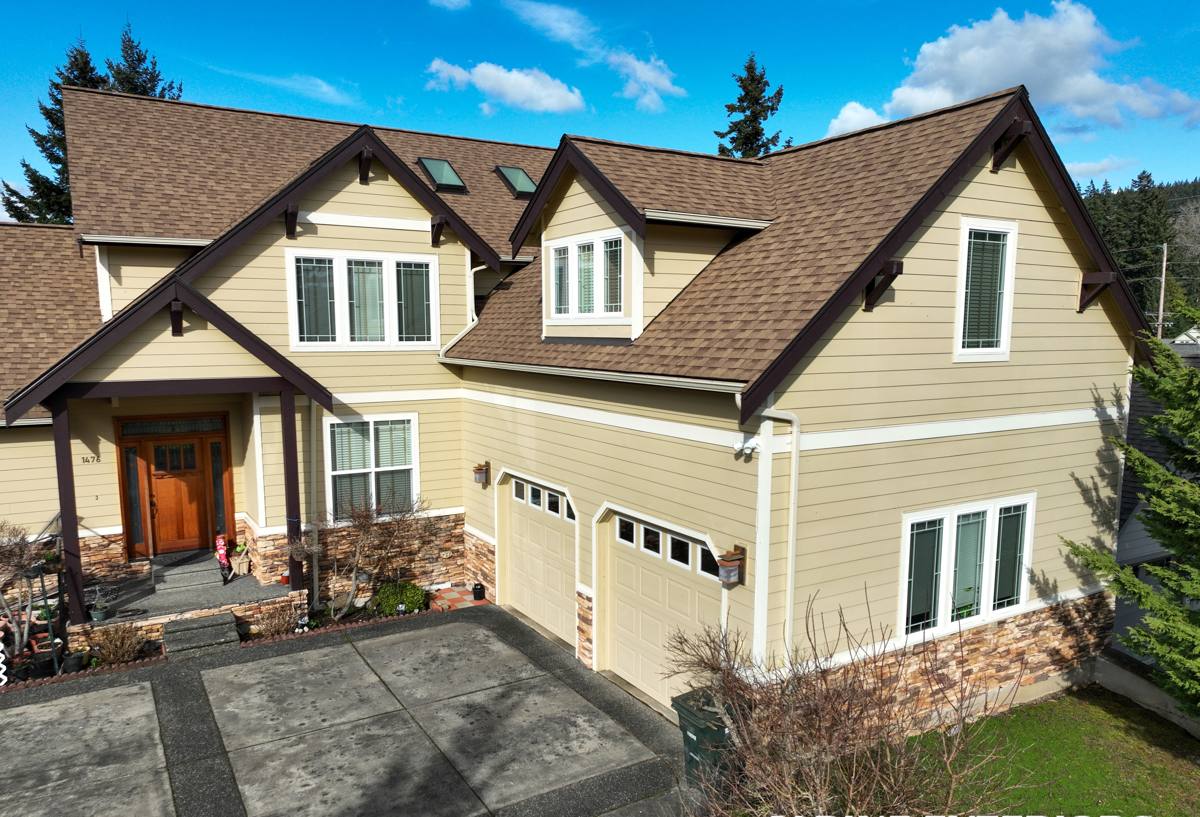
Signs a Sunnyland Home Needs New Windows
Most homeowners don't think about their windows until something forces the issue. In our experience, these are the most reliable indicators that it's time to look seriously at replacement rather than another round of patching:
- Fogging or condensation trapped between the panes of a double-pane unit — the seal has failed and can't be repaired
- Persistent drafts you can feel near the frame even with the window fully latched
- Soft, discolored, or crumbling wood at the sill or jamb — a sign moisture has already gotten behind the trim
- Windows that are difficult to open, close, or lock, often from swelling, warping, or a settled frame
- Visible gaps between the frame and siding, or caulking that has cracked and pulled away
- Moss, algae, or dark staining building up around the frame or on the sill
- Single-pane glass still in place, especially on the north or west-facing walls that take the brunt of weather
- Noticeably higher heating bills compared to similar homes nearby
What a Correct Window Installation Involves
Setting a new window into an existing wall opening is a moisture-management job as much as a carpentry job. Skipping steps doesn't show up right away — it shows up as rot and mold two or three winters later, hidden behind the trim.
Flashing and Water Management
In a climate with as much driving, wind-blown rain as ours, the flashing details around a window matter more than the window itself. That means a proper sill pan to catch and direct any water that gets past the exterior seal, correctly lapped flashing tape integrated with the home's weather-resistive barrier, and a clear path for water to escape rather than pool at the sill. Done out of sequence, flashing can actually funnel water into the wall instead of away from it.
Air Sealing and Insulation
The gap between the window frame and the rough opening needs to be sealed with a low-expansion foam or backer rod and sealant — never packed tight with standard spray foam, which can bow the frame and cause the sash to bind. Exterior sealant has to be compatible with the siding material and rated for the temperature swings and constant moisture exposure typical of Whatcom County.
Frame and Sill Prep
Before a new window ever goes in, the opening gets inspected for existing damage. If there's soft wood, old water staining, or a sill that's out of level, that gets addressed first. Installing a new window over an already-compromised opening just hides the problem for a while — it doesn't fix it.
Choosing Window Materials for a Marine Climate
There's no single "best" frame material for every home — it depends on your budget, your home's style, and how much upkeep you want to take on. Here's how the common options generally hold up under salt air and near-constant moisture exposure:
| Frame Material | How It Handles Salt Air & Moisture | Maintenance | Relative Upfront Cost |
|---|---|---|---|
| Vinyl | Doesn't corrode or rot; performs well in coastal air with minimal fuss | Low — occasional cleaning | Lower |
| Fiberglass | Excellent stability and moisture resistance; holds paint well if a custom color is wanted | Low | Higher |
| Wood (exterior clad) | Good if the exterior cladding is intact, but any breach in the cladding exposes wood to rot | Moderate to high — cladding and seals need periodic inspection | Higher |
| Bare aluminum | Prone to pitting and corrosion near salt air over time; conducts cold, increasing condensation risk | Moderate | Varies |
For most Sunnyland homes, we steer clients toward vinyl or fiberglass specifically because of how consistently they perform against salt exposure and driving rain without demanding ongoing maintenance. Wood-clad windows can still be the right call for a specific architectural look — the trade-off is simply that the cladding and seals need to be checked regularly, since any gap gives moisture a path to the wood underneath.
Our Window Installation Process
On-Site Assessment
We start by looking at the actual condition of your existing windows and the openings behind them — not just measuring for new glass. This is where we catch sill rot, settled framing, or drainage issues that need to be part of the plan.
Removal and Prep
Old windows come out carefully to avoid damaging surrounding siding and trim. Any deteriorated wood or flashing is repaired before the new unit goes in — this is the step that gets skipped by installers trying to move fast, and it's the one that determines whether the job lasts.
Installation and Flashing
The new window is set plumb, level, and square, then sealed and flashed using the sequence appropriate for your siding type — details differ between lap siding, shingle, and stucco. Insulation is worked into the gap without over-packing it.
Final Inspection and Cleanup
We test operation, check the seal from inside and out, and walk the site to make sure debris and old materials are cleared away before we consider the job done.
Why Hiring a Crew That Already Works in Sunnyland Matters
A lot of window problems in this neighborhood trace back to installation shortcuts, not the windows themselves. A crew that regularly works in Bellingham and across Whatcom County has already seen how the housing stock in areas like Sunnyland was built, what siding types are common, and where older homes tend to have hidden moisture issues around openings. That familiarity means fewer surprises mid-project and a flashing approach that's already matched to what's actually behind your siding, rather than a generic install.
There's also a practical accountability piece: a local company is easy to reach if a question comes up after the fact, and has a reputation in the community worth protecting. That matters more in a climate where a poorly sealed window won't show its problems until well into the next rainy season.
Caring for New Windows Through Bellingham's Moss Season
A correctly installed window still needs a small amount of upkeep to get its full lifespan out of it in this climate:
- Clear moss, leaves, and debris from tracks and weep holes a couple of times a year so water can drain as designed
- Wipe down frames and sills periodically, especially in shaded or north-facing areas where moss and algae take hold fastest
- Inspect exterior caulking annually and have any cracked or separated sections resealed before winter rains set in
- Avoid aiming a pressure washer directly at window seals or weep holes — it can force water past seals that are otherwise doing their job
- Operate hardware (locks, cranks, latches) a few times through the year so mechanisms don't seize from disuse
What Affects the Cost of Window Installation in Sunnyland
Every home is different, so we avoid quoting numbers before we've actually looked at the project — but the main variables that drive cost are consistent from house to house: the number of windows being replaced, their size and shape (standard rectangular units cost less than custom shapes or large picture windows), the frame material chosen, whether any rot or structural repair is needed at the opening, and whether the job is a straightforward frame-in-frame replacement versus a full-frame replacement down to the studs. Homes closer to the bay sometimes warrant upgraded glazing or hardware finishes to hold up better against salt exposure, which is worth factoring in even if it adds modestly to the upfront cost.
If you're noticing drafts, fogged glass, or moisture issues on your Sunnyland home, we're happy to take a look and give you a straightforward, no-pressure estimate — just fill out the form below to get started.