 Bellingham Exterior
 Siding Replacement Built for Sudden Valley's Terrain
Sudden Valley sits in a different microclimate than a lot of Bellingham. Homes here are tucked into heavy tree cover near Lake Whatcom, which means more shade, more standing moisture on north-facing walls, and a moss season that runs longer than it does on open, sun-exposed lots. Add in the driving rain and salt-tinged marine air that moves through Whatcom County off the Sound, and you've got a combination that's tough on siding: constant damp, limited drying time between storms, and organic growth that doesn't quit from October through May.
That combination matters because siding failure in Sudden Valley rarely starts with the material itself — it starts with moisture that never gets a chance to dry out. Shade-heavy lots hold humidity against the wall longer than an open lot in town would. Over years, that changes the math on what "good enough" siding looks like, and it's a big part of why we don't install anything on Sudden Valley homes except James Hardie fiber cement.
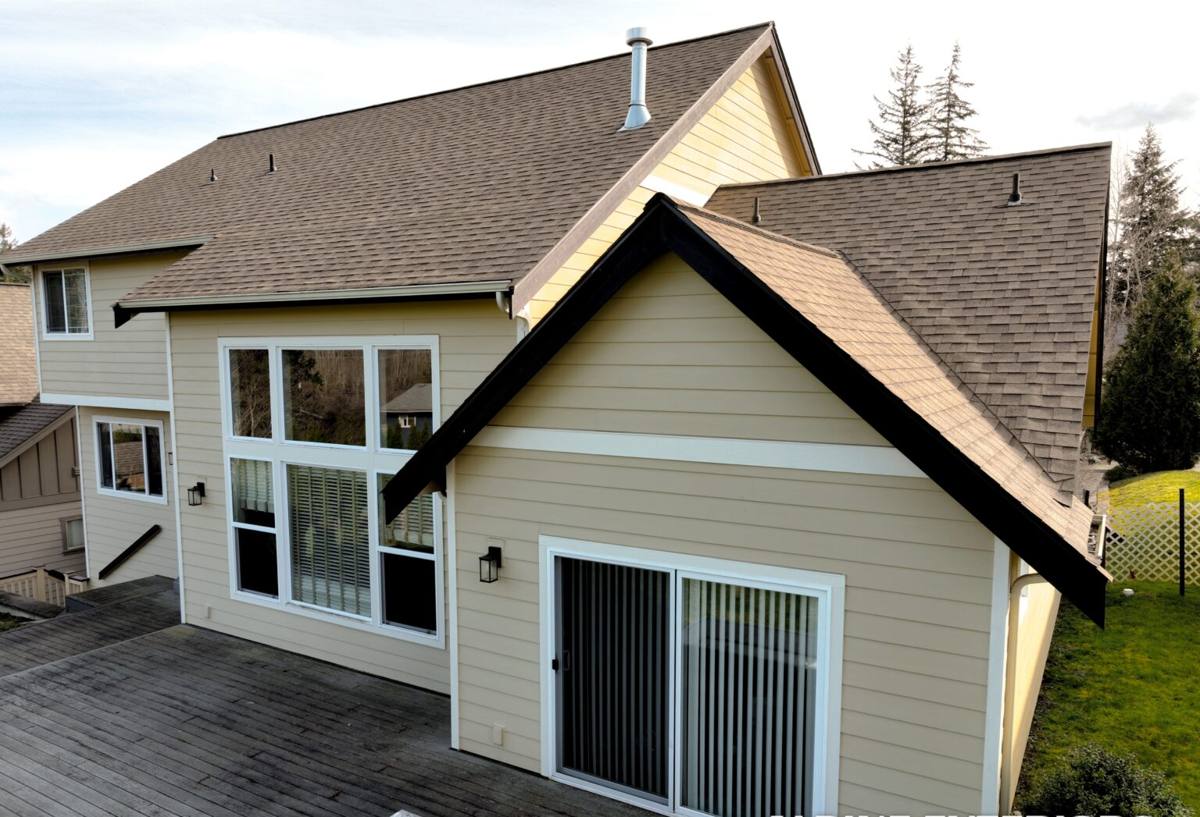
Signs a Sudden Valley Home Needs Siding Replacement, Not Just a Patch
Because of the shade and moisture load out here, siding problems tend to show up in specific patterns. Before assuming a repair will do the job, it's worth checking for these:
- Soft or spongy siding when you press on it, especially low on the wall or under eaves with poor overhang
- Persistent moss or algae staining that comes back within weeks of being cleaned
- Visible warping, cupping, or separation at panel seams, more common on wood or engineered wood products
- Paint that's peeling or bubbling rather than just fading — usually a sign moisture is moving through the material, not just sitting on top of it
- Soft trim or corner boards, which often fail before the field siding does
- Rot found during a gutter, deck, or window project that turns out to run further than expected
One or two of these can sometimes be handled with spot repair. Several at once, especially combined with age, usually means the underlying material has reached the end of what it can do in this climate, and a full replacement is the more honest recommendation.
What a Correct Siding Replacement Actually Involves
Tear-Off and Wall Inspection
Pulling the old siding is also when we find out what's really happening behind it. In a shaded, damp environment like Sudden Valley, we routinely find sheathing that's softened in isolated spots, even when the siding itself looked okay from the ground. Any compromised sheathing gets identified and repaired before anything new goes up — installing new siding over a wet or rotted wall just hides the problem for another few years.
Water-Resistive Barrier and Flashing
The siding itself is the least important layer for keeping a house dry. What matters more is the water-resistive barrier underneath it, and the flashing details around every window, door, and penetration. In a high-rainfall area with limited sun exposure to dry things out between storms, sloppy flashing is the single most common cause of the "new siding, same rot" problem homeowners run into with lower-quality installs.
Installation to Manufacturer Spec
James Hardie siding is engineered around specific nailing patterns, gapping, and clearances, and those specs exist for a reason — they're what keep the warranty valid and what keep the product performing as designed. That includes proper clearance from grade, deck surfaces, and roof lines, all of which matter more on a heavily treed lot where debris and moisture collect against the base of a wall.
Why We Install Only James Hardie Fiber Cement
We get asked why we don't offer vinyl, LP SmartSide, or cedar as options. The honest answer is that we've standardized on one product because it's the one we're willing to stand behind on homes in this climate.
James Hardie is fiber cement — not wood, not wood-plastic composite, not vinyl. It doesn't swell, rot, or feed the kind of fungal growth that engineered wood and cedar are prone to in a shaded, wet environment like Sudden Valley. It's also non-combustible, which matters more each year in Washington as wildfire smoke seasons and defensible-space conversations become part of homeownership here, even west of the mountains.
Hardie's HZ5 product line is engineered specifically for climate zones like ours — the Pacific Northwest's freeze-thaw cycles and sustained moisture exposure — rather than being a one-size-fits-all product. The ColorPlus factory finish is baked on under controlled conditions, which holds color and resists the fading and peeling that field-applied paint struggles with, especially on a house that gets limited direct sun. And because it's backed by a strong transferable warranty when installed by a certified crew, it protects the investment for whoever owns the home next.
None of this means other products are junk. Vinyl is inexpensive and low-maintenance for the right budget. LP SmartSide has real fans and a lower material cost than fiber cement. Cedar looks great and plenty of people love the aesthetic. But we've made a professional call: for Whatcom County's rain load, humidity, and moss pressure, fiber cement is the material we're comfortable putting our name on, so it's the only one we install.
Comparing Siding Materials in a Wet, Shaded Climate
| Factor | James Hardie Fiber Cement | Vinyl | LP SmartSide / Engineered Wood |
|---|---|---|---|
| Moisture resistance | Does not rot or swell; non-organic core | Doesn't rot, but seams and moisture behind panels can trap water | Treated to resist moisture, but engineered wood core is still organic |
| Moss and algae resistance | Factory finish resists organic growth buildup | Can host moss/algae in shaded, damp spots | Prone to surface growth in low-sun areas without regular cleaning |
| Fire rating | Non-combustible | Combustible; can melt or warp near heat | Combustible (wood-based) |
| Finish longevity | ColorPlus factory finish, long color retention | Color molded in, can fade unevenly over time | Field-applied paint, needs repainting on a cycle |
| Typical lifespan when properly installed | Multiple decades | 20–30 years, variable | 15–25 years, heavily dependent on maintenance |
Cost Factors for a Sudden Valley Siding Replacement
Every home is different, so we won't quote a number without seeing the house, but the factors that move the price are consistent from project to project:
| Factor | Why It Matters |
|---|---|
| Wall square footage and home shape | More surface area and more corners/angles mean more material and labor |
| Sheathing condition found at tear-off | Rot repair from shade-related moisture damage adds time before new siding goes up |
| Siding profile and trim detail | Lap width, board-and-batten, and trim complexity affect labor hours |
| Access and site conditions | Tree cover, slope, and tight lot access common in Sudden Valley can affect staging and scaffolding |
| Window and door count | Each opening needs flashing and trim work, which adds time regardless of wall size |
Our Process, Start to Finish
1. On-Site Assessment
We walk the home, check siding condition at grade, under eaves, and around penetrations, and look for signs of moisture intrusion before quoting anything.
2. Written Plan and Product Selection
We go over the Hardie product line, profile, and color options that fit the home, and put the scope of work in writing before anything starts.
3. Tear-Off, Repair, and Barrier Installation
Old siding comes off, sheathing gets inspected and repaired as needed, and the water-resistive barrier and flashing go in correctly the first time.
4. Siding Installation to Spec
Panels and trim go up following James Hardie's installation requirements for our climate zone, with attention to clearances that matter on shaded, tree-lined lots.
5. Site Cleanup and Walkthrough
We clean up debris and walk the finished job with the homeowner before calling it done.
Why Hiring a Crew That Already Works Sudden Valley Matters
A crew that regularly works Sudden Valley knows what to expect before the first panel comes off: shaded walls that stay damp longer, tree debris and organic buildup at the base of siding, and the access challenges that come with wooded, sloped lots. That familiarity shows up in fewer surprises mid-project and a more accurate estimate up front. It also means we're not learning the local climate's quirks on your house — we already know what causes premature siding failure out here, and we build the install around avoiding it.
Keeping New Siding Performing for the Long Haul
Even the right material benefits from basic upkeep, especially in a shaded, moisture-heavy setting like Sudden Valley. A yearly rinse to keep moss and organic buildup from taking hold, trimming back vegetation that's crowding the walls, and keeping gutters clear so water isn't sheeting down the siding all go a long way toward getting the full lifespan out of a new install. None of it is intensive — it's the kind of maintenance that takes an afternoon a year, not a weekend project.
If your Sudden Valley home is due for new siding, or you're not sure whether what you're seeing is a repair or a replacement situation, we're happy to take a look and give you a straight answer. Reach out for a free, no-pressure estimate using the form below.