 Bellingham Exterior
 Getting Windows Right the First Time in Silver Beach
If you're building new in Silver Beach, the windows are one of the few components in the whole project you really don't get a second chance on. Once the siding, trim, and interior finish go in around them, a poorly flashed or poorly sealed window becomes a hidden problem instead of a visible one — and in Whatcom County's climate, hidden moisture problems don't stay small for long. New-construction windows are installed differently than replacement windows, with the flashing and water management built into the wall assembly itself, which means the install sequence matters as much as the window unit you choose.
We work new builds and additions in Bellingham neighborhoods like Silver Beach regularly, which means we're used to coordinating with builders, working around inspection schedules, and installing to a standard that holds up to this area's salt air, driving rain, and long moss season — not just to whatever the minimum code requires.
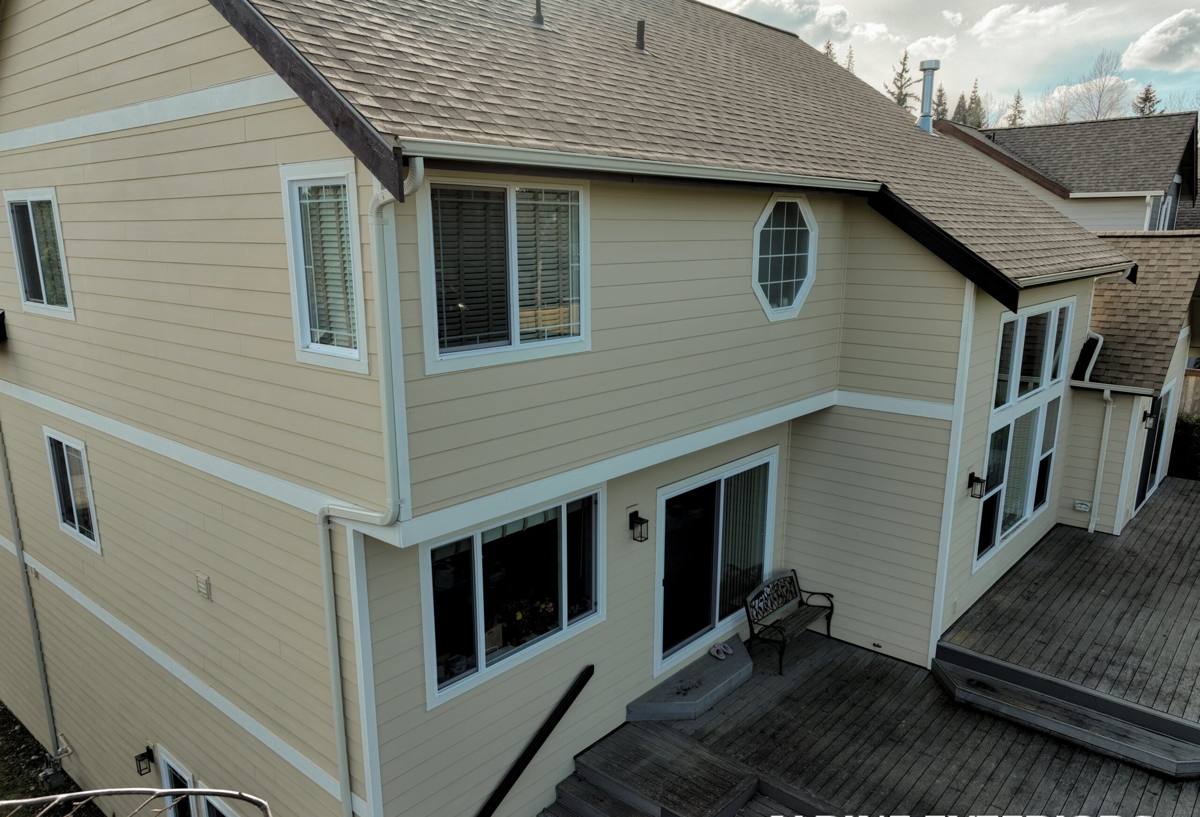
What Bellingham's Climate Actually Does to New-Construction Windows
Whatcom County's marine climate is mild compared to a lot of the country, but "mild" doesn't mean easy on building materials. The combination of moisture-laden air, wind-driven rain, and long shaded wet seasons creates specific failure points for windows that don't show up in drier climates.
Salt Air and Metal Components
Bellingham sits on the water, and marine air carries salt further inland than most homeowners assume. Over years, that air accelerates corrosion on unprotected fasteners, cheap balance hardware, and lower-grade aluminum components. It's one of the reasons we pay attention to what's inside a window unit, not just what the frame looks like on the showroom floor.
Driving Rain and Wind-Driven Water
Storms here don't just drop rain straight down — wind pushes it sideways into wall assemblies, which is exactly the condition new-construction flashing details are supposed to defend against. A sill pan, properly lapped weather-resistant barrier, and correctly sequenced flashing tape matter more in a wind-driven rain climate than in a calm one, because water is actively being pushed toward every seam and fastener.
A Long Moss and Algae Season
Shaded lots, tree cover, and extended damp stretches through fall, winter, and spring give moss and algae a long runway to establish themselves on sills, tracks, and frame exteriors. Beyond the appearance issue, sustained organic growth holds moisture against the frame and finish, which shortens the life of caulking, weatherstripping, and paint or finish coatings faster than in drier regions.
New-Construction vs. Replacement Windows: Why the Install Method Matters
These two window types solve different problems, and using the wrong one — or installing a new-construction window like a replacement window — is one of the most common ways water problems get built into a new home.
| Factor | New-Construction (Flange) Window | Replacement (Pocket/Insert) Window |
|---|---|---|
| Best used for | New builds, additions, full wall openings | Existing openings with intact frames |
| Water management | Nailing flange integrates directly with the WRB and flashing | Relies on existing frame and exterior finish for water control |
| Exterior finish sequence | Installed before siding/trim go on | Installed into a finished wall, siding stays in place |
| Long-term performance in this climate | Strongest option when flashed correctly — full control over the water path | Depends heavily on the condition of the existing opening |
For a new build, the flange window is almost always the right call — it's designed for exactly this situation. The performance difference between a correctly flashed new-construction window and one installed like a replacement shows up as leaks, staining, or soft framing within a few wet seasons, not immediately, which is part of why it's easy for a rushed install to pass a walkthrough and still fail later.
What a Correct New-Construction Window Installation Involves
Sill Pan and Sloped Drainage First
Before the window ever goes into the opening, the rough sill needs a sloped, sealed pan flashing so any water that does get past the window has somewhere to go besides the framing below it. Skipping this step is invisible once the window is in — and it's one of the most common shortcuts on rushed builds.
Weather-Resistant Barrier Integration
The house wrap or building paper has to be cut, folded, and taped in the correct shingle-lap order — head flashing over the WRB, jamb flashing overlapping the sill pan, and the WRB above overlapping the head flashing. Get this sequence backward and you've built a path for water to travel behind the siding instead of down and out.
Fastening and Shimming for a True, Square Opening
A window that's shimmed out of square will bind, won't seal evenly, and puts uneven stress on the frame and glass seal over time. Fasteners go through the flange at manufacturer-specified spacing — not wherever's convenient — because under-fastening lets the frame flex in wind, and over-fastening or incorrect placement can void the manufacturer's warranty.
Interior and Exterior Sealant, in the Right Places Only
Sealant belongs at specific points, not everywhere. A fully sealed exterior perimeter with no way for incidental moisture to escape can trap water inside the wall assembly instead of keeping it out — the opposite of what most homeowners assume "more caulk" accomplishes.
Choosing Frame Material and Glass for This Climate
Material choice matters more in a marine climate than in a dry one, since it affects how the frame handles years of moisture exposure, not just its first-year appearance.
| Frame Type | Moisture Behavior | Maintenance | Typical Cost Position |
|---|---|---|---|
| Vinyl | Won't rot or corrode; performs well in wet marine climates | Low — occasional cleaning | Lower to mid |
| Fiberglass | Very stable in moisture and temperature swings; strong long-term option | Low | Mid to higher |
| Wood or Wood-Clad | Attractive but exposed wood is vulnerable to prolonged damp and moss contact | Higher — finish upkeep required | Higher |
We don't refuse to install wood-frame windows, but we're upfront that exposed wood in a climate with this much sustained moisture and shade-driven moss growth carries a real maintenance commitment — it's a trade-off in upkeep and long-term exposure, not a defect in the product. For most new builds in Silver Beach, vinyl or fiberglass frames give homeowners the best balance of low maintenance and long service life without babysitting a finish every year or two.
On glass, dual-pane with a low-E coating and argon fill is the practical standard for this region — it manages both our wet, overcast winters and the temperature swings across the seasons. Upgrading to triple-pane adds cost and weight without a dramatic performance jump in Bellingham's moderate climate, so it's worth weighing against your actual budget priorities on the build rather than assuming more panes always means better value.
Our Process for New-Construction Windows in Silver Beach
- Plan review and coordination — we review window schedules and rough opening sizes with your builder or GC before framing is finalized.
- Site verification — every rough opening gets checked for square, level, and correct sizing before install day, catching framing issues while they're still cheap to fix.
- Sill pan and flashing installation — sloped drainage and WRB integration done in the correct shingle-lap sequence, before the window goes in.
- Window setting and fastening — units are shimmed true and square, fastened to manufacturer spec.
- Sealant and final flashing — exterior sealant applied only where it belongs, with the drainage path left open.
- Walkthrough — we review the completed openings with you or your builder before siding closes them in for good.
Mistakes We See on New Builds — What to Watch For
If you're a homeowner overseeing a build rather than swinging the hammer yourself, here's what's worth asking your builder or window crew about directly:
- Sill pan flashing installed under every window before the unit goes in — not skipped to save time
- WRB and flashing tape lapped in the correct top-down shingle order, not just taped flat
- Fasteners placed at the spacing the manufacturer specifies, not spaced by eye
- Sealant applied at the right points only, with weep paths left clear
- Rough openings checked for square before the window is set, not adjusted after
- Manufacturer installation instructions on hand and followed — not just "how we always do it"
None of these take much extra time to do correctly during construction. They take a lot of time and money to fix after the siding is on and a leak has already found its way into the wall.
Why Local New-Construction Experience Matters in Silver Beach
Anyone can install a window into an open rough opening. Fewer crews have spent years doing it specifically in Bellingham's conditions — where salt-laden marine air, sideways-driving storms, and a moss season that stretches across most of the year all put real demands on the details most installers treat as boilerplate. We coordinate with builders on schedule, we know what Whatcom County inspectors look for at framing and window inspections, and we install to a standard meant to hold up over decades in this specific climate, not just pass a walkthrough.
If you're building or adding on in Silver Beach and want windows installed right the first time, we're glad to walk the plans or the framed opening with you and give you a straightforward, no-pressure estimate — just fill out the form below.