 Bellingham Exterior
 Windows Built for Barkley's Coastal Whatcom County Climate
Barkley homes sit in a stretch of Bellingham that gets the full range of what Whatcom County weather has to offer: salt-laden air drifting in off the bay, long stretches of driving rain through fall and winter, and a moss season that seems to start earlier every year. None of that is a problem for a window that was specified and installed correctly. It becomes a problem fast when a window was chosen for a showroom in a dry climate, or installed with shortcuts that only show up two or three winters later.
We install and replace custom windows for homes throughout Barkley, and the work is straightforward in concept: pick a frame material and glass package that actually suits this climate, then install it so water has nowhere to go but out. The details are where jobs succeed or fail.
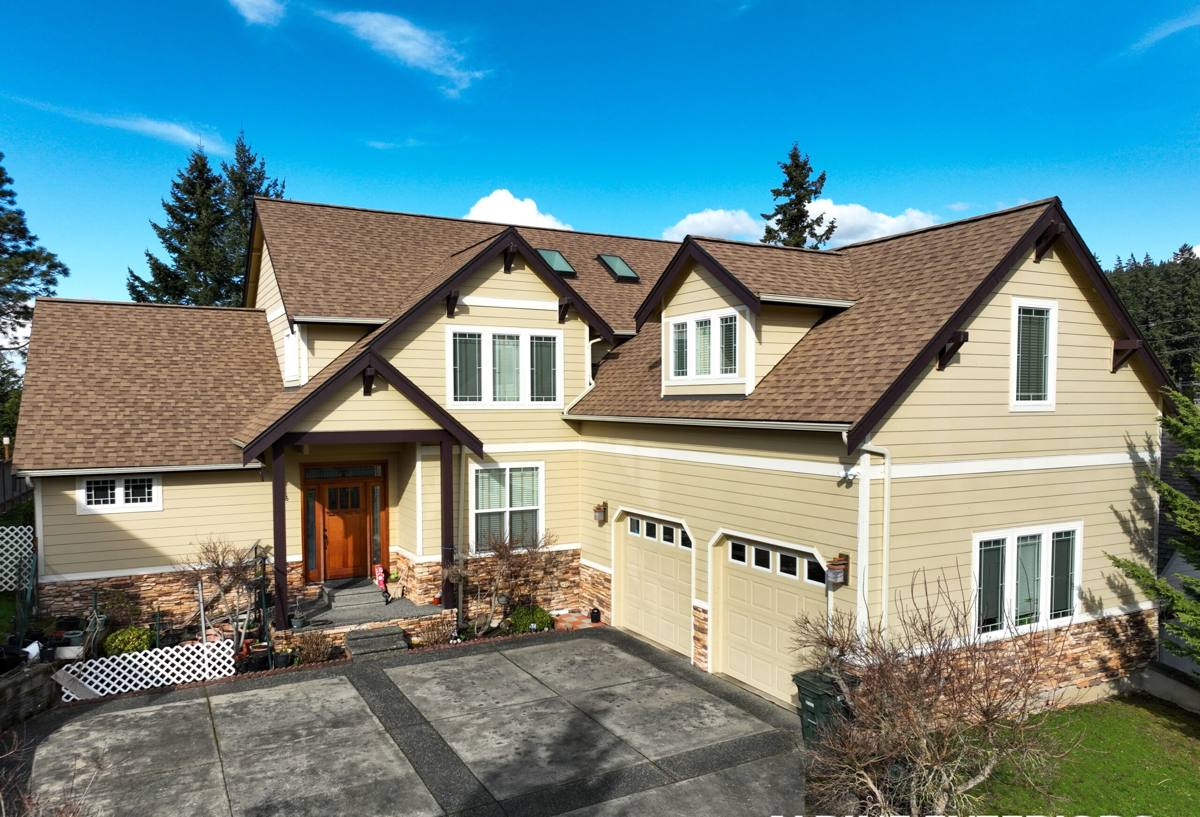
What Salt Air, Rain, and Moss Actually Do to a Window
It helps to understand the specific ways this climate attacks a window assembly, because it changes what "good" looks like for a Barkley home.
Salt Air
Airborne salt is corrosive to unprotected metal hardware — hinges, cranks, locks, and low-grade fasteners. On homes closer to the water, we see pitting and stiff operation on hardware that would have lasted decades further inland. It also accelerates the breakdown of poor-quality seals and finishes over time.
Driving Rain
Wind-driven rain doesn't just hit a window head-on — it gets pushed sideways and upward, testing every seam, sill pan, and flashing detail. A window that only handles rain falling straight down will eventually leak in a Bellingham storm. This is the single biggest source of water intrusion we find in older Barkley homes.
Moss and Prolonged Dampness
Moss itself doesn't usually damage window frames directly, but the conditions that grow moss — shade, moisture, and long dry-out times — also keep wood trim, sills, and unsealed gaps wet for extended periods. That sustained dampness is what leads to rot, swollen wood, and mildew around window openings, especially on the north and west sides of a house.
What a Correct Custom Window Installation Involves
"Custom" means the window is built to the exact opening and specification of your home, not pulled off a shelf in a standard size. That's necessary for most Barkley homes, especially older ones where openings have settled or were never perfectly standard to begin with. But the frame is only part of the job — the installation determines whether that frame stays dry.
- Removing the old window down to the rough opening and inspecting the framing, sill, and sheathing underneath for hidden rot or prior water damage before anything new goes in
- Installing a proper sloped sill pan so any water that gets past the glass drains outward, not into the wall cavity
- Flashing the opening in the correct shingle-style sequence — sill, sides, then head flashing lapped over the sides — so water always moves down and out
- Sealing with the right sealants at the right layers, not just a bead of caulk around the trim as a finishing step
- Setting the window level, plumb, and square, then shimming and fastening according to the manufacturer's structural requirements
- Insulating the gap between the frame and rough opening properly, without over-packing it in a way that bows the frame
- Finishing the exterior trim and interior casing so the whole assembly sheds water and looks right from both sides
Skip or rush any one of these steps and you can still have a window that looks fine for a year or two before a leak shows up as a stain, a soft spot in drywall, or a musty smell that traces back to the wall behind the window.
Choosing a Frame Material for a Barkley Home
There's no single "best" window material for every house — it depends on your home's style, your budget, and how much upkeep you want to take on. Here's how the common options actually perform in this specific climate.
| Frame Material | How It Handles This Climate | Maintenance |
|---|---|---|
| Vinyl | Handles moisture and salt air well; won't rot or corrode, though color and hardware quality vary widely between grades | Low — occasional cleaning |
| Fiberglass | Very stable in temperature swings and damp conditions; strong resistance to warping | Low |
| Wood (clad or unclad) | Good insulating and appearance qualities, but exposed or poorly maintained wood is vulnerable in a wet, mossy climate | Higher — needs regular paint/stain upkeep |
| Aluminum | Durable but a poor insulator and prone to condensation; hardware needs corrosion-resistant coatings near salt air | Moderate |
For most Barkley homes we recommend vinyl or fiberglass frames with corrosion-resistant hardware, or a clad-wood window where the exterior face is protected and only the interior is exposed wood. If you want an all-wood exterior for a historic or period-style home, it can be done — it just needs a realistic maintenance commitment going forward, and we'll tell you that honestly rather than talk you into upkeep you're not planning for.
Glass Packages
Double-pane, low-E, argon-filled glass is the standard baseline for this region and handles the temperature swings and condensation risk of a damp climate well. Homes with more direct exposure to wind and rain — corner lots, elevated sites, homes closer to open water — benefit from upgraded weatherstripping and heavier-duty frame reinforcement in addition to the glass package itself.
How We Approach a Barkley Window Job
- On-site assessment. We look at your current windows, the condition of the framing and trim around them, and any existing signs of water intrusion or rot before recommending anything.
- Honest scope and estimate. You get a clear picture of what's actually needed — full replacement, partial replacement, or repair — and why, along with straightforward pricing.
- Material and frame selection. We help you weigh frame material, glass package, and style against your home's exposure and your budget, without pushing a single "house brand."
- Careful removal and inspection. Old windows come out cleanly, and we check the rough opening for hidden damage before installing anything new.
- Correct flashing and sealing. Every opening gets proper sill pan drainage and shingle-lapped flashing — this is the step that determines whether the window stays dry for the next twenty years.
- Finish work and cleanup. Interior and exterior trim finished properly, site cleaned, and a walkthrough so you know exactly what was done.
Signs Your Barkley Home's Windows Need Attention
Some warning signs are easy to miss because they develop slowly over multiple wet seasons. Worth checking for:
- Fogging or moisture between panes, which means a seal has failed and the insulating gas is gone
- Stiff, hard-to-operate cranks or locks, especially on windows facing prevailing wind and rain
- Soft or discolored trim and sill wood around the window frame
- Visible gaps, drafts, or daylight around the frame when the window is closed
- Peeling paint or bubbling finish on interior casing near the window
- A musty smell in the room that gets stronger near the window on rainy days
- Moss or persistent green growth building up on the exterior trim or sill
Any one of these on its own isn't necessarily an emergency, but they're worth having looked at before the next wet season adds to the damage.
What Affects the Cost of a Custom Window Project
| Factor | Why It Matters |
|---|---|
| Frame material | Vinyl and fiberglass generally cost less upfront than wood or clad-wood options |
| Number and size of openings | More windows and larger or custom-shaped openings increase labor and material cost |
| Condition of the rough opening | Hidden rot or framing damage found during removal adds repair work before the new window can go in |
| Glass package | Upgraded low-E coatings, gas fills, or impact-resistant glass raise cost but improve performance |
| Access and site conditions | Second-story windows, tight side yards, or difficult access can add time to the job |
| Trim and finish work | Matching existing exterior trim profiles or restoring interior casing adds finish labor |
We give a firm, itemized estimate before any work starts, so you know what you're paying for and why — not a vague range that changes once the walls are open.
Why Hiring a Crew That Already Works in Barkley Matters
A window installer who mostly works drier inland climates can still do competent work, but they're often applying general-purpose details to a house that needs coastal-grade ones. A crew that regularly works Barkley and the surrounding Bellingham neighborhoods already knows which sides of a house typically take the worst weather, how quickly moss and moisture problems develop on shaded elevations here, and which flashing and sealing details actually hold up through a Whatcom County winter rather than just passing a same-day inspection.
That local experience also means fewer surprises during the job. We're not guessing at how a rough opening will look once old trim comes off a home built for this climate — we've seen the pattern of wear before and know what to check for.
Let's Look at Your Windows
If your Barkley home has windows that fog, stick, draft, or show water damage around the frame, or you're simply planning ahead of the next wet season, we're glad to take a look. Use the form below to request a free, no-pressure estimate — we'll assess your current windows honestly and lay out your options in plain terms.