 Bellingham Exterior
 Siding Repair in Barkley: Two Different Kinds of Homes, One Climate Problem
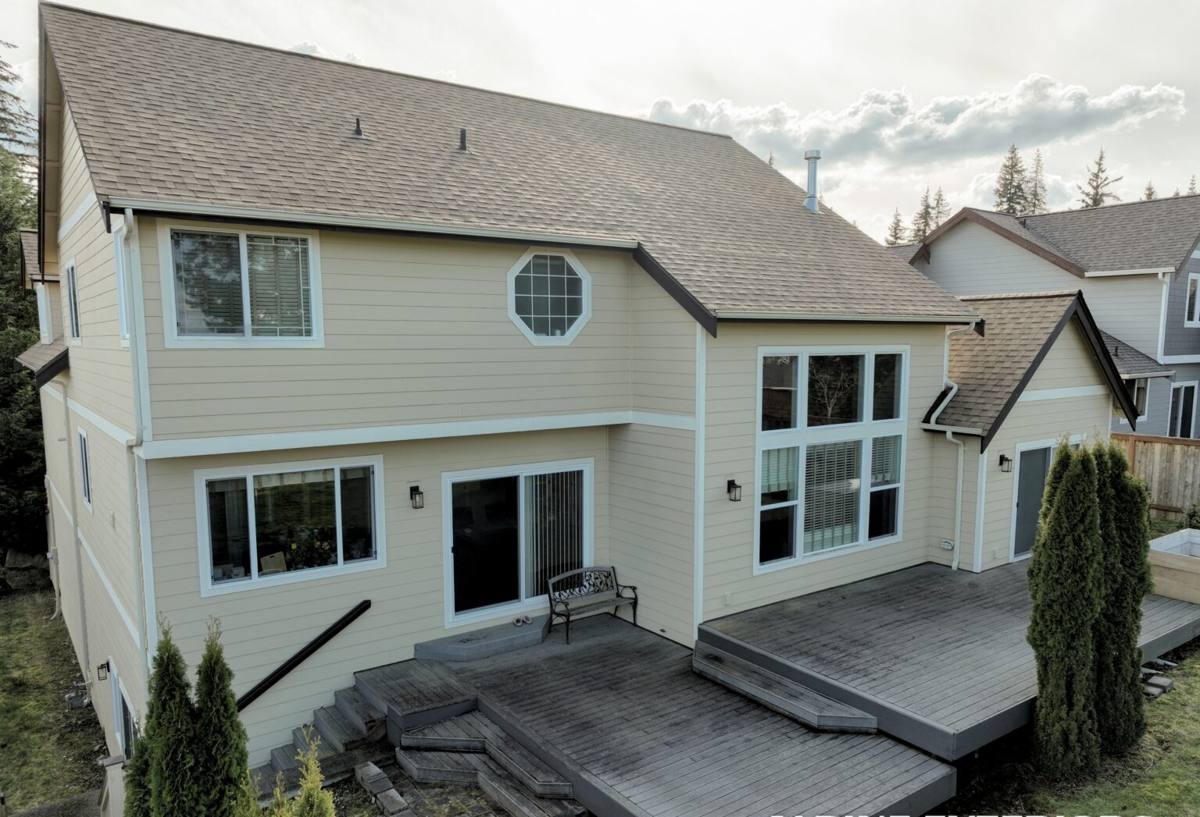
Barkley sits among a mix of newer construction and established homes on Bellingham's east side, and that mix matters when it comes to siding. A house built in the last couple of decades and one built well before that will often have completely different siding materials, different original installation quality, and different failure points. What they share is the same Whatcom County weather working on them year-round. Whatever is on the walls of a Barkley home, it has to survive the same salt-tinged air drifting in from Bellingham Bay, the same wind-driven rain, and the same long, damp moss season that defines siding wear in this part of Washington.
Siding repair only works when it accounts for both halves of that equation — the specific material on the house and the specific way our climate attacks it. A patch job that ignores either one tends to fail again within a year or two.
What Bellingham's Climate Does to Siding Over Time
Three regional factors show up again and again when we inspect siding in and around Barkley:
Salt Air
Proximity to the water means a steady, low-level exposure to salt-laden moisture in the air. Over years, this accelerates corrosion on fasteners, trim flashing, and any exposed metal, and it can speed up the breakdown of caulking and sealants at seams and joints.
Driving Rain
Bellingham doesn't just get a lot of rain — it gets a lot of wind-driven rain, which pushes water sideways into laps, seams, and butt joints that were only ever designed to shed water falling straight down. Siding that looks fine from the ground can still be taking on water at every horizontal joint during a storm.
A Long Moss Season
Shaded, north-facing, and tree-adjacent walls in Whatcom County stay damp for much of the fall through spring. That extended dampness is exactly what moss and algae need to take hold, and once established, they hold moisture directly against the siding surface, which is a problem for wood-based products in particular.
Common Siding Repair Issues We See in Barkley
The specific problem changes depending on what's actually on the house. Here's how the common siding types in this area tend to fail:
| Siding Material | Typical Failure Mode | Repair Complexity |
|---|---|---|
| Vinyl | Cracking in cold snaps, warping near heat sources, faded or chalky color that new panels won't match | Moderate — color matching aged panels is often the real challenge |
| Cedar / wood | Moss and algae staining, rot at butt joints and lower courses, paint failure exposing bare wood | High — rot repair often reveals more damage once boards are removed |
| LP SmartSide / engineered wood | Edge swelling, delamination, and softening where caulking has failed and water has entered the substrate | High — swollen edges usually mean the board itself needs replacing, not patching |
| Fiber cement (James Hardie) | Caulk and paint touch-up at seams, occasional impact damage; the board itself resists moisture and moss | Low to moderate — repairs are usually localized and don't reveal hidden rot |
That last row is a big part of why we standardized on James Hardie for full replacements. Fiber cement doesn't absorb water the way wood-based products do, so repair work on it tends to stay simple: a damaged panel, a cracked corner, a failed piece of caulk. It's not chasing rot back into the wall.
What a Correct Siding Repair Actually Involves
A repair that just covers the visible damage isn't a repair — it's a delay. Done right, siding repair in a climate like ours means:
Checking What's Behind the Siding, Not Just On It
Visible damage — a soft spot, a stain, a warped panel — is usually a symptom. Before we replace anything, we check the house wrap, flashing, and sheathing underneath for moisture intrusion. Replacing the surface material without addressing what let water in behind it just resets the clock on the same failure.
Matching Material and Exposure
New siding pieces almost never match weathered, sun-faded originals perfectly, especially on vinyl and painted wood. We'll tell you honestly when a patch will be visible so you can decide whether a full wall — or in some cases a full elevation — makes more sense than a mismatched patch.
Correct Flashing and Fastening
A lot of the repair calls we get trace back to flashing that was missing, undersized, or installed backward at windows, doors, and butt joints. Fixing the visible siding without correcting the flashing underneath it just guarantees a repeat visit.
Sealant That's Actually Rated for the Job
Not all caulking is equal, and in a climate with this much sustained moisture exposure, using the wrong sealant at joints and penetrations is one of the fastest ways for a repair to fail early.
Repair or Replace? How We Help You Decide
Not every issue calls for full replacement, and not every issue can be solved with a patch. We walk every Barkley property with the same checklist in mind:
- Is the damage isolated to one or two areas, or spread across multiple elevations?
- Has moisture reached the sheathing, or is it contained to the siding surface itself?
- Is the underlying material (wood, engineered wood, vinyl) still structurally sound where it's undamaged?
- Is the siding old enough that matching replacement material is realistic, or has the product been discontinued or badly faded?
- Would the cost of a proper, code-correct repair start to approach the cost of replacing the wall section outright?
When the honest answer points to replacement, we say so — and we'll explain why we rebuild with James Hardie fiber cement rather than matching whatever was there before, especially if what was there before is part of what failed.
Our Siding Repair Process
- Inspection. We look at the damaged area and the surrounding siding, plus any trim, flashing, or caulk joints nearby that could be contributing.
- Moisture check. Where there's any sign of water intrusion, we check behind the siding before quoting anything, so the estimate reflects the real scope of work.
- Straight assessment. You get a clear repair-versus-replace recommendation in plain terms, with the reasoning behind it — not just a number.
- The repair itself. Damaged material comes out, any underlying moisture damage gets addressed, flashing is corrected where needed, and new material goes in with proper fastening and sealant.
- Cleanup and check-in. We clean up the work area and walk the repair with you before we consider the job done.
Why a Crew That Already Works Barkley Makes a Difference
Siding repair is a trade where local familiarity pays off directly. A crew that regularly works this part of Bellingham already knows how the Whatcom County wet season behaves against different elevations, what kind of flashing mistakes tend to show up in homes from certain build eras, and how to navigate City of Bellingham permitting when a repair crosses into larger-scope work. That familiarity means fewer surprises mid-project and a more accurate estimate up front, instead of the scope quietly growing once work starts.
It also means faster response. A contractor based nearby can get eyes on a moisture problem quickly, which matters — a leak that sits through a few more weeks of Bellingham rain does a lot more damage than one addressed right away.
When Repair Isn't Enough: Why We Rebuild With James Hardie
Some repair calls end with a patch. Others end with a recommendation to replace a wall, an elevation, or the whole exterior — usually because the underlying material has reached the point where repeated repairs no longer make financial sense. When that's the conversation, we only install James Hardie fiber cement siding. Not vinyl, not LP SmartSide, not Cemplank or Allura, not primed spruce or cedar.
That's not a brand preference — it's a standard we've built around what actually holds up in this climate. Fiber cement doesn't absorb moisture the way wood-based and engineered-wood products can, so it resists the rot and delamination that drive most of the repair calls we see. It's non-combustible. Hardie's ColorPlus factory finish is baked on under controlled conditions rather than field-applied, which means better long-term color retention against the sun and salt air here. And Hardie's HZ product lines are engineered specifically for regions with sustained moisture exposure — which describes Whatcom County about as well as anywhere. Backed by a strong transferable warranty and installed to manufacturer spec, it's the product we're comfortable standing behind for the long term, which is why it's what goes back up when a repair turns into a replacement.
Get a Straight Answer on Your Barkley Siding
If you're dealing with a soft spot, a stain that won't go away, a crack, or just siding that's starting to look tired, we're happy to take a look and give you an honest read on what it actually needs. There's no pressure and no obligation — just a straight assessment and a free estimate.