 Bellingham Exterior
 Why Birch Bay Is a Tougher Test for Siding Than Most of Whatcom County
Birch Bay sits right where Puget Sound weather meets open water exposure, and that combination is harder on a home's exterior than most inland Bellingham neighborhoods ever see. Homes here take on three compounding stresses at once: salt-laden air drifting off the bay, driving rain pushed sideways by wind off the water, and a long, damp shoulder season that lets moss and algae get a foothold on anything that stays wet too long. Any one of those is manageable. All three, year after year, is what actually wears out a wall system.
Salt air is corrosive to fasteners, trim flashing, and any exposed metal — and it accelerates the breakdown of paint films and lower-grade siding substrates faster than the same product would age a few miles inland. Wind-driven rain doesn't just wet the surface of a wall; it finds every unsealed joint, panel gap, and undersized flashing detail and pushes water behind the cladding, where it can sit against sheathing for days. And Whatcom County's mild, wet winters and cool, cloudy springs give moss and algae exactly the conditions they want: shade, moisture, and mild temperatures with no hard freeze to knock growth back.
That's the environment any siding product has to perform in here — not just survive one bad storm, but hold up to this cycle every year for decades.
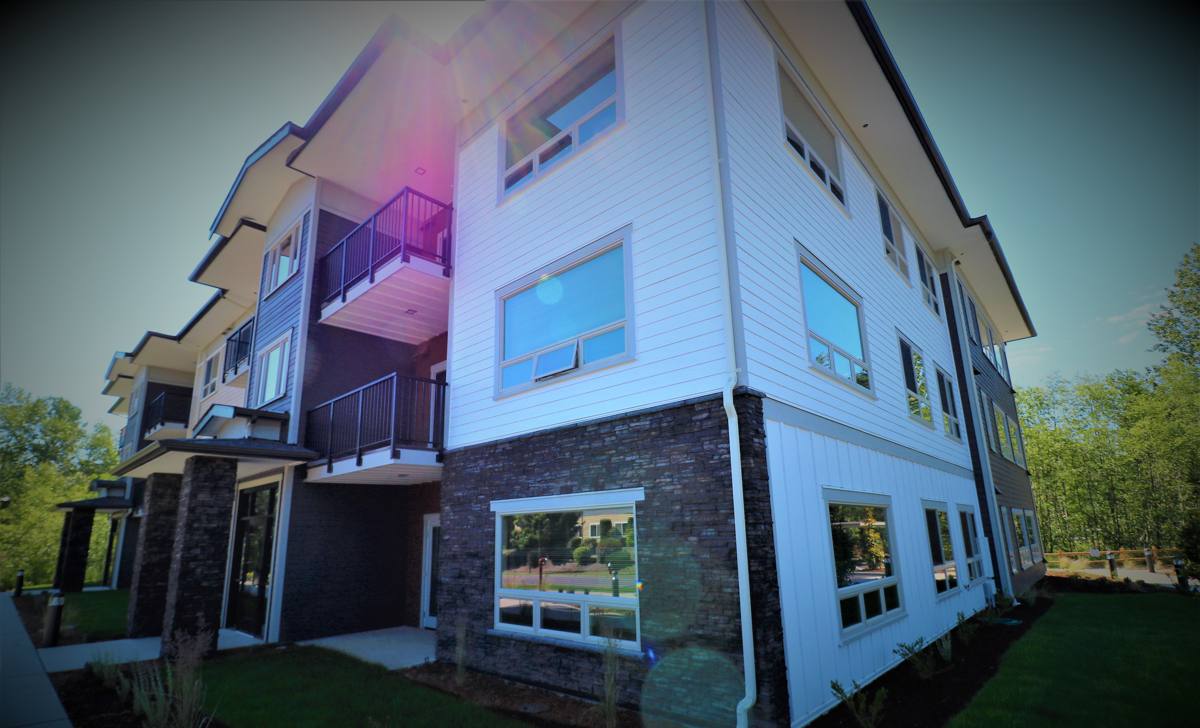
What Birch Bay Homes Actually Need From Their Siding
Given that combination of salt exposure, wind-driven rain, and moss pressure, we look at four things before recommending anything for a Birch Bay home:
- Moisture tolerance: the material itself needs to resist swelling, rot, or delamination if it takes on water at a seam or fastener point.
- Finish durability in salt air: a factory finish that resists fading and chalking holds up better near the water than field-applied paint, which breaks down faster under salt exposure and UV.
- Surface resistance to moss and algae: a dense, engineered surface sheds growth more easily than a porous or heavily grained one, and is easier to clean without damaging the finish.
- Correct installation detailing: even the best material fails early if the flashing, clearances, and fastening aren't done right for wind-driven rain exposure.
This is the reason our company installs James Hardie fiber cement exclusively. It's not brand loyalty — it's that Hardie's engineered product lines and factory finish system are built to answer these exact four points, and we'd rather stand behind one system we trust completely than offer several and let a homeowner guess which one holds up.
Why James Hardie Fits This Specific Climate
Fiber Cement's Moisture Behavior
James Hardie siding is a cement-based composite, not wood or wood-derived material. It doesn't absorb water the way wood, wood composite, or primed spruce products can, and it won't swell, cup, or rot if it gets wet at a seam or cut edge. In a location where wind-driven rain is a regular event rather than an occasional storm, that moisture stability matters more than it does in a drier inland neighborhood.
ColorPlus Factory Finish
Hardie's ColorPlus finish is baked on at the factory in a controlled process, which gives it more consistent coverage and better long-term color retention than siding that's primed at the factory and painted on-site. Near salt water, where UV and airborne salt both accelerate finish breakdown, that factory-cured finish is doing real work — it's the difference between a home that needs repainting on a normal cycle and one that doesn't.
HZ5 Product Engineering
James Hardie engineers its products by climate zone, and homes in our region fall into the HZ5 category, engineered for high-moisture, freeze-thaw-adjacent climates like ours. That's a meaningfully different product than what gets installed in the desert Southwest — the formulation accounts for the wet winters and marine exposure that define Whatcom County weather, including areas like Birch Bay that see even more direct exposure than Bellingham proper.
Non-Combustible Material
Fiber cement doesn't burn, which isn't a Birch Bay-specific climate point, but it is part of why we standardized on Hardie as a single system: it's the rare siding choice with no meaningful trade-off between fire performance and long-term durability.
What Correct Installation Looks Like on a Bay-Exposed Home
Material choice only gets a home halfway there. The other half is installation, and on a wind-and-salt-exposed property, the margin for error is smaller than it is elsewhere in the county. Correct installation includes:
Drainage Plane and Water-Resistive Barrier
A properly lapped weather-resistive barrier behind the siding, with a drainage gap that lets any water that does get past the cladding drain out and dry, rather than sit against the sheathing.
Flashing at Every Penetration
Windows, doors, hose bibs, light fixtures, and any other wall penetration need flashing detailed to shed water outward, not into the wall assembly. This is the single most common place we find shortcuts on older installs.
Fastening Pattern and Clearances
Hardie specifies exact fastener spacing, type, and embedment depth, along with minimum clearances from grade, roof lines, and decks. On a home exposed to driving rain, following these specs isn't optional finish work — it's what keeps water from being forced behind the panels in the first place.
Caulking and Joint Treatment
Butt joints and trim transitions need the right sealant, applied correctly, at every seam exposed to wind-driven rain. Skipping or under-sealing these joints is a common source of early moisture intrusion.
Siding Options Compared for a Birch Bay Property
| Factor | James Hardie Fiber Cement | Vinyl Siding | Wood / Primed Spruce |
|---|---|---|---|
| Moisture tolerance | High — won't swell or rot | Doesn't absorb water, but seams and gaps allow bulk water behind panels | Absorbs water; prone to rot at joints and end cuts |
| Salt air / finish durability | Factory ColorPlus finish resists fading and chalking | Color can fade and become brittle over time | Field-applied paint breaks down faster near salt air |
| Moss and algae resistance | Dense surface, easy to clean without damaging finish | Textured surface can trap growth | Porous surface holds moisture, feeds growth |
| Fire performance | Non-combustible | Combustible, can melt or deform under heat | Combustible |
| Long-term maintenance | Occasional wash, minimal repainting needed | Low maintenance but limited repair options if damaged | Regular repainting, more frequent repair |
Our Process for a Birch Bay Siding Job
We run every project the same way, whether it's a full re-side or a targeted repair, because consistency is what prevents the shortcuts that cause problems later:
- On-site assessment: we look at the specific exposure of your home — which walls take the most wind-driven rain, where the existing siding or trim is already showing wear, and what's happening behind the current cladding if we can access it.
- Tear-off and substrate check: once old siding is off, we inspect sheathing and framing for any hidden moisture damage before anything new goes on. This is often where a homeowner learns whether previous work was done correctly.
- Weather barrier and flashing: a new drainage plane and correctly lapped flashing at every window, door, and penetration, sized for this level of wind and rain exposure.
- Hardie installation to spec: proper fastening pattern, clearances, and joint treatment, following James Hardie's published installation requirements rather than shortcuts that save time on the job but cost the homeowner later.
- Final inspection and walkthrough: we go over the finished work with you, including where seams and trim transitions are located, so you know what to keep an eye on over time.
Why Local Experience in Birch Bay Specifically Matters
A crew that mostly works drier, more sheltered neighborhoods can still install Hardie siding correctly on paper — but they may not have a feel for how much more attention flashing and joint sealing need on a property that takes direct wind off the water. Local experience means knowing which wall orientations in this area take the worst of the weather, understanding how moss tends to establish here compared to more inland lots, and having already worked through the practical realities of scheduling and weather windows on this stretch of the coast.
When you're vetting a contractor for a Birch Bay siding project, it's worth asking directly about their experience with waterfront-adjacent exposure, not just their general siding experience. The install details that matter most here — flashing, drainage planes, fastening to spec — are exactly the details that are easiest to shortcut and hardest to inspect once the job is finished.
Living With Hardie Siding in a Salt-Air, Moss-Prone Climate
Once installed correctly, James Hardie siding is genuinely low-maintenance in this environment, but "low-maintenance" isn't "zero-maintenance." A few habits keep it performing well for the long haul:
- Rinse the siding periodically, especially on shaded or north-facing walls where moss and algae are more likely to establish.
- Keep gutters clear so overflow doesn't run down the siding face and create a constant damp strip.
- Trim back vegetation that shades siding or keeps it from drying out after rain.
- Check caulked joints every few years and have any that have cracked or pulled away re-sealed.
- Address any impact damage promptly — a cracked panel is a straightforward repair when caught early, and a much bigger one if water gets behind it first.
Warranty and Long-Term Value
James Hardie backs its siding with a strong, transferable warranty on the substrate, and the ColorPlus finish carries its own separate finish warranty — both of which matter more, not less, in a demanding coastal climate like Birch Bay's. A transferable warranty is also a real selling point if you sell the home down the road; buyers and their inspectors increasingly recognize Hardie siding and understand what it means for the home's exterior condition going forward.
The upfront cost of a correctly installed Hardie system is higher than lower-end alternatives, but the comparison that actually matters is lifetime cost: fewer repaint cycles, fewer moisture-related repairs, and a finish that's still doing its job well after cheaper materials would need replacing or heavy maintenance.
Ready to Talk About Your Home
If you're dealing with siding that's showing its age from Birch Bay's salt air and moss season, or you're planning ahead before it becomes a bigger problem, we're happy to take a look and give you a straightforward assessment — no pressure, no hard sell. Fill out the form below and we'll set up a time to walk your property and talk through what your home actually needs.