 Bellingham Exterior
 Why Birch Bay's Marine Climate Changes What a Roof Needs to Do
Birch Bay sits right on the water, and that changes the math on roofing. A roof here isn't just shedding rain like a roof a few miles inland — it's dealing with salt-laden air rolling off the bay, wind that has a clear run across open water before it hits a rooftop, and a rainy season that stretches on long enough for moss and algae to take hold on anything that stays damp. Add in the shade from mature evergreens common on many Whatcom County lots, and you've got a recipe for roofs that age faster than their paperwork suggests they should.
None of that makes metal roofing a bad fit for Birch Bay — quite the opposite, when it's specified and installed correctly. But it does mean a few details matter more here than they would on a roof in a drier, inland climate. Salt air is hard on fasteners and unprotected metal edges. Driving rain finds its way into laps and penetrations that a lighter climate would forgive. And moss doesn't just sit on the surface — given enough time, it holds moisture against the roof and works into seams and fastener heads. A roof built for Birch Bay needs to account for all three from day one, not as an afterthought.
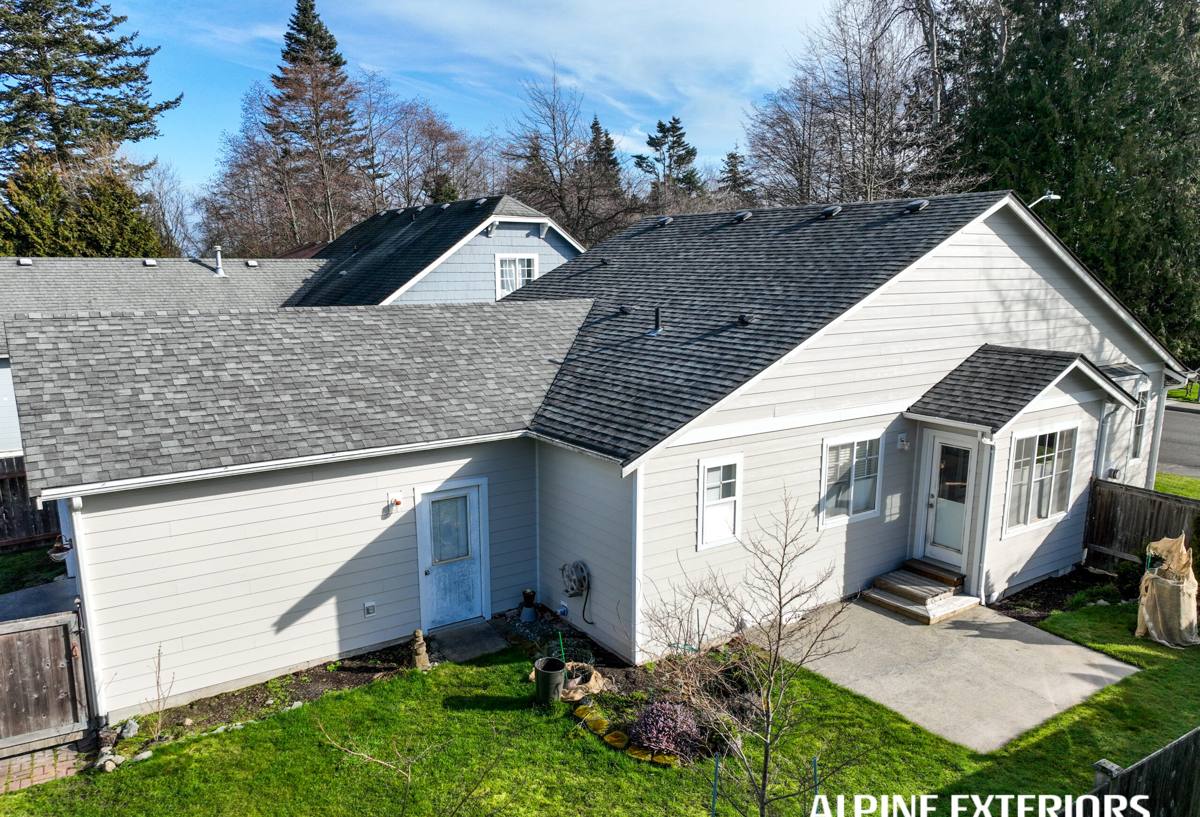
What a Correctly Installed Metal Roof Involves Here
Fasteners and Corrosion Resistance
In a salt-air environment, the fasteners and exposed metal edges are usually the first things to show wear — long before the panels themselves are in trouble. That means using fasteners and trim rated for coastal exposure, not whatever is cheapest at the supply house, and making sure dissimilar metals aren't placed in contact with each other in ways that accelerate corrosion. It's a small detail that's easy to skip and expensive to fix later.
Underlayment and Water Management
Metal panels shed water fast, but the underlayment beneath them is what protects the deck if wind-driven rain gets pushed uphill under a lap or around a penetration — which happens more often in an exposed, waterfront setting than most homeowners expect. A synthetic underlayment with good water resistance, plus self-adhered membrane at eaves, valleys, and vulnerable transitions, is standard practice for a roof that's actually going to be tested by weather off the bay.
Flashing and Penetration Details
Every chimney, vent pipe, skylight, and wall transition is a place where two materials meet, and that's where roofs actually fail — rarely in the open field of panels. Flashing needs to be formed to fit the specific roof geometry and installed so water is directed out, not just covered over. This is where rushed installs show up years later as stains on a ceiling.
Ventilation
A roof deck that can't breathe traps moisture, and trapped moisture is exactly what feeds moss, mildew, and slow rot in the sheathing underneath. Proper intake and exhaust ventilation matters as much on a metal roof as any other type, and it's worth checking during tear-off rather than assuming the existing setup was adequate.
Choosing the Right Panel System for a Birch Bay Home
Not all metal roofing is the same product wearing different colors. The two broad categories homeowners run into are standing seam (concealed fastener) systems and exposed-fastener panels, and the right choice depends on budget, roof style, and how much long-term maintenance you want to take on.
| Factor | Standing Seam (Concealed Fastener) | Exposed Fastener Panels |
|---|---|---|
| Upfront cost | Higher | More affordable |
| Fastener exposure to salt air | Fasteners hidden under seams, less exposed | Fastener heads exposed to weather and require periodic checking |
| Long-term maintenance | Lower — fewer exposed penetration points | Higher — gaskets and fasteners can need attention over time |
| Look | Clean, tailored appearance | Traditional ribbed/corrugated look |
| Best fit | Homes where long-term, low-maintenance performance is the priority | Budget-conscious projects, outbuildings, simpler roof shapes |
In a coastal environment like Birch Bay, the case for standing seam is a little stronger than it would be elsewhere, simply because there are fewer exposed fasteners for salt air to work on over the years. That said, exposed-fastener systems are a legitimate, cost-effective option when installed with quality fasteners and proper attention to gasket condition over time — we'll walk through the honest trade-offs for your specific roof rather than defaulting to the more expensive option.
Moss and Algae: Managing the Long Wet Season
Metal roofing sheds moss more easily than shingles simply because there's less texture for spores to grip, but "sheds more easily" doesn't mean "never a problem." Shaded roof sections, north-facing slopes, and areas near overhanging trees still collect organic debris, and that debris holds moisture right where you don't want it. A few habits go a long way toward keeping a Birch Bay metal roof performing the way it should:
- Keep overhanging branches trimmed back so roof sections get more light and air movement
- Clear gutters and valleys of needles and leaf debris before the fall rains set in
- Do a visual check after major windstorms for lifted flashing or debris buildup
- Rinse off accumulated moss or algae growth gently rather than scraping or pressure-washing aggressively
- Have fastener heads and sealant points checked periodically if the roof uses an exposed-fastener system
- Watch for streaking near penetrations, which often signals a small flashing issue worth catching early
This kind of light, regular attention is far cheaper than dealing with a moisture problem that's had years to work into the deck.
Cost Factors for a Birch Bay Metal Roofing Project
Every roof is priced on its own specifics, but a few factors consistently move the number up or down for homes in this area:
| Factor | Why It Matters |
|---|---|
| Panel system chosen | Standing seam runs higher than exposed-fastener panels, largely due to labor and material |
| Roof complexity | Valleys, dormers, and multiple roof planes add flashing work and labor time |
| Tear-off vs. overlay | Removing an old roof adds cost but allows a full deck inspection, which matters in a wet climate |
| Access and site conditions | Waterfront lots, steep driveways, or limited staging area can affect logistics |
| Coating and gauge upgrades | Heavier-gauge metal and enhanced coatings cost more but hold up better to salt exposure |
As a rough starting point, metal roofing typically costs meaningfully more upfront than asphalt shingles — often somewhere in the range of double, depending on the system and roof — but that gap needs to be weighed against a much longer service life and lower long-term maintenance in a climate that's genuinely hard on roofing. We'll give you real numbers for your roof rather than a generic estimate that doesn't reflect your home.
Our Process, Start to Finish
A metal roof is a long-term investment, and the process should reflect that:
- On-site assessment — we look at the existing roof, deck condition, ventilation, and any problem areas specific to your home's exposure to wind and rain off the bay.
- Honest recommendation and quote — we'll explain which panel system fits your roof, budget, and priorities, without steering you toward the most expensive option by default.
- Tear-off and deck inspection (when applicable) — this is the point where hidden moisture damage or ventilation issues get caught and addressed, not covered over.
- Underlayment, flashing, and panel installation — done to the details described above, with attention to the specific penetrations and transitions on your roof.
- Cleanup and final walkthrough — we go over the finished roof with you and answer questions about long-term care before we consider the job done.
Why Hiring a Crew That Already Works Birch Bay Matters
A lot of roofing problems in coastal areas trace back to a crew that installed a roof the same way they would anywhere else, without adjusting for salt exposure, wind loading near the water, or the amount of shade and moisture a given lot actually sees. Working in Birch Bay and around Whatcom County regularly means knowing which details actually matter here — where wind-driven rain tends to find weak spots, which fastener and flashing choices hold up over years near the water, and how local permitting and inspection processes work for a roof replacement. That local pattern-recognition is hard to fake, and it's the difference between a roof that looks right on day one and one that still performs correctly ten years in.
Is a Metal Roof the Right Call for Your Home?
Metal roofing isn't the automatic right answer for every home — it's a serious upfront investment, and the payoff comes over the long run rather than immediately. But for homes exposed to Birch Bay's salt air, wind, and heavy moss season, a correctly installed metal roof genuinely holds up better and asks less of you in ongoing maintenance than many alternatives. If you're weighing options, replacing an aging roof, or just want a straight answer about whether metal makes sense for your specific house, we're happy to take a look and talk through it honestly — no pressure, no upsell. Reach out using the form below for a free estimate.