 Bellingham Exterior
 Why Birchwood Decks Take a Beating
If you own a deck in Birchwood, you already know it doesn't get an easy life. This part of Bellingham sits close enough to the water that salt-laden air works its way into fasteners, flashing, and any exposed end grain. Add in Whatcom County's long stretch of driving rain from fall through spring, and you've got a deck surface that rarely gets a real chance to dry out between soakings. Then there's moss season — which around here isn't really a season so much as most of the year on any deck that sits in partial shade or under tree cover. Moss holds moisture against the wood, and moisture is the one thing a deck can't tolerate for long without starting to break down.
None of this means a Birchwood deck is doomed. It means the repair work has to account for how the deck actually gets used and weathered here, not just what a generic checklist says. A repair that would hold up fine in a dry inland climate can fail fast on a shaded, rain-exposed deck a few blocks from Bellingham Bay.
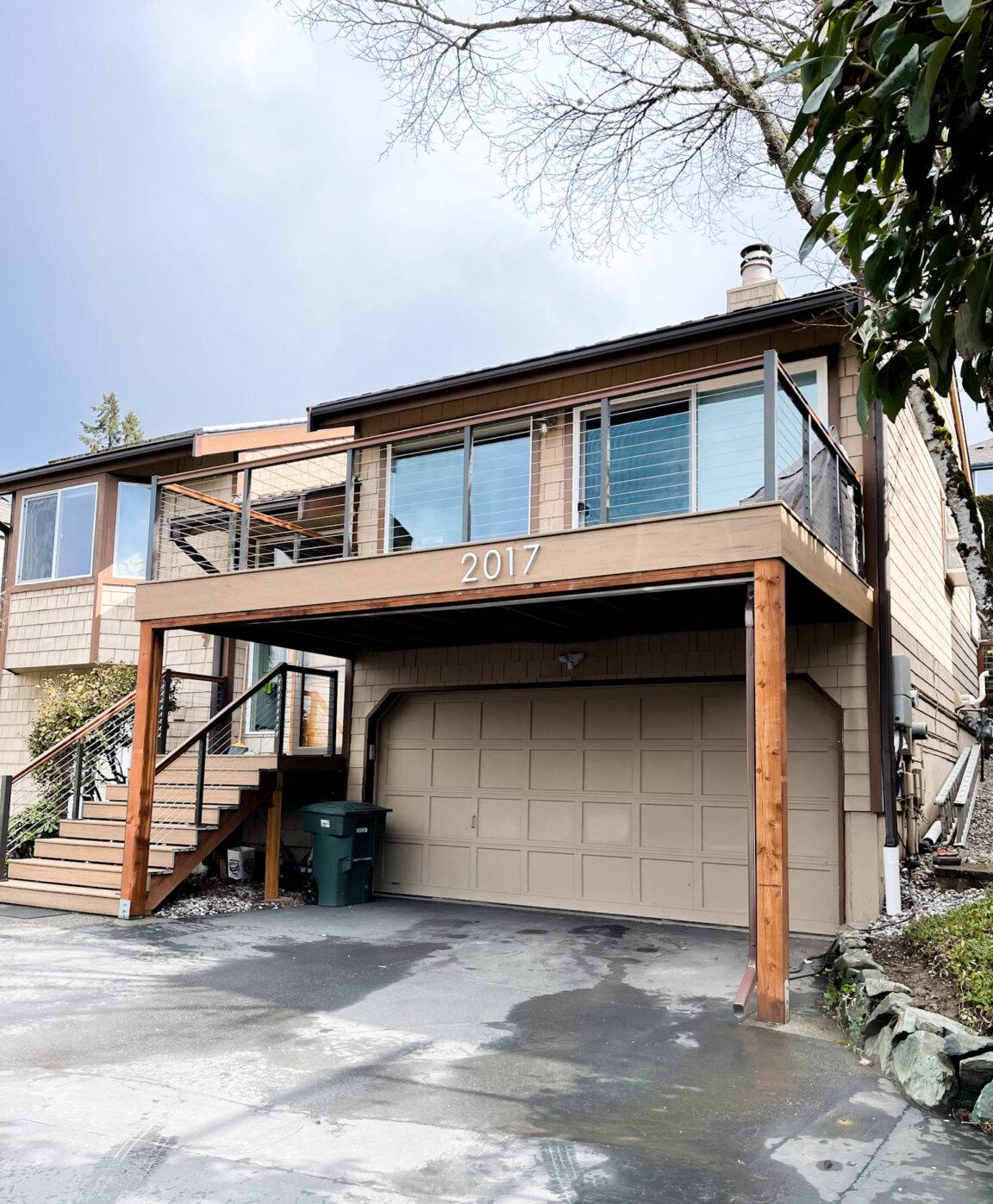
Signs Your Deck Needs Repair (Not Replacement)
Surface-Level Wear
Most decks show trouble on the surface long before anything structural is wrong. Graying, cracking, or peeling finish; boards that feel rough or splintery; green or black staining from moss and mildew; and fasteners that have started to rust and bleed streaks into the wood are all common on Birchwood decks and are usually repairable without touching the frame underneath.
Structural Red Flags
These are the signs that matter more, and shouldn't wait:
- Boards that flex, bounce, or feel spongy underfoot
- Soft or crumbling wood when you press a screwdriver into a post, beam, or ledger board
- Visible gaps or rust at the ledger-to-house connection
- Wobbly or leaning railings and posts
- Stair stringers that have separated from their supports
- Standing water or persistent damp spots that never seem to dry
If you're seeing any of the structural signs, that's not a cosmetic fix — it's worth a proper inspection before anyone uses the deck again.
What a Correct Deck Repair Actually Involves
Inspection First, Always
A repair that skips inspection is just a patch. Before we touch a board, we check the ledger board attachment, the posts and footings, the joists, and every spot where two pieces of wood meet — because that's where water sits longest and rot starts first. On a deck exposed to Bellingham's rain patterns, the ledger-to-house connection and any joist ends tucked under railings or planters are the areas we check most carefully, since they dry the slowest.
Structural Repairs Come Before Cosmetics
Rotted joists, posts, or ledger boards get replaced with appropriately rated lumber and correctly sized, corrosion-resistant fasteners — not just sistered over with a scrap piece and hoped for the best. Flashing at the ledger board gets corrected if it's missing or failing, since that single detail causes more hidden rot than almost anything else on a Pacific Northwest deck.
Finishing and Protection Last
Once the structure is sound, we address the surface: replacing damaged boards, resetting popped fasteners, cleaning and treating moss and mildew growth, and refinishing with a sealer or stain suited to how much sun or shade the deck actually gets. A deck under fir trees needs a different maintenance rhythm than one that sits in full sun, and we plan the finish schedule around that.
Common Deck Materials Around Birchwood
Most decks we work on in this neighborhood fall into a few categories, each with different repair needs given the local climate:
| Material | Typical Issue Locally | Repair Approach |
|---|---|---|
| Pressure-treated fir or pine | Checking, splintering, fastener corrosion, ledger rot | Replace compromised boards/framing; reseal on a regular cycle |
| Cedar | Graying, moss staining, soft spots in shaded areas | Clean and brighten, spot-replace soft boards, oil-based finish |
| Composite decking | Moss/mildew film, fading, occasional fastener or clip failure | Deep clean, replace failed clips or boards, check substructure beneath |
| Older or mixed-material decks | Inconsistent past repairs, hidden rot under old patches | Full inspection before any cosmetic work; remove and redo unreliable prior fixes |
Composite decking often gets marketed as maintenance-free, and the surface material genuinely doesn't rot. But the framing underneath is almost always still wood, and moss and organic debris can build up on and between composite boards just as readily as on wood — so "low maintenance" still means checking it, not ignoring it.
How Our Repair Process Works
- On-site assessment. We walk the full deck, check the substructure where accessible, and identify what's cosmetic versus structural.
- Written scope and estimate. You get a clear breakdown of what needs to happen and why, not just a lump-sum number.
- Structural repairs. Rotted or compromised framing, posts, and ledger connections get replaced and properly flashed.
- Board and railing repair. Damaged decking, loose railings, and worn stair components get replaced or reinforced.
- Cleaning and treatment. Moss, mildew, and grime get removed before any finish goes on — sealing over moss just traps it.
- Finish application. A stain or sealer matched to the wood type and the deck's sun/shade exposure.
- Final walkthrough. We show you what was done and talk through a realistic maintenance schedule going forward.
Repair vs. Replacement: What Actually Drives the Decision
Homeowners in Birchwood often ask us to "just repair it" or "just tell me if I need a whole new deck," and the honest answer depends on a few specific factors rather than the age of the deck alone:
| Factor | Leans Toward Repair | Leans Toward Replacement |
|---|---|---|
| Framing condition | Solid, isolated soft spots | Widespread rot in joists/posts |
| Ledger board | Sound, properly flashed | Failing attachment to the house |
| Age of decking surface | Under 10-15 years, isolated damage | Original material at end of service life |
| Extent of moss/moisture damage | Surface-level, recent | Long-term, penetrated deep into wood fibers |
| Design and layout | Still meets your needs | Undersized, poorly configured, or unsafe by current standards |
Broadly, straightforward board and railing repairs on an otherwise sound deck tend to run in the hundreds to low thousands of dollars, while significant structural work or a deck that's failing in multiple places starts pushing toward what a partial or full rebuild would cost. We'll always tell you honestly which side of that line your deck falls on rather than defaulting to the bigger job.
Maintenance Checklist for Birchwood Homeowners
A little seasonal attention goes a long way toward keeping a repaired deck from needing repair again. Between visits from us, here's what's worth checking yourself:
- Sweep debris and standing leaves off the deck regularly, especially in fall
- Scrub moss and algae off boards before it has a chance to establish, particularly on shaded sections
- Check that gaps between boards aren't clogged with organic debris that traps moisture
- Look at the ledger board and any spots where the deck meets the house for gaps, staining, or soft wood
- Test railings and stair connections for wobble a few times a year
- Reseal or restain on the schedule appropriate to your wood type and sun exposure, not just "when it looks bad"
- Keep planters and furniture off bare wood, or use protective pads underneath
Why Hiring a Crew That Already Works Birchwood Matters
Deck repair isn't just carpentry — it's carpentry that has to hold up against a specific climate. A crew that regularly works decks in Birchwood and the surrounding Bellingham area already knows which connections tend to fail first in this kind of weather, how aggressively moss establishes itself in the shaded lots common to this neighborhood, and what finish products actually perform well through a Whatcom County winter versus what looks good on a sunny installation day and fails within a year. That local pattern recognition is the difference between a repair that lasts one season and one that lasts a decade.
We also know that every deck repair here should be treated as an opportunity to correct whatever let the damage happen in the first place — bad flashing, undersized framing, a finish that was never suited to the exposure — rather than just replacing what's visibly broken and leaving the underlying cause in place.
Get a Free, No-Pressure Estimate
If your deck is showing wear, feeling soft in places, or just hasn't been looked at in a few years, it's worth having someone take an honest look before the next rainy season adds to the damage. We'll walk the deck with you, tell you plainly what's cosmetic and what's structural, and give you a straightforward estimate — no pressure to go bigger than the job actually calls for. Use the form below to request your free estimate.