 Bellingham Exterior
 Sehome's Roofs Work Harder Than the Brochure Says
Sehome sits close enough to Bellingham Bay to pick up salt-laden air, tucked under enough mature tree canopy to stay shaded and damp for months at a time, and squarely in a Pacific Northwest rain pattern that doesn't so much storm as it does drizzle, relentlessly, from October through May. None of that is dramatic on its own. Together, it's a slow grind on an asphalt shingle roof that a lot of manufacturers' warranty language simply doesn't account for.
Salt air accelerates corrosion on exposed metal fasteners, flashing, and vent stacks. Driving rain off the bay finds every gap in a valley or a poorly lapped course. And the shade that makes Sehome's older streets pleasant to walk also means roofs here dry out slower after every rain, which is exactly the condition moss and algae need to take hold. A shingle roof built for a drier climate, or installed by a crew used to working in one, tends to show its age in Sehome years before it should.
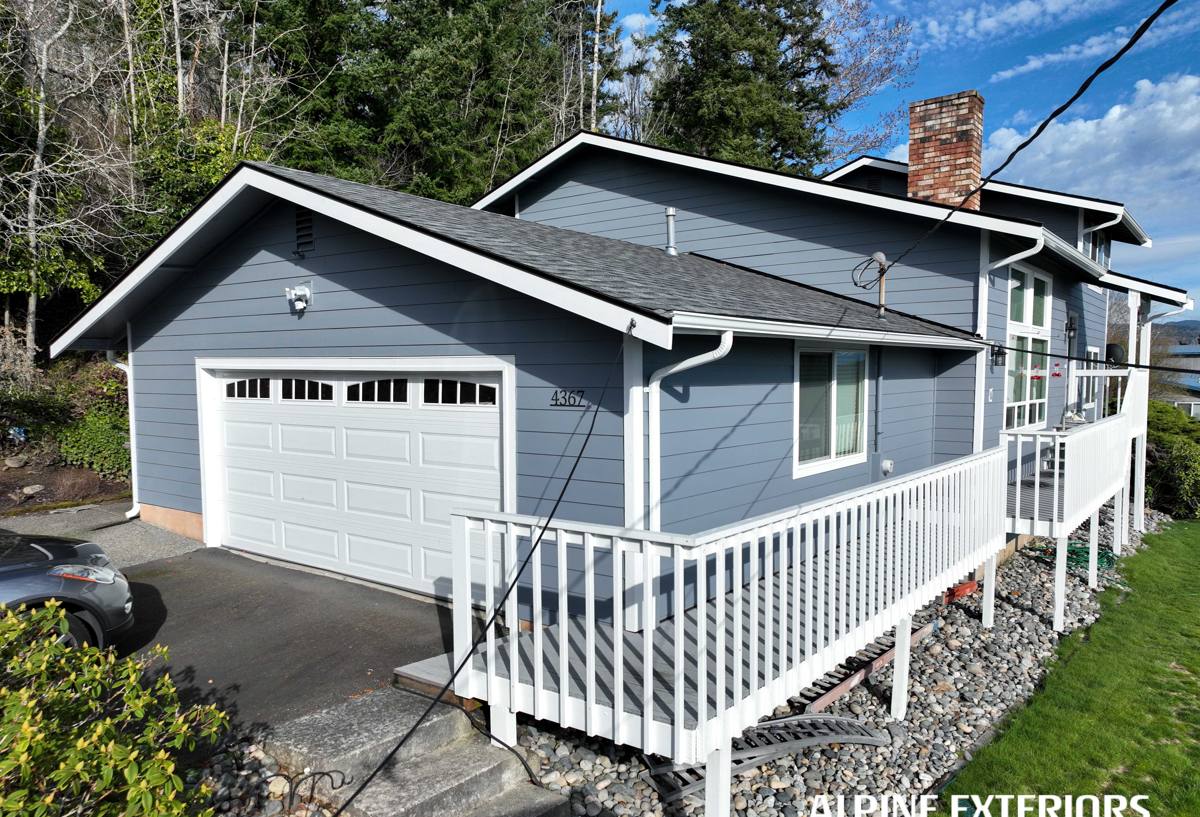
What a Correct Installation Actually Involves
Asphalt shingles look like a simple product, and the shingle itself usually isn't where a roof fails. The system underneath it is. In Whatcom County's wet-and-shaded conditions, three things matter more than they would in a milder climate.
Underlayment and Ice/Water Protection
We use synthetic underlayment as standard, not felt, because it holds up better to the weeks of damp exposure a roof deck sees during a typical Sehome tear-off and reinstall. In valleys, around chimneys, and at eaves, we run a self-adhered ice-and-water barrier. Bellingham doesn't get heavy ice damming most winters, but the same membrane does double duty protecting against wind-driven rain, which is the more common threat here.
Ventilation
A shingle roof that can't breathe traps moisture in the attic, and trapped moisture shortens shingle life from underneath, where you can't see it happening. We check intake at the soffits and exhaust at the ridge on every job, not just the ridge vent alone. A lot of older Sehome homes have exhaust but little to no working intake, which means the ridge vent is pulling humid house air through the attic insulation instead of pulling in fresh air from outside.
Flashing and Valleys
Flashing failures, not worn-out shingles, are the most common reason we get called for a leak on a roof that's otherwise nowhere near end of life. Step flashing at walls and chimneys, valley metal, and pipe boots all take direct hits from driving rain in a way flat field shingle doesn't. We replace flashing as part of a reroof rather than reusing old metal, and we use corrosion-resistant fasteners throughout given the salt exposure this close to the water.
Choosing a Shingle That Fits This Climate
Not every asphalt shingle line is built the same, and the differences matter more here than in a dry climate where any of them would perform fine for a while. The table below is a general guide, not a price quote — actual cost depends on roof size, pitch, tear-off complexity, and current material pricing.
| Shingle Type | Typical Lifespan | Algae Resistance | Best Fit For |
|---|---|---|---|
| 3-tab | 15–20 years | Varies by line; often minimal | Budget rebuilds, rentals, low-visibility roofs |
| Architectural / dimensional | 25–30 years | Usually included as standard | Most Sehome homes — the common mid-tier choice |
| Premium / designer | 30+ years, often lifetime-rated | Enhanced granule treatment | Steep, highly visible, or heavily shaded roofs |
For most Sehome properties we steer homeowners toward an architectural shingle with algae-resistant (AR) granules built in. The upcharge over 3-tab is modest, and given how much shade and moisture this neighborhood holds onto, the algae resistance alone tends to pay for itself in how the roof looks and performs ten years out.
Moss, Algae, and Bellingham's Long Wet Season
Moss doesn't just sit on a roof looking bad — it lifts shingle edges as it grows, holds water against the granule surface, and works its way under laps over time. On a shaded Sehome roof under a tree canopy, moss can establish itself within a couple of years of a reroof if nothing is done to discourage it.
Two things help. First, AR shingles use copper-infused granules that slow algae growth on the shingle surface itself. Second, we install zinc or copper strips near the ridge on roofs with heavy moss history — rain washing over the metal releases trace amounts that inhibit regrowth downslope. Neither approach eliminates the need for occasional gentle roof cleaning, but both meaningfully stretch the interval between cleanings and reduce how aggressively moss comes back.
We don't recommend pressure washing a shingle roof under any circumstances — it strips granules and shortens the roof's life faster than the moss it removes. Soft washing or manual removal with the right technique is the correct approach, and we're happy to advise on that even outside of a full roofing project.
Signs Your Roof Needs a Closer Look
Most shingle roof problems are visible well before they become a leak inside the house, if you know what to look for. Worth a walk around your property, or a call to us, if you notice any of the following:
- Granules collecting in gutters or at downspout outlets — a sign of accelerated shingle wear
- Shingle edges curling up or corners lifting, especially on south- or west-facing slopes
- Dark streaking or green-black patches, particularly on shaded north-facing roof sections
- Moss visible along ridge lines or in valleys, even if it hasn't spread to the whole roof yet
- Daylight visible through the attic roof deck, or damp insulation near the eaves
- Missing or cracked shingles after a windstorm off the bay
- Rust staining or visible gaps around flashing at chimneys, skylights, or wall intersections
Repair or Replace: How We Make the Call
Not every roof issue means a full reroof, and we don't default to recommending one. A localized flashing failure, a handful of storm-damaged shingles, or a single problem valley can often be repaired properly and hold for years. We look at the age of the existing roof, how widespread the wear is, whether the underlying deck and ventilation are sound, and whether the shingle line is still available to match for a spot repair. If a roof is more than about two-thirds through its expected life and already showing granule loss or curling across multiple slopes, patchwork repairs tend to be a short-term fix that costs more over time than planning the replacement now, on your schedule rather than during an active leak.
How We Handle a Sehome Reroof
The process is straightforward, but we walk through it in detail before any work starts so there are no surprises:
- On-site inspection. We get on the roof, check the deck condition, ventilation, and flashing points, and take measurements — not just a drive-by estimate.
- Written estimate. A clear breakdown of material choice, scope, and price, with options if more than one shingle tier makes sense for your roof and budget.
- Tear-off and deck check. Old roofing comes off down to the deck so we can catch soft spots or rot before they're covered up again.
- Underlayment, flashing, and ventilation work. The parts of the system that actually determine how the roof performs in Bellingham's climate, done first and correctly.
- Shingle installation. Installed to manufacturer spec for nail placement and exposure, which protects both performance and warranty coverage.
- Cleanup and magnetic sweep. Debris and stray fasteners cleared from the property, driveway, and yard before we consider the job finished.
Why Local Experience in Sehome Matters
A roofing crew that works this neighborhood regularly already knows which streets sit under heavy tree cover, which blocks catch the worst of the wind off the bay, and which older homes tend to have the intake ventilation problem we mentioned above. That familiarity shows up in fewer surprises once tear-off starts — and in shingle and ventilation choices that are matched to your specific lot, not a one-size-fits-all recommendation. It also means we're a short drive away if a question comes up after the job is done, not a crew that worked the area once and moved on.
Whatcom County's building requirements and the practical realities of a shaded, salt-air, high-rainfall neighborhood like Sehome both factor into how we scope and install a roof here. We'd rather get that right the first time than have a homeowner call us back in three years about moss or a flashing leak that proper installation would have prevented.
If you're weighing a repair, planning ahead for a reroof, or just want an honest read on how much life is left in your current roof, we're glad to take a look. Use the form below to request a free, no-pressure estimate.