 Bellingham Exterior
 Board and batten has become one of the most requested siding profiles for homes in Blaine, and it's easy to see why — the bold vertical lines and crisp shadow reveals give a house real presence, whether it's a new build on a view lot or an older home getting a modern update. But Blaine sits right on Semiahmoo Bay, a few miles from the Canadian border, and that location comes with a climate that's tougher on siding than most homeowners realize. Salt-laden air off the water, wind-driven rain, and a moss season that can stretch most of the year all put board and batten to the test in ways a generic installation guide won't cover. This page walks through what board and batten actually needs to hold up in Blaine, how we build it, and why we install it exclusively in James Hardie fiber cement.
Why Blaine's Climate Is Hard on Board and Batten
Board and batten relies on vertical boards with narrow battens covering the seams between them. That design looks great, but it also creates more seams and more fastener penetrations per square foot of wall than a standard horizontal lap job. Every one of those seams and fastener points is a place water can find its way in if the installation isn't done with the local climate in mind.
In Blaine, three conditions work against siding year-round:
- Salt air: Being close to Semiahmoo Bay and the Strait of Georgia means airborne salt is a constant, low-grade corrosive force on fasteners, flashing, and any metal trim components.
- Driving rain: Storms coming off the water often push rain sideways, not straight down. Siding here has to shed water horizontally, not just vertically, which changes how laps, caps, and battens need to be detailed.
- Long moss season: Whatcom County's mild, wet winters and shaded lots give moss and algae months of ideal growing conditions. Board and batten's vertical boards can actually help here — water runs off faster than on a flat wall — but only if the material itself resists moisture absorption instead of feeding the growth.
None of this means board and batten is a bad choice for Blaine. It means the installation details — the ones that don't show up in a sales photo — matter more here than in a drier inland climate.
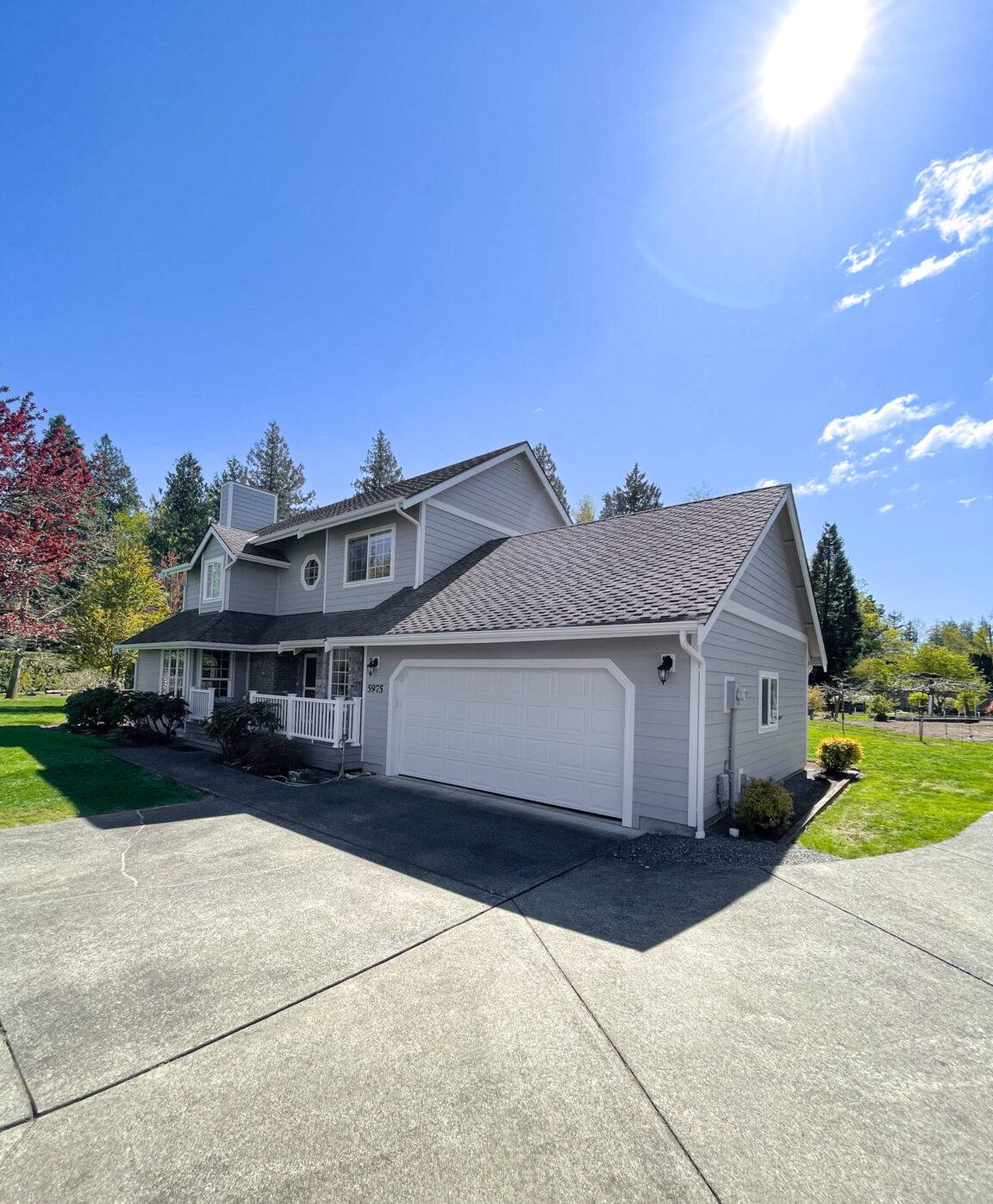
What a Correct Board & Batten Installation Involves
A Real Drainage Plane Behind the Siding
Any wall assembly, no matter how well caulked, will eventually take on some moisture at seams and fasteners. The question is whether that moisture has somewhere to go. A correct board and batten install starts with a weather-resistive barrier and, ideally, a rainscreen gap that lets water drain and the wall cavity breathe. Skipping this step is the single most common shortcut we see on older or budget board and batten jobs, and it's the one that causes the most damage down the road because it's invisible until there's a problem.
Fastening Pattern and Panel Movement
Fiber cement expands and contracts slightly with temperature and moisture swings. Boards need to be fastened according to the manufacturer's pattern — not just wherever it's convenient — so panels can move without cracking caulk joints or pulling fasteners loose. Over-driven or under-driven nails are a quiet failure point that shows up years later as popped fasteners or hairline cracks at the batten edges.
Batten Spacing and Water Path
Battens need consistent spacing and a gap behind them (not just glued flush to the wall) so water that gets behind a seam has a path down and out, rather than sitting against the substrate. Butt joints between vertical boards need to be flashed, not just caulked, especially near roof lines, decks, and anywhere water concentrates.
Corners, Trim, and Penetrations
Outside corners, window and door trim, and any wall penetration (vents, hose bibs, light fixtures) are where board and batten jobs most often fail first. Correct flashing and sealant at these transitions — done with materials rated for coastal exposure — is what separates a wall that lasts decades from one that needs attention in five years.
Why We Install James Hardie, Not Vinyl, LP, or Cedar
Board and batten is available in several materials, and each has real trade-offs. We standardized on James Hardie fiber cement for every siding job we do, including board and batten, because of how it performs specifically in a coastal, wet Pacific Northwest climate.
| Material | Where It Struggles in Blaine's Climate | Why We Don't Install It |
|---|---|---|
| Vinyl board and batten | Can warp or become brittle with temperature swings; seams rely on overlap, not solid fastening | Shorter realistic lifespan and a less substantial look than true board and batten profiles |
| LP SmartSide | Engineered wood substrate is more vulnerable to prolonged moisture exposure at cut edges and seams | Requires more diligent field sealing to perform well near salt air and driving rain |
| Primed spruce / cedar | Natural wood absorbs moisture, moves seasonally, and needs ongoing refinishing | Higher long-term maintenance burden and repainting cycle in this climate |
| James Hardie fiber cement | Non-combustible, engineered for moisture resistance, factory-cured finish | What we install — built for exactly these conditions |
James Hardie's HardiePanel vertical siding, often paired with battens in the classic board and batten look, is engineered fiber cement — it doesn't absorb water the way wood-based products do, and it won't warp, rot, or attract pests. Its ColorPlus factory finish is baked on under controlled conditions, which holds up better against UV and salt exposure than field-applied paint, and it comes backed by a strong transferable warranty. We're not against other products because they're bad materials — cedar has real character, vinyl is inexpensive, LP has its place — but for board and batten specifically, in a climate that punishes seams and moisture-sensitive substrates, Hardie is the product we're willing to put our name behind.
Our Process, Start to Finish
- On-site assessment: We look at your existing wall assembly, exposure to prevailing wind and rain direction, and any moss or moisture staining that points to trouble spots.
- Plan the drainage and flashing details: Before any siding goes up, we map out how water will move behind and around the new wall — rainscreen, house wrap, flashing at every penetration.
- Install to manufacturer spec: Correct fastening pattern, batten spacing, and joint treatment, done according to James Hardie's installation requirements rather than shortcuts that only show up as problems later.
- Detail the trim and transitions: Corners, window and door surrounds, and any wall penetrations get the same attention as the field of the wall — this is where most failures start.
- Final walkthrough: We go over the finished job with you, including what to expect from the finish and how to spot early signs of anything that needs attention.
Living With Board & Batten Near the Water
Once it's installed correctly, board and batten in James Hardie fiber cement is a low-maintenance siding choice, but "low-maintenance" isn't the same as "no-maintenance" in a salt air, high-moisture environment. A little seasonal attention goes a long way:
- Rinse the exterior periodically to clear salt residue, especially on walls facing the water
- Trim back landscaping and tree limbs that keep siding shaded and slow to dry
- Check gutters and downspouts before the wet season so water isn't dumping against a wall
- Look at north-facing and shaded walls each fall for early moss or algae growth and address it before it spreads
- Inspect caulking at trim joints and penetrations every year or two and refresh it if it's cracked or pulling away
Cost Factors for Board & Batten Siding in Blaine
Every home is different, but the same handful of factors drive most of the variation in what a board and batten project costs here:
| Factor | Why It Matters |
|---|---|
| Wall complexity | More corners, gables, and trim transitions mean more detail work and labor time |
| Existing wall condition | Rot or moisture damage found once old siding comes off adds repair scope |
| Exposure to wind and water | Walls facing the bay or prevailing storms may warrant added flashing and rainscreen detail |
| Board width and reveal | Wider boards and different batten spacing affect material quantities and labor |
| Access and site conditions | Steep lots, tight setbacks, or limited staging area can affect labor time |
We give straightforward, itemized estimates so you know exactly what you're paying for and why — no vague lump-sum numbers.
Why Local Experience in Blaine Matters
Blaine isn't just "coastal Washington" in the abstract — it has its own microclimate driven by its position on Semiahmoo Bay, its exposure to weather coming off the Strait of Georgia, and the border-area terrain that shapes how wind and rain hit different lots. A crew that already works in and around Blaine has seen which walls take the worst of the weather, which older homes tend to have hidden moisture issues behind their siding, and how moss behaves on shaded lots through a Whatcom County winter. That local pattern recognition is what keeps a board and batten installation from becoming a five-years-later problem — and it's the difference between a crew reading a spec sheet for the first time and one that's already accounted for what this coastline does to a wall.
If you're considering board and batten siding for a home in Blaine, we're happy to take a look and walk you through what your specific home needs. Reach out for a free, no-pressure estimate — there's a short form below to get started.