 Bellingham Exterior
 Board & Batten in Barkley: A Style That Has to Earn Its Keep
Board and batten has become one of the most requested siding styles among homeowners in Barkley and the surrounding Bellingham neighborhoods. The vertical lines read as clean and modern on newer construction, but they also pair naturally with the craftsman and Pacific Northwest architecture common throughout the area. It's a look that works on a wide range of home styles, which is part of why we get so many calls about it here.
But board and batten isn't just a design choice — it's a siding system with its own set of installation rules, and those rules matter more in Whatcom County than in drier parts of the country. Get the details wrong and you're not just risking an aesthetic problem down the road; you're risking moisture getting behind the wall assembly. This page covers what board and batten siding actually needs to hold up in Barkley, and why the installation matters as much as the material.
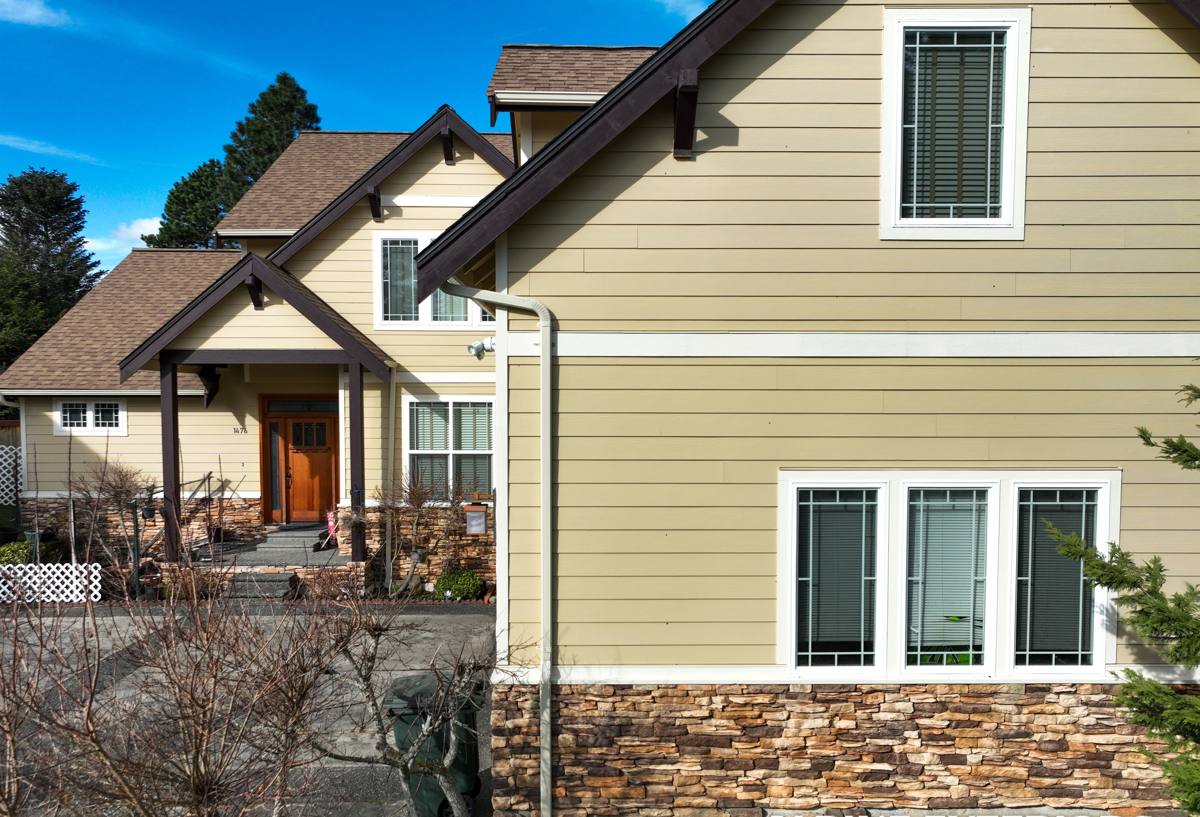
What Bellingham's Climate Does to Vertical Siding
Barkley sits close enough to the water and to the marine air patterns that move through Whatcom County that homes here deal with a specific combination of stresses: salt-laden air, long stretches of driving rain off the Pacific, and a moss season that can stretch for the better part of the year on north- and shade-facing walls. Vertical siding profiles like board and batten create more seams and more vertical channels for water to travel than a standard lap profile, which means the assembly behind the boards has to be engineered to manage that water, not just shed it and hope.
Salt air accelerates corrosion on fasteners and trim hardware that isn't rated for coastal exposure. Persistent moisture and shade feed moss and algae growth on siding faces and especially in the battens' shadow lines, where debris and organic matter collect if the profile isn't detailed correctly. None of this makes board and batten a bad choice for a Barkley home — it just means the material and the installation both need to be matched to the conditions, not to a catalog photo from a drier climate.
Why We Install Only James Hardie for Board & Batten
We don't offer board and batten in vinyl, engineered wood, or primed cedar. We install it in James Hardie fiber cement, and that's a deliberate standard, not a limitation we're apologizing for.
HardiePanel Vertical Siding + HardieTrim Battens
The board and batten look is built from two Hardie components working together: HardiePanel vertical siding as the field material, and HardieTrim boards installed over the panel seams as the battens. Because it's fiber cement — a mix of cement, sand, and cellulose fiber — the material doesn't swell, rot, or delaminate when it takes on moisture the way wood-based products can. That matters directly for a profile that, by design, creates more vertical water paths than lap siding.
ColorPlus Factory Finish
Hardie's ColorPlus finish is baked on at the factory under controlled conditions, rather than sprayed or brushed on site. In a climate like Bellingham's, where site-applied paint has to cure through unpredictable rain windows, a factory finish is a real practical advantage — it goes on more evenly and holds up longer against UV and moisture cycling than field-applied coatings typically do.
Hardie's HZ5 product line is engineered for regions with significant moisture exposure, which describes Whatcom County well. Combined with a warranty that's transferable to a future buyer, it's a system built for exactly the conditions Barkley homes deal with — not a general-purpose product we're stretching to fit the region.
What a Correct Board & Batten Installation Requires
The siding material is only part of the equation. Most board and batten failures we get called to look at aren't material failures — they're installation shortcuts that let water get where it shouldn't.
Rainscreen and Drainage
Vertical siding should be installed over a drainage gap, not tight against the weather-resistive barrier. That gap lets any water that gets past the siding face drain down and out instead of sitting against the sheathing. Skipping this on a house in a marine climate is one of the fastest ways to trap moisture behind the wall.
Fastening and Batten Spacing
Panels and battens need to be fastened per Hardie's engineering specs — correct fastener type, spacing, and penetration into framing, not just into sheathing. In a salt-air environment, fastener material matters too; the wrong hardware corrodes faster and can streak or fail years before the siding itself would.
Flashing and Sealant Details
Every seam, panel joint, window and door transition, and the bottom termination near grade needs proper flashing. Sealant has a role, but it's a backup to good flashing detail, not a substitute for it. This is the part of the job that doesn't show up in a finished photo but determines whether the siding is still doing its job in fifteen years.
Board & Batten Options Compared for Barkley Homes
| Material | How It Handles Bellingham's Rain & Moss | Long-Term Maintenance | Our Take |
|---|---|---|---|
| James Hardie fiber cement | Non-combustible, dimensionally stable, doesn't absorb and swell with repeated wetting | Occasional wash-down; factory finish resists fading and moss staining longer than field-applied coatings | What we install |
| Engineered wood (LP SmartSide-type) | Wood-based core is more moisture-sensitive at cut edges and seams if detailing isn't perfect | Requires vigilant caulk and paint upkeep to keep moisture out of the substrate | Not installed by our crew |
| Vinyl vertical panel | Won't rot, but can warp or become brittle with UV and temperature swings; seams can trap moss buildup | Low maintenance but limited repair options if a section fails | Not installed by our crew |
| Cedar board and batten | Attractive but naturally moisture-absorbent; needs a healthy moisture and drainage plan behind it | Regular refinishing and moss treatment on shaded elevations | Not installed by our crew |
Our Process for Barkley Projects
We start with an on-site walkthrough of the home, not a phone estimate — vertical siding decisions depend on the specific elevations, existing wall assembly, and how much sun or shade each side of the house gets, which affects moss risk and drainage planning. From there:
- Assessment of the existing siding, sheathing condition, and any moisture issues already present
- A written scope covering panel and batten layout, drainage plane approach, and flashing details specific to that home
- Material order in the ColorPlus color and profile the homeowner selects
- Installation following Hardie's fastening, spacing, and clearance specifications
- A final walkthrough covering care and what to expect in year one
We don't subcontract the installation out to whoever's available that week. The crew that scopes the job is the crew that installs it, which matters for a profile where the installation quality is what determines the outcome.
Living With Board & Batten in a Moss-Prone Climate
Correctly installed Hardie board and batten is low-maintenance, but "low" isn't "none," especially on shaded elevations common in Barkley's tree-lined lots. A few habits keep it looking right and performing well for the long haul:
- Rinse siding faces and batten shadow lines annually, more often on north-facing or heavily shaded walls
- Keep gutters clear so overflow isn't running down siding seams during heavy rain events
- Trim back vegetation and tree limbs that keep a wall section damp and shaded longer than the rest of the house
- Check caulking at trim and window transitions every couple of years and have any cracked sealant redone
- Address moss or algae at first sign rather than letting it establish — it's far easier to rinse off than to remove once it's taken hold
Why a Crew That Already Works Barkley Matters
Board and batten performance in this climate comes down to details a contractor either knows from experience or doesn't: how much drainage gap a given elevation needs, which fastener spec holds up against salt air, where moss actually collects on homes in this specific pocket of Whatcom County versus a drier region's install guide. A crew that's already worked on homes in and around Barkley has seen how the climate treats vertical siding here specifically, not in a generic training manual written for a different part of the country.
That local track record is also why we're comfortable standing behind one material system instead of offering a menu of options with varying trade-offs. We'd rather do board and batten right in the product built for this climate than install something we know will need more attention than we think is fair to ask of a homeowner.
If you're considering board and batten siding for a home in Barkley, we're happy to walk the property with you and talk through what the job would actually involve — no pressure, no obligation. Reach out using the form below to schedule a free estimate.