 Bellingham Exterior
 Board & Batten Siding Built for South Hill's Hillside Weather
South Hill sits on the ridge above downtown Bellingham, and that elevation is exactly what makes board and batten such a popular choice up there. The vertical lines suit the craftsman bungalows, Tudor-influenced homes, and newer infill builds that line the hill, and the strong shadow lines look sharp against the views of Bellingham Bay and the islands. But that same elevation exposes homes to wind and rain in a way that flatter, more sheltered lots downtown don't experience. A board and batten wall that looks great in the showroom photo can fail in five years on an exposed South Hill elevation if it isn't detailed correctly for the site.
This page is about that specific combination: the board and batten siding profile, installed correctly, on South Hill homes, in Whatcom County's marine climate. It is not a generic "why choose board and batten" page — it's what we've learned installing vertical siding on this particular hill, in this particular weather.
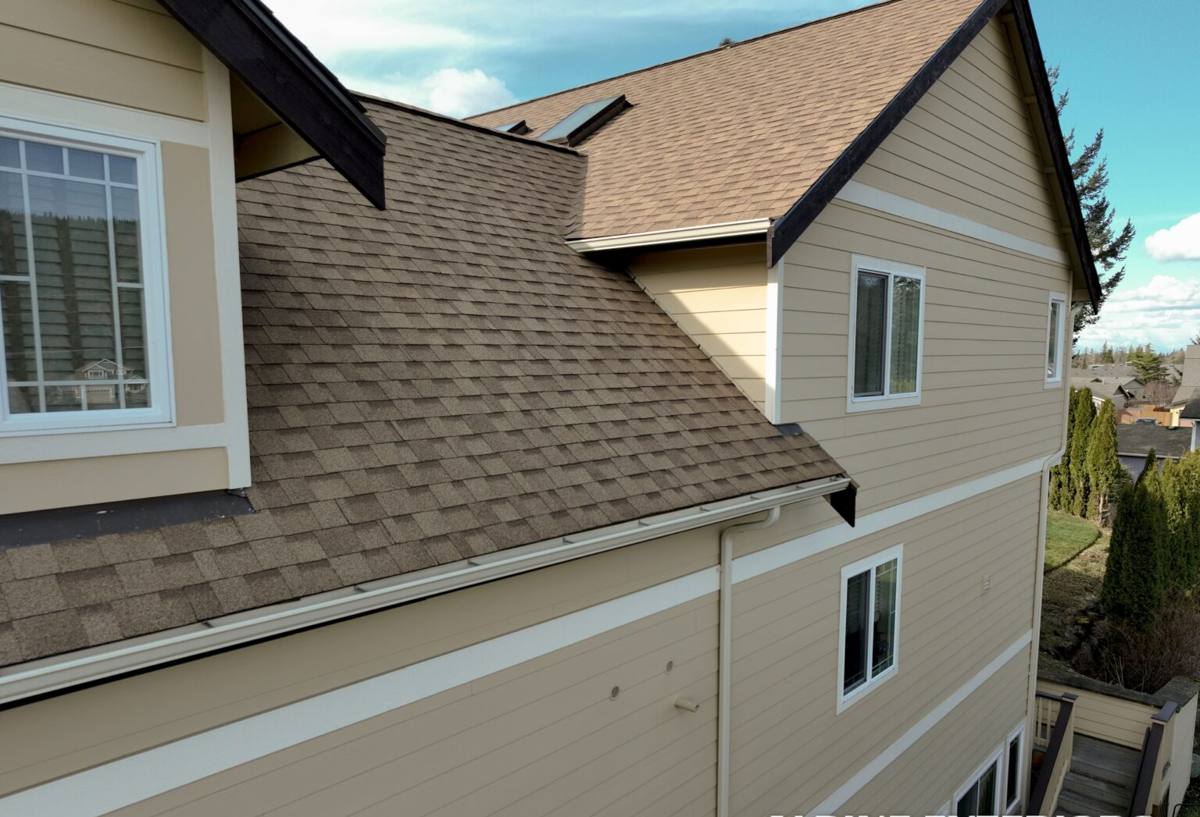
Why Vertical Siding Behaves Differently Than Lap Siding
Traditional horizontal lap siding is designed so gravity does most of the work — each course overlaps the one below it, and water sheds down and off the wall. Board and batten flips the visual orientation to vertical, which changes how water actually moves across the wall. Water can run down a long, uninterrupted face and concentrate at horizontal breaks: window heads, the transition between stories, soffit intersections, and the bottom termination near the foundation. Those horizontal joints — not the vertical batten seams themselves — are where a board and batten installation earns or loses its reputation over the following winters.
That's an important distinction for South Hill specifically. A lap-sided home on a sheltered downtown lot can tolerate a lot of installation shortcuts before problems show up. A vertical-profile wall facing open weather on the hill has much less margin for error at those horizontal transitions.
What South Hill's Climate Actually Does to a Wall
Whatcom County's marine climate brings a specific set of stresses, and South Hill's position on the ridge tends to amplify them:
- Driving, wind-driven rain — the hill sits higher and more exposed than much of the flatter city below, so storms off the Salish Sea hit south- and west-facing walls at an angle, not just straight down.
- Salt air — proximity to Bellingham Bay means airborne salt reaches exterior surfaces and fasteners, accelerating corrosion on anything that isn't rated for it.
- A long moss and algae season — shaded north- and east-facing walls, especially under mature trees common on the hill, stay damp for extended stretches from fall through spring, which is exactly what moss and algae need to establish.
- Slow drying cycles — even when the rain stops, cool, humid air keeps wall surfaces from drying quickly, which matters a lot for any siding material that absorbs moisture.
None of that is unique to South Hill in isolation, but the combination — elevation, exposure, salt air, and shade from mature landscaping — is a tougher environment than a typical in-town lot faces.
What a Correct Board & Batten Installation Involves
Getting a vertical siding wall right isn't about the battens themselves — it's about everything behind them. On every South Hill project, the details that actually determine whether the wall performs are:
A drainage plane, not a sealed wall
Board and batten should never be installed as a flat, face-sealed system relying on caulk alone to keep water out. We install a weather-resistive barrier correctly lapped from the bottom up, with a rainscreen gap behind the siding so any moisture that does get past the face has somewhere to go and can dry out instead of sitting against the sheathing.
Flashing at every horizontal break
Window heads, story transitions, roof-to-wall intersections, and the bottom of the wall all get proper metal or manufacturer-specified flashing, integrated with the water-resistive barrier — not caulked over as an afterthought. This is the single biggest difference between a board and batten wall that lasts and one that doesn't.
Corrosion-resistant fastening
Given the salt air off the Bay, fastener choice matters more on South Hill than it would further inland. We fasten with corrosion-resistant fasteners rated for the exposure, following the manufacturer's fastening schedule for panel size and batten spacing rather than guessing at spacing in the field.
Factory-finished panels over field-primed lumber
Any cut edge or fastener penetration is a potential entry point for moisture. Factory-finished, factory-primed panel products hold up far better over time than boards primed on site, where coverage is harder to control and edges are more likely to get missed.
Board & Batten Material Options — How They Actually Compare
| Material | Moisture Behavior | Maintenance in This Climate | Typical Lifespan Here |
|---|---|---|---|
| James Hardie fiber cement | Non-combustible, engineered HZ product line for Pacific Northwest moisture exposure; doesn't rot or swell | Occasional gentle wash; factory ColorPlus finish resists fading | Decades, with a strong transferable warranty when installed to spec |
| Cedar board and batten | Absorbs moisture, prone to cupping and checking in wet/dry cycling | Regular refinishing, staining, and moss/mildew treatment required | Shorter without diligent, ongoing upkeep |
| LP SmartSide (engineered wood) | Wood-based substrate; edges and cut ends are vulnerable if not fully sealed and maintained | Repainting cycle and careful joint maintenance to protect exposed wood fiber | Shorter than fiber cement in high-moisture, high-exposure sites |
| Vinyl board and batten | Won't rot, but flexes and can distort in temperature swings; seams rely on lap-and-lock fit | Low maintenance but limited repair options if panels crack or fade | Variable; appearance and rigidity degrade with age and UV exposure |
We install James Hardie fiber cement exclusively. We don't carry LP SmartSide, vinyl, Cemplank, Allura, primed spruce, or cedar — not because those products can't be installed correctly by someone, but because we've standardized our crews, our detailing, and our warranty backing around one system we trust in this exact climate. Hardie's HZ5 line is engineered specifically for the wetter, harsher weather zones the Pacific Northwest falls into, the ColorPlus factory finish holds color and resists the fading that field-applied paint struggles with, and the fiber cement composition is non-combustible and dimensionally stable — it doesn't swell, cup, or rot the way wood-based products can when a hillside wall takes on repeated driving rain.
Our Process on a South Hill Board & Batten Project
Every board and batten job on the hill follows the same sequence, adjusted for that specific home's exposure:
- Site walk and exposure assessment — we look at each elevation separately. A south or west wall facing open weather gets treated differently in our flashing and fastening plan than a sheltered north wall under tree cover.
- Moisture and substrate inspection — before any new siding goes up, we check the existing wall for hidden rot, moss intrusion, or sheathing damage, especially around old horizontal joints and window trim where past installations commonly failed.
- Tear-off and sheathing repair — old siding comes off, and any compromised sheathing is repaired before we move forward. Covering a wet or damaged substrate with new siding just hides the problem.
- Weather-resistive barrier and rainscreen installation — installed and lapped correctly from the bottom of the wall up, with a drainage gap behind the siding plane.
- Flashing and trim — installed at every horizontal transition, window, and door before the battens go on, not caulked in after the fact.
- Panel and batten installation — fastened per the manufacturer's schedule with corrosion-resistant fasteners, with consistent batten spacing and reveal.
- Final detailing and walk-through — caulking at appropriate joints only (not as a substitute for flashing), cleanup, and a walk-through so you understand what was done and why.
Maintaining Board & Batten Through a Moss Season
Even a correctly installed wall benefits from a little seasonal attention in this climate. A short annual routine goes a long way toward keeping a board and batten exterior looking sharp through Whatcom County's wetter months:
- Keep gutters and downspouts clear so roof runoff isn't dumping extra water down the wall face
- Trim back vegetation and tree limbs that shade a wall and slow drying, especially on north-facing elevations
- Rinse the siding gently once or twice a year to keep moss and algae from establishing, particularly on shaded sides
- Do a quick visual check of caulk joints and trim after the first hard storms each fall
- Have any settling, staining, or soft spots near the base of the wall looked at promptly rather than waiting
Cost Factors on a South Hill Project
Every home is different, but a few factors consistently move the price on a board and batten job in this neighborhood:
| Factor | Why It Matters Here |
|---|---|
| Elevation and access | Steep South Hill lots and driveways can affect staging, scaffolding, and material handling |
| Extent of tear-off and sheathing repair | Homes with prior moisture damage or old moss intrusion need substrate repair before new siding goes on |
| Trim and architectural detail | Gable accents, mixed siding profiles, and porch details common on the hill add labor and flashing points |
| Exposure per elevation | South- and west-facing walls exposed to driving rain may warrant extra flashing detail compared to sheltered sides |
| Panel size and finish selection | ColorPlus factory finishes and specific reveal widths affect material cost |
We walk every project in person before quoting, because two homes on the same street can need very different scopes of work depending on their exposure and the condition of what's currently on the wall.
Why It Matters to Hire a Crew That Works This Hill
South Hill's mix of elevation, exposure, and mature tree cover means the same siding job can need different detailing from one side of a house to the other — and from one house to the next just a block away. A crew that already understands how weather moves across this specific ridge, and that has flashed the same story transitions and window heads on similar homes nearby, is going to make fewer assumptions and catch more of the details that matter before they become problems. A few things worth asking before you hire anyone for a board and batten project on the hill:
- Do they install a drainage plane and rainscreen gap, or rely on caulk to keep the wall dry?
- Do they flash horizontal joints, window heads, and story transitions as a standard part of the job — before siding goes on?
- Do they inspect and repair sheathing before covering it, or just install over what's there?
- Do they use fasteners rated for salt air exposure?
- Do they carry a manufacturer warranty that transfers if you sell the home?
If you're weighing board and batten siding for a home on South Hill, we're glad to come take a look, walk each elevation with you, and talk through what your specific site actually needs. Reach out for a free, no-pressure estimate using the form below.