 Bellingham Exterior
 Composite Decking Built for the Columbia Neighborhood
Columbia sits close enough to Bellingham Bay that homes here deal with a different set of weather stresses than decks built further inland in Whatcom County. Salt-laden air, driving rain off the water, and a moss season that can stretch from fall through spring all work on a deck year-round, not just during the wet months. If you're planning a new deck or replacing an old one in Columbia, composite decking is worth a serious look, but only if it's installed with this specific climate in mind.
This page covers what Columbia homes actually need from a composite deck, what a correct installation looks like, and how we approach the job from first visit to final walkthrough.
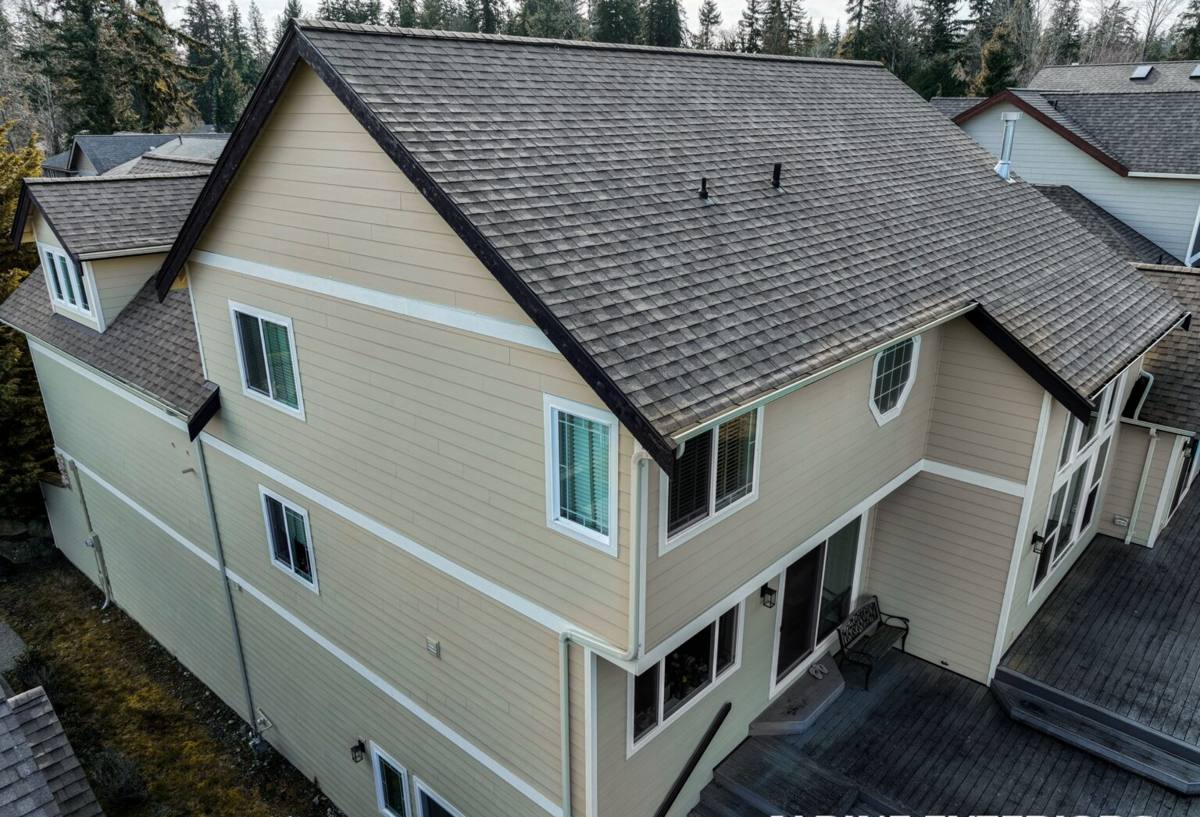
What Salt Air, Rain, and Moss Do to a Deck
Three things define deck wear in this part of Bellingham, and they compound each other:
- Salt air accelerates corrosion on any exposed metal hardware — nails, screws, joist hangers, and railing brackets. Standard fasteners can start rusting and staining boards within a couple of seasons.
- Driving rain off the bay doesn't just fall straight down. Wind-driven rain gets pushed sideways into board seams, railing posts, and the ledger connection at the house, which is why flashing and gapping details matter more here than in drier inland areas.
- A long moss season means organic growth has more time to establish itself on any surface that stays damp and shaded — deck boards, especially in north-facing or tree-covered yards, and anywhere debris collects instead of draining.
None of this is unique to Columbia, but the combination is more constant here than it is a few miles inland, which changes what "correct" installation and product choice actually mean.
Why Composite Decking Makes Sense Here
Composite decking doesn't rot, splinter, or need annual staining, which matters a lot when a deck spends most of the year damp. It also doesn't absorb moisture the way wood does, so it's far less hospitable to the algae and moss that thrive in Bellingham's wet season. That said, composite isn't maintenance-free — it still needs to be kept clean, and the substructure underneath it (the part nobody sees) still has to be built to shed water, or none of composite's advantages matter.
Composite vs. Wood in a Marine Climate
| Factor | Composite Decking | Cedar / Wood Decking |
|---|---|---|
| Moisture absorption | Low — resists swelling and rot | Higher — needs regular sealing to slow water uptake |
| Moss and algae resistance | Better on most boards; still needs periodic cleaning | Prone to growth if not sealed and cleaned regularly |
| Maintenance routine | Occasional wash-down, no staining | Annual or biannual sealing/staining recommended |
| Upfront cost | Higher material cost | Lower material cost |
| Long-term cost | Lower over the life of the deck | Higher due to recurring maintenance and earlier replacement of worn boards |
| Fastener sensitivity | Requires corrosion-resistant, board-specific fasteners | More forgiving of standard exterior fasteners |
We don't tell clients wood is a bad choice — plenty of homeowners like the look and are willing to keep up with sealing. Our point is simpler: in a marine-influenced climate like Columbia's, composite shifts the maintenance burden from "recurring and required" to "occasional and optional," which is what most people are actually looking for when they ask about composite in the first place.
What a Correct Composite Deck Installation Involves
Composite boards are only as good as what's underneath them. Most composite deck problems we get called to inspect trace back to the substructure, the drainage plan, or the hardware — not the decking material itself.
Substructure and Framing
Joists and beams need to be sized and spaced correctly for the specific composite product being used — composite boards flex differently than wood and manufacturers publish minimum joist spacing for a reason. In a wet climate, we also pay close attention to any wood framing that will sit under or against the composite decking, since that framing still needs to shed water and dry out between rain events.
Drainage and Airflow
A deck that traps water underneath it stays damp longer, which is exactly the condition moss and mildew need. Correct spacing between boards, proper slope away from the house at the ledger, and enough clearance underneath the deck for air to move all matter more in a climate that doesn't give surfaces much of a chance to fully dry out between storms.
Fasteners and Hardware
Given the salt air in Columbia, we use corrosion-resistant fasteners and hardware rated for coastal or marine exposure, not standard-grade hardware. This is a small cost difference at installation and a large difference in how the deck looks and performs five and ten years out — rust streaks on composite boards are almost always a hardware problem, not a board problem.
Our Process for Columbia Deck Projects
The steps are straightforward, but we don't skip any of them:
- On-site assessment — we look at drainage, sun/shade exposure, existing structure (if replacing an old deck), and how close the site is to salt air exposure and prevailing wind-driven rain.
- Design and product selection — board style, color, and railing system based on the home, budget, and how much maintenance the homeowner actually wants to do.
- Permitting — decks over a certain height or attached to the home typically require a permit through the City of Bellingham or Whatcom County, depending on the property. We handle this so it isn't a surprise mid-project.
- Framing and substructure build — sized and spaced for the specific composite product, with attention to ledger flashing and slope.
- Composite board and railing installation — using manufacturer-specified fastening systems and corrosion-resistant hardware throughout.
- Final walkthrough — we check board gaps, fastener finish, railing stability, and drainage before we call the job done.
Choosing the Right Composite Board
Composite decking isn't one product — it spans a range of construction types (capped composite, capped polymer, PVC) and price points. Rather than push one brand, we walk homeowners through the real trade-offs:
- Capped composite boards wrap a wood-plastic core in a protective outer shell, which handles moisture and staining well and is a solid middle-ground choice for most Columbia homes.
- Uncapped composite costs less but is more porous and more prone to staining and moss growth over time — we're upfront that this isn't our first recommendation for a bay-adjacent property.
- PVC decking contains no wood fiber at all, so it's the most moisture- and mold-resistant option, usually at a higher price point.
Color also matters more here than people expect: darker boards show less staining from organic debris but run hotter in direct sun, while lighter boards show pollen and debris more readily but stay cooler. We'll talk through this with you based on where the deck sits and how much sun and shade it actually gets.
Maintenance in a Long Moss Season
Composite cuts down on maintenance, but "low-maintenance" isn't "no-maintenance," especially with Bellingham's stretch of wet months. A simple seasonal routine keeps a composite deck looking right for the long haul:
- Sweep leaves and debris off the deck regularly, especially in fall — trapped organic matter is what feeds moss and algae.
- Rinse or lightly scrub with a soft-bristle brush and mild soap a couple of times a year, more often in shaded or north-facing areas.
- Keep gutters and downspouts near the deck clear so runoff isn't dumping extra water onto or under the deck surface.
- Check railing hardware and fastener heads periodically for early signs of rust staining, and address it before it spreads to the board surface.
- Avoid pressure washing at high pressure directly into board seams — it can force water into places it shouldn't go and damage the board's surface layer.
Why Hire a Crew That Already Works in Columbia
A lot of deck problems we inspect weren't caused by bad composite material — they were caused by installers using inland or generic-climate assumptions on a property that needed marine-grade details. Framing spaced for a dry-climate install, standard hardware instead of corrosion-resistant fasteners, or drainage that wasn't planned around Bellingham's rain patterns all show up as problems within a few years, not immediately.
Working regularly in Columbia and the surrounding Bellingham neighborhoods means we're not guessing at what this climate does to a deck — we're building around it from the first framing decision onward. That includes knowing which details matter more here than they would on a similar job twenty miles inland, and not cutting corners on hardware or drainage to save a few dollars on a bid.
Get a Free Estimate
If you're considering a new composite deck or replacing an aging one in Columbia, we're happy to take a look and walk you through your options honestly — including where composite makes sense for your situation and where it might not. Use the form below to request a free, no-pressure estimate.