 Bellingham Exterior
 Deck Repair Built for Columbia's Coastal Conditions
The Columbia neighborhood sits close enough to Bellingham Bay that salt-laden air is a daily fact of life for anything built outdoors, and decks take the worst of it. Fasteners corrode faster near the water, wood grain stays damp longer under a marine layer, and the region's long stretch of wet months gives moss and algae months at a time to gain a foothold on any shaded or north-facing deck surface. None of that is unusual for Whatcom County — it's just what coastal Pacific Northwest weather does to exterior wood and hardware over years of exposure.
A deck that looks fine from the porch door can still have soft framing underneath, corroded fasteners holding on by a thread, or a ledger connection that's slowly pulling away from the house. Deck repair done right in this climate isn't about patching what's visible — it's about finding where moisture actually collects and fixing the structure underneath, not just the boards on top.
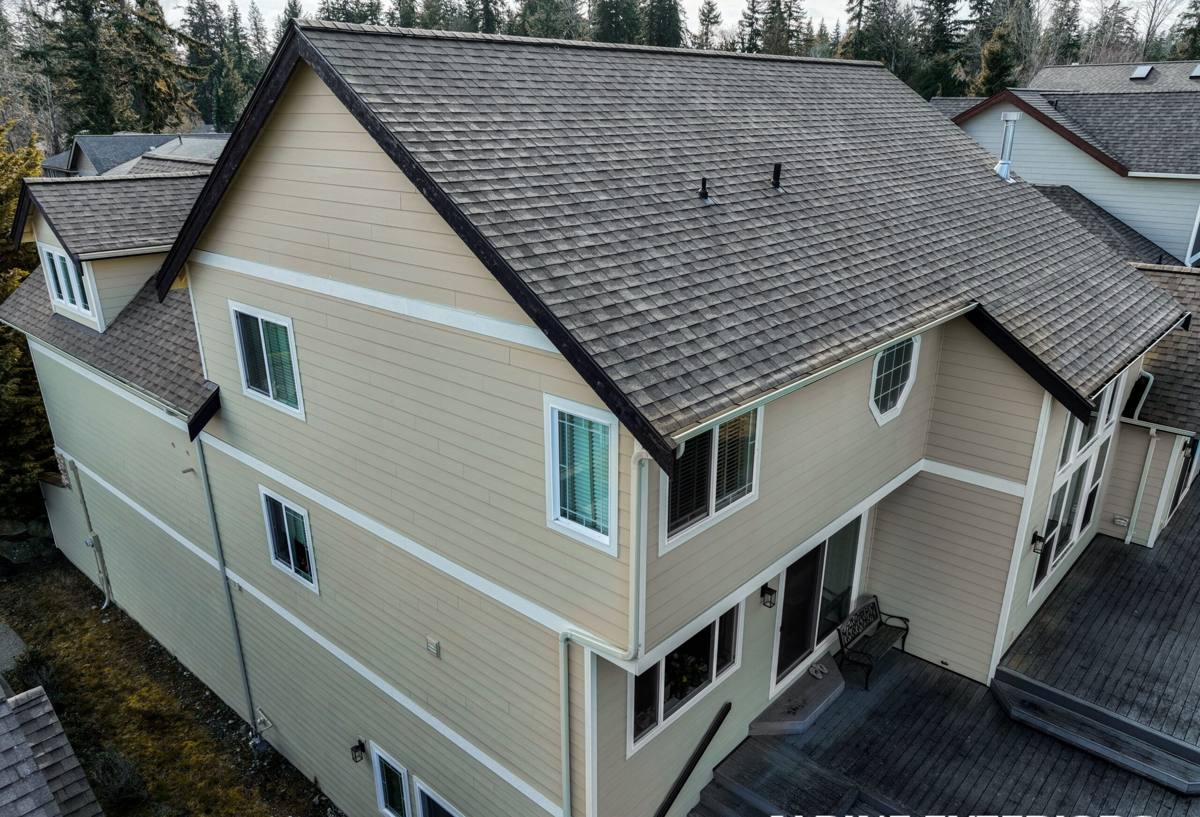
What Bellingham's Climate Does to a Deck Over Time
Salt Air and Metal Fasteners
Proximity to the bay means airborne salt settles on every exposed surface, including nail heads, screws, and joist hangers. Standard fasteners corrode faster in this environment than they would further inland, and corroded hardware is one of the most common hidden causes of a deck that feels "spongy" or slightly loose even though the boards themselves look okay.
Driving Rain and Trapped Moisture
Wind-driven rain off the Sound doesn't just fall straight down — it gets pushed sideways into ledger boards, under railings, and into any gap where flashing has failed or was never installed correctly. Water that gets behind a ledger board or under a rail post base can sit there for weeks without ever being visible from above, quietly rotting framing while the deck surface still looks presentable.
Moss, Algae, and the Long Wet Season
Whatcom County's extended overcast, damp season gives moss and algae far more time to establish than they'd get in a drier climate. Beyond looking bad, a moss mat on a deck surface holds moisture directly against the wood or composite decking, which accelerates rot in wood boards and can void warranties on some composite products if it's left untreated for years.
Signs a Columbia Deck Needs Repair
Most deck problems give warning signs well before anything becomes unsafe. Homeowners in this area should watch for:
- Soft, spongy, or bouncy spots when walking across the deck
- Boards that have visibly cupped, split, or pulled away from joists
- Rust streaks running down from screw heads or joist hangers
- A railing or post that wiggles more than it used to
- Persistent green or black growth that comes back within weeks of cleaning
- Gaps or dark staining where the deck meets the house (a sign of a compromised ledger connection)
- Fasteners backing out or visibly corroded around the deck perimeter
Any one of these is worth a closer look. Several at once usually means the deck has been dealing with trapped moisture for a while, and it's worth having someone check the framing before just replacing the surface boards.
What a Correct Deck Repair Actually Involves
Start Below the Surface
A repair that only replaces the boards you can see, without checking the joists, ledger board, and posts underneath, is a cosmetic fix — not a structural one. On coastal properties especially, we pull enough decking to inspect the framing directly rather than guessing based on what's visible from above.
The Ledger Connection
Where the deck attaches to the house is the single most important connection on the whole structure, and it's also the spot most exposed to wind-driven rain working its way behind the siding. Proper flashing at this joint isn't optional — it's the difference between a repair that lasts and one that fails again in a few years.
Fasteners and Hardware
Given how fast standard hardware corrodes this close to the bay, repair work should use fasteners and connectors rated for coastal or wet-environment exposure, not whatever matches what's already there if the original hardware wasn't up to the job in the first place.
Surface Boards and Railings
Once the structure underneath is sound, replacing damaged boards, tightening or rebuilding railings, and resetting post bases is straightforward work — but it only holds up long-term if it's built on a frame that isn't quietly rotting.
Repair or Replace? How We Help You Decide
Not every deck problem calls for a full rebuild, and not every deck is worth patching indefinitely. The right call usually comes down to how much of the framing is still sound.
| Condition Found | Repair Usually Makes Sense | Replacement Usually Makes Sense |
|---|---|---|
| Surface boards | Isolated cupping, splitting, or staining | Widespread failure across most of the deck |
| Framing/joists | Localized soft spots near one area | Soft or rotted framing throughout |
| Ledger board | Flashing failure caught early, wood still solid | Ledger wood itself is rotted or compromised |
| Railings/posts | Loose connections, minor wood damage | Posts rotted at the base or code-noncompliant |
| Deck age | Under 15-20 years, one problem area | Original structure nearing end of service life |
We'll walk you through what we actually find underneath before recommending either path — there's no reason to rebuild a structurally sound deck, and no reason to keep patching one that's failing at the framing level.
Wood vs. Composite: Repair Considerations
Repairing Wood Decking
Wood decks are common throughout Bellingham and can be repaired and maintained indefinitely with the right upkeep, but they need real attention in this climate — sealing on a regular schedule, prompt cleaning of moss and debris, and periodic checks of fastener condition. Skipping maintenance is what turns a healthy wood deck into a rotting one over a few wet seasons.
Repairing Composite Decking
Composite boards resist rot in the board itself, but the framing underneath is still almost always wood, and that framing needs the same moisture management a wood deck does. Composite repairs also require matching board profiles and colors carefully, since manufacturers change product lines over time and an exact match isn't always available — something we'll flag honestly before starting rather than after.
Our Standard on Materials
We install and repair with fasteners, flashing, and hardware rated for coastal exposure as our standard practice, not an upsell. In a climate that corrodes standard hardware within a handful of years, using anything less just means doing the repair again sooner than necessary.
Our Deck Repair Process
- Inspection: We check the deck surface, framing, ledger connection, and hardware condition, pulling boards where needed to see what's actually happening underneath.
- Honest assessment: You get a clear picture of what's structural, what's cosmetic, and what your realistic options are — repair, partial rebuild, or full replacement.
- Written plan: A scope of work and price range before anything starts, so there are no surprises once we're into the project.
- Repair work: Structural issues get fixed first — framing, ledger flashing, hardware — before any cosmetic work on boards or railings.
- Protection: Sealing or finishing recommendations appropriate for a coastal environment, plus straightforward guidance on what to keep an eye on going forward.
Why a Crew That Already Works Columbia Matters
A contractor who works regularly in the Columbia neighborhood and elsewhere around Bellingham Bay has already seen how this specific stretch of coastline treats exterior wood and hardware — which corners of a deck tend to trap moisture first, which fastener types hold up and which don't, and how fast moss comes back if a job isn't sealed properly. That's the difference between a repair that's built for the actual conditions here and one that's built for a climate chart from somewhere else.
It also means faster, more accurate estimates. We're not guessing at how Whatcom County's rain and salt air will affect a repair — we're working from what we've seen hold up and what hasn't, on decks facing the same weather yours does.
Keeping a Repaired Deck in Good Shape
Once a deck is repaired correctly, a little regular upkeep goes a long way in this climate:
- Sweep off leaves and debris before they trap moisture against the boards
- Clean moss and algae as soon as it appears rather than letting it establish
- Check railings and stair connections for looseness once or twice a year
- Reseal wood decking on the schedule appropriate for the product used
- Keep gutters and downspouts near the deck clear so runoff isn't pouring onto it
None of this is complicated, but it's the difference between a repair that lasts fifteen-plus years and one that starts failing again in five.
If your deck in the Columbia neighborhood is showing soft spots, rust stains, stubborn moss, or a railing that's not as solid as it used to be, we're happy to take a look and give you a straightforward, no-pressure assessment of what it actually needs. Use the form below to request a free estimate.