 Bellingham Exterior
 Why Edgemoor Decks Face a Tougher Environment
Edgemoor sits close to Bellingham Bay, under a canopy of mature trees, which is a beautiful place to live but a hard place to keep a deck looking good. The combination of salt-laden air off the water, frequent driving rain, and heavy shade from surrounding evergreens means decks here deal with more moisture cycling and more organic growth than decks just a few miles inland in drier parts of Whatcom County. Salt air accelerates corrosion on fasteners and hardware. Shade keeps wood surfaces damp long after a storm has passed, which is exactly the condition moss and algae need to take hold. None of this is a reason to avoid a deck — it's a reason to build one correctly for the site it's actually on.
We've built and repaired decks all over Bellingham and Whatcom County, and the projects that hold up longest in neighborhoods like Edgemoor are the ones where the framing, fasteners, and board selection were chosen with this specific climate in mind from the start, not bolted on as an afterthought.
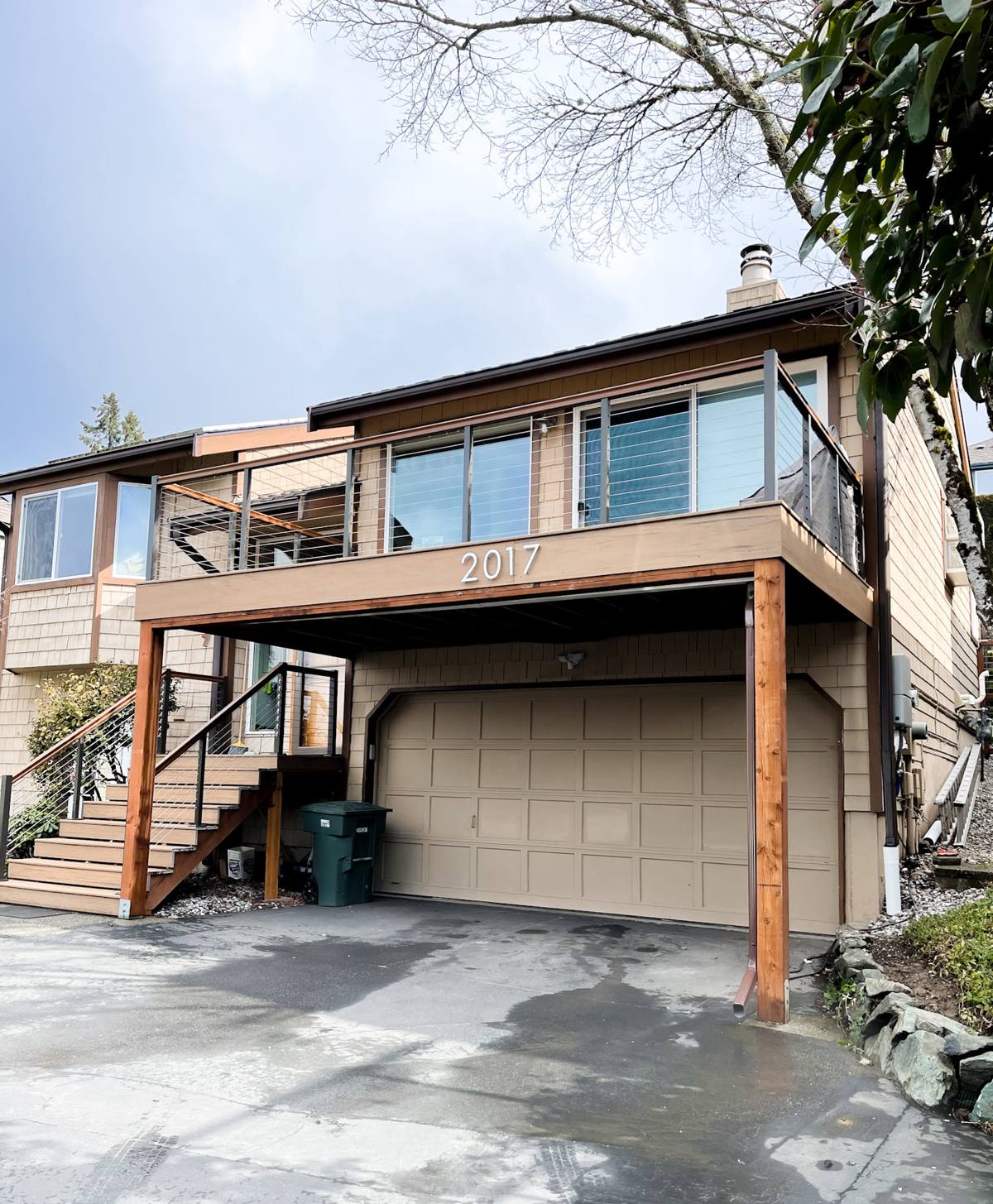
What a Correctly Installed Composite Deck Requires Here
Composite decking is popular in this climate because the boards themselves don't rot, splinter, or absorb water the way wood does. But the board is only part of the system. A composite deck is only as good as what's underneath it and holding it together, and that's where a lot of the long-term problems actually start.
Framing and Ventilation
Composite boards don't rot, but the wood framing underneath them still can if it's buried against a damp foundation wall or a shaded, poorly ventilated crawlspace. On heavily treed, water-adjacent lots like the ones common in Edgemoor, we pay close attention to airflow under the deck, proper grading away from the house, and joist protection tape on any wood framing member the composite boards will sit on. Skipping joist tape is one of the most common shortcuts we see on decks that were installed elsewhere and started having structural problems years before the surface boards showed any wear.
Fasteners, Flashing, and Hidden Hardware
Salt air is hard on metal. Standard zinc-coated screws and brackets can start corroding faster near the water than they would a few miles inland. We use stainless steel or marine-grade coated fasteners and hardware on Edgemoor projects, along with proper ledger board flashing where the deck attaches to the house, so water is directed away from the structure instead of trapped against it. This is a detail that's invisible once the deck is finished, but it's often the difference between a deck that's still tight in fifteen years and one that develops soft spots and rust streaks in five.
Choosing the Right Composite Board for a Marine Climate
Not all composite decking performs the same way in a shaded, damp, salt-air environment, and this is where an honest conversation about trade-offs matters more than a sales pitch.
Capped vs. Uncapped Composite
Fully capped composite boards have a polymer shell wrapped around the core, which gives much better resistance to moisture absorption, staining, and surface mold than older-generation or uncapped composite products. In a low-sun, high-moisture setting like a tree-shaded Edgemoor backyard, that cap matters. Our standard is to spec capped composite for jobs in this kind of environment because the long-term maintenance savings are real, not a marketing claim.
Color and Grain Selection
Darker composite boards absorb more heat and can show pollen, dust, and moss spores less than very light colors, but they also show water spotting differently. Lighter and mid-tone boards tend to hide the natural streaking that comes from tree debris and rain runoff better on heavily shaded lots. We walk through actual samples on site, in your yard's real light conditions, rather than picking a color off a screen — shade and glare change how a board looks more than most homeowners expect.
Composite vs. Wood vs. PVC: A Straight Comparison
Every decking material is a set of trade-offs. Here's how the three main options actually compare for a shaded, salt-air lot like the ones common in Edgemoor.
| Factor | Capped Composite | Pressure-Treated Wood | PVC / Vinyl Decking |
|---|---|---|---|
| Moisture resistance | High — core is protected by a polymer cap | Moderate — treatment slows rot but doesn't stop it | Very high — fully synthetic, no organic core |
| Moss & algae resistance | Good, especially with a textured cap finish | Poor in shaded, damp spots without regular treatment | Good, similar to composite |
| Maintenance | Occasional washing; no staining or sealing | Annual cleaning, sanding, and re-sealing | Occasional washing; no staining or sealing |
| Upfront cost | Mid-range | Lowest | Highest |
| Feel underfoot / appearance | Wood-like grain and texture | Natural wood look, ages and grays over time | Smoother, more plastic-like appearance |
| Typical lifespan in this climate | 25-30+ years with proper installation | 10-15 years before major repair or replacement | 25-30+ years |
For most Edgemoor homeowners, capped composite lands in the sweet spot — meaningfully lower maintenance than wood, a more natural look and feel than PVC, and a cost that's reasonable given how long it actually lasts when installed correctly.
Moss, Algae, and the Maintenance Reality
"Low-maintenance" doesn't mean "no maintenance," and we'd rather tell you that up front than have you surprised later. Even the best composite decking will collect pollen, tree debris, and surface moss film in a shaded, damp Whatcom County yard, especially through our long fall-to-spring moss season. The difference between composite and wood isn't that composite never needs attention — it's that the attention is a simple periodic wash instead of sanding, staining, and sealing.
- Rinse and lightly scrub the deck surface a couple of times a year, more often under heavy tree cover
- Keep gutters and nearby drainage clear so water isn't sheeting across the deck surface
- Trim back overhanging branches where possible to reduce shade and debris buildup
- Sweep standing leaves and needles off the boards after storms rather than letting them sit
- Check fastener heads and railing hardware annually for any early signs of corrosion
A deck that gets this basic care will hold its look and its warranty far longer than one that's left to fend for itself under the trees.
Our Process for an Edgemoor Composite Decking Project
We start with an on-site walkthrough, not a phone estimate, because slope, drainage, tree cover, and access all affect the job and none of that shows up in a photo. From there:
- We assess the existing structure (if any) — footings, ledger attachment, framing condition — and flag anything that needs to be addressed before new decking goes down
- We review board options and colors with you in your actual yard, in your actual light
- We provide a written estimate that spells out material, fastener type, and scope so there are no surprises
- We handle permitting where required and schedule around Bellingham's weather rather than fighting it
- We install with attention to the details that don't show — flashing, joist protection, fastener grade — because those are what determine how the deck holds up in ten years, not just how it looks on day one
Permits and Working Near the Water in Whatcom County
Decking projects on or near shoreline-adjacent properties in the Bellingham area can involve setback and permitting considerations that inland projects don't. Requirements vary by lot and by how close the structure is to the water or to critical areas, so we check the specifics for your property rather than assuming one standard applies everywhere. Part of our estimate process includes flagging whether your project needs a permit and helping manage that paperwork so it doesn't become a delay you didn't see coming.
Why a Crew That Already Works in Edgemoor Matters
A contractor who mainly works drier, sunnier neighborhoods can still build a technically sound deck, but they may not default to the fastener grade, ventilation detailing, or board selection that a shaded, salt-air lot actually calls for — because they don't run into those conditions as often. Crews that regularly work Edgemoor and similar Bellingham-area properties see the same moss patterns, the same drainage challenges, and the same salt-air wear year after year, and that shapes how we spec and build every project, not just the ones where a problem has already shown up.
What to Ask Before You Hire a Decking Contractor
- Are you licensed, bonded, and insured to work in Whatcom County?
- What fastener and hardware grade do you use, and why?
- Do you use joist tape or other protection on wood framing under composite boards?
- Is the manufacturer's warranty tied to certified installation, and does that apply here?
- Can you walk me through how you'd handle drainage and shade on this specific lot?
- Will you provide a written, itemized estimate before work begins?
If you're weighing a new composite deck or need an honest look at how an existing one is holding up against Edgemoor's climate, we're happy to come take a look. Estimates are free and there's no pressure — just a straight assessment of what your deck actually needs.