 Bellingham Exterior
 Deck Building in Cordata: What Bellingham's Climate Demands
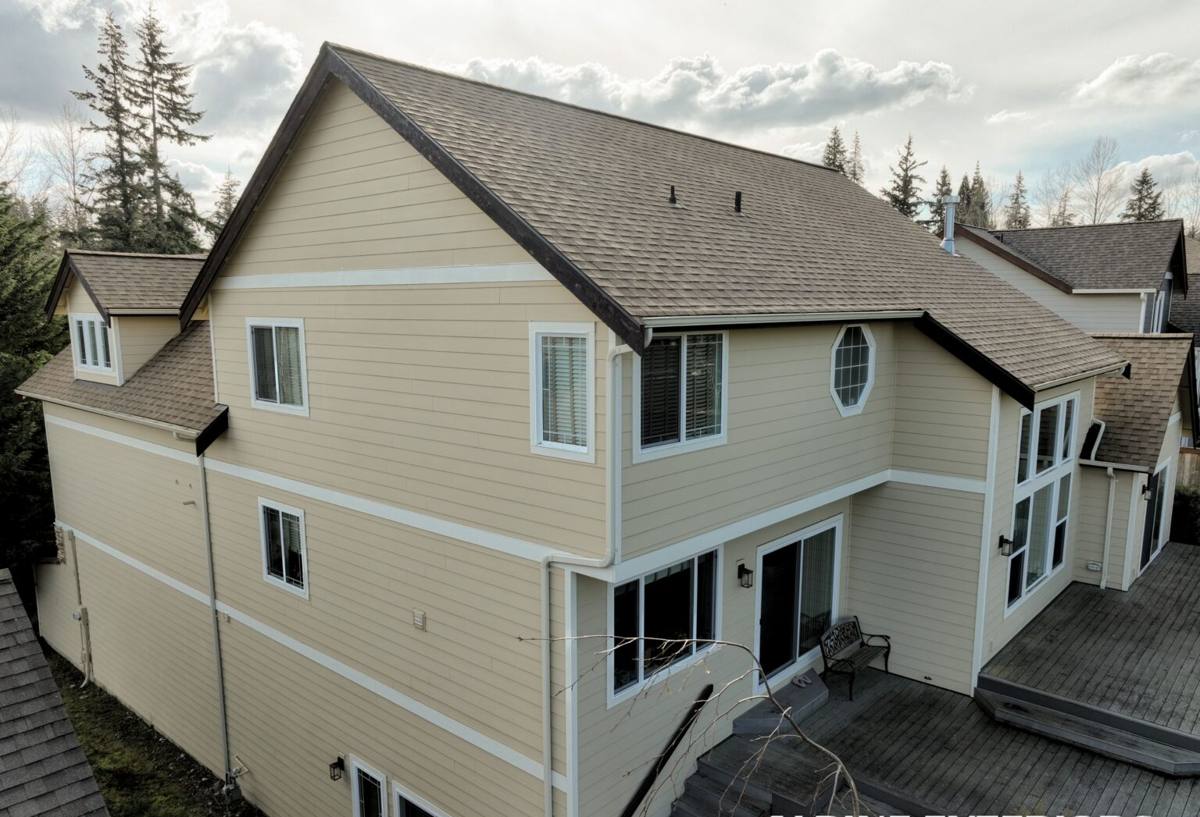
Cordata is one of Bellingham's newer, more established residential areas, a mix of subdivisions, townhomes, and single-family lots spread across the north end of the city. A lot of the decks out here were built during different waves of development, which means we see everything from decks barely a decade old and already showing problems to older ones that have quietly outlived their builder-grade construction. What ties them together is the climate they all have to survive: driving rain that comes in sideways more often than straight down, salt-tinged marine air moving through the whole region, and a moss season that can run most of the year on shaded or north-facing surfaces. A deck in Cordata isn't decorative, it's exterior structure exposed to Whatcom County weather twelve months a year, and it needs to be built like that's true.
This page is specifically about deck building for Cordata homes: what the climate actually does to decks here, what a correctly built deck involves from the ground up, and how we approach the work. We're not covering roofing or siding here, just decks, and just this neighborhood's conditions.
What This Climate Does to a Deck Over Time
Driving Rain and Trapped Moisture
Wind-driven rain doesn't just fall on a deck surface, it gets pushed into every horizontal-to-vertical transition: where the ledger board meets the house, where posts meet footings, where decking boards butt up against fascia or trim. A deck built without real attention to those transitions will look fine for a few seasons and then start failing quietly from the inside, usually at the ledger connection or under the surface boards where nobody's looking.
Moss, Algae, and Standing Water
Shaded decks, decks under tree cover, and north-facing decks in this part of Bellingham grow moss and algae film readily, especially where boards are spaced too tight to drain or where debris collects in the gaps. Beyond the slip hazard, a deck surface holding moisture against the wood or composite core for months at a stretch accelerates rot in real lumber and can void warranty coverage on some composite products if drainage wasn't addressed at installation.
Freeze-Thaw and Seasonal Wood Movement
Whatcom County doesn't get extreme cold most winters, but it gets enough freeze-thaw cycling that fasteners, joist hangers, and any wood that absorbed moisture during the wet season can work loose or crack over a few years. Real lumber also expands and contracts with the seasons here more than people expect, and a deck built without allowing for that movement tends to show it as popped fasteners, cupped boards, and rail posts that loosen at the base.
Choosing the Right Decking Material for a Cordata Deck
There's no single right answer on material, it depends on budget, how much upkeep you want to take on, and how long you want the deck to last before major work is needed again. Here's how the common options actually compare in this climate:
| Material | Moisture Behavior | Maintenance | Realistic Lifespan Here |
|---|---|---|---|
| Pressure-treated lumber | Resists rot with the chemical treatment, but end cuts and fastener holes are vulnerable if not sealed | Needs re-staining or sealing every 2-3 years in this climate to perform as intended | Can last well past a decade with upkeep, much less without it |
| Cedar | Naturally rot-resistant heartwood, but sapwood and any unsealed cuts absorb moisture readily | Similar sealing schedule to pressure-treated, plus more visible weathering if skipped | Comparable to treated lumber when maintained, grays and softens faster when neglected |
| Composite decking | Doesn't rot, but poor drainage or trapped moisture under boards can still cause issues at the substructure | Occasional cleaning, no staining or sealing required | Generally the longest-lasting surface option if installed with proper drainage and ventilation |
Composite costs more upfront, real wood costs less initially but asks for a maintenance commitment most homeowners underestimate. We'll walk through the honest trade-offs for your specific deck and budget rather than pushing one option by default.
Railings, Hardware, and Corrosion Resistance
Railings take as much weathering as the decking surface, sometimes more, since they're the first thing wind-driven rain hits and rarely get any roof overhang to shield them. Wood rail systems need the same sealing schedule as wood decking to hold up over time. Metal rail systems, including aluminum and cable rail, need marine-grade or coated hardware, because standard fasteners and connectors corrode noticeably faster in this region's salt-tinged air than they would further inland. Whatever rail system you choose, the hardware holding it together deserves the same scrutiny as the decking material itself.
Where Decks Actually Fail: Ledger Attachment and Flashing
The Ledger-to-House Connection
The ledger board, the piece that attaches the deck directly to the house, is where we see the most serious failures in this region, and it's almost always a moisture problem rather than a structural one at first. If the ledger isn't properly flashed and fastened with lag bolts or through-bolts rated for the load, water works its way behind it and starts rotting the house's rim joist, not just the deck. That's a repair that gets more expensive the longer it goes unnoticed.
Flashing Details That Get Skipped
Proper ledger flashing means a continuous water-shedding path: flashing that laps over the ledger correctly, house wrap or building paper integrated with it rather than just caulked over, and a gap or drainage plane that lets any water that does get in find its way back out instead of sitting against wood. It's not a visible detail once the deck is finished, which is exactly why it's the detail most likely to get cut on a rushed or budget build.
Footings, Framing, and Structural Basics
Frost Depth and Footing Design
Footings need to be sized and set to the frost depth required by local code, not just poured to whatever depth is convenient. An undersized or shallow footing can shift over time with seasonal ground moisture changes common to this part of Washington, which shows up eventually as a deck that's no longer level or a post working loose at the base.
Joist Spacing and Beam Sizing
Joist spacing, beam size, and post spacing all need to match the actual span and load of the deck being built, including anything heavy you plan to put on it long-term like a hot tub or a large table set. Builder-grade decks are sometimes framed to the minimum the code allows and nothing more, which is fine until the deck gets used the way people actually use decks.
Reusing an Old Deck's Footings
When we're replacing rather than building new, one of the first questions is whether the existing footings are still sound enough to reuse. Sometimes they are, and reusing them saves real money. Just as often, years of ground moisture and freeze-thaw cycling have left them undersized, cracked, or set to a depth that no longer meets current code, and building on top of a footing that isn't sound just carries the old problem into the new deck. We check this before quoting a replacement rather than assuming the existing foundation is fine.
Our Deck Building Process
- On-site assessment of the house connection point, ground conditions, and how you actually plan to use the space
- Material and layout discussion, including honest cost and maintenance trade-offs for your situation
- Design and permit drawings submitted to the local jurisdiction before any work starts
- Footings, framing, and ledger attachment, built to span and load requirements rather than the code minimum by default
- Decking, railing, and stair installation with attention to drainage and fastening at every transition point
- Final walkthrough and inspection sign-off before we consider the job finished
Permits and Code Considerations in Whatcom County
Most new deck construction and many significant repairs require a building permit, and skipping that step can create real problems later: an unpermitted deck can complicate a home sale, cause issues with insurance after storm or structural damage, and in some cases require costly retroactive corrections if it's ever flagged. Permit review also covers things that are easy to get wrong without it, like guardrail height, baluster spacing, and stair rise-and-run, all of which matter for basic safety and not just paperwork. We handle the permit submission as part of the job rather than leaving it to the homeowner to sort out.
Signs an Existing Cordata Deck Needs Attention
- Soft, spongy, or discolored decking, especially near the house connection
- Visible gaps, rust staining, or cracking around ledger board fasteners
- Moss or algae film that returns quickly after cleaning
- Railings or stair posts that feel loose or move under pressure
- Boards that have cupped, warped, or separated at the seams
- A deck that no longer feels level, or that sags noticeably in the middle
Any one of these on its own might be a minor fix. Several together, especially near the ledger, usually means it's worth a real inspection before the next wet season.
Why a Local Crew That Already Works Cordata Matters
A crew that builds and repairs decks across this part of Bellingham on a regular basis has already seen how this specific combination of driving rain, salt-tinged air, and long moss seasons plays out on real decks over years, not just how a material or detail is supposed to perform on paper. That experience shows up in decisions that don't make it onto a materials list: where to add extra flashing attention, which orientations need wider board gaps for drainage, and which shortcuts we've learned not to take because we've seen what they cost a homeowner two or three winters later. Cordata's mix of newer subdivisions and older infill lots doesn't all behave identically, and a crew that works the neighborhood regularly accounts for that instead of applying one generic approach everywhere.
If you're planning a new deck in Cordata, or you've got one that's showing its age, we're glad to take a look and give you an honest read on what it needs. Reach out using the form below to schedule a free, no-pressure estimate.