 Bellingham Exterior
 Why Decks in Cordata Wear Out Faster Than You'd Expect
Cordata sits under the same wet, gray weather pattern that defines exterior work all across Bellingham, but a few local factors make deck failure show up sooner than homeowners expect. Wooded and shaded lots common in the neighborhood keep decking surfaces damp longer after a storm, which is exactly the condition moss and algae need to take hold. Once moss establishes on a deck board, it holds moisture against the wood around the clock, not just when it's raining — and Whatcom County's moss season runs long, often from early fall through late spring.
Add in the salt air drifting off Bellingham Bay and you get a second problem most homeowners never think about until it's too late: corrosion. Fasteners, joist hangers, and post hardware that would last decades in a dry inland climate can start rusting and weakening within a handful of years here, especially on decks facing the water or open to prevailing wind. Combine that with driving rain that gets pushed sideways under railings and against ledger boards, and you have three separate forces — moisture, moss, and salt-accelerated corrosion — all working on a Cordata deck at once.
None of this means decks in this area are doomed. It means they need to be built and replaced with materials and details chosen specifically for this climate, not generic lumberyard defaults.
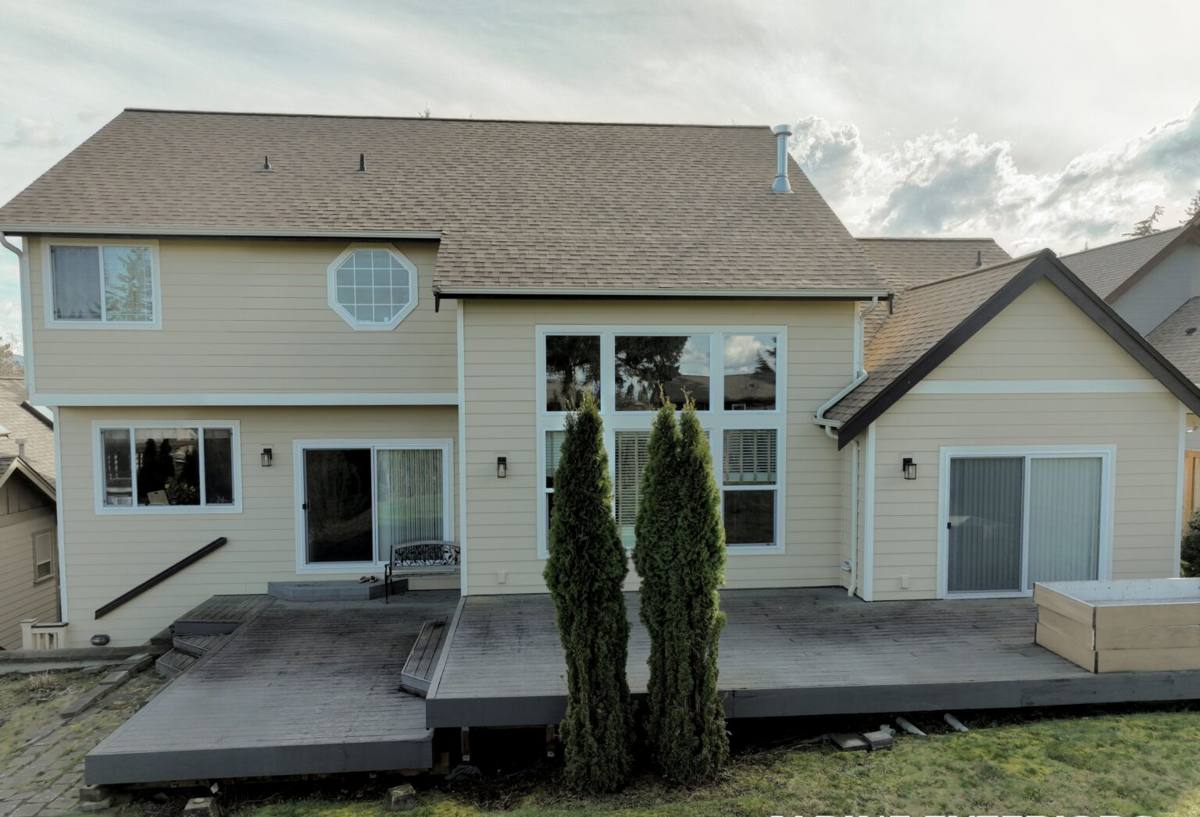
Signs Your Deck Has Passed the Point of Repair
Not every deck problem calls for a full replacement. But there's a point where patching boards is just delaying a bigger failure, and it's worth knowing where that line is.
- Boards that feel spongy, soft, or flex noticeably underfoot
- Visible rot or soft wood where the ledger board meets the house
- Posts that are soft, cracked, or crumbling at the base where they meet the ground or footing
- Fasteners that are heavily rusted, bleeding rust streaks into the wood, or backing out on their own
- A deck that sways or feels less rigid than it used to, especially with a few people standing on it
- Persistent black or green staining that returns within weeks of cleaning
- Gaps between boards that have widened well beyond their original spacing
If you're seeing two or more of these at once, especially anything involving the ledger board or the posts, that's usually a structural conversation, not a cosmetic one.
What a Correct Deck Replacement Actually Involves
A deck replacement done right is mostly about what you don't see once it's finished. The visible decking boards get the attention, but the parts underneath determine whether the new deck lasts 10 years or 30.
Ledger Board and Flashing
Where the deck attaches to the house is the single most common failure point we find on decks being replaced in this area. Correct flashing directs water away from the house framing instead of trapping it against the ledger board, which is critical given how much sideways rain the region sees. A deck replacement is the right time to fully expose and correct this detail — it's not something that can be properly fixed while the old decking is still in place.
Footings and Posts
Footings need to be sized and set to local frost depth and soil conditions, not guessed at. On a replacement, we check whether existing footings are adequate or whether they need to come out and be re-poured. Posts should sit on hardware that keeps end grain off wet concrete and ground contact — that single detail prevents most of the post-base rot we see on older decks.
Framing and Fasteners
Joists, beams, and hardware all need to be rated for ground contact or exterior exposure as appropriate, and fasteners should be corrosion-resistant hardware suited to coastal air, not standard interior-grade screws. This is one area where cutting corners doesn't show up as a problem for a few years — and then shows up all at once.
Decking Surface
The surface material is a real decision with trade-offs, covered in more detail below. Whatever material is chosen, board spacing, fastening method, and ventilation underneath all affect how well it sheds water and resists moss over time.
Choosing a Decking Material for Cordata's Climate
There's no single "best" decking material — the right choice depends on how much maintenance you're willing to do and what you want the deck to look and feel like ten years from now.
| Material | Moisture Behavior | Maintenance | Typical Lifespan Here |
|---|---|---|---|
| Pressure-treated lumber | Resists rot when properly sealed; prone to moss without upkeep | Needs cleaning and resealing every 1-2 years in this climate | 15-20 years with regular maintenance |
| Cedar | Naturally rot-resistant but softer surface; can gray and hold moss if untreated | Periodic cleaning and finish renewal for appearance and protection | 15-20 years with upkeep |
| Composite | Doesn't absorb water like wood; less prone to rot and splintering | Occasional washing; no sealing or staining required | 25-30+ years, varies by product warranty |
In a climate with this much rain and moss pressure, composite decking has become a popular choice for homeowners who want to spend less time maintaining the surface. But wood — pressure-treated or cedar — still has a place, particularly for homeowners who prefer its look and are willing to keep up with cleaning and resealing on a regular schedule. We'll walk through the honest trade-offs of each for your specific deck rather than pushing one product line.
Our Deck Replacement Process
- On-site assessment — we inspect the ledger, framing, footings, and posts to determine what's actually failing and whether replacement, not repair, is the right call.
- Design and material selection — we go over decking material, railing style, and layout, with honest guidance on what holds up best in this climate versus what looks good on day one.
- Permitting — where required, we handle the permit process so you're not the one navigating it.
- Demolition and disposal — the old deck is removed and hauled away, including any hidden rot found once boards come up.
- Structural rebuild — footings, posts, ledger flashing, and framing are corrected or replaced to current standards, not just patched.
- Decking and railing installation — surface material and railings go in with attention to fastening, spacing, and drainage.
- Final walkthrough — we go over the finished deck with you, including what maintenance it will and won't need.
Permits and Local Considerations
Most deck replacements that involve structural work — new footings, a raised deck, or work attached to the house — require a permit in Bellingham and unincorporated Whatcom County. The exact requirements depend on the deck's height, size, and whether it's attached to the structure, so this is worth confirming before work starts rather than assuming a straight swap of old boards for new ones is exempt. Footings need to be set to meet local frost and soil requirements, and any work near property lines needs to respect setback rules. We handle this process as part of the job so you're not left tracking down code requirements on your own.
What Affects the Cost of a Deck Replacement
Every deck is different, but the same handful of factors drive most of the cost difference between projects.
| Factor | Why It Matters |
|---|---|
| Size and footprint | More square footage means more framing, footings, and decking material |
| Decking material | Composite typically costs more upfront than wood but less in long-term maintenance |
| Height and stairs | Taller decks and stair sets add framing complexity and railing requirements |
| Railing style | Material and design choices for railing can vary widely in cost |
| Condition underneath | Rotted footings, posts, or ledger framing found during demo add scope |
| Permit and inspection requirements | Structural changes typically require permitting time and inspection steps |
We give straightforward, itemized estimates so you can see where the cost is actually going, rather than a single lump number.
Maintaining Your New Deck Through Bellingham's Wet Months
A well-built deck still needs some seasonal attention in this climate, especially through the fall-to-spring stretch when moss pressure is highest.
- Sweep leaves and debris off the surface regularly so moisture doesn't sit trapped underneath
- Rinse or treat for moss and algae before it has a chance to establish, particularly on shaded sections
- Check railing and stair fasteners periodically for rust or looseness
- Keep gutters and downspouts near the deck clear so water isn't draining directly onto it
- For wood decking, reseal or stain on the schedule recommended for the product — skipping a cycle in this climate shows up fast
- Glance underneath once a year to check that the ledger flashing and framing still look dry and sound
Why Hire a Crew That Already Works in Cordata
Deck replacement isn't a one-size-fits-all job, and a crew that regularly works in this specific area already understands the conditions before we set foot on your property — how shaded lots hold moisture, how far salt air carries inland from the bay, and what kind of framing and flashing details actually hold up through a Whatcom County winter. That local familiarity means fewer surprises, more accurate estimates, and a deck built for the weather it will actually face rather than a generic spec sheet.
If your deck is showing soft spots, sagging, or rot, or you just want an honest read on whether it's a repair or a replacement, we're happy to take a look. Fill out the form below for a free, no-pressure estimate.