 Bellingham Exterior
 Roof Repair Built for Cordata's Climate
Cordata sits in north Bellingham, close enough to the Salish Sea that salt-laden air, driving rain off the water, and a moss season that can run nine months out of the year all show up on local roofs. Whatcom County doesn't get the hail and hard freezes that beat up roofs elsewhere, but it makes up for it with something just as damaging: persistent, low-grade moisture exposure that never really lets a roof dry out. That's the difference between roofing here and roofing almost anywhere else. A roof repair in Cordata isn't just patching a leak — it's addressing why the roof failed in the first place, which in this climate is almost always a moisture story.
We work on Cordata roofs regularly, from the older ranch and split-level homes to newer construction near the retail corridor and surrounding residential streets. The repair approach is the same everywhere in Bellingham, but what fails first, and why, tends to follow a pattern we've learned to recognize.
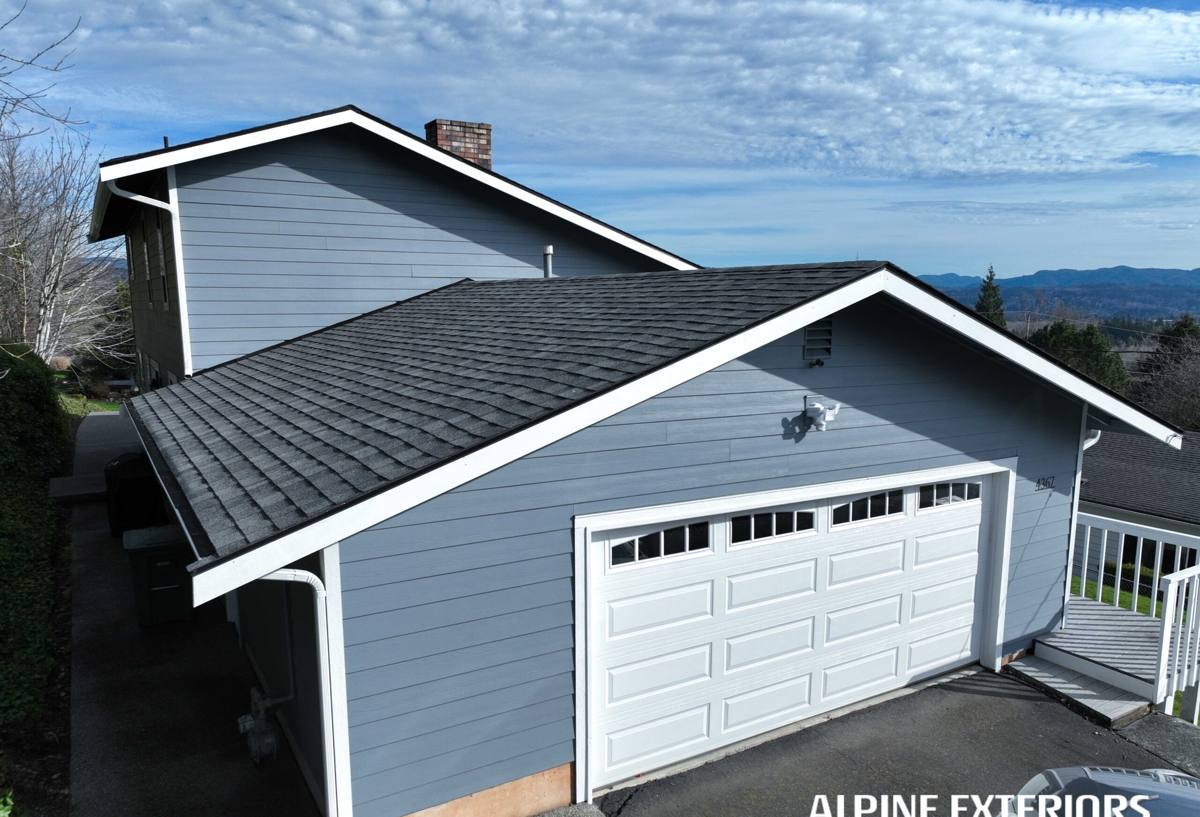
Common Roof Problems We See in Cordata Homes
Moss and Algae Growth
North-facing slopes and roofs shaded by mature trees hold moisture longer, and moss takes hold in those damp, shaded strips first. Left alone, moss lifts shingle edges, holds water against the roof deck, and works its way under flashing. By the time moss is visibly thick, it's usually already caused some amount of granule loss or minor lifting underneath it — the moss is a symptom, not just a cosmetic issue.
Flashing and Valley Leaks
Roof valleys, chimney flashing, skylight curbs, and vent boots are the most common leak points on any roof, and in a climate with this much annual rainfall, small flashing failures show up faster. Sealant dries out and cracks, metal flashing corrodes at the edges, and rubber vent boots split from age and UV exposure. These are usually straightforward repairs if caught early, and expensive interior repairs if they aren't.
Wind and Storm Damage
Bellingham doesn't see frequent severe wind events, but winter storms off the water do produce gusts strong enough to lift shingle tabs, crack ridge caps, or peel back sections that were already weakened by age or prior moss damage. A storm rarely creates a problem from nothing — it usually finds a spot that was already compromised.
What a Correct Roof Repair Actually Involves
A repair that only addresses the visible symptom tends to come back within a season or two. A repair done right starts with figuring out the actual path water is taking, which is often not directly above where the stain or drip shows up inside the house. Water travels along the underlayment and framing before it ever becomes visible, so a repair based on where the ceiling stain is located — without checking upslope — is a common way to miss the real problem.
Correct repair work in this climate typically means:
- Removing moss and debris fully, not just from the immediate repair area, so the rest of the roof isn't hiding the same issue
- Checking the roof deck for soft spots or rot anywhere water has been sitting, not just at the point of the leak
- Replacing degraded underlayment in the repair zone, not just laying new shingles over old material
- Using flashing details — step flashing, counter-flashing, valley metal — that match how the rest of the roof was built, so the repair doesn't create a new mismatch point
- Matching shingle or material type, profile, and where possible color, so the repair doesn't stand out or create a second weak seam
Our Roof Repair Process
- Inspection and diagnosis. We get on the roof (not just the ladder-and-binoculars approach) to trace the actual source of a leak or the extent of moss and granule damage, and check attic or interior access points where visible.
- Written scope and estimate. You get a clear explanation of what's failing, what we recommend fixing, and why — including whether a full replacement is a smarter option than continuing to repair an aging roof.
- Repair work. Deck repair where needed, underlayment and flashing replacement, shingle or material replacement matched to the existing roof, and moss/debris removal from the affected area and surrounding roof.
- Cleanup and walk-through. We clear debris and old material from the property and walk you through what was done and what to watch for going forward.
Repair vs. Replacement: How We Help You Decide
Not every roof problem in Cordata calls for a full replacement, and not every leak is fixable with a patch that will actually last. The honest answer depends on the roof's age, how widespread the damage is, and how many prior repairs it's already had.
| Factor | Leans Toward Repair | Leans Toward Replacement |
|---|---|---|
| Roof age | Under 15-18 years (asphalt) | Nearing or past manufacturer lifespan |
| Damage extent | Localized — one valley, one leak point, one section | Spread across multiple slopes or repeated leak locations |
| Deck condition | Solid, dry decking under the damaged area | Soft, rotted, or repeatedly re-repaired decking |
| Moss/algae history | Recent, surface-level growth | Long-term staining with granule loss across the roof |
| Repair history | First or second repair on this roof | Multiple past repairs in different spots |
We'll tell you plainly which category your roof falls into. If a repair is the right call, that's what we'll recommend and price — we don't push replacements on roofs that don't need them.
Materials and Repair Considerations
Most Cordata homes are roofed in composition (asphalt) shingle, with some cedar shake and metal roofing mixed in, particularly on older or custom-built homes. Each material behaves differently when it comes to repair:
- Composition shingle — the most common and generally the most straightforward to repair, provided we can source a reasonably close match; older roofs with discontinued shingle lines sometimes require a slightly larger repair area to blend properly.
- Cedar shake — repairable, but shake roofs in this climate need close attention to ventilation and moisture behavior underneath; we replace individual shakes and address any underlying moisture issues rather than just capping over a problem area.
- Metal roofing — repairs typically center on fastener backout, seam sealant failure, or flashing at penetrations rather than the panels themselves, which tend to hold up well here.
We don't recommend simply coating over an aging, failing roof surface as a substitute for real repair. Coatings can have a place on certain low-slope or metal applications, but on a standard sloped composition roof they're a maintenance product, not a fix for underlying deck or flashing problems — and treating them as one just delays a repair that gets more expensive the longer water keeps getting in.
Why Hire a Crew That Already Works in Cordata
Roofing standards don't change block to block, but familiarity helps in practical ways. Knowing which parts of a neighborhood sit shaded most of the day and hold moss longer, which roof ages and construction styles are common on which streets, and how Whatcom County's permitting and inspection process works for repair versus replacement all shave time and guesswork off a job. It also means we're not learning the area's roofing quirks on your dime — we've already seen how this climate wears on roofs in this part of Bellingham.
Being local also matters for accountability. If something needs a follow-up look after the next round of Pacific Northwest rain, we're not a crew that drove in from out of the area for one job and is gone.
Roof Repair Maintenance Checklist for Cordata Homeowners
Between service visits, a few habits go a long way toward catching problems before they become expensive ones:
- Look at the roof from the ground a few times a year for dark streaking, moss buildup, or missing/lifted shingles
- Keep gutters clear so water isn't backing up under the shingle edge, especially through fall and winter
- Trim back tree branches that keep a section of roof shaded and slow to dry
- Check attic spaces after heavy rain for damp insulation, staining, or musty odor
- Don't ignore small interior stains — they're almost always smaller and cheaper to fix early than after a second winter
- Have moss professionally removed rather than pressure-washed, which can drive water under shingles and strip protective granules
Get a Free, No-Pressure Estimate
If you're dealing with a leak, visible moss, storm damage, or just want an honest read on where your roof stands, we're happy to take a look. Fill out the form below and we'll get in touch to schedule a straightforward inspection and estimate — no pressure, no upsell, just a clear picture of what your roof needs.